- World's Best Steaks 101 Best Steak Restaurants #86 · 2025
The Counter Format That Changed What a Wagyu Dinner Can Be
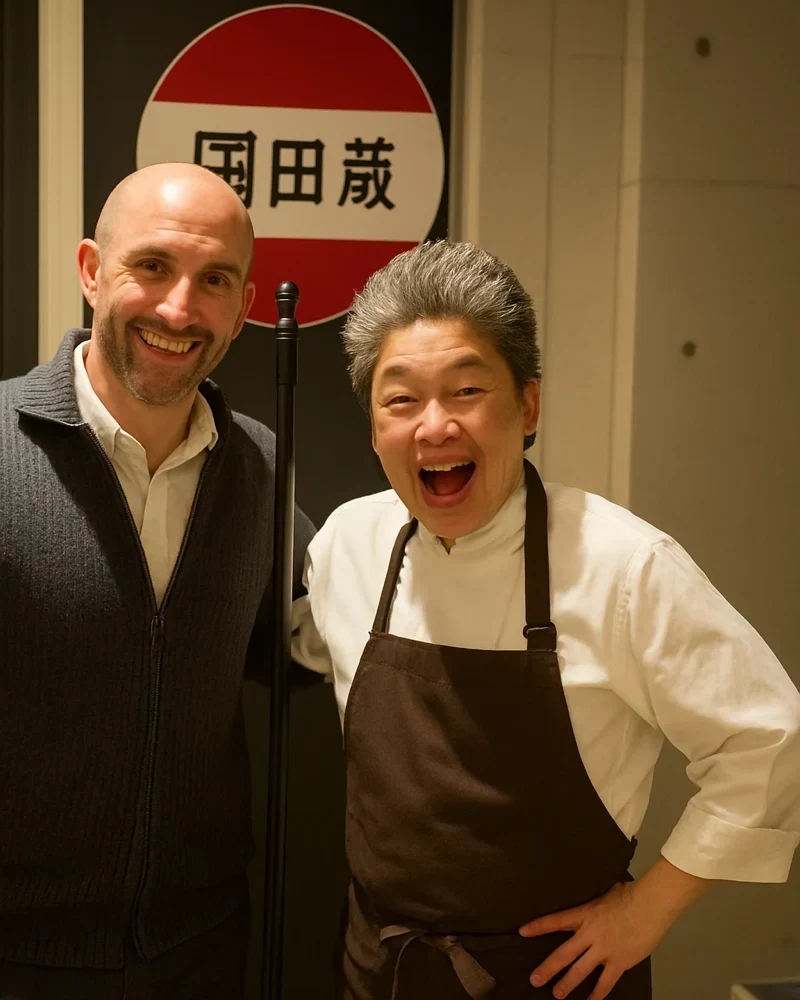
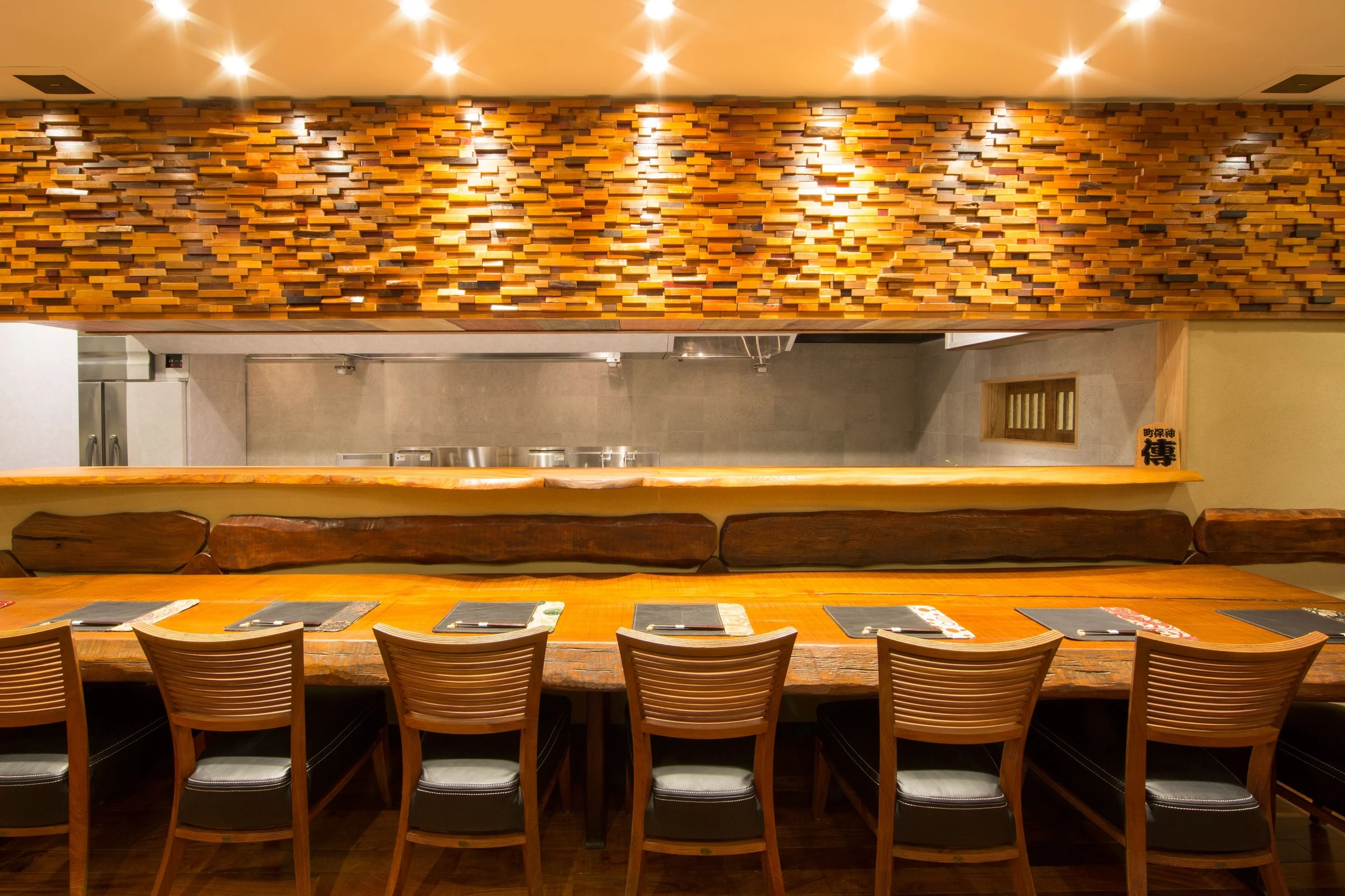
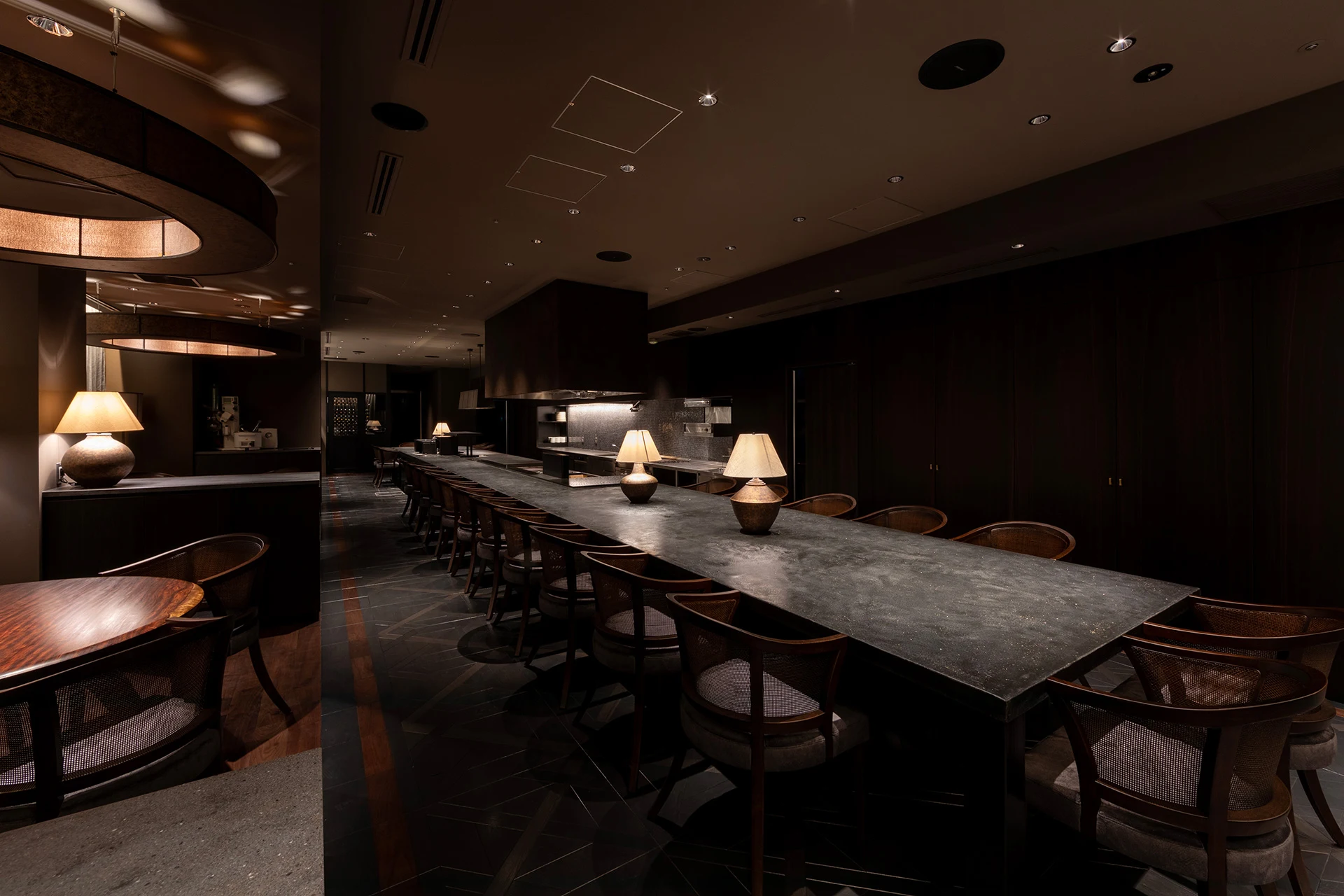
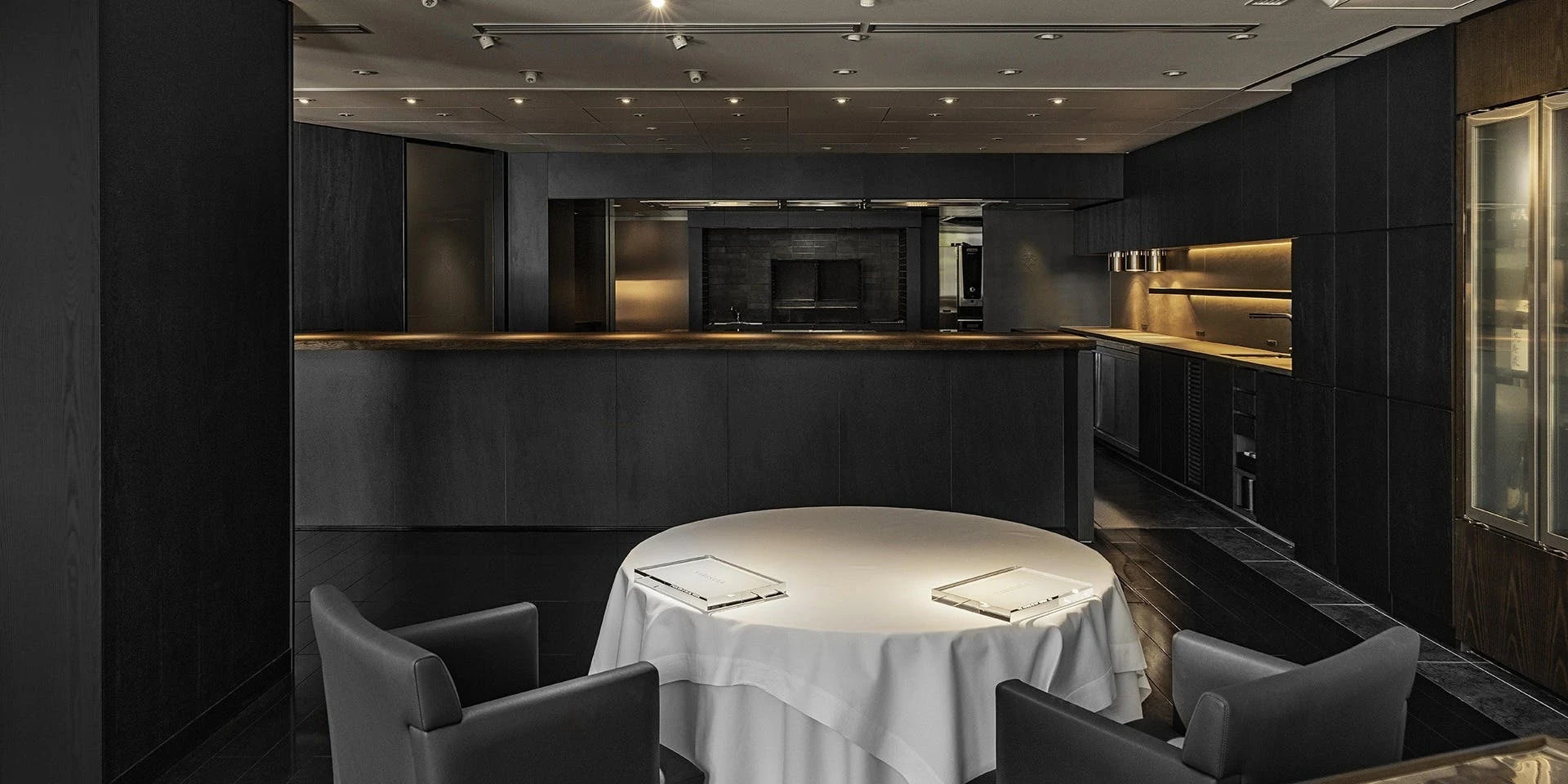
Okadamae is a Tokyo restaurant serving wagyu kappo steakhouse dining in Azabu-Juban. Sixteen seats arranged around a counter in Azabu-Juban's basement level: that is the physical framework of Okadamae, and it tells you almost everything about what the restaurant is doing. Counter dining in Tokyo carries specific obligations. At Harutaka it means watching nigiri formed within arm's reach; at RyuGin, kaiseki's seasonal logic plays out across a longer arc. Okadamae applies the same grammar of direct preparation and guest proximity to wagyu, a cut of beef that Japan's premium dining scene has long treated as ingredient rather than theatre. Here, the beef becomes both.
Tokyo's high-end steakhouse tier has historically borrowed from the Western teppanyaki or yakiniku template: skilled execution, often impressive cuts, but a format that keeps the kitchen at a distance. Okadamae belongs to a smaller subset that applies kappō disciplines to beef-centred dining. Kappō, literally meaning to cut and cook, places the chef in full sight and continuous dialogue with guests, with courses sequenced like a Japanese seasonal menu. That structural choice shapes everything: the pace, the sourcing logic, the drink pairings, and the reason the restaurant seats sixteen rather than sixty.
Wagyu as a Regional Argument
Japan does not have a single wagyu. It has a set of competing regional claims, each backed by specific cattle breeds, feed regimes, and grading standards, and each with a devoted professional following. Okadamae works across that geography deliberately. Chef Kinichiro Okada draws from Kobe, Matsusaka, Omi, and Sendai beef, which means the menu is implicitly a comparative tasting of Japan's most scrutinised cattle-raising traditions. Kobe's strict certification process makes it the most internationally recognised of the four; Matsusaka, produced in Mie Prefecture, carries arguably greater prestige within Japan for the fineness of its marbling; Omi from Shiga Prefecture holds the distinction of being among Japan's oldest documented beef-producing regions; Sendai beef from Miyagi Prefecture brings its own textural character to the set.
The decision to focus on cuts with balanced marbling rather than maximum fat intensity reflects a coherent culinary position. Sourcing for balance means that a dish of raw yukhoe, a seasoned preparation common in Korean-influenced Japanese beef culture, can sit alongside a richer menchi-katsu without the meal becoming one-dimensional. The restraint is practical as much as philosophical.
The Arc of a Seasonal Omakase
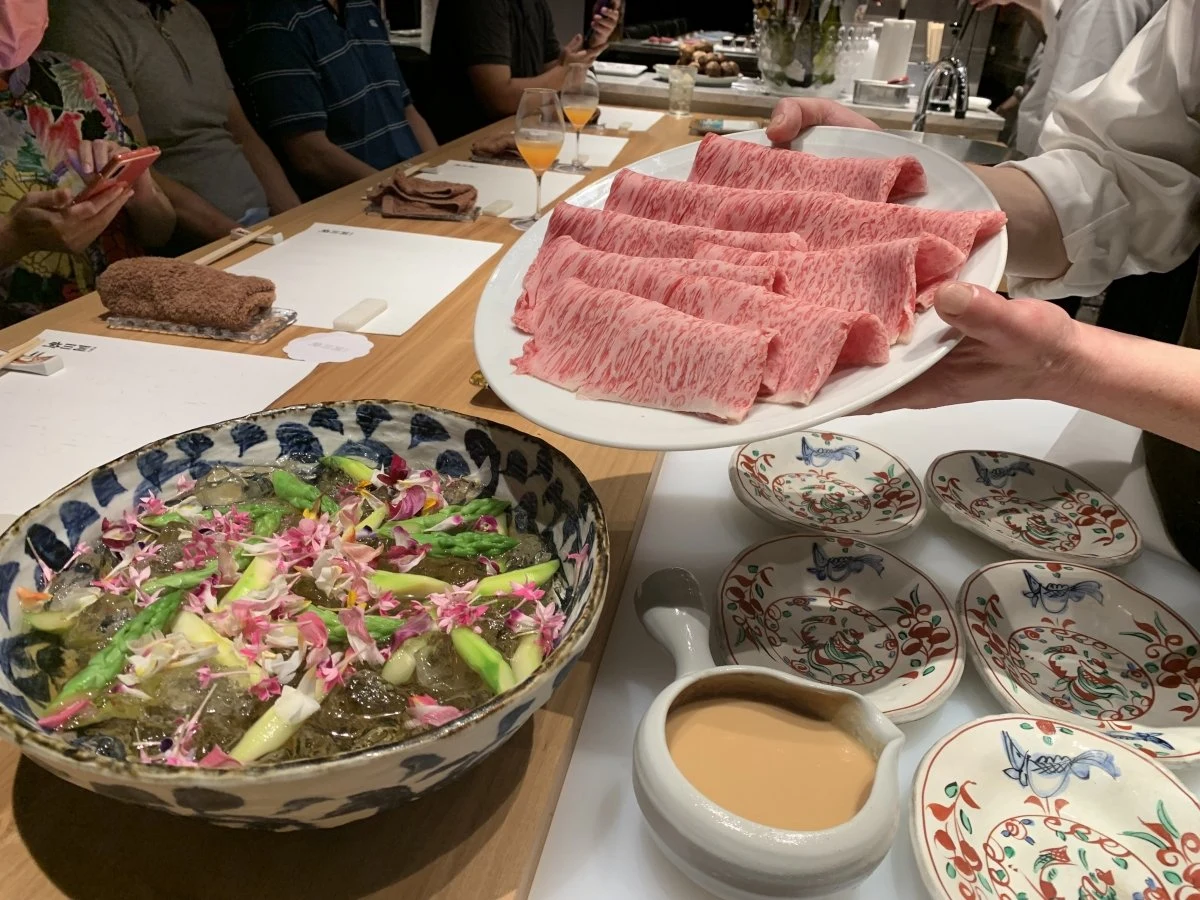
Omakase at this level, whether at a sushi counter like Harutaka or a kaiseki room like RyuGin, follows a disciplined arc from delicate to substantial, with the kitchen adjusting the sequence by season. Okadamae applies the same logic to beef. The meal opens with lighter preparations: beef tartare paired with caviar, yukhoe that lets the raw quality of the sourced cuts speak without interference. These early courses function as calibration, giving the palate a reference point before richer preparations arrive.
Mid-course, the menchi-katsu, a minced meat cutlet with a fine crumb crust, introduces texture as a variable rather than simply weight. The sirloin sukiyaki that follows draws on Kansai tradition, where the beef is cooked at the table with soy and mirin rather than the Tokyo style of simmering in broth first. The Matsusaka cut used here, with its distinctive fat structure, suits the Kansai preparation's relatively quick cook time. The meal closes with a steak cooked over Spanish charcoal, which is credited with imparting a precise smokiness.
Meat is sliced and cooked to order throughout, which at a 16-seat counter is operationally feasible in a way it could not be at larger venues. That constraint is also a commitment: each portion is prepared within the rhythm of the specific evening rather than broken down in advance.
Azabu-Juban and the Neighbourhood's Role
Azabu-Juban occupies a specific tier within Tokyo's dining geography. It is not Ginza's high-visibility luxury corridor, nor the creative younger scene around Shibuya or Shinjuku. The neighbourhood has long attracted a residential international clientele alongside Tokyo's own affluent professional class, which has shaped what survives there at the premium end. Smaller counters and specialist formats persist in Azabu-Juban in a way that reflects the area's tolerance for both price and intimacy. For the same reasons, the neighbourhood holds several French-influenced rooms, including L'Effervescence, that operate at the same high-craft, low-capacity register. The basement location, a common configuration in Tokyo's premium counter scene, removes street-level noise and reinforces the contained intensity that a 16-seat omakase requires.
Drink Pairings and the Wine-Sake Parallel
Tokyo's leading counters have increasingly treated the drink list as a second editorial layer rather than an afterthought. At Okadamae, the list includes IWA sake, a label produced by Richard Geoffroy. The choice signals a specific positioning: IWA is discussed in Japan's premium sake market in the same terms that allocated Burgundy is discussed in wine circles, distributed sparingly, priced accordingly, and built on the producer's traceable credentials. That a wagyu counter in Azabu-Juban carries it says something about the price tier and the expectations of the clientele.
The wine side includes limited vintage selections from Kenzo Estate. The combination of French-method sake and California Cabernet alongside wagyu is a coherent editorial choice rather than an attempt to cover every preference: both are allocated, both are Japan-relevant in different ways, and both sit at a price point appropriate to the format.
Where Okadamae Sits in Tokyo's Broader Dining Picture
Tokyo's premium dining scene is large enough that any single counter needs contextual coordinates. Okadamae does not compete with the city's sushi rooms or the kaiseki tradition; it operates in a narrower subcategory of beef-focused counters where kappō disciplines apply. Relative to the wider Tokyo table, it belongs in the same conversation as high-effort, low-capacity rooms such as Sézanne or Crony in terms of format intensity, even if the cuisine category differs entirely.
Beyond Tokyo, the serious wagyu counter format has parallels in Osaka's dining culture, where beef preparation traditions are arguably even more deeply embedded. HAJIME in Osaka represents a different expression of the same high-precision, low-capacity approach. Gion Sasaki in Kyoto demonstrates how the kappō counter format operates across ingredient categories. For readers building a broader Japan itinerary around this style of dining, akordu in Nara, Goh in Fukuoka, 1000 in Yokohama, and 6 in Okinawa each represent a regional variation on the craft-first counter format. Internationally, the discipline that underpins Okadamae's approach connects to how counters in New York, like Le Bernardin or Atomix, have redefined what a chef-directed, ingredient-led tasting format requires of the room itself.
Planning Your Visit
Okadamae is located at 1 Chome-5-23 Azabujuban, Minato City, Tokyo, in the basement of the Rene Azabujuban Building. Azabu-Juban Station on the Namboku and Oedo lines is the nearest point of entry. At 16 seats, the counter is small enough that advance booking is not optional at this price tier: Tokyo counters of this format typically fill several weeks out, and Okadamae's specificity of concept concentrates demand further. Reservations are essential.
The Sunday letter
Get new places like Okadamae every Sunday.
One email a week with the restaurants, bars and hotels we have just written up, and the people who run them.
One email a week. Unsubscribe from any issue.
Questions
Frequently asked
Who works at Okadamae?
Made By profiles Kinichiro Okada (Chef) at Okadamae.
How expensive is Okadamae?
Okadamae is listed at a price level of $$$$.
Where is Okadamae and what does it serve?
Okadamae is in Minato, Tokyo, serving Wagyu Kappo Steakhouse.
The field
How it compares
| Place | Cuisine | Notes | Awards |
|---|---|---|---|
| Okadamae | Wagyu Kappo Steakhouse | Minato, $$$$ | · |
| Den | Modern Japanese Kaiseki | Tokyo | Michelin 2 Stars, World's 50 Best |
| Florilège | Modern French-Japanese Plant-Based Fine Dining | Tokyo | Michelin 2 Stars, World's 50 Best |
| Narisawa | Modern Japanese Satoyama Fine Dining | Tokyo | Michelin 2 Stars, World's 50 Best |
| Quintessence | Modern French Fine Dining | Tokyo | Michelin 3 Stars |
| Sazenka | Modern Chinese Fine Dining | Tokyo | Michelin 3 Stars, World's 50 Best |
| Sézanne | Modern French Fine Dining | Tokyo | Michelin 3 Stars, World's 50 Best |
In residence
Similar places
Modern Japanese Kaiseki
Den
Tokyo, Japan
★★ · 50 Best
Modern French-Japanese Plant-Based Fine Dining
Florilège
Tokyo, Japan
★★ · 50 Best
Modern Japanese Satoyama Fine Dining
Narisawa
Tokyo, Japan
★★ · 50 Best
Modern French Fine Dining
Quintessence
Tokyo, Japan
★★★
Modern Chinese Fine Dining
Sazenka
Tokyo, Japan
★★★ · 50 Best
Modern French Fine Dining
Sézanne
Tokyo, Japan
★★★ · 50 Best
The Sunday letter
Get the next Made By story in your inbox.
We send one email every Sunday morning with the places and people we covered that week.
One email a week. Unsubscribe from any issue.