Olives
- 01CityDubai, United Arab Emirates
Mediterranean heat, Italian pull
- James Beard Award Best Chefs · 1994
- James Beard Award Rising Star Chef of the Year · 1991
A Mediterranean hand in Dubai
His public kitchen language was formed before the name traveled: Guilford College in North Carolina, the Culinary Institute of America from 1978 to 1982, then work under chef Jean-Jacques Rachou at La Cote Basque in New York. That sequence matters here because Olives is not built as a neutral hotel restaurant with borrowed Mediterranean cues. The Dubai address sits inside that lineage, with the same broad grammar of high-end Mediterranean cooking and Italian influence, a style that prefers assertive seasoning, generous composition, and a plate that moves with confidence rather than restraint alone.
The Olives method, carried forward
The method associated with Olives is less about a single inherited recipe than a way of arranging Mediterranean appetite: pasta, seafood, grilled vegetables, flatbread, olive oil, acid, herbs, and the heat of the hearth. Earlier Olives kitchens made that approach visible through rustic Mediterranean cooking with a strong Italian pull, and through dishes that did not hide their architecture. The original Boston restaurant became known for desserts that had to be ordered with the main meal, including molten chocolate cake and vanilla bean soufflé, because the kitchen needed the time to finish them properly. Other Olives menus have carried grilled squid and octopus, watermelon gazpacho, beef carpaccio, fig and prosciutto flatbread, and portobello with fontina cheese and truffle oil flatbread. Those details give the Dubai room its craft inheritance: not delicacy for its own sake, but timing, heat, and a willingness to put richness beside acid so the plate keeps moving.
The room around the pass
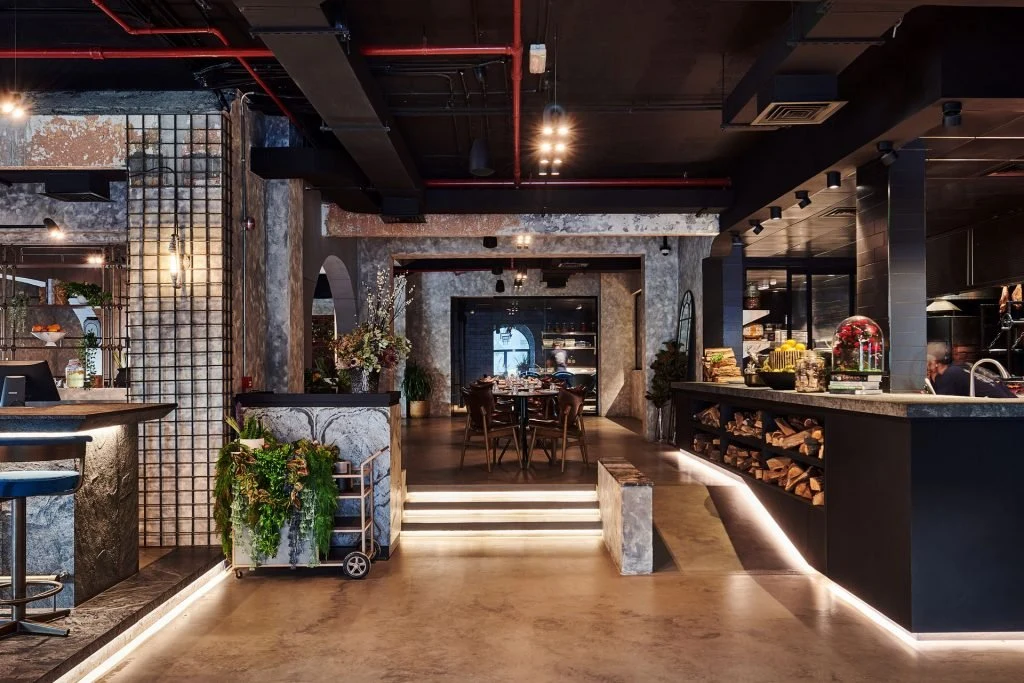
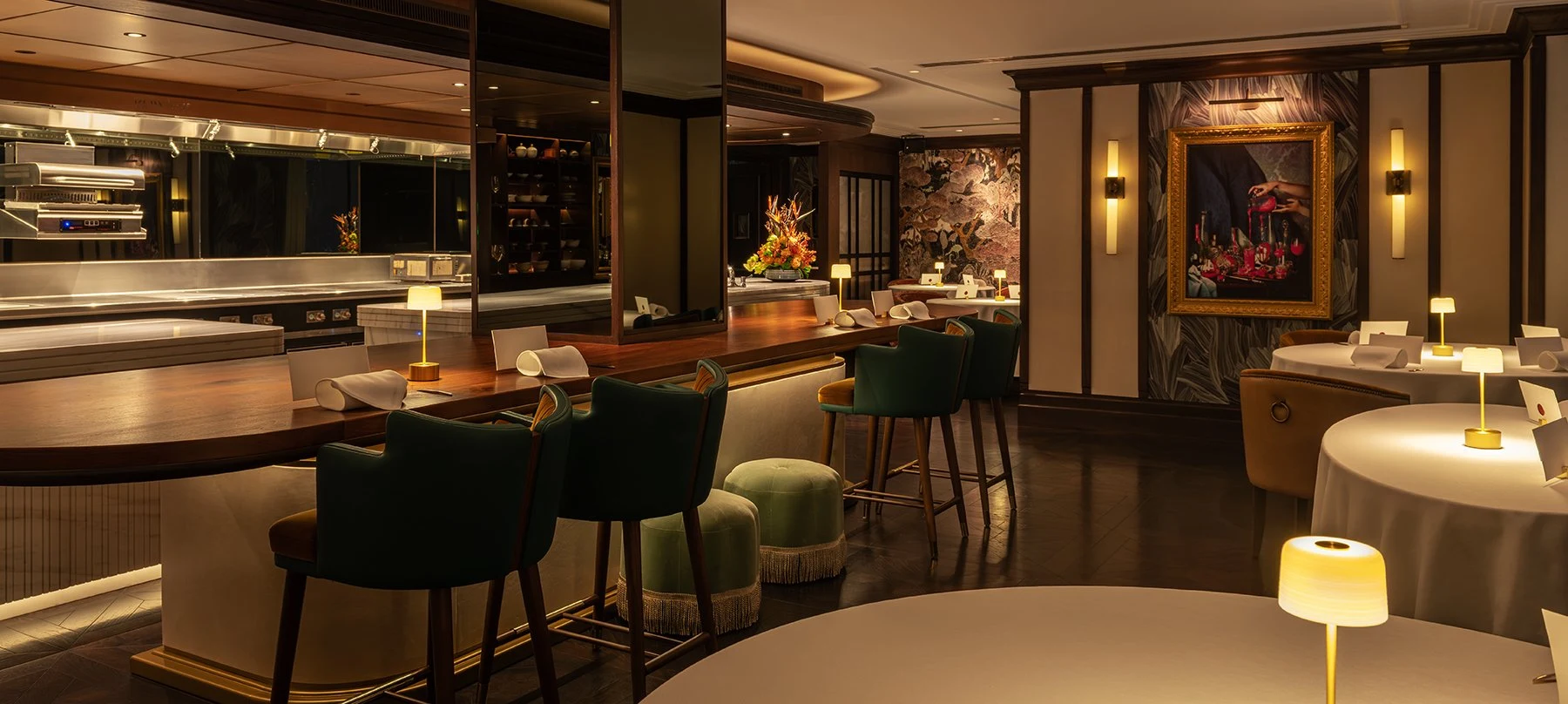
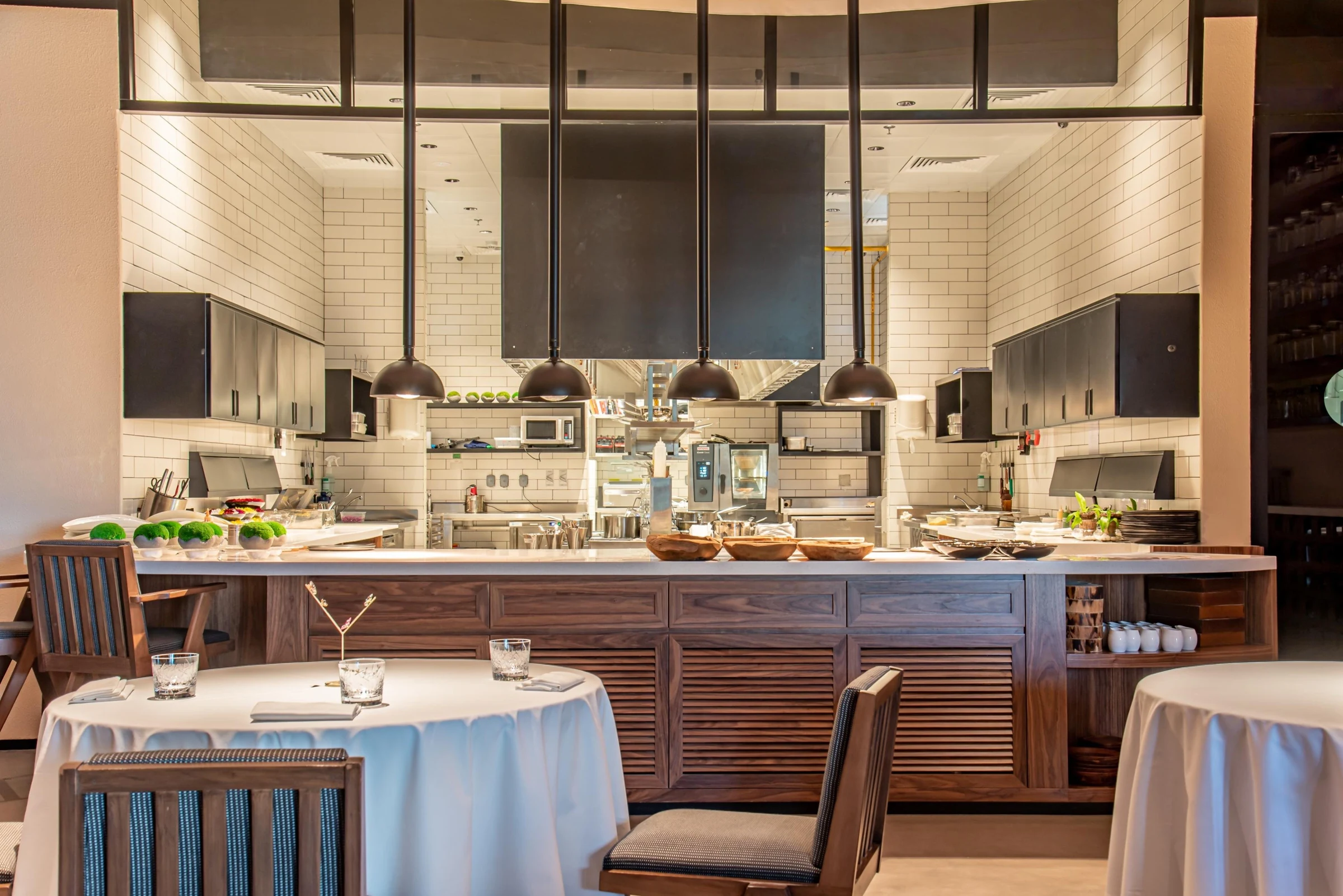
At a restaurant like Olives, the room has to leave enough space for the food to arrive with momentum. The pass is the hinge. Plates move from heat to hand to table; the counter rhythm depends on cooks who understand when a flatbread wants char, when seafood wants less time, and when a sauce needs brightness rather than more weight. It is a place shaped by a traveling name, but the work still returns to the same bench-side questions: how much heat, how much oil, how much acid, how long to hold a dish before it loses its edge. The craft is in those decisions, repeated service after service, under the Olives name.
Why this address carries weight
The original Charlestown restaurant closed in 2013, but the name kept moving through other rooms, other hotel dining rooms, and other versions of the Mediterranean table. That continuity is not the same as replication. A place changes when it lands in a different city, with a different room and a different pass, but the maker’s vocabulary remains audible if the kitchen protects the method.
Questions
Frequently asked
What kind of cooking does Olives do?
Olives is built around a broad Mediterranean grammar with a strong Italian influence. The cooking leans toward assertive seasoning, generous composition, and the use of pasta, seafood, grilled vegetables, flatbread, olive oil, acid, herbs, and hearth heat.
Where does the kitchen style come from?
The kitchen language behind Olives was formed through Guilford College in North Carolina, the Culinary Institute of America from 1978 to 1982, and work under Jean-Jacques Rachou at La Cote Basque in New York. That background is part of why the Dubai room reads as a continuation of a longer line rather than a generic hotel restaurant.
What dishes are associated with the Olives name?
Across earlier Olives menus, dishes have included grilled squid and octopus, watermelon gazpacho, beef carpaccio, fig and prosciutto flatbread, and portobello with fontina cheese and truffle oil flatbread. The original Boston restaurant was also known for desserts that had to be ordered with the main meal, including molten chocolate cake and vanilla bean soufflé.
What is distinctive about the way the kitchen cooks?
The method associated with Olives is about timing, heat, and balance rather than delicacy alone. It gives attention to char on flatbread, careful cooking for seafood, and the point at which acid should brighten a dish instead of more weight being added to it.
Why does the Olives name carry weight here?
The original Charlestown restaurant closed in 2013, but the name continued in other rooms and hotel dining spaces. In Dubai, that continuity matters because the place carries the same method and vocabulary even as the room and city change.
The field
How it compares
| Place | Notes | Awards | Cuisine |
|---|---|---|---|
| Olives | Al Sufouh 2, $$$ | · | · |
| 11 Woodfire | Dubai | Michelin 1 Star, World's 50 Best | Modern Woodfire Grill |
| FZN by Björn Frantzén | Dubai | Michelin 3 Stars, World's 50 Best | Modern Scandinavian-Japanese Fine Dining |
| Orfali Bros | Dubai | Michelin 1 Star, World's 50 Best | Contemporary Middle Eastern Bistro |
| Ossiano | Dubai | Michelin 1 Star, World's 50 Best | Modern Seafood Fine Dining |
| Row on 45 | Dubai | Michelin 2 Stars, World's 50 Best | Modern Japanese Fine Dining |
| Trèsind Studio | Dubai | Michelin 3 Stars, World's 50 Best | Modern Indian Fine Dining |
Similar places
Modern Woodfire Grill
11 Woodfire
Dubai, United Arab Emirates
★ · 50 Best
Modern Scandinavian-Japanese Fine Dining
FZN by Björn Frantzén
Dubai, United Arab Emirates
★★★ · 50 Best
Contemporary Middle Eastern Bistro
Orfali Bros
Dubai, United Arab Emirates
★ · 50 Best
Modern Seafood Fine Dining
Ossiano
Dubai, United Arab Emirates
★ · 50 Best
Modern Japanese Fine Dining
Row on 45
Dubai, United Arab Emirates
★★ · 50 Best
Modern Indian Fine Dining
Trèsind Studio
Dubai, United Arab Emirates
★★★ · 50 Best