O'Pazo
- 01CuisineGalician Seafood
- 02CityMadrid, Spain
From the people index
Recommended by
One trusted voice points here.

- Macarfi 7.9 Food Rating · 2026
- Opinionated About Dining Casual in Europe Ranked #28 · 2026
- Guía Repsol 2 Soles · 2026
Where Madrid's Seafood Tradition Holds Its Ground
There is a category of Madrid restaurant that functions as a corrective to the city's appetite for novelty. These are rooms that predate the tasting-menu boom, that built reputations on the quality of raw material rather than the complexity of technique, and that continue to draw a clientele that measures a fish house by the provenance of its catch rather than the number of its courses. O'Pazo, on Calle de la Reina Mercedes in the Tetuán district, is a Madrid restaurant serving Galician seafood, with a Google rating of 4.6 and an average price of about $95 per person. Walking into this part of Madrid, you are north of the Castellana's gallery strip and clear of the tourist circuits around Sol and Malasaña. The neighbourhood signals intent: this is a working-city address, and the restaurant operates accordingly.
Madrid's position as a seafood capital is one of the more counterintuitive facts about Spanish dining. The city sits on a high plateau, hundreds of kilometres from the Atlantic and Mediterranean coasts, yet it developed one of Europe's most demanding cultures for fresh fish. The logic is historical: the Spanish rail and road networks that consolidated in the twentieth century made overnight delivery of Galician and Cantabrian catch viable, and Madrid's wealthy restaurant class had both the appetite and the purchasing power to sustain it. The result is that the city's leading fish houses have long operated with the same sourcing rigour as coastal counterparts. O'Pazo fits inside that tradition, drawing from Galicia in particular, a region whose fishing ports, shellfish beds, and market infrastructure represent the backbone of serious seafood dining across the Iberian Peninsula.
Sourcing as the Structural Argument
The sustainability conversation in European fine dining has, over the past decade, shifted from a marketing footnote to a structural requirement. At the high end of Spain's seafood scene, that shift has been most visible in how restaurants communicate their supply chains. Aponiente in El Puerto de Santa María, which built its entire identity around marine ecosystem thinking, sits at the conceptual extreme. But the more common expression of responsible sourcing at traditional fish houses is quieter: direct relationships with specific markets and boats, preference for species that are in season and not under quota pressure, and the kind of whole-animal usage that classical Galician cooking has always practised as a matter of economy rather than ideology.
O'Pazo's positioning in this context is that of a house where the sourcing argument is made through consistency rather than declaration. The Galician seafood tradition it draws from is, by its nature, tied to seasonal availability: percebes arrive when the Atlantic swell allows harvesting, centolla is at its finest in winter months, and the quality of lubina or rodaballo tracks the temperature and condition of the water at the time of catch. A restaurant that respects that calendar is, in structural terms, operating sustainably whether or not it uses the language of sustainability. That alignment between traditional practice and contemporary sourcing ethics is one reason classical Galician fish houses have aged better than some of their modernist peers.
For comparison, the creative tasting-menu circuit that dominates Madrid's top-tier recognition, from DiverXO and Coque to Deessa and DSTAgE, operates in a different register entirely. Those restaurants foreground technique, narrative, and chef authorship. O'Pazo's comparable set is different: it sits alongside the classical specialist houses where the chef's role is to select well and interfere minimally, and where the room's character is shaped by the regulars rather than the reservation waitlist.
The Room and Its Regulars
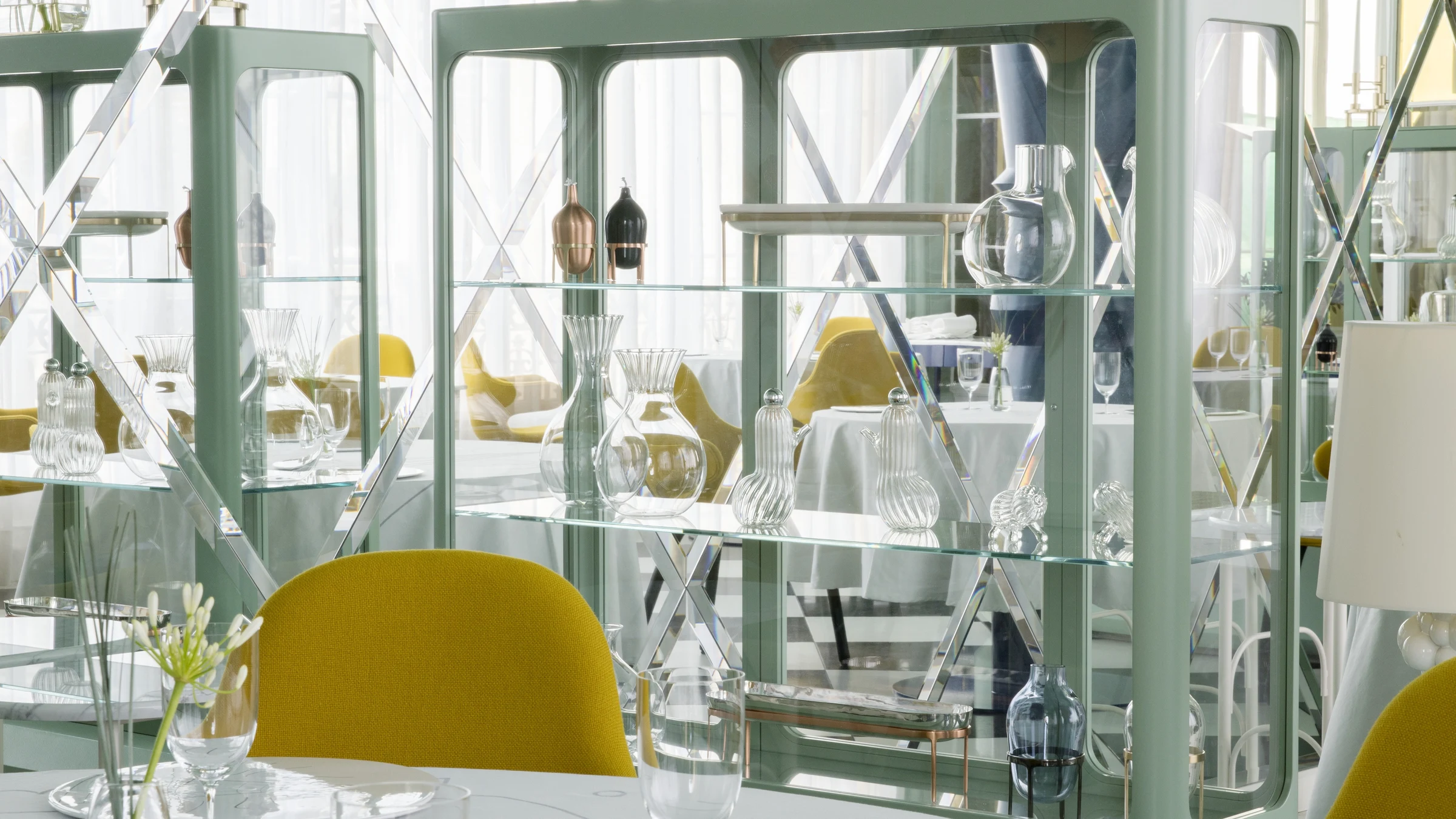
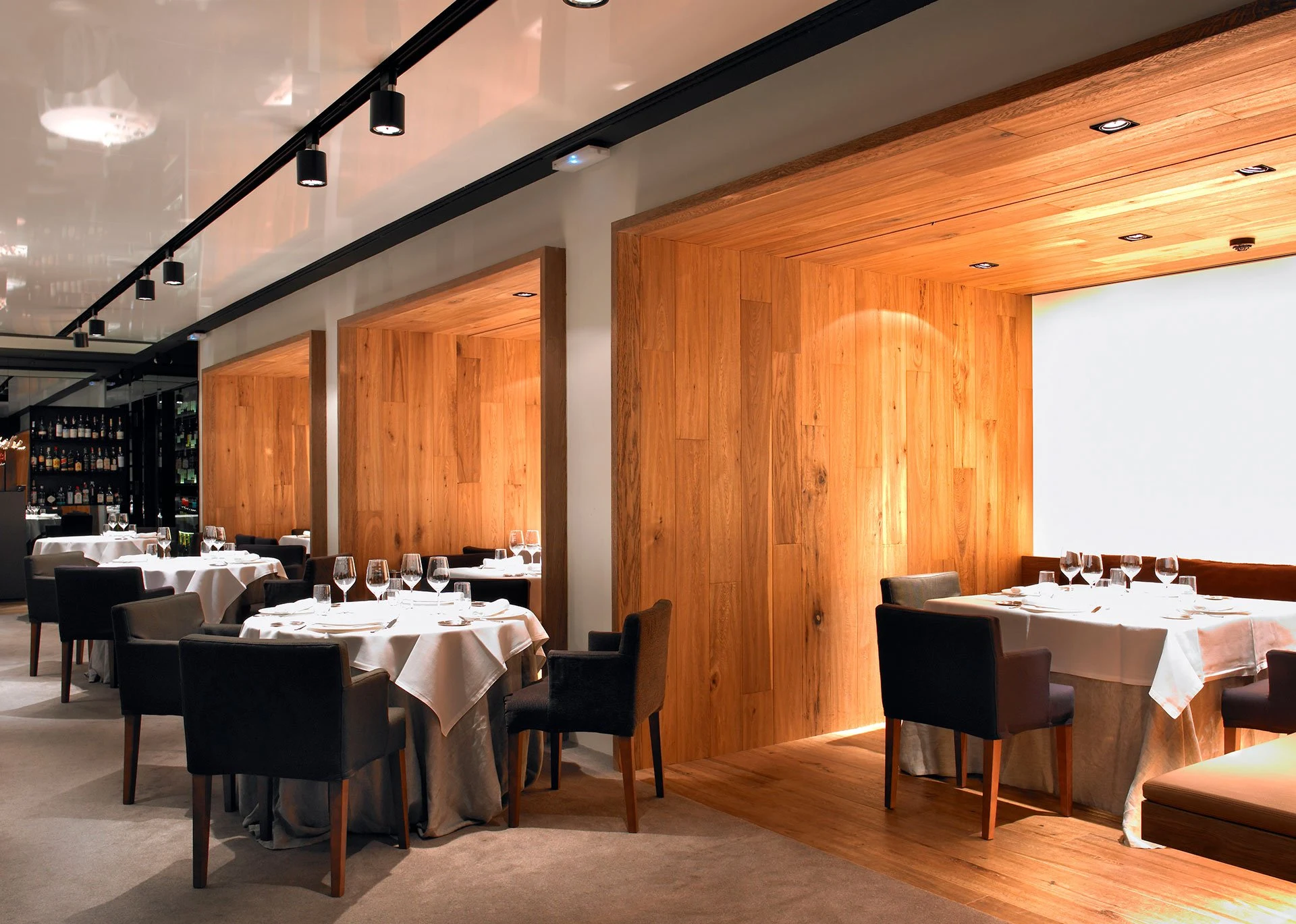
Traditional Madrid seafood houses tend toward a specific aesthetic: formal without being stiff, heavy on white tablecloths and silver service, with wine lists that lean toward Galician Albariño and Ribeiro whites alongside the Riojas that the city's older dining class still orders by default. The clientele at establishments in this tier tends to be local and repeat: business lunches, family celebrations, and the kind of solitary regular who arrives at the same table on the same day each week. The atmosphere this produces is legible to anyone who has eaten in the classic dining rooms of San Sebastián or the old-school marisquerías of Vigo, and O'Pazo's Tetuán address places it in that lineage rather than in the newer, more photographed dining rooms of Justicia or Salamanca.
Practically, reaching O'Pazo means heading north from the centre, roughly a fifteen-minute taxi ride from Sol or the Prado area. The Tetuán district is accessible by metro (line 1, Tetuán station), making the logistics direct for visitors staying anywhere along the Castellana corridor.
O'Pazo in the Wider Spanish Seafood Conversation
Spain's seafood dining culture operates at multiple registers, and Madrid's fish houses occupy a specific middle position: more product-focused than the creative laboratories, less pyrotechnic than places like Quique Dacosta in Dénia or Mugaritz in Errenteria, but also more rigorous in sourcing terms than the generic marisquería. The Spanish network of serious fish restaurants extends from Arzak in San Sebastián to El Celler de Can Roca in Girona, from Cocina Hermanos Torres in Barcelona to Ricard Camarena in València, and from Martin Berasategui in Lasarte-Oria to Azurmendi in Larrabetzu and Atrio in Cáceres. Within that geography, the Madrid classical fish house occupies its own niche, and O'Pazo is one of the addresses that defines it.
Internationally, the comparison that helps calibrate expectations is Le Bernardin in New York City, where the institutional commitment to fish cookery over decades has produced a different kind of authority than the creative tasting-menu format. Lazy Bear in San Francisco and Paco Roncero in Madrid represent the opposite pole: format-first, technique-forward, narrative-heavy. O'Pazo's argument is quieter and more product-centred, which is a legitimate position to hold in a city that has spent the past decade rewarding spectacle.
Planning a Visit
The Tetuán address at Calle de la Reina Mercedes, 20 is fixed, and the district is well connected by public transport. Reservations are essential, and peak lunch times typically warrant advance planning of at least a week, with more lead time for Friday and Saturday services.
Questions
Frequently asked
How expensive is O'Pazo?
O'Pazo is listed at a price level of $$$.
Where is O'Pazo and what does it serve?
O'Pazo is in Cuatro Caminos, Madrid, serving Galician Seafood.
The field
How it compares
| Place | Cuisine | Notes | Awards |
|---|---|---|---|
| O'Pazo | Galician Seafood | Cuatro Caminos, $$$ | · |
| Coque | Modern Spanish Fine Dining | Madrid | Michelin 2 Stars |
| Corral de la Morería | Modern Spanish Fine Dining with Flamenco | Madrid | Michelin 1 Star |
| Desde 1911 | Premium Seafood Fine Dining | Madrid | Michelin 1 Star |
| DiverXO | Avant-Garde Spanish Tasting Menu | Madrid | Michelin 3 Stars, World's 50 Best |
| DSTAgE | Avant-Garde Spanish Tasting Menus | Madrid | Michelin 2 Stars |
| Paco Roncero | Avant-Garde Spanish Fine Dining | Madrid | Michelin 2 Stars |
Similar places
Modern Spanish Fine Dining
Coque
Madrid, Spain
★★
Modern Spanish Fine Dining with Flamenco
Corral de la Morería
Madrid, Spain
★
Premium Seafood Fine Dining
Desde 1911
Madrid, Spain
★
Avant-Garde Spanish Tasting Menu
DiverXO
Madrid, Spain
★★★ · 50 Best
Avant-Garde Spanish Tasting Menus
DSTAgE
Madrid, Spain
★★
Avant-Garde Spanish Fine Dining
Paco Roncero
Madrid, Spain
★★