Osteria Da Fortunata
- 01CuisineTraditional Roman Osteria
- 02CityRome, Italy
- Opinionated About Dining Casual in Europe Recommended · 2026
- Opinionated About Dining Casual in Europe Ranked #585 · 2025
- Opinionated About Dining Casual in Europe Ranked #638 · 2024
- Opinionated About Dining Casual in Europe Recommended · 2023
Where Via del Pellegrino Meets the Roman Table
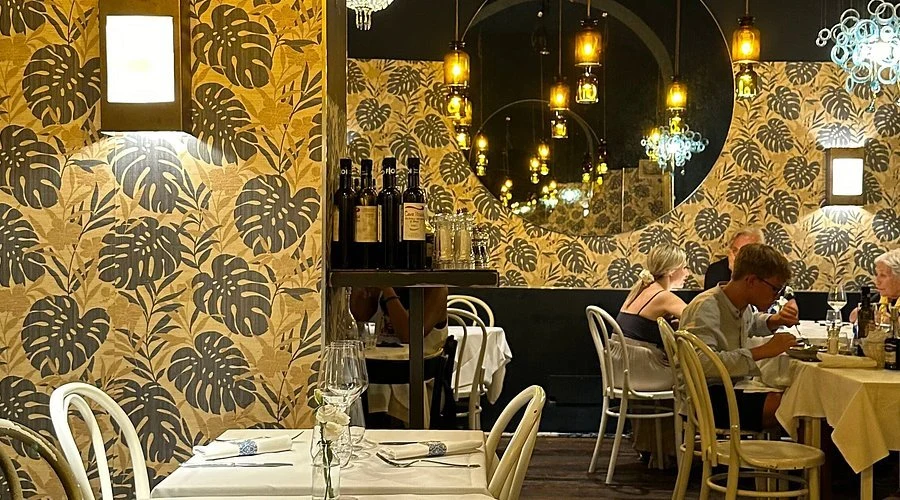
Osteria Da Fortunata is a traditional Roman osteria in Rome, with a Google rating of 4.4, about 29,278 reviews, and a typical price of about $25 per person. The streets around Campo de' Fiori compress centuries of market-driven cooking into a few dense blocks. Via del Pellegrino, one of the quarter's older pedestrian corridors, sits just far enough from the piazza's tourist orbit to retain a working-neighbourhood texture, locals collecting provisions, trattorias whose clientele skews Roman. It is in this context that Osteria Da Fortunata has built a reputation substantial enough to attract tens of thousands of Google reviews.
The OAD Trajectory and What It Signals
Rome's casual dining sector occupies an interesting position in European rankings. The Checchino Dal 1887 model, deep Roman tradition, multi-generational, anchored in offal cookery, sits at one pole. At the other, newer trattorias apply tighter sourcing discipline and more technical consistency to the same classical canon. Opinionated About Dining tracks this spectrum. Osteria Da Fortunata entered OAD's Casual Europe list as a Recommended entry in 2023, moved to #638 in 2024, and climbed to #585 in 2025. That directional movement indicates sustained kitchen consistency rather than a single good year catching attention. Among the Roman entries on that list, upward movement at this pace is not routine.
For comparison, Rome's high-end tier, La Pergola, Il Pagliaccio, Idylio by Apreda, operates on a separate track entirely, using contemporary Italian technique and tasting-menu formats against an international reference set. Osteria Da Fortunata competes within the casual Roman category, where the differentiators are ingredient fidelity, pasta execution, and the kind of consistency that sustains a high-volume, daily-service operation without degrading the product.
Roman Cooking as a Technical Discipline
The focus here is the intersection of indigenous ingredients and transferable technique, which separates the serious Roman kitchen from the merely traditional one. Roman cuisine's canonical dishes, cacio e pepe, carbonara, amatriciana, coda alla vaccinara, are deceptively simple in their ingredient lists and technically demanding in execution. The emulsification of fat and starch in cacio e pepe, for instance, is a heat-and-timing problem that professional kitchens get wrong more often than the recipe's brevity suggests. The quality of guanciale, pecorino Romano, and the pasta itself determine the ceiling of any given version.
In Rome, ingredient sourcing for these dishes is not a marketing point but a structural one. The leading guanciale comes from specific producers in Lazio and Abruzzo; the aging and fat content shift the flavour profile materially. Pecorino Romano DOP has defined production parameters, but the age and producer still vary. A kitchen that works this sourcing carefully will produce dishes that read differently from those using undifferentiated commodity inputs, even when the recipe is nominally identical. This is the gap that comparative panels tend to identify and reward.
Chef Andrea Bergesio leads the kitchen at Osteria Da Fortunata. In the Roman trattoria context, the chef's role is less about personal expression and more about custodianship of a fixed technical repertoire executed to a consistent standard across high-volume service. That discipline is harder to maintain than it looks.
Setting and Format
Via del Pellegrino 11/12 places the osteria within the historic centre's most food-active corridor, within walking distance of Campo de' Fiori's morning market and the Trastevere-adjacent streets where serious Roman eating has always concentrated. The neighbourhood's character remains more residential than the streets immediately south of the Pantheon, it lacks the tourist density of Armando al Pantheon's immediate surroundings, which contributes to a clientele mix that includes working Romans alongside the visitors who have sought the address out specifically.
The operation runs from 11:30 am to 12:30 am daily, an unusually long service window for a serious trattoria. This format accommodates both the Italian lunch-as-main-meal structure and late Roman dinner habits, and it signals an operational scale that sustains multi-shift kitchen consistency. For visiting diners, the extended hours offer flexibility that tighter lunch-and-dinner splits do not.
Rome in Context: Where This Sits in the Italian Casual Tier
Across Italy, the casual dining category has become one of the more contested spaces in the country's food culture. The osteria format, historically a no-frills neighbourhood eating house, has split into several distinct tiers: unreconstructed local spots with no wider visibility; technically upgraded versions of traditional cooking that attract OAD and similar panel attention; and a hybridised category where the trattoria label is applied to what is functionally a mid-priced contemporary restaurant. Osteria Da Fortunata sits in the second of these tiers, within Rome's canonical culinary tradition but operating at a level of consistency that has attracted sustained external recognition.
For reference, Italy's most-discussed casual dining addresses span the full geographic range: Da Danilo and CiPASSO operate in adjacent Roman registers, while Antica Pesa has built a profile that extends beyond the domestic market. Outside Rome, the Italian fine dining canon is represented by addresses including Osteria Francescana in Modena, Enoteca Pinchiorri in Florence, Enrico Bartolini in Milan, Atelier Moessmer Norbert Niederkofler in Brunico, Dal Pescatore in Runate, and Quattro Passi in Marina del Cantone. These occupy a different competitive tier entirely, but they share with Osteria Da Fortunata the premise that Italian regional tradition, executed with precision, remains a credible reference point against any international standard. The Roman kitchen's influence also travels: Il Marchese in Milan and Osteria Romana in Brussels both work variations of the Roman canon outside the city.
Planning Your Visit
- Address: Via del Pellegrino, 11/12, 00186 Roma, Italy
- Hours: Monday to Sunday, 12:00 pm to 1:00 am
- Booking: Reservations are recommended
- Timing: The Campo de' Fiori market operates mornings; arriving for an early lunch (12:00 to 12:30 pm) aligns with the market wind-down and typically precedes the main midday rush. Late-evening service after 9:30 pm skews toward a more local crowd
- Getting there: Via del Pellegrino is pedestrian-accessible from Campo de' Fiori (two minutes on foot) and from the Corso Vittorio Emanuele II bus corridor. Tram and metro connections are a 10 to 15-minute walk; the centre's traffic restrictions make arriving on foot or by taxi the most practical approach
- Recognition: OAD Casual Europe #585 (2025); #638 (2024); Recommended (2023)
- Google rating: 4.4 across 29,278 reviews
Questions
Frequently asked
How expensive is Osteria Da Fortunata?
Osteria Da Fortunata is listed at a price level of $$.
Where is Osteria Da Fortunata and what does it serve?
Osteria Da Fortunata is in Parione, Rome, serving Traditional Roman Osteria.
The field
How it compares
| Place | Cuisine | Notes | Awards |
|---|---|---|---|
| Osteria Da Fortunata | Traditional Roman Osteria | Parione, $$ | · |
| Acquolina | Modern Mediterranean Seafood Fine Dining | Rome | Michelin 2 Stars |
| Enoteca La Torre | Modern Italian Fine Dining | Rome | Michelin 2 Stars |
| Idylio by Apreda | Modern Mediterranean-Asian Fusion | Rome | Michelin 1 Star |
| Il Pagliaccio | Modern Italian-Japanese Fusion Fine Dining | Rome | Michelin 2 Stars |
| Imàgo | Modern Italian Fine Dining | Rome | Michelin 1 Star |
| La Pergola | Modern Italian Fine Dining | Rome | Michelin 3 Stars |
Similar places
Modern Mediterranean Seafood Fine Dining
Acquolina
Rome, Italy
★★
Modern Italian Fine Dining
Enoteca La Torre
Rome, Italy
★★
Modern Mediterranean-Asian Fusion
Idylio by Apreda
Rome, Italy
★
Modern Italian-Japanese Fusion Fine Dining
Il Pagliaccio
Rome, Italy
★★
Modern Italian Fine Dining
Imàgo
Rome, Italy
★
Modern Italian Fine Dining
La Pergola
Rome, Italy
★★★