Otagi
- 01CuisineSeasonal Kyoto Kaiseki Omakase
- 02CityKyoto, Japan
- 03RecognitionTwo Michelin Stars
Monthly kaiseki shaped by Takagamine.
- 2 Michelin Stars · Michelin Guide
- Michelin 2 Stars · 2026
- Tabelog Bronze #345: 4pts · 2026
- Michelin 2 Stars · 2025
- Tabelog Bronze · 2025
- Tabelog 100 #44: 3.9pts · 2025
- Michelin 2 Stars · 2024
Royal court discipline at a Kyoto counter
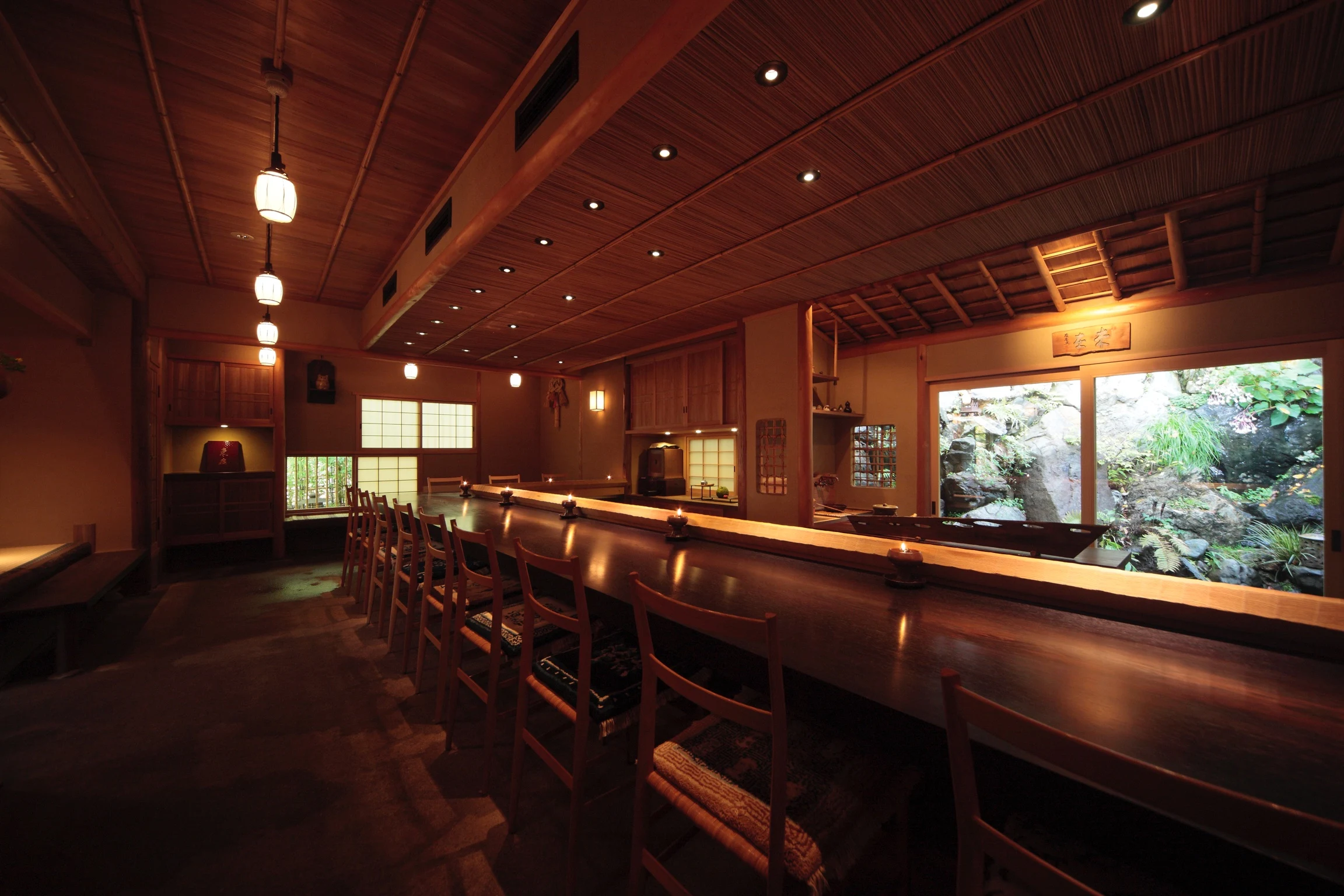
Takagamine produce reaches the kaiseki counter before anything else at Otagi in Kyoto, where Kazuaki Baba works as owner and head chef. Baba trained at Wakuden and Toriimoto before going independent in 2012, and the method is stated plainly: take liberties with tradition without exceeding the bounds of Japanese cuisine. The house he built is organised around Takagamine produce, seasonal kaiseki, and the freedom to let other culinary languages enter without loosening the Japanese frame. Otagi opened in 2012 and later moved, in August 2018, to his grandmother’s land in northern Kyoto. The restaurant took its name from the old name for Takagamine, and the room still leans toward that rural edge of the city. The first Michelin star followed in 2013 and the second by 2025, and the kitchen stayed interested in how far tradition can stretch before it stops being itself.
Kaiseki held inside seasonal limits
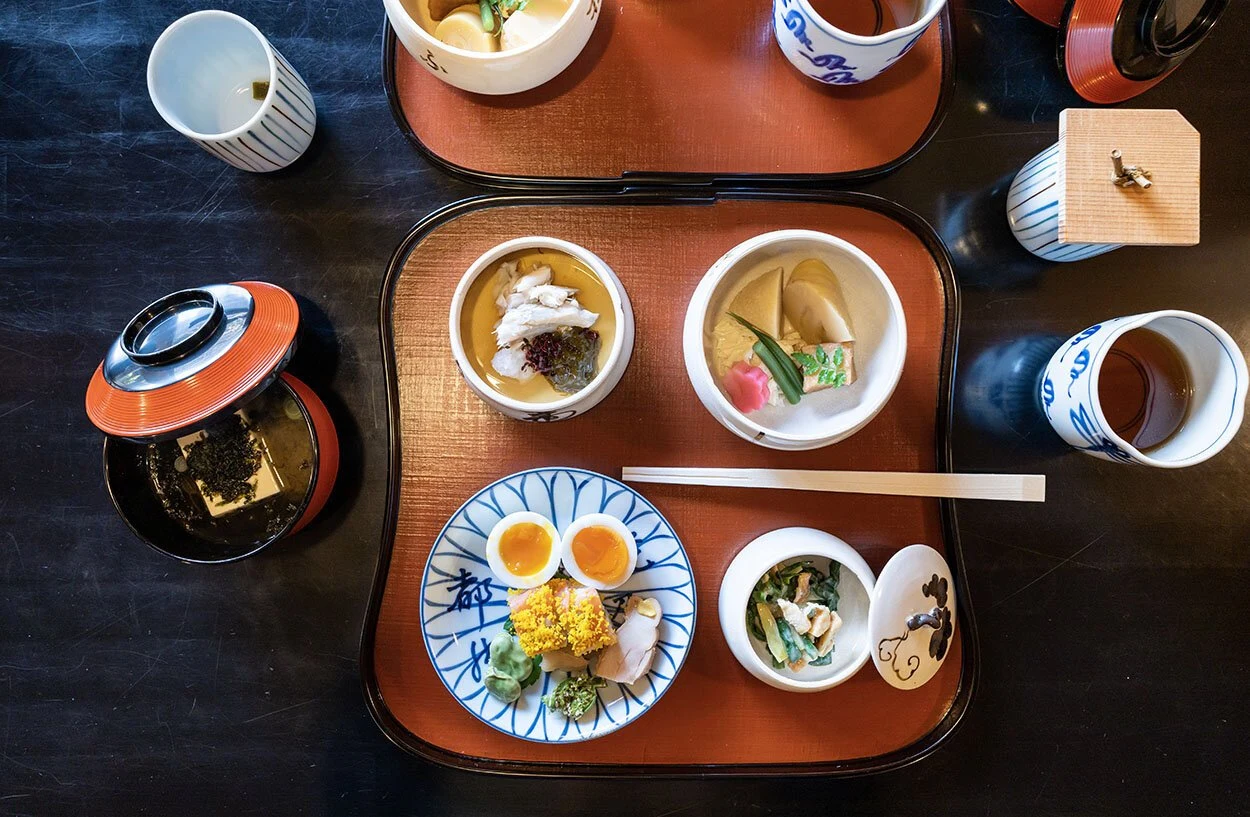
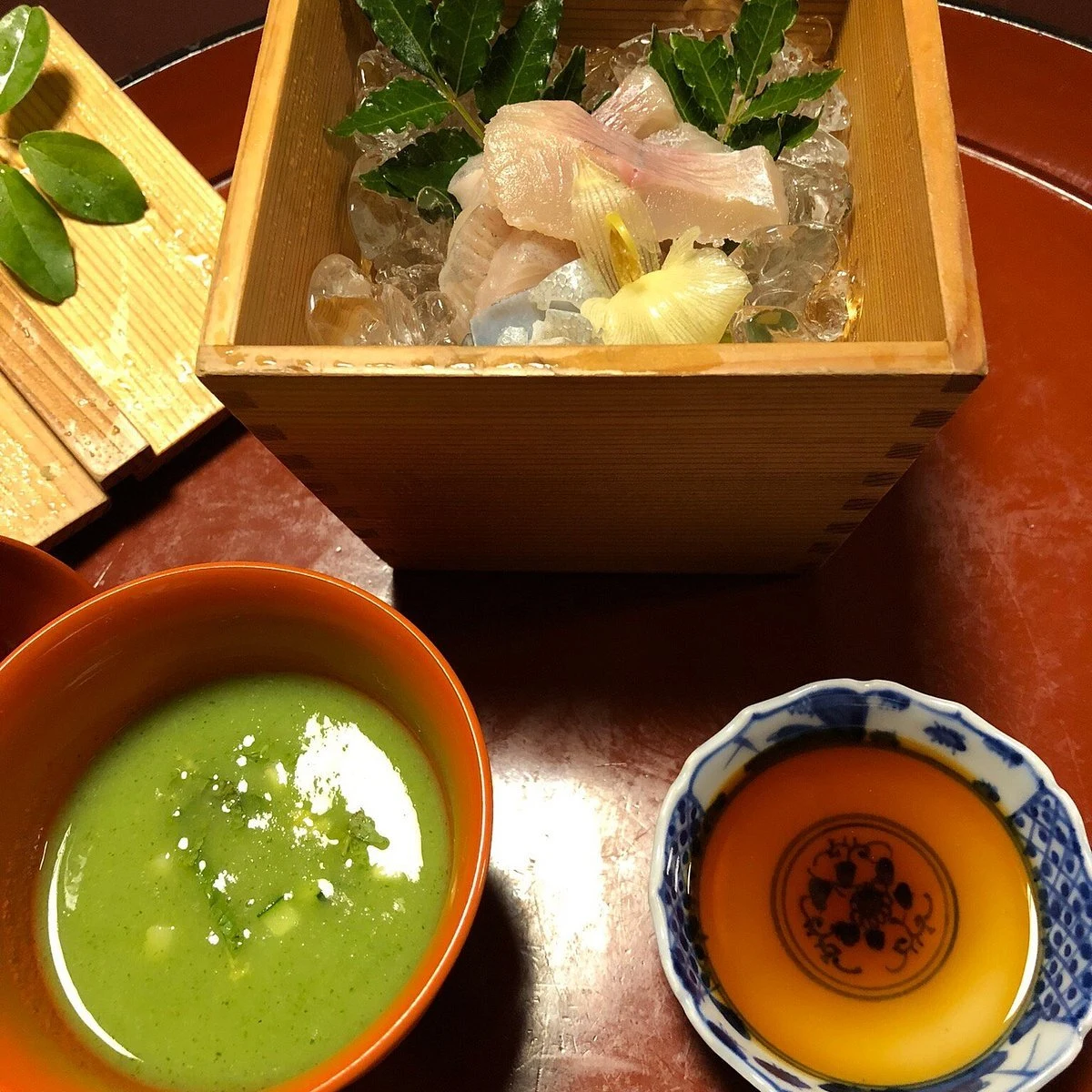
The program at Otagi changes monthly, moving through the familiar architecture of kaiseki without treating the form as a cage. A meal may pass through sashimi, sushi, soup, hotpot, noodles, meat, vegetables, fruit, dessert, and tea, with the sequence doing as much work as the individual dishes. The kitchen’s known gestures are specific: shibi with sea bream and salmon roe on sweet shrimp; clam and turnip soup; Kameoka beef with green onions picked the same day, rock salt, and sudachi; anago nigiri; handmade soba with spicy grated radish; Kinki rockfish cutlet with an original sauce. The house also folds Western and Chinese references back into dashi and miso. Hashed beef rice takes dashi, sake, and miso as its base. Beef stew brings katsuobushi dashi, Hatcho miso, and shrimp taro into the bowl. Grilled duck takes eel sauce. These are not departures for their own sake. They are decisions made under kaiseki pressure, where the pass has to keep temperature, season, and progression in order. Otagi holds two Michelin stars in 2025, and the figure that moves is the monthly change, repeated by hand through a menu that refuses to settle.
The room near Takagamine farms
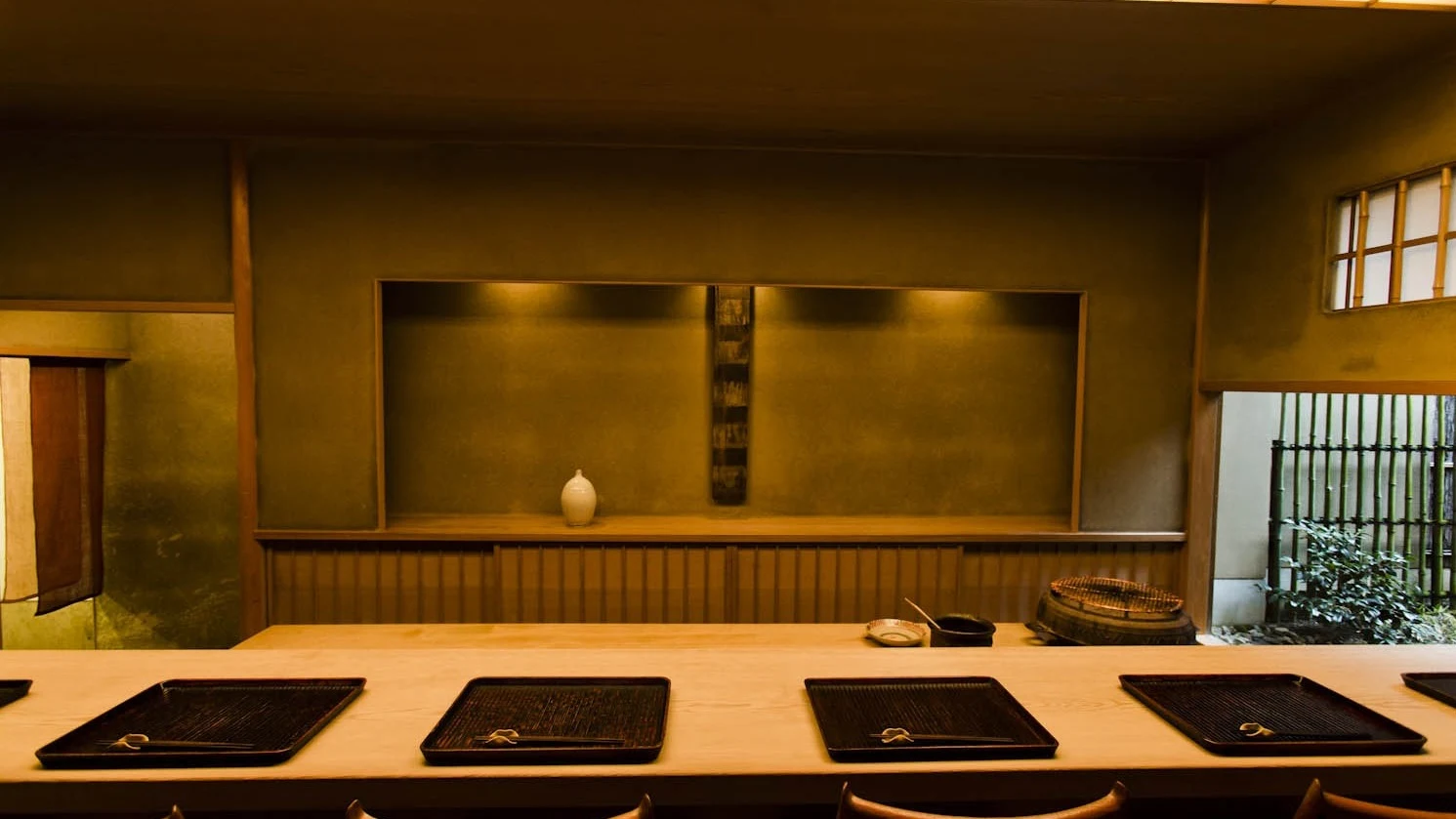
The room belongs to northern Kyoto before it belongs to any dining category. Otagi sits in Takagamine, away from the denser restaurant streets, close enough to nearby farms that vegetables and green onions can enter the kitchen with the place still on them. The restaurant’s move in August 2018 fixed that relationship more firmly, placing the work on family land and giving the dining room a rural quiet that suits a course meal built on scent, stock, and timing. The counter is not described as theater. It is a station for attention: seafood arriving at the front of the meal, soup thickened by clam and turnip, beef held back until the palate is ready, soba used as a reset before the final turn. Baba’s training meets that room without needing to announce itself. The shared language is restraint, season, and the patience to let a course arrive only when it has earned its place.
Why the meeting holds
Otagi’s standing in Kyoto comes from keeping kaiseki recognizable while allowing other memories into the method. Baba’s sourcing gives that instinct its material: Takagamine vegetables and green onions handpicked from nearby farms by childhood friends, carried straight into the day’s courses. The house’s own future is written in the same discipline it repeats each month: Takagamine vegetables, dashi, handmade soba, and the next seasonal course adjusted at the bench rather than explained from the doorway.
Questions
Frequently asked
Who is behind Otagi?
Kazuaki Baba is the owner and head chef at Otagi. He trained at Wakuden and Toriimoto before going independent in 2012.
What kind of restaurant is Otagi?
Otagi is a kaiseki restaurant in Kyoto. The cooking follows seasonal limits and changes monthly, while staying within the bounds of Japanese cuisine.
What is Otagi known for?
The restaurant is known for using Takagamine produce and building meals around seasonal kaiseki. The menu can include sashimi, sushi, soup, hotpot, noodles, meat, vegetables, fruit, dessert, and tea, and the kitchen also works in Western and Chinese references through dashi and miso.
What recognition does Otagi hold?
Otagi holds two Michelin stars.
When is Otagi open?
Otagi is open Monday, Tuesday, Thursday, Friday, Saturday, and Sunday from 5:30pm to 9pm. It is closed on Wednesday.
The field
How it compares
| Place | Awards | Cuisine | Notes |
|---|---|---|---|
| Otagi | Michelin 2 Stars | Seasonal Kyoto Kaiseki Omakase | Kita, $$$$ |
| Gion Sasaki | Michelin 3 Stars | Modern Kaiseki | Kyoto |
| Hyotei | Michelin 3 Stars | Traditional Kaiseki | Kyoto |
| Isshisoden Nakamura | Michelin 3 Stars | Traditional Kyoto Kaiseki | Kyoto |
| Miyama Sou | Michelin 3 Stars | Tsumikusa Kaiseki | Kyoto |
| Mizai | Michelin 3 Stars | Traditional Kaiseki | Kyoto |
| Ogata | Michelin 2 Stars | Kaiseki Omakase | Kyoto |