Paul John operates out of Cuncolim's industrial corridor in South Goa, producing single malt whisky under conditions shaped by the region's tropical climate. Awarded Pearl 2 Star Prestige recognition in 2025, the distillery occupies a distinct position in India's growing premium spirits conversation, where monsoon-accelerated maturation and coastal humidity produce results that read differently from Scottish or Irish benchmarks.
<h2>South Goa's Industrial Belt, Reimagined as Terroir</h2><p>The Cuncolim Industrial Area is not where most spirits tourists expect to find a distillery earning international prestige recognition. The approach along M 21, past light manufacturing units and the workaday infrastructure of South Goa's commercial fringe, does little to signal what happens inside. That contrast between unremarkable exterior and the serious work conducted within is itself a useful frame for understanding Paul John's position in the global single malt conversation. The product's reputation was built on what the climate here does to spirit in cask.</p><p>Goa's coastal humidity and temperatures that regularly exceed 30°C create maturation conditions with no Scottish parallel. The so-called "angel's share", the volume of spirit lost to evaporation annually, runs significantly higher in tropical climates than in the cool, damp warehouses of Speyside or Islay. At Paul John, that accelerated interaction between new-make spirit and oak means the whisky reaches structural complexity in years rather than decades. The wood contributes faster, the spirit tightens faster, and the resulting character reflects a tropical logic entirely its own.</p><h2>Where Paul John Sits in the Indian Single Malt Tier</h2><p>India's premium single malt category has expanded considerably over the past decade, with a small group of producers establishing credibility on the international circuit. <a href="https://www.enprimeurclub.com/wineries/amrut-bengaluru-winery">Amrut in Bengaluru</a> was the first to break through internationally, drawing serious attention from whisky critics at a time when Indian malt was largely dismissed. Paul John followed a different trajectory, rooted in Goa rather than Karnataka, using six-row barley sourced from the foothills of the Himalayas and distilling in pot stills that prioritise a heavier, more textured new-make character.</p><p>The 2025 Pearl 2 Star Prestige award positions Paul John within a tier that signals consistent, credentialed quality. For context, Pearl Prestige recognition at the two-star level places a producer inside a competitive set that includes internationally distributed expressions reviewed against established benchmarks. It is assessed against a global peer field. That distinction matters when orienting a visit or a purchase; Paul John is not a curiosity for travellers seeking something local. It is a producer whose output holds up against global comparisons.</p><p>The Indian single malt niche itself occupies an interesting structural position globally. Unlike New World wine regions that mapped their ambitions onto French templates, Indian distillers have increasingly leaned into the argument that tropical maturation is not a compromise but a distinct typology. The parallel is instructive: just as <a href="https://www.enprimeurclub.com/wineries/krsma-estates-hampi-hills-winery">KRSMA Estates in the Hampi Hills</a> produces Cabernet that reads through a distinctly Indian lens rather than a Bordeaux one, Paul John's single malts are understood on their own terms rather than as approximations of Scotch.</p><h2>Tropical Maturation as the Central Argument</h2><p>The editorial frame applied to Paul John, and to Indian single malts broadly, is terroir in the broadest sense: not just soil and vine, but air, heat, rainfall, and the specific microbiology of a warehouse in the tropics. The barley, distillation method, and cask selection are relevant, but it is the Goan environment that sets the ceiling and the character for everything produced here.</p><p>Monsoon conditions particularly accelerate the extraction of wood compounds. Vanilla, caramel, and spice notes that take 12 or more years to integrate in a Scottish context can arrive earlier in tropical maturation, but the risk of over-oakification is real without precise warehouse management. Paul John's prestige recognition suggests that balance is being maintained across its range. The result is a style that trades the slow, incremental complexity of long-aged Scotch for a more immediate but still layered profile, often described by reviewers in terms of dried fruit intensity, baking spice, and a characteristic Goan warmth that reads as neither Scottish nor American but as something genuinely regional.</p><p>For visitors interested in the broader conversation about climate-driven spirit character, the parallels across categories are worth holding. The same terroir logic that drives discussion of <a href="https://www.enprimeurclub.com/wineries/adelaida-vineyards">Adelaida Vineyards in Paso Robles</a> or <a href="https://www.enprimeurclub.com/wineries/adelsheim-vineyard-newberg-winery">Adelsheim Vineyard in Newberg</a> applies here: climate and site impose themselves on a product regardless of whether the producer's intention is to let them. At Paul John, the intention appears to be to let them fully.</p><h2>Context in the Global Distillery Tier</h2><p>Placing Paul John alongside a wider global reference set is useful. Established distilleries like <a href="https://www.enprimeurclub.com/wineries/aberlour-aberlour-winery">Aberlour in Aberlour</a> occupy heritage-led positions in their regional hierarchies, with decades of institutional recognition and mature distribution. Paul John's Pearl 2 Star Prestige credential places it in a tier where the conversation has shifted from whether Indian single malt belongs on international shelves to which expressions within the Paul John range merit the most attention.</p><p>The comparison also holds across different prestige-led producers internationally. Where <a href="https://www.enprimeurclub.com/wineries/accendo-cellars">Accendo Cellars in St. Helena</a> positions itself through limited allocation and Napa's Cabernet hierarchy, or where <a href="https://www.enprimeurclub.com/wineries/aldo-conterno-monforte-dalba-winery">Aldo Conterno in Monforte d'Alba</a> draws authority from Barolo's typological depth, Paul John's credibility rests on demonstrable quality in a climate category that now commands genuine critical attention. The 2025 prestige recognition confirms what engaged whisky buyers have tracked for several years: this is a producer operating at a level where serious comparison is appropriate.</p><h2>Planning a Visit to Cuncolim</h2><p>Cuncolim sits in South Goa's Salcete taluka, roughly an hour from Panaji by road and closer to Margao, the district's main commercial hub. The distillery address in the Cuncolim Industrial Area is not a visitor experience in the conventional estate-winery sense; travellers should confirm current tour and tasting availability directly before making the trip from Goa's northern resort belt. The site is approached with a specific purpose rather than as a casual stop. For visitors already exploring South Goa's less-trafficked areas, combining Paul John with the wider Salcete region, one of Goa's more historically layered districts, makes geographic sense.</p><p>Cuncolim itself is a working town with Portuguese-era church architecture and local markets that have little overlap with Goa's coastal tourist circuit. The visit belongs to a different register than the beach towns north of Panaji: quieter, more specifically purposeful, and rewarding in proportion to how much the visitor already cares about what is being produced inside the industrial units. For the whisky-interested traveller, that specificity is the point. For more on what the broader area offers,</p><p>Across the global spectrum of spirits producers gaining prestige recognition in emerging regions, from <a href="https://www.enprimeurclub.com/wineries/achaia-clauss-patras-winery">Achaia Clauss in Patras</a> to <a href="https://www.enprimeurclub.com/wineries/all-saints-estate-rutherglen-winery">All Saints Estate in Rutherglen</a> to <a href="https://www.enprimeurclub.com/wineries/alexander-valley-vineyards-geyserville-winery">Alexander Valley Vineyards in Geyserville</a>, the pattern is consistent: place-driven character eventually earns recognition when quality is sustained across multiple releases. Paul John's 2025 award is evidence of exactly that pattern playing out in South Goa.</p>
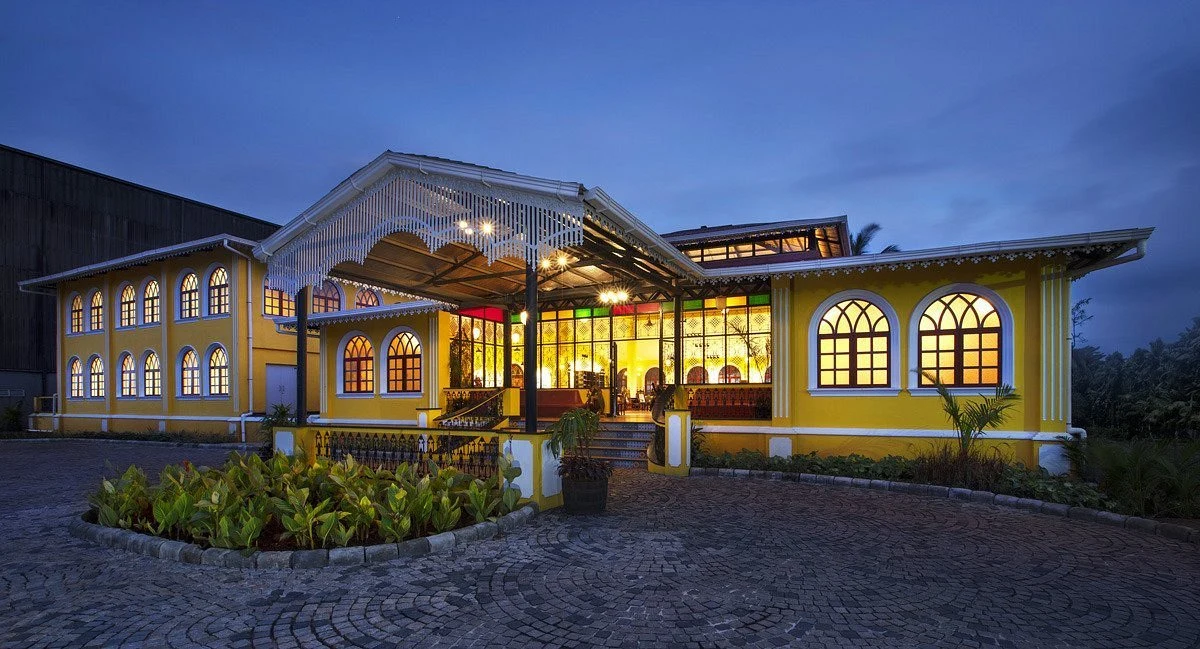
Paul John operates from the Cuncolim Industrial Area in South Goa, which sets the register immediately: this is a working distillery, not a hospitality showroom. The focus is production and the liquid itself, with the Pearl 2 Star Prestige recognition (2025) reflecting serious industry standing rather than lifestyle branding.
Paul John has received recognition including: Pearl 2 Star Prestige (2025).
Paul John is a single malt whisky distillery, not a wine producer. The credentialled category here is Indian single malt Scotch-style whisky, with the distillery earning Pearl 2 Star Prestige in 2025. Visitors should orient their tasting around the whisky range rather than any wine offering.
Paul John is located at M 21, Cuncolim Industrial Area., Cuncolim, Goa 403703, Cuncolim.
Paul John's reputation rests on Indian single malt whisky matured in Goa's tropical climate, where high temperatures and humidity accelerate wood interaction in ways that set the spirit apart from Scottish or Japanese benchmarks. The Pearl 2 Star Prestige award (2025) places it among the more formally recognised producers in its category.
M 21, Cuncolim Industrial Area., Cuncolim, Goa 403703
Cuncolim Industrial Estate