PM & Vänner
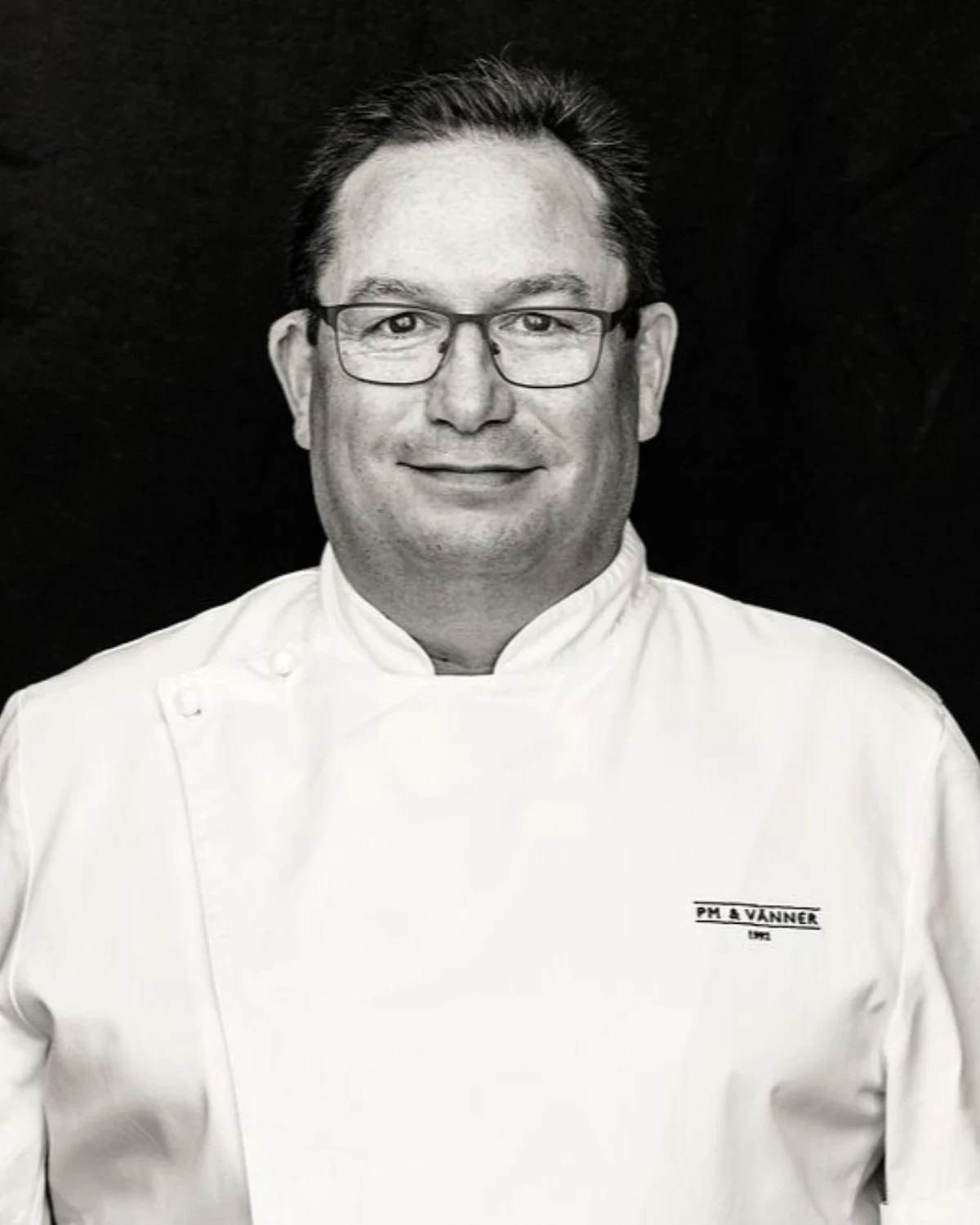
In Residence
Anders Lauring
Chef
- 01CuisineModern Småland Regional Cuisine
- 02CityVäxjö, Sweden
- 03RecognitionOne Michelin Star
- 1 Michelin Star · Michelin Guide
- Wine Spectator · Tier 3
- White Guide Nordic Restaurants - Global Masters Level · 2026
- Star Wine List · 2026
- Falstaff Restaurant - 84 Falstaff Points · 2026
- Opinionated About Dining Top Restaurants in Europe Recommended · 2026
- Wine Spectator Grand Award · 2026
- White Guide Sweden Restaurants - Global Masters Level · 2026
- La Liste Top Restaurants: 85pts · 2026
- Star Wine List · 2025
- Opinionated About Dining Top Restaurants in Europe Ranked #663 · 2025
- Wine Spectator Grand Award · 2025
- Michelin 1 Star · 2025
- La Liste Top Restaurants: 87pts · 2025
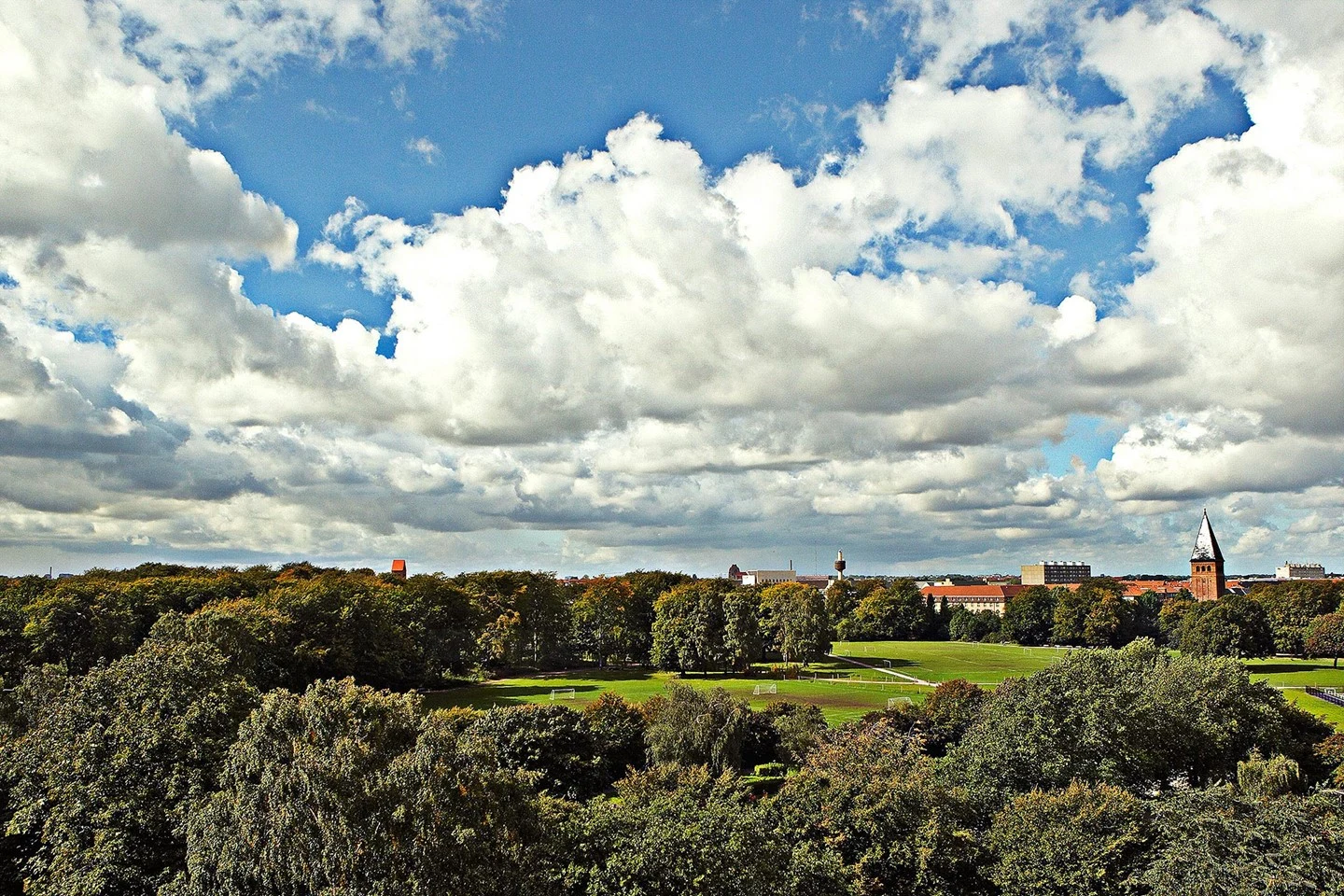
Approaching the dining room in central Växjö, the context matters before the first course does. This is not Stockholm dining transplanted south, nor Copenhagen minimalism copied across the water. Småland has its own grammar: forest, lake, preservation, smoke, acidity, dairy, game, berries, and an old habit of making scarcity taste deliberate. PM & Vänner works inside that language rather than treating regionality as decoration.
The New Nordic manifesto made purity, seasonality, ethics, and place into restaurant vocabulary across Scandinavia. In larger capitals, those ideas often became theatrical tasting-menu shorthand. In Växjö, they read differently because the surrounding geography is not an abstraction. The city sits in lake country, close to woodland and agricultural Sweden, and the restaurant’s regional Scandinavian classification places it in that broader movement: not nostalgia, but a contemporary way of giving local produce a formal dining structure.
Småland gives the New Nordic idea a sharper edge
New Nordic cooking is often misunderstood as pale plates and foraged garnish. Its stronger argument is stricter: a restaurant should be accountable to its climate and supply lines. In southern Sweden, that means a cuisine built around short growing seasons, preservation techniques, freshwater references, grains, root vegetables, mushrooms, and the clean acidity that keeps richer Nordic ingredients from becoming heavy.
PM & Vänner sits in the expensive end of that conversation, with a Michelin 1 Star in 2024 and 2025 and La Liste Top Restaurants scores of 87 points in 2025 and 85 points in 2026. Those signals matter because Växjö is not a city where international gastronomic recognition arrives by default. A Michelin-starred restaurant here has to justify a trip on substance rather than metropolitan momentum.
Chef Anders Lauring’s name belongs in the discussion as a credential, not as a biography. The more useful point is the kitchen’s category: creative Nordic cooking with a regional Scandinavian base. That combination tells an informed diner what to expect structurally: disciplined technique, seasonal constraint, and a plate architecture that should feel tied to place rather than imported luxury. At this price tier, the question is not whether the room can perform refinement. It is whether the cooking says anything specific about where it is.
Växjö’s dining culture has a smaller footprint than Sweden’s major restaurant cities, which makes its serious tables easier to read. Casual, social dining has its own local circuit, including Garden de luxe, Kafé de luxe, and Villa & Trädgård de luxe. The Michelin-starred end operates under a different pressure: it has to translate the region for diners who may be crossing Sweden for one meal.
The cellar changes the scale of the meal
The wine program is not a supporting detail here. Star Wine List recognition across 2019, 2020, 2022, 2023, 2024, 2025, and 2026 points to continuity rather than a single strong season, and the numbers are unusually large: 6,200 selections and an inventory of 20,350 bottles. For a restaurant in Växjö, that scale shifts the experience from regional dining room to serious cellar address.
The strengths also reveal the intended audience. Burgundy, Rhône, Bordeaux, Piedmont, Tuscany, Germany, Austria, Champagne, Spain, Alsace, California, and Italy place the list in a classical European frame with enough New World depth to avoid narrowness. Pricing is marked at the higher end, with many bottles above the 100-dollar equivalent, so the wine decision can shape the final bill as much as the menu. For diners who care about mature bottles, vertical depth, or sommelier-led pairings, the cellar is central to the value equation.
Staffing reinforces that point. Anders Jörgensen is listed as Wine Director, with Rubén Sanz Ramiro also named in that role, and sommeliers Arvid Lundstrom, Tonie Ingvarsson, Sebastian Svensson, and Henrik Westin attached to the program. That is a serious bench for a city of this size. It suggests a dining room where wine service is not a luxury add-on but part of the restaurant’s operating identity.
Swedish restaurant travel often concentrates on the capital, Gothenburg, and the southern corridor. Växjö complicates that map. For readers building a broader itinerary, the local context is worth pairing with our full Växjö restaurants guide, our full Växjö hotels guide, our full Växjö bars guide, our full Växjö wineries guide, and our full Växjö experiences guide. The wider Swedish map runs from city wine rooms such as 19 Glas Bar & Matsal in Stockholm to informal genre cooking at 2112 in Gothenburg, 450 Gradi in Lidingö, A Little Party in Halmstad, Aaltos Italian Grill & Garden in Uppsala, Adrian Restaurang in Borås, AGRILL in Västerås, and Albert Kök, Hotell & Konferens in Trollhättan. For a cross-Nordic creative reference, LYST, Nordic, Creative in Vejle sits in a different national tradition, while Jōdo Saké Bar in Los Angeles shows how far specialist beverage-led dining has travelled from its original contexts.
Who should make the detour
The strongest case for PM & Vänner is for diners who want a Michelin-starred meal outside Scandinavia’s predictable city circuit and who care as much about the cellar as the kitchen. The restaurant’s profile is not built on spectacle. It is built on a regional idea, a formal dining format, and a wine list with unusual reach for Växjö.
The price range places it in the occasion-dining category, so it makes less sense as a casual stop between errands and more sense as the anchor of a night in the city. Lunch and dinner service broaden its usefulness, but the editorial read is clear: this is a restaurant for travellers who want New Nordic cooking with a Småland accent and enough wine depth to turn the meal into a longer conversation.
Questions
Frequently asked
What recognition does PM & Vänner hold?
PM & Vänner holds 1 Michelin star.
Who works at PM & Vänner?
Made By profiles Anders Lauring (Chef) at PM & Vänner.
How expensive is PM & Vänner?
PM & Vänner is listed at a price level of $$$$.
Where is PM & Vänner and what does it serve?
PM & Vänner is in Storgatan/Västergatan, Växjö city center, Växjö, serving Modern Småland Regional Cuisine.
The field
How it compares
| Place | Awards | Cuisine | Notes |
|---|---|---|---|
| PM & Vänner | Michelin 1 Star | Modern Småland Regional Cuisine | Storgatan/Västergatan, Växjö city center, $$$$ |
| Geranium | Michelin 3 Stars, World's 50 Best | Modern New Nordic Pescatarian | Copenhagen |
| Jungsik New York | Michelin 3 Stars, World's 50 Best | Modern Korean Fine Dining | New York City |
| Le Calandre | Michelin 3 Stars, World's 50 Best | Modern Italian Fine Dining | Rubano |
| Myojaku | Michelin 3 Stars, World's 50 Best | Modern Minimalist Kaiseki | Tokyo |
| Paco Roncero | Michelin 2 Stars | Avant-Garde Spanish Fine Dining | Madrid |
| Zén | Michelin 3 Stars, World's 50 Best | Neo-Nordic with Japanese Influences | Singapore |
In residence
Similar places
Modern New Nordic Pescatarian
Geranium
Copenhagen, Denmark
★★★ · 50 Best
Modern Korean Fine Dining
Jungsik New York
New York City, United States
★★★ · 50 Best
Modern Italian Fine Dining
Le Calandre
Rubano, Italy
★★★ · 50 Best
Modern Minimalist Kaiseki
Myojaku
Tokyo, Japan
★★★ · 50 Best
Avant-Garde Spanish Fine Dining
Paco Roncero
Madrid, Spain
★★
Neo-Nordic with Japanese Influences
Zén
Singapore, Singapore
★★★ · 50 Best