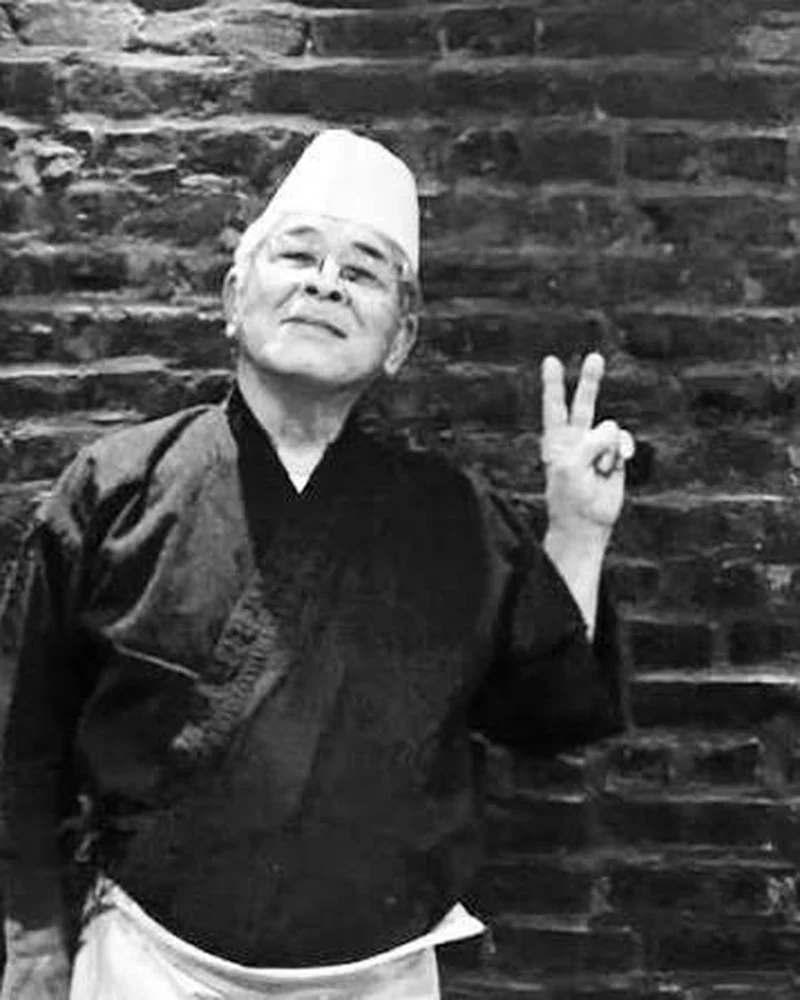
Norihiro Ishizuka, chef at Raku (NYC) in New York City, centers the restaurant on handmade udon and disciplined bowls.
- Opinionated About Dining Top Restaurants in North America Recommended · 2026
Handmade udon at the center
The dough takes its authority from repetition. Norihiro Ishizuka, chef at Raku (NYC) in New York City, works from udon as the defining material of the restaurant, not as a supporting part of a larger Japanese menu. His biography is spare on lineage, but clear on discipline: his cooking begins with noodles, with pressure, restraint, and the repeated handling that turns a plain mixture into something with pull. Raku gives that work a narrow, useful frame. The room offers Japanese small plates, but the kitchen’s grammar returns to handmade udon, served hot or cold, in bowls that declare their structure without ornament. Ishizuka’s role here is not built around a broad display of technique. It is built around one form, made again and again, until the noodle can carry broth, beef, egg, miso, tempura, or dipping sauce and still remain the reason the bowl exists. How long he has held this station is not something the restaurant states. The visible lineage is the method itself, a craft that rewards patience more than novelty and makes consistency a daily test at the bench.
Bowls measured by the noodle
At Raku, the udon is dense, bouncy, and chewy, language that belongs to the hand as much as to the palate. Those words point to resistance, hydration, rest, and cut, even when the house does not turn the process into theatre. The named bowls carry the program. Curry udon sets the noodle against weight and spice. Niku udon brings beef short ribs and honeycomb tripe into the same structure. Gyunan Udon uses USDA Prime Zabuton beef, a detail that matters because the meat does not displace the noodle; it tests whether the bowl can hold richness without losing its center. Tantan Udon, with spicy miso pork, works another edge of the same problem. Zaru Udon cools the form down, pairing chilled noodles with shiso leaf tempura and dipping sauce, where texture has fewer places to hide. Ebiten Udon adds shrimp tempura and wakame seaweed. Kitsune Udon brings sweet tofu skin. Ankake Udon thickens the soup with egg. The range is not a scatter of signatures. It is a set of conditions for the same material.
The counter, the room, the pass
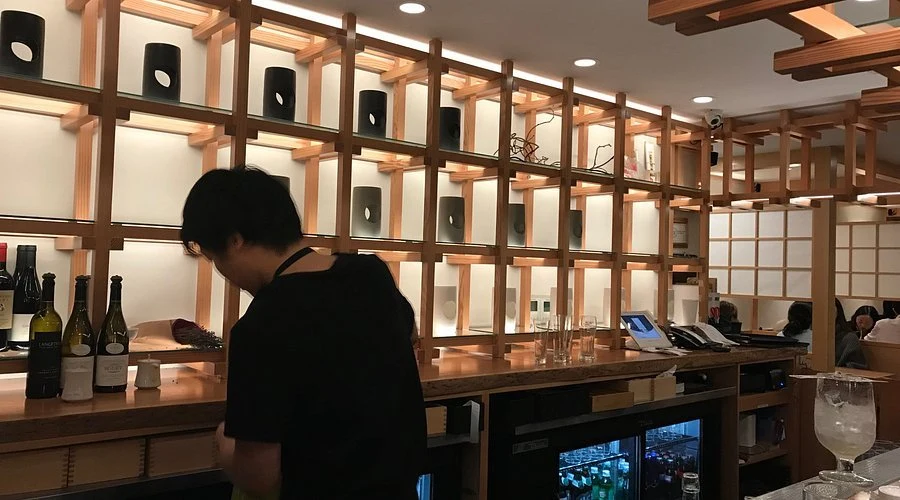
The SoHo address is a minimal room on MacDougal Street, warm without excess, busy enough that the craft happens in a steady cadence rather than a hushed one. At the pass, the bowls leave with their purpose already named: hot, cold, dipped, thickened, spiced, beefed, tempura set to the side or carried into broth. The room’s restraint suits the food. Nothing needs to compete with the white weight of the noodles in the bowl. Small plates widen the table without changing the argument: chicken Tatsuta-age, tamago sando, ankimo, vegetable gyoza, pork gyoza, atsugiri bacon. They are not the thesis. The bench work remains in the udon, and the counter reads it in the small delays between order, pull, broth, garnish, and handoff. The restaurant has other New York locations, including East Village, Midtown, and Brooklyn, but the craft holds its line through the same central material.
A narrow craft with room inside it
Raku’s recognition in 2025 placed the restaurant at number 391 on Opinionated About Dining’s Leading Restaurants in North America, a numerical marker that sits more cleanly beside the work than any louder claim would. Ishizuka has made a New York City restaurant where udon is treated as a discipline. Follow the next bowl by its name, because the kitchen’s argument is always specific: curry udon, Niku udon, Gyunan Udon, Tantan Udon.
Questions
Frequently asked
Who is the chef at Raku (NYC)?
Norihiro Ishizuka is the chef at Raku (NYC) in New York City.
What is Raku known for?
Raku centers its menu on handmade udon, served hot or cold in bowls, with Japanese small plates alongside it.
What kinds of udon bowls does Raku serve?
The menu includes Curry Udon, Niku Udon with beef short ribs and honeycomb tripe, Gyunan Udon with USDA Prime Zabuton beef, Tantan Udon with spicy miso pork, Zaru Udon with shiso leaf tempura and dipping sauce, Ebiten Udon with shrimp tempura and wakame seaweed, Kitsune Udon with sweet tofu skin, and Ankake Udon with egg.
Has Raku received any recognition?
In 2025, Raku was ranked number 391 on Opinionated About Dining’s Leading Restaurants in North America.
The field
How it compares
| Place | Cuisine | Awards | Notes |
|---|---|---|---|
| Raku (NYC) | Sushi | · | · |
| Atomix | Modern Korean Tasting Menu | Michelin 2 Stars, World's 50 Best | New York City |
| Daniel | Modern French Fine Dining | Michelin 1 Star, World's 50 Best | New York City |
| Eleven Madison Park | Contemporary Plant-Based Fine Dining | Michelin 3 Stars, World's 50 Best | New York City |
| Jungsik New York | Modern Korean Fine Dining | Michelin 3 Stars, World's 50 Best | New York City |
| Kabawa | Modern Caribbean Prix Fixe | World's 50 Best | New York City |
| Le Bernardin | French Seafood Fine Dining | Michelin 3 Stars, World's 50 Best | New York City |
In residence
Similar places
Modern Korean Tasting Menu
Atomix
New York City, United States
★★ · 50 Best
Modern French Fine Dining
Daniel
New York City, United States
★ · 50 Best
Contemporary Plant-Based Fine Dining
Eleven Madison Park
New York City, United States
★★★ · 50 Best
Modern Korean Fine Dining
Jungsik New York
New York City, United States
★★★ · 50 Best
Modern Caribbean Prix Fixe
Kabawa
New York City, United States
50 Best
French Seafood Fine Dining
Le Bernardin
New York City, United States
★★★ · 50 Best