Where the Runway Ends and the Bar Begins
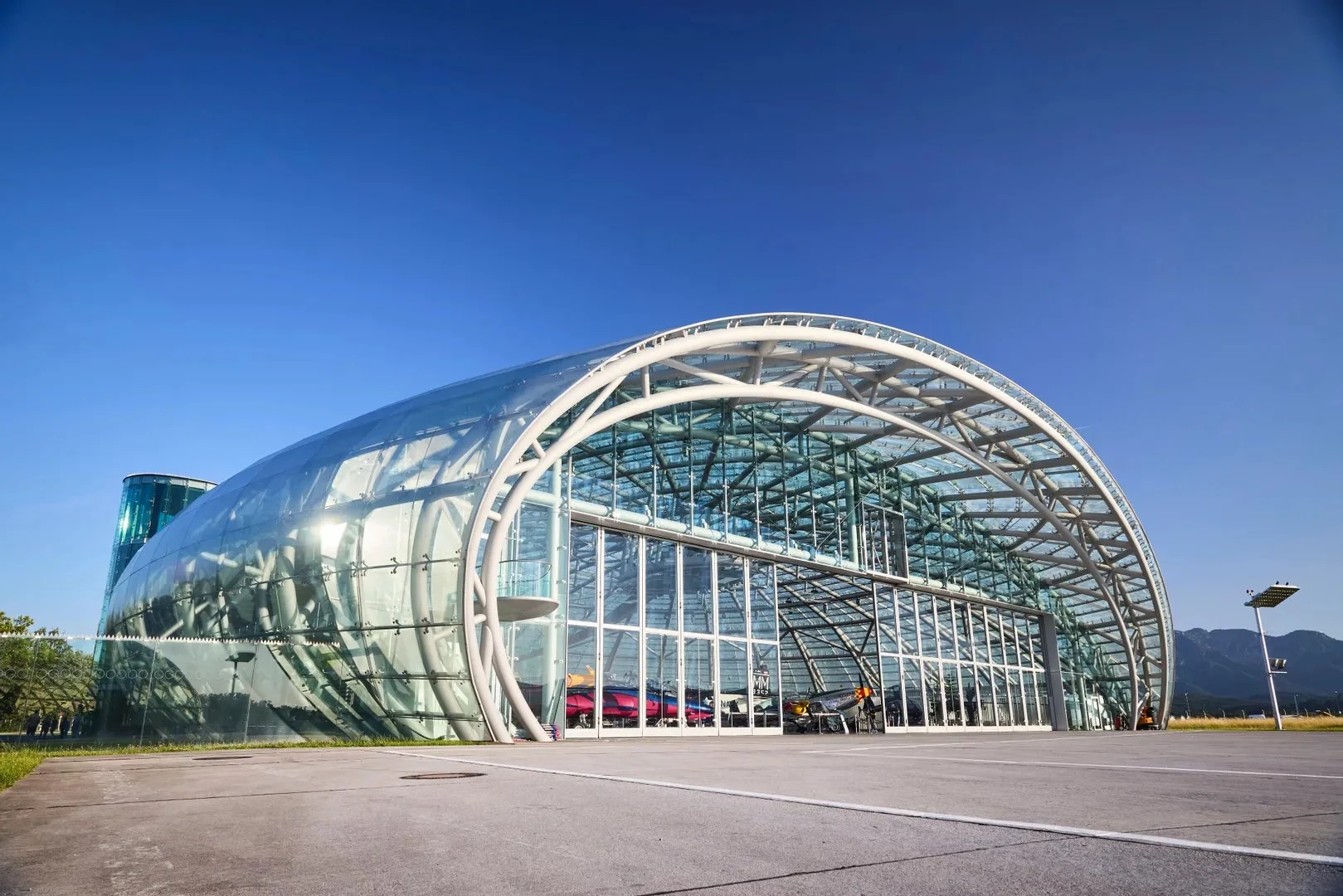
Salzburg's airport edge is not where you expect to find a serious cocktail program. The approach along Wilhelm-Spazier-Straße 7a deposits you at a structure that reads less like a hospitality venue and more like a museum of controlled velocity: a vast glass-and-steel hangar enclosing vintage aircraft, helicopters, and Formula One machinery from Red Bull's motorsport archive. The building itself does the atmospheric work before a single drink is poured. Glass panels run floor to ceiling, daylight pours across polished concrete, and the silhouette of a suspended aircraft sets the visual register well above anything you'd find in the city's baroque old town. This is a venue where the container and the content are in deliberate conversation with each other.
The Red Bull brand operates a specific hospitality logic here: the hangar is not an afterthought attached to a museum, nor is the museum a backdrop for a bar. Both functions carry equal weight, which means the drinks program has to justify its place inside a space of this ambition. That pressure tends to produce better cocktail menus, and the bar at Hangar-7 takes its position in Salzburg's premium tier seriously.
The Sunday email
Read about the people behind bars like Red Bull Hangar-7 in the Sunday email.
Every Sunday we send a lead story and up to four more about the chefs, winemakers, sommeliers and hoteliers behind the restaurants, bars, wineries and hotels we cover.
Recent stories
Free. One email a week, and you can unsubscribe from any issue.
The Cocktail Program in Context
Austria's bar culture has developed along two distinct tracks over the past decade. Vienna claims the denser scene, with venues like Club U in Vienna anchoring a tradition that runs from grand café culture through to contemporary cocktail technique. Outside the capital, the picture is more fragmented: Salzburg's tourist-heavy footfall creates demand but not always the conditions for sustained technical ambition. Most bars here calibrate toward accessibility rather than craft depth.
Hangar-7 operates at a different register. The Red Bull infrastructure brings international visitors who arrive with calibrated expectations from Berlin, London, or São Paulo, and the bar program has to perform against that cosmopolitan comparable set rather than against Salzburg's local bar average. The result is a cocktail menu that leans into the venue's aviation and motorsport identity without reducing itself to themed novelty. The drinks reference speed, altitude, and precision as conceptual anchors rather than literal garnish choices, which places Hangar-7 inside a broader European trend: bars that use a strong conceptual frame to justify technical ambition rather than relying on heritage or neighbourhood prestige.
For comparison within the Austrian alps corridor, venues like Das O's in Mondsee and Hotel Schöne Aussicht in Sölden occupy the design-led hospitality tier, where atmosphere and drinks quality reinforce each other. Hangar-7 sits in that same category but with a scale and brand backing that neither of those venues can match. For wine-focused alternatives in the broader region, Carinthia Weinbar in Velden am Wörthersee, Haschka Weinbar in Linz, and Mazerat Wein.Wirt in Kufstein represent the specialist end of Austrian drinking culture, though their approach and setting share little with what Hangar-7 is doing.
The Hangar as a Drinking Space
Scale matters here in ways it rarely does in a conventional bar. Most cocktail venues work with compression: low ceilings, dim lighting, and close seating that create intimacy and focus attention on the glass. Hangar-7 inverts this entirely. The ceiling soars, the aircraft dominate the sightlines, and the bar occupies its corner of a space designed around objects that generate their own gravitational pull. Drinking here means accepting that your cocktail will compete visually with a 1960s helicopter and a Formula One chassis from a championship-winning season.
That is not a disadvantage. It changes the rhythm of an evening. Conversation extends into the space, curiosity pulls people between the bar and the exhibits, and the pace slows in the way that large architectural spaces tend to slow human movement. The bar at Hangar-7 functions as an anchor rather than a destination in isolation: you return to it between circuits of the collection, which means the bartenders work across a longer guest experience than their counterparts in a standard cocktail bar format.
For visitors accustomed to Salzburg's more traditional drinking options, including the beer-garden tradition represented by Augustiner Bräu Mülln just across the city, Hangar-7 represents a sharp tonal shift. One is about deep local roots and volume; the other is about international spectacle and precision. Both are worth your time, but they are not interchangeable.
Questions
Frequently asked
Who works at Red Bull Hangar-7?
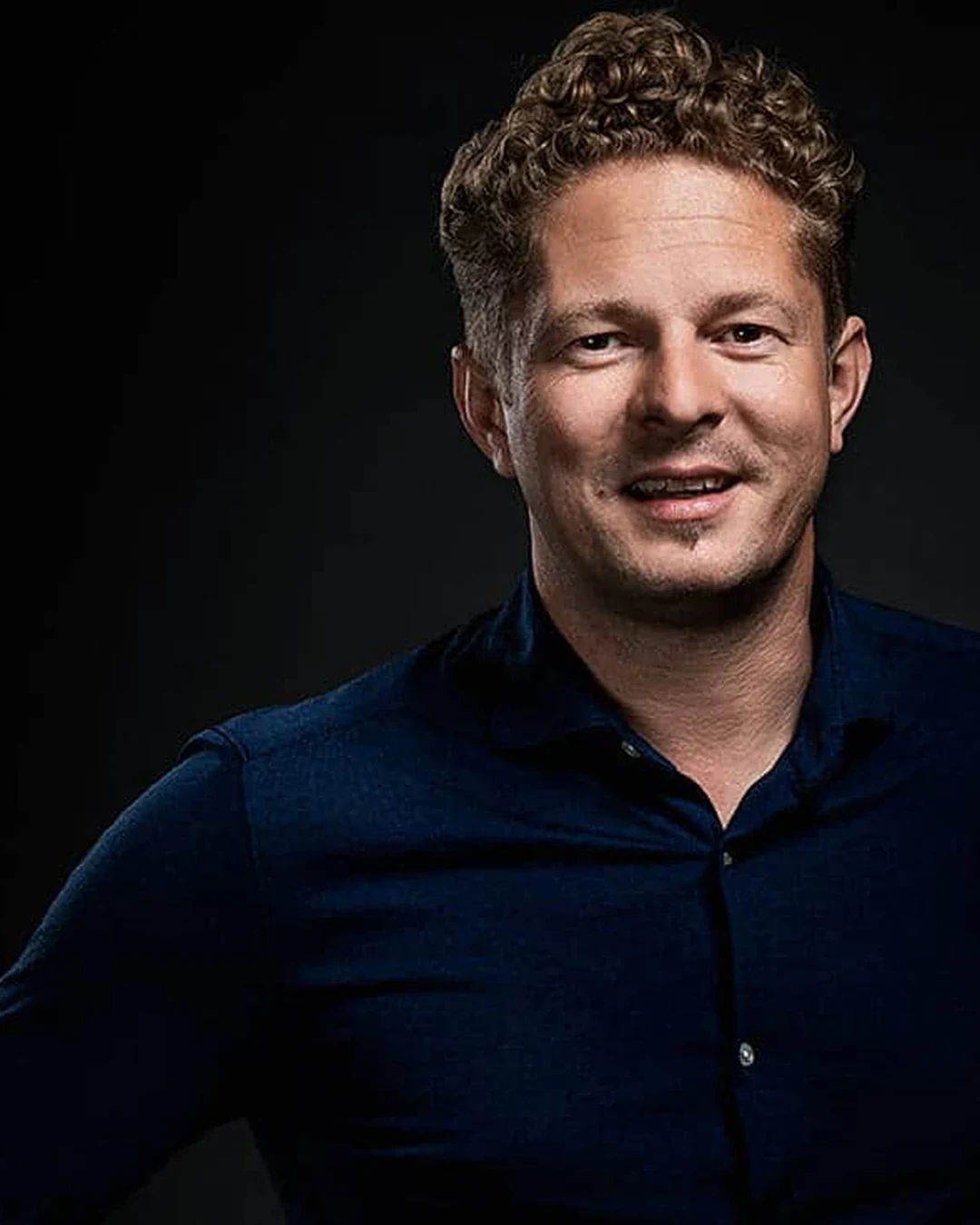
Made By profiles Martin Klein (Chef) at Red Bull Hangar-7.
How expensive is Red Bull Hangar-7?
Red Bull Hangar-7 is listed at a price level of $$$$.
The field
How it compares
| Place | Notes | Awards |
|---|---|---|
| Red Bull Hangar-7 | Himmelreich, $$$$ | · |
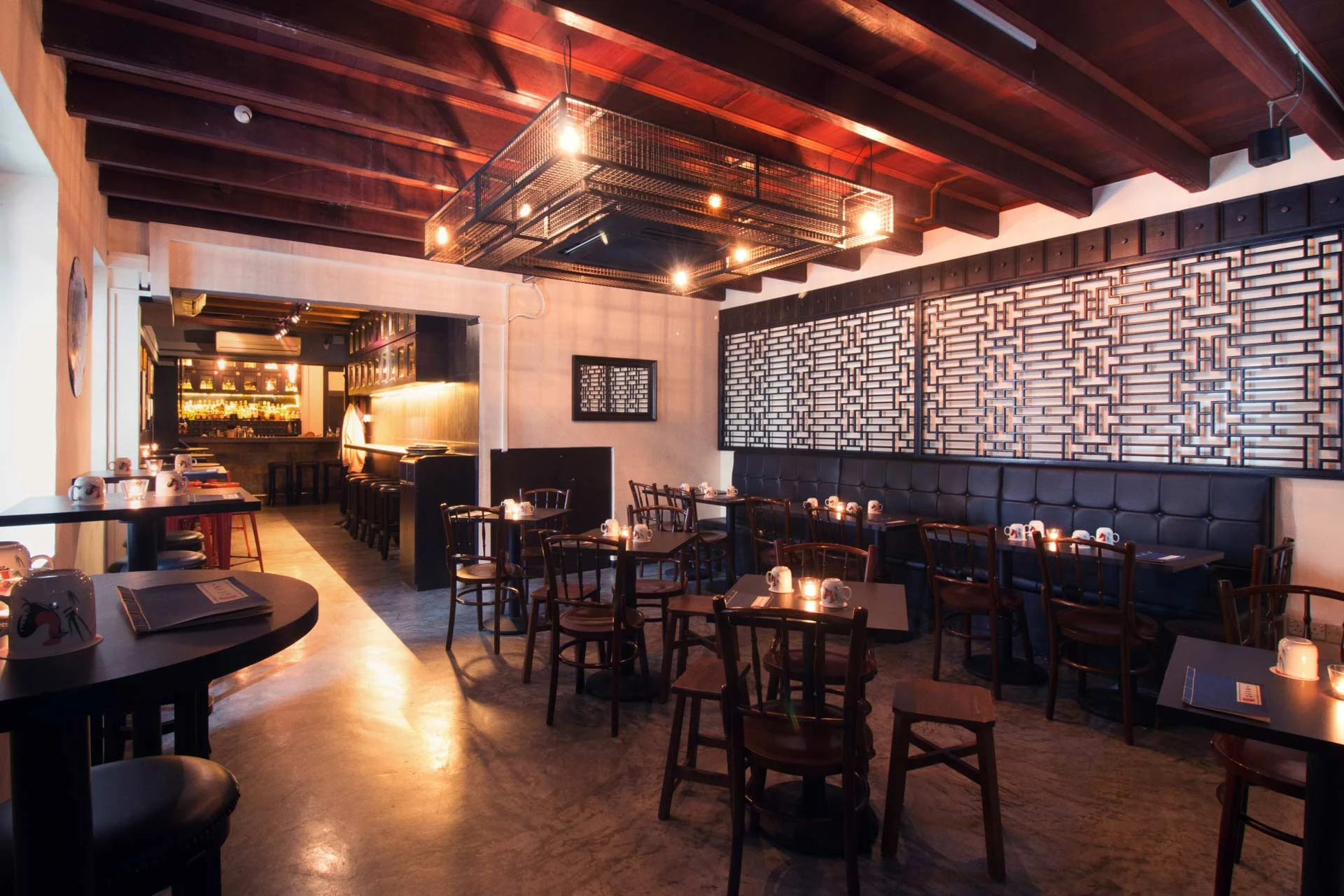
| 28 HongKong Street | Singapore | 50 Best |
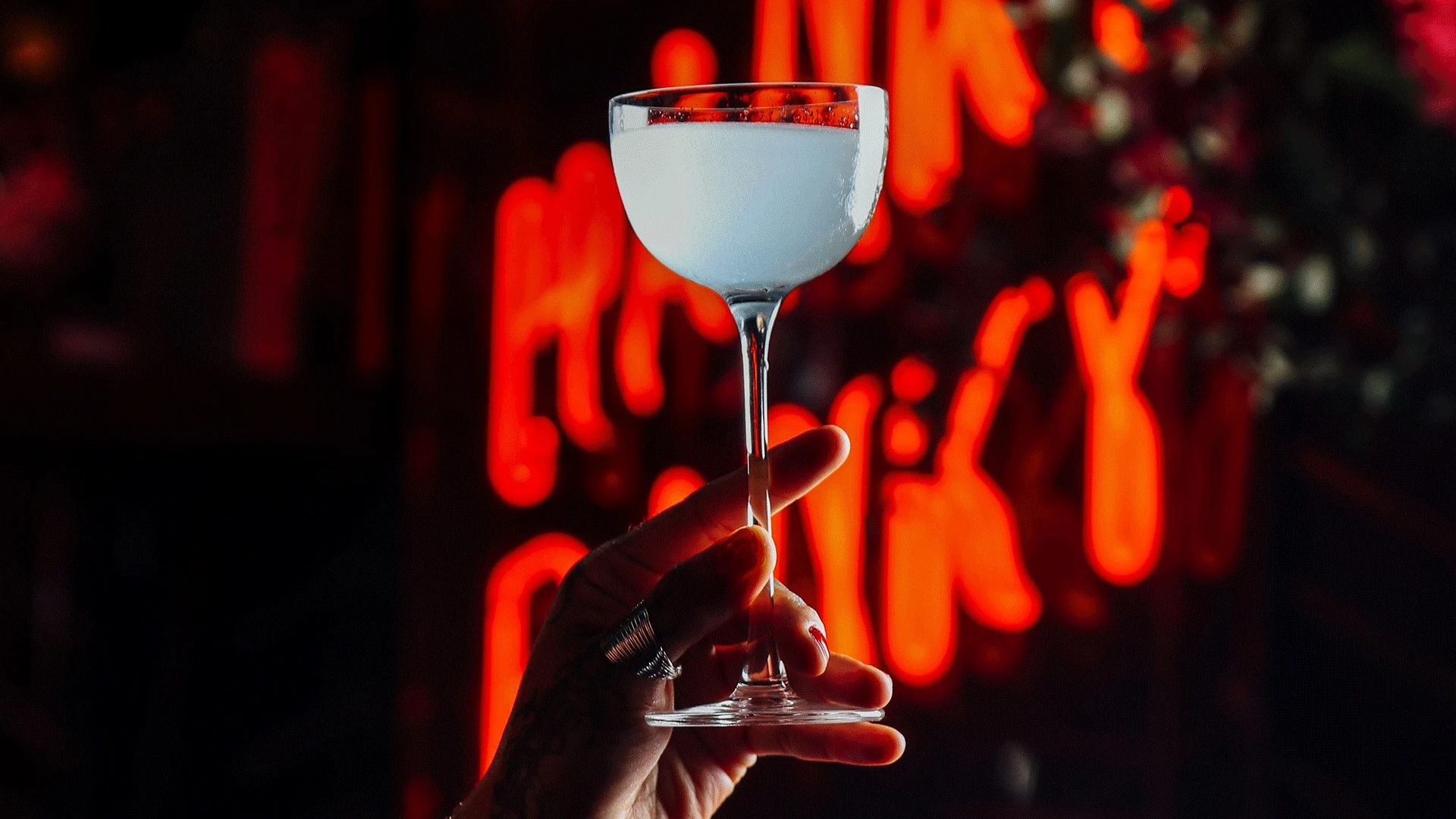
| Hanky Panky | Mexico City | 50 Best |
| Nutmeg & Clove | Singapore | 50 Best |
| The Cambridge Public House | Paris | 50 Best |
| The Connaught Bar | London | 50 Best |
| The Keefer Bar | Vancouver | 50 Best |
Similar places
The Sunday email
Read about the people behind bars like Red Bull Hangar-7 in the Sunday email.
Every Sunday we send a lead story and up to four more about the chefs, winemakers, sommeliers and hoteliers behind the restaurants, bars, wineries and hotels we cover.
Recent stories
Free. One email a week, and you can unsubscribe from any issue.