roku
- 01CuisineEdo-mae Sushi with Premium Sake Selection
- 02CityTokyo, Japan
- Michelin Bib Gourmand · Michelin Guide
- Michelin Plate · 2026
- Michelin Bib Gourmand · 2025
- Michelin Bib Gourmand · 2024
Six Seats, One Counter: The Logic of Small-Format French Dining in Tokyo
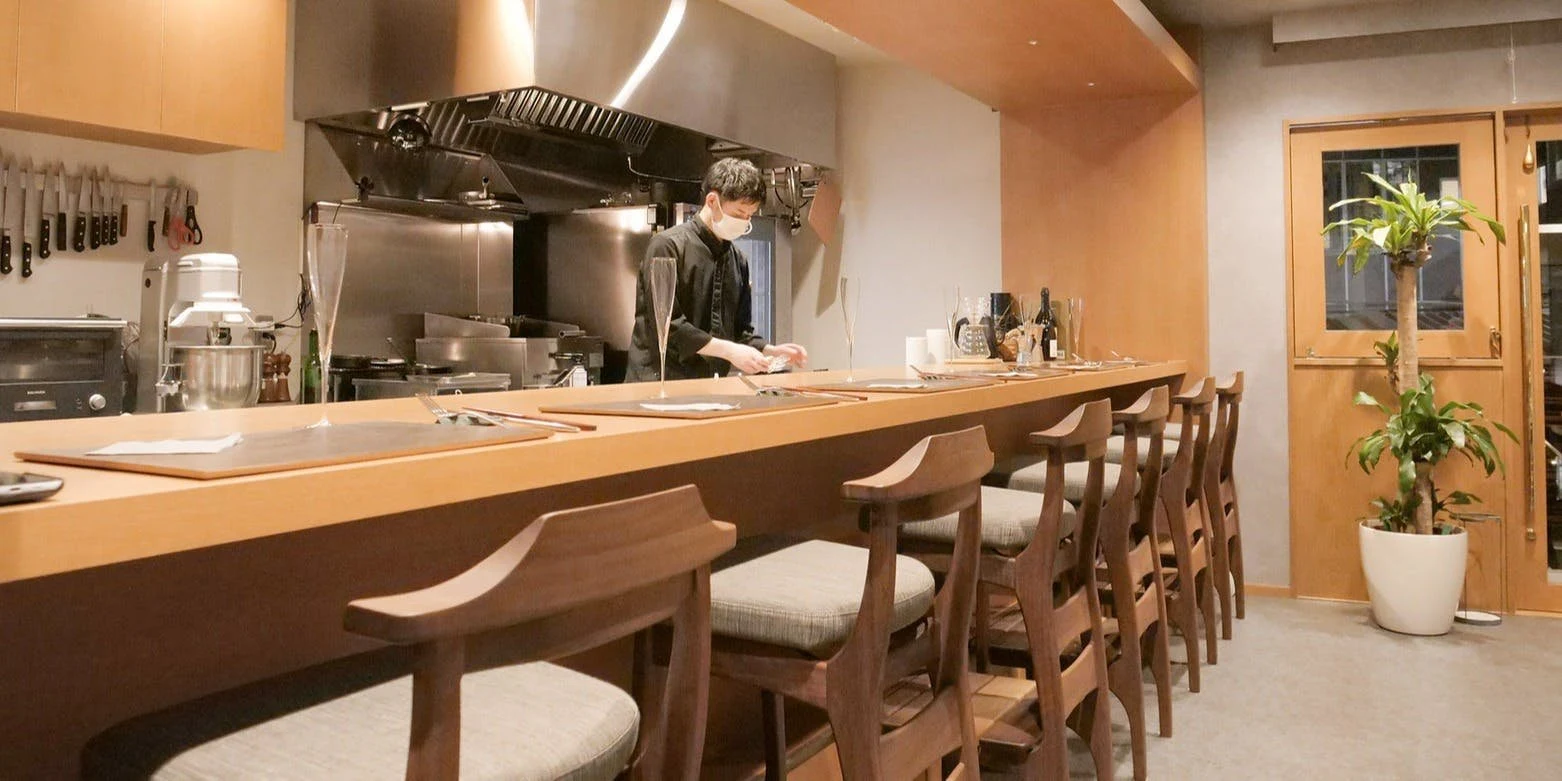
The compression of French cuisine into a counter format is not new to Tokyo, but it remains a discipline that separates serious kitchens from fashionable ones. The city's French restaurant tier has stratified sharply over the past decade: on one end sit the white-tablecloth maisons with full brigade kitchens and deep wine lists; on the other, a smaller cohort of counter-format addresses where the entire meal is orchestrated by one or two people working directly in front of the guest. L'Effervescence and Sézanne operate at the formal end of that spectrum, with full rooms and international recognition at the Michelin star level. roku, in Yoyogi, operates at the opposite scale entirely. It is a six-seat restaurant in Tokyo’s Yoyogi district, led by Chef Cheung Chi Shing, and known for an Edo-mae Sushi with Premium Sake Selection format.
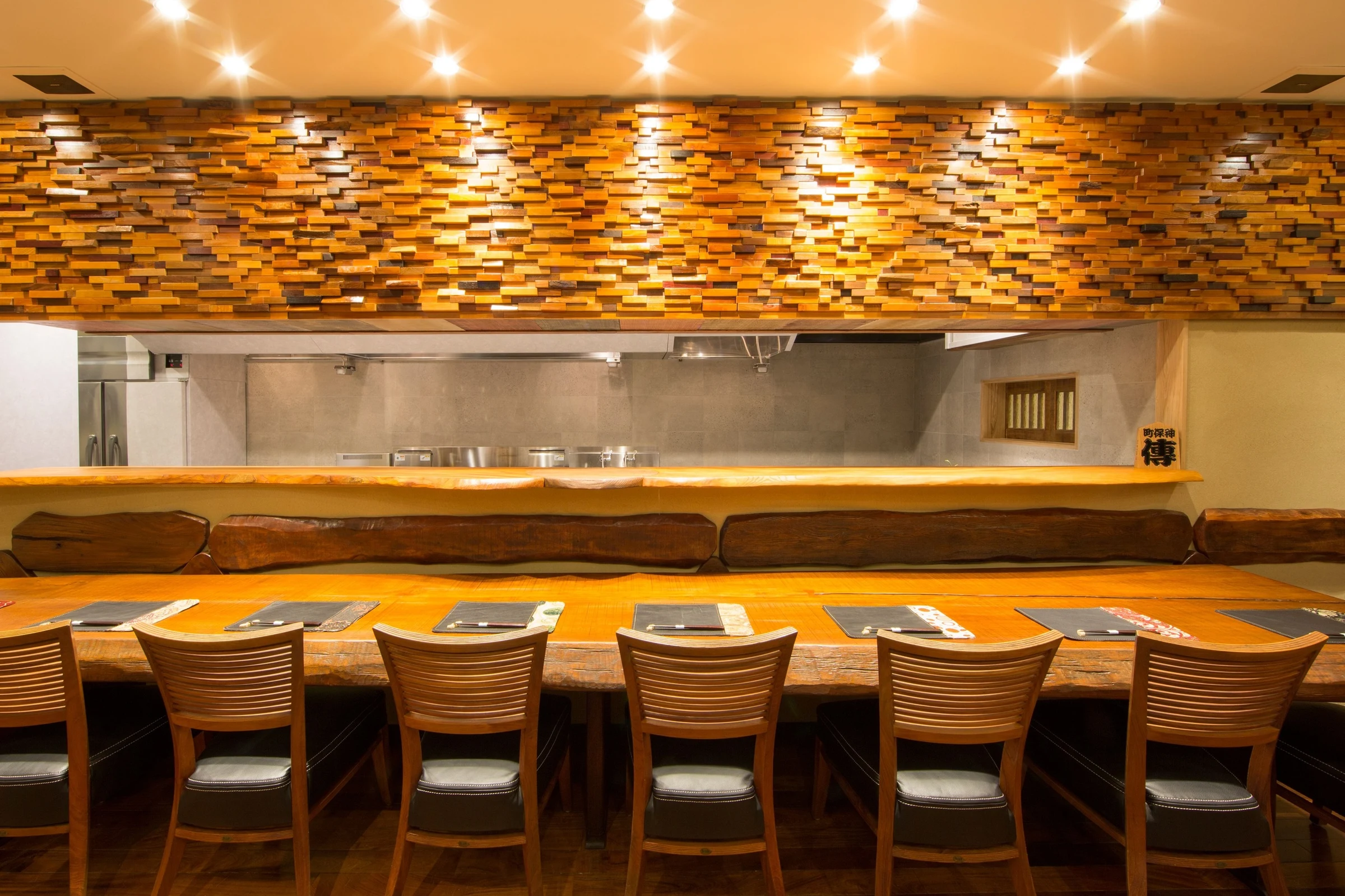
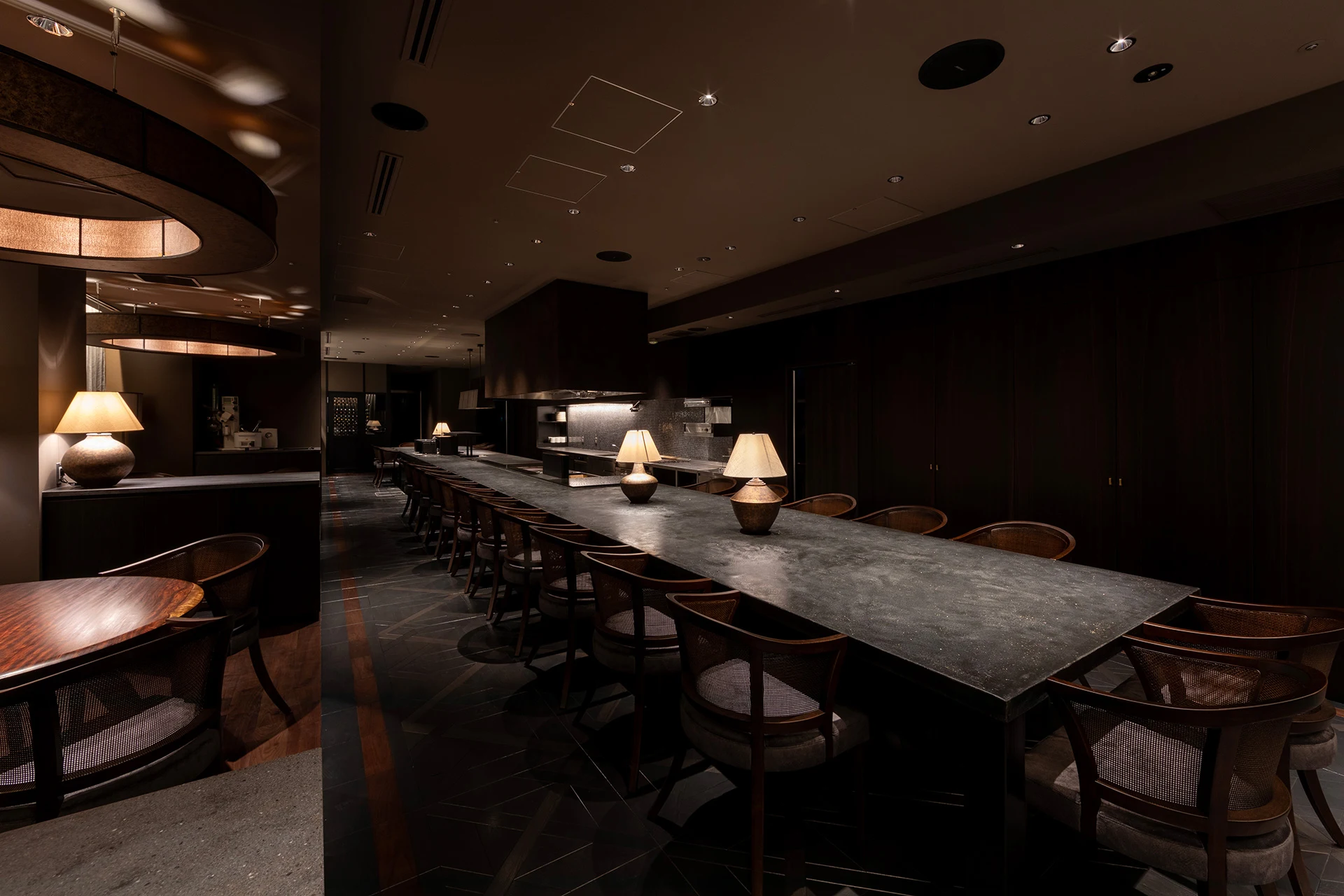
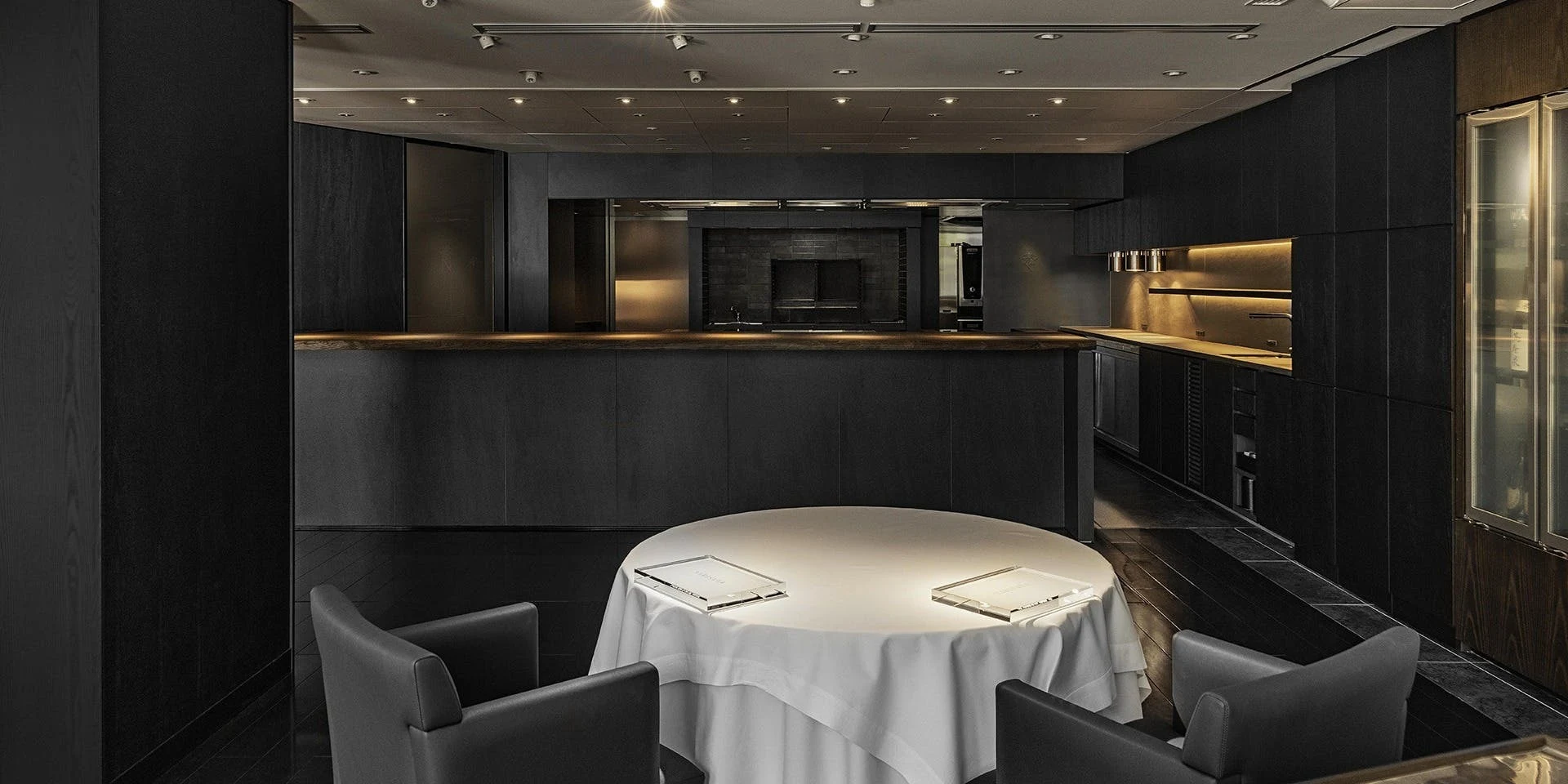
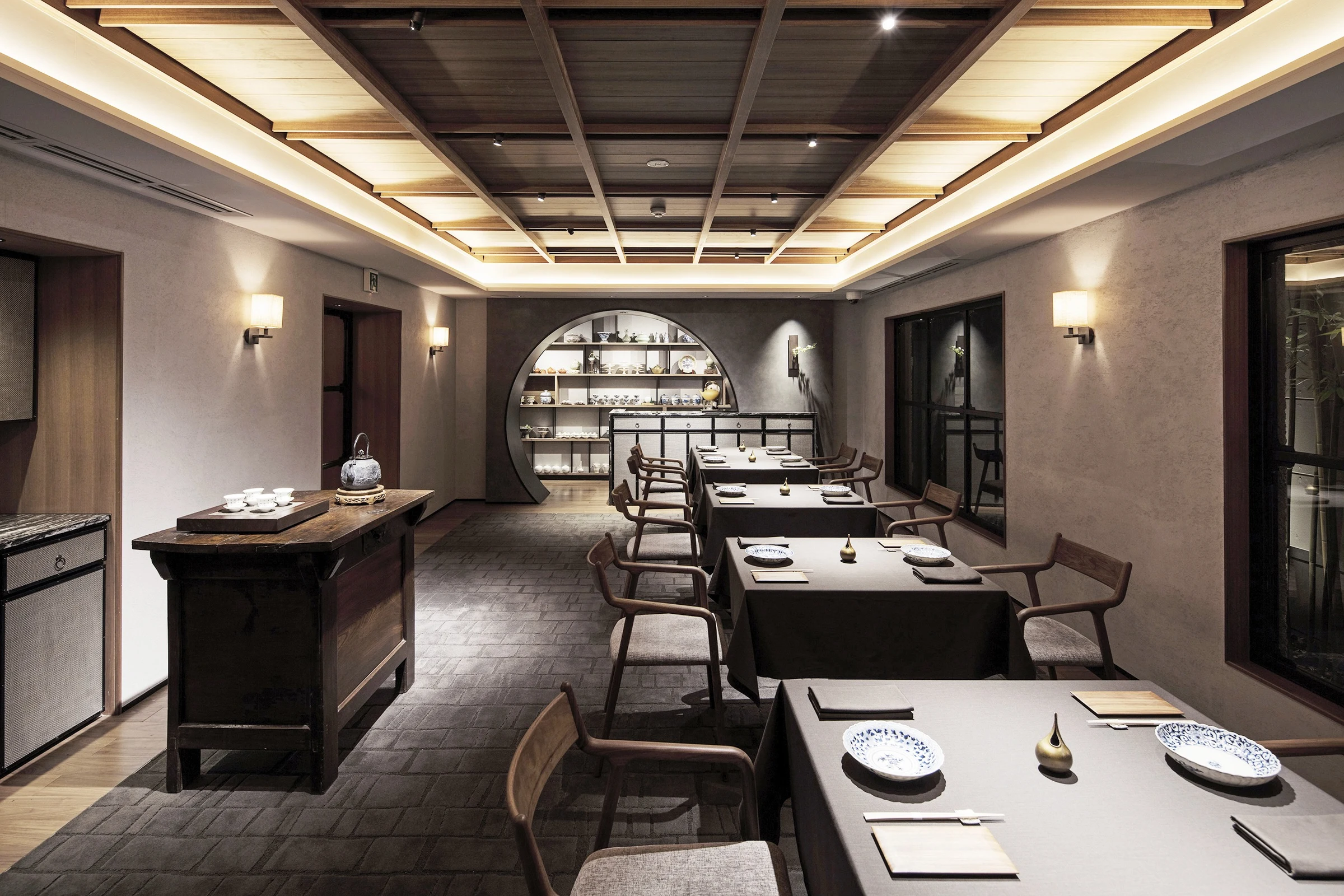
The counter seats six, a constraint that shapes everything about how the meal unfolds. In kaiseki tradition, the counter has long been the site of direct exchange between chef and diner; French cuisine imported that architecture later, but in Tokyo it has taken root particularly deeply. At a six-seat counter, the sequencing of courses is not managed by a brigade but felt in real time by everyone in the room. There is no buffer between kitchen decisions and the guest's plate. That proximity is not incidental to the experience, it is the experience.
The Structured Meal at roku: Fermentation as a French Dialect
Prix fixe format, as practiced at this scale, demands a different kind of curation than a large à la carte kitchen. Every course must carry weight; filler dishes become audible at a six-seat counter in a way they never would in a room of forty. At roku, the structural discipline of the fixed menu is reinforced by a consistent ingredient logic: fermented seasonings, koji and miso specifically, run through the kitchen as a recurring technical device. These are not garnish-level flourishes. Koji and miso belong to Japanese fermentation culture at a foundational level, and deploying them inside a French framework produces a specific result: dishes that read as French in structure but have a depth of umami and acidity that standard European technique does not generate on its own.
This approach places roku within a wider movement in Tokyo's French dining scene, where the most considered kitchens have stopped treating Japanese ingredients as local colour and started treating them as primary technique. ESqUISSE and Florilège have both built recognition on versions of this synthesis, at higher price points and with full Michelin star recognition. roku holds the Bib Gourmand designation from Michelin in both 2024 and 2025, which signals value at quality rather than a concession on either front.
Supply Chain as Editorial Statement
Where a restaurant sources its ingredients is, in a well-run kitchen, an argument about what the food should taste like. At roku, the supply line runs directly to Nagano: edible wild plants arrive from the chef's mother, and the wooden serving trays are made by the chef's father. This is not sentimentality dressed as sourcing policy. In practical terms, it means the kitchen has access to foraged material that does not pass through wholesale distribution, and the serving vessels are handmade rather than purchased from a catering supplier. The effect on the meal is tangible in two directions: the ingredients carry a freshness and specificity that farmed produce cannot replicate, and the tactile quality of the trays changes the way dishes are presented and received.
Nagano, as a producing region, is worth contextualising. The prefecture sits at altitude in the Japanese Alps, with growing conditions that favour plants with concentrated flavour and a short foraging window. Wild plants from that environment have a different intensity than cultivated equivalents. Bringing them into a French-structured menu in Yoyogi creates a direct channel between mountain terroir and urban table, a supply logic that mirrors, in miniature, what the most committed farm-to-counter operations in Europe have pursued for a generation.
Dessert and the Division of Labour
The meal at roku divides the kitchen responsibility in a specific way: the savoury courses belong to Chef Cheung Chi Shing, while dessert is the domain of the proprietress of the house. In structured multi-course dining, the handoff between savoury and pastry is one of the most consequential moments of a meal. At larger restaurants, this transition is managed by a separate pastry brigade; at a six-seat counter, it is a personal transfer. The dessert course is handled by the proprietress, while Chef Cheung Chi Shing leads the savoury side of the meal.
Placing roku in Tokyo's French Tier
Tokyo's French restaurant scene is broad enough to sustain multiple competitive tiers. At the summit, Château Restaurant Joël Robuchon represents the fully formalised maison model imported directly from France. A tier below, addresses like L'Effervescence and Sézanne operate with star recognition and full-room formats. roku sits in a distinct third tier: counter-only, Bib Gourmand-recognised, and priced at ¥¥¥ rather than the ¥¥¥¥ of its starred peers. That tier has real advantages for a certain kind of diner. The meal is not cheaper because the quality is lower; the Michelin recognition argues otherwise. It is cheaper because the format is stripped of the overhead costs that a full dining room requires.
For broader reference across Japan's French and contemporary dining scene, HAJIME in Osaka and akordu in Nara each represent versions of European technique adapted to Japanese contexts at different scales and price points. Internationally, the counter-format French model has precedents in Hotel de Ville Crissier in Crissier and Les Amis in Singapore, though both operate at considerably larger scale and higher price points than roku.
Practical Planning
roku is located at 4 Chome-1-6, Yoyogi, Shibuya, Tokyo 151-0053, on the ground floor. Yoyogi sits between Shinjuku and Harajuku, accessible from Yoyogi Station on the JR Yamanote Line. Google reviewers rate the restaurant 4.5 stars from 50 reviews. Michelin Bib Gourmand recognition in consecutive years (2024 and 2025) indicates consistent kitchen performance rather than a single notable year.
| Venue | Format | Price Tier | Michelin Recognition | Seats |
|---|---|---|---|---|
| roku | Counter, prix fixe | ¥¥¥ | Bib Gourmand 2024, 2025 | 6 |
| L'Effervescence | Full room, tasting menu | ¥¥¥¥ | Star-level | Not specified |
| Florilège | Counter and tables, tasting | ¥¥¥¥ | Star-level | Not specified |
| ESqUISSE | Full room, tasting menu | ¥¥¥¥ | Star-level | Not specified |
For dining elsewhere in Japan, Gion Sasaki in Kyoto, Goh in Fukuoka, 1000 in Yokohama, and 6 in Okinawa represent the range of considered cooking across the country.
Questions
Frequently asked
What recognition does roku hold?
roku holds a Michelin Bib Gourmand.
How expensive is roku?
roku is listed at a price level of $$$$.
Where is roku and what does it serve?
roku is in Shibuya, Tokyo, serving Edo-mae Sushi with Premium Sake Selection.
The field
How it compares
| Place | Cuisine | Notes | Awards |
|---|---|---|---|
| roku | Edo-mae Sushi with Premium Sake Selection | Shibuya, $$$$ | · |
| Den | Modern Japanese Kaiseki | Tokyo | Michelin 2 Stars, World's 50 Best |
| Florilège | Modern French-Japanese Plant-Based Fine Dining | Tokyo | Michelin 2 Stars, World's 50 Best |
| Narisawa | Modern Japanese Satoyama Fine Dining | Tokyo | Michelin 2 Stars, World's 50 Best |
| Quintessence | Modern French Fine Dining | Tokyo | Michelin 3 Stars |
| Sazenka | Modern Chinese Fine Dining | Tokyo | Michelin 3 Stars, World's 50 Best |
| Sézanne | Modern French Fine Dining | Tokyo | Michelin 3 Stars, World's 50 Best |
Similar places
Modern Japanese Kaiseki
Den
Tokyo, Japan
★★ · 50 Best
Modern French-Japanese Plant-Based Fine Dining
Florilège
Tokyo, Japan
★★ · 50 Best
Modern Japanese Satoyama Fine Dining
Narisawa
Tokyo, Japan
★★ · 50 Best
Modern French Fine Dining
Quintessence
Tokyo, Japan
★★★
Modern Chinese Fine Dining
Sazenka
Tokyo, Japan
★★★ · 50 Best
Modern French Fine Dining
Sézanne
Tokyo, Japan
★★★ · 50 Best