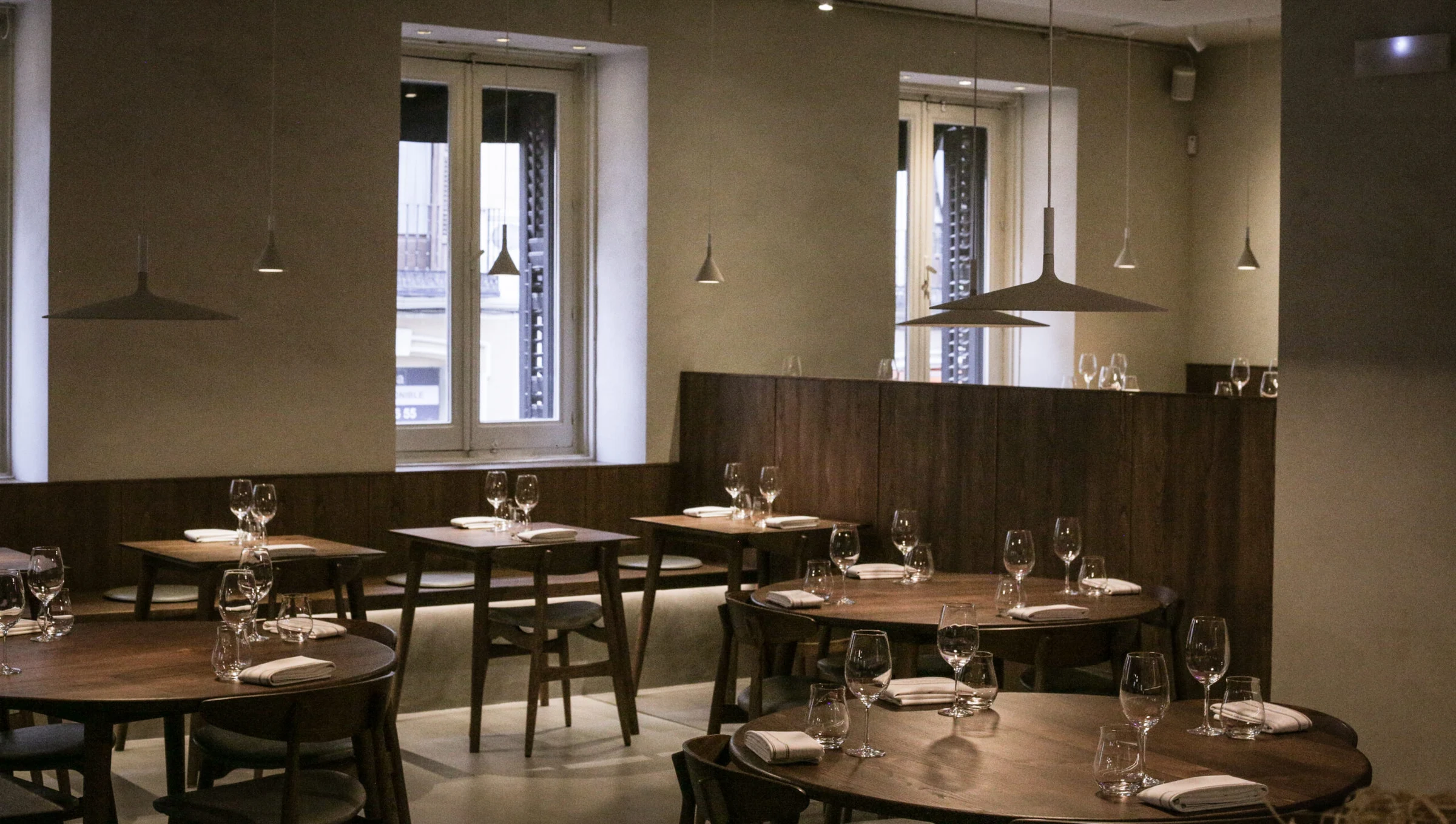
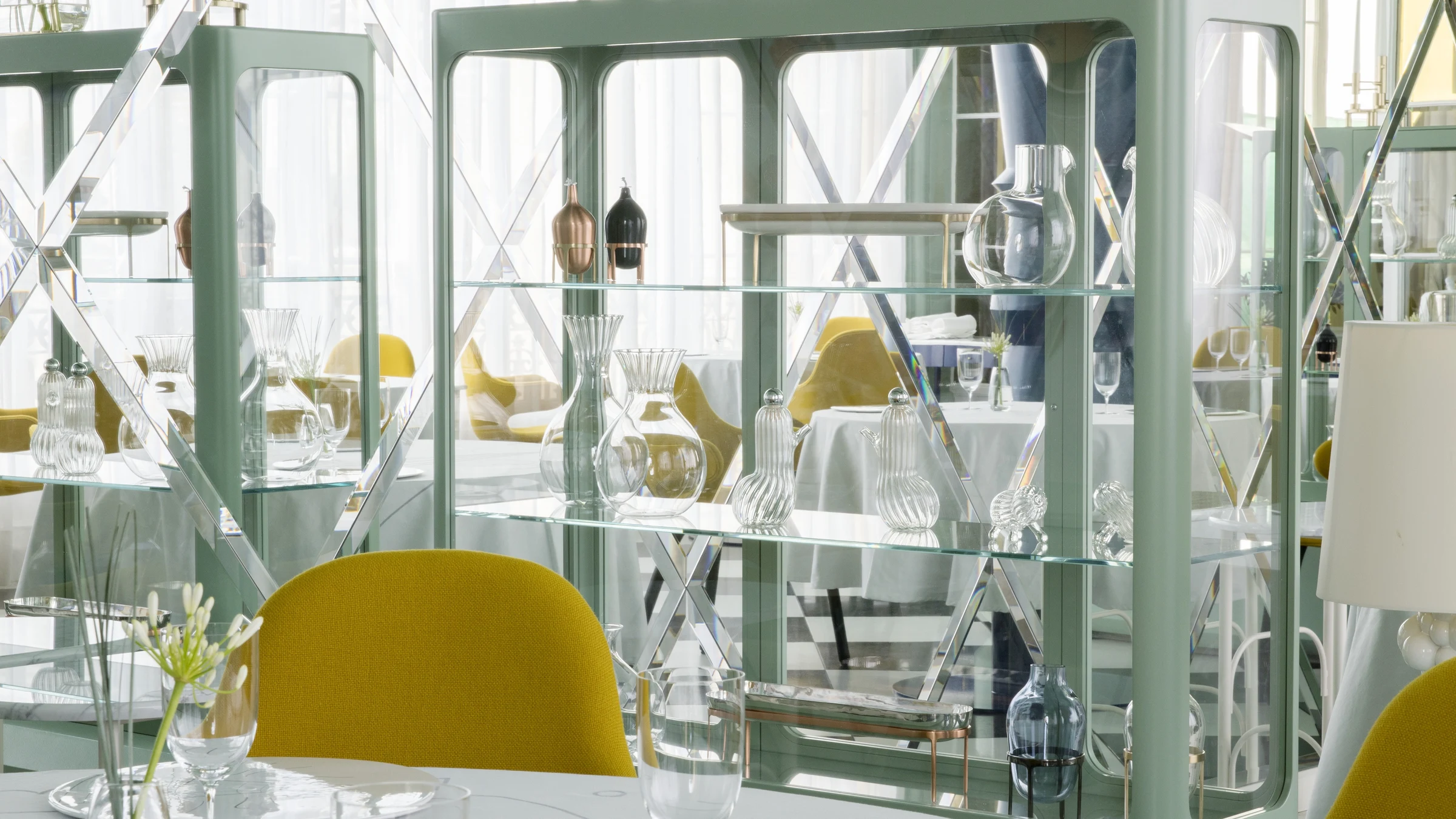
Ronda 14
- 01CuisinePeruvian-Japanese Fusion (Nikkei) with Asturian Influences
- 02CityMadrid, Spain
- Macarfi 7.5 Food Rating · 2026
- Opinionated About Dining Casual in Europe Recommended · 2026
- Opinionated About Dining Casual in Europe Ranked #874 · 2025
What Salamanca's Regulars Already Know
The Salamanca district runs on repetition. Its residents return to the same addresses week after week with the quiet conviction of people who have already done the research and stopped looking. Ronda 14, at C. del Gral. Oráa, 25, in Salamanca, benefits from exactly that dynamic. Its 4.5 Google rating across 2,629 reviews is the accumulated testimony of a neighbourhood that keeps showing up.
Peruvian-Japanese fusion, the nikkei tradition, has a complicated reputation in European cities. At its weakest, it operates as a surface-level marriage of two fashionable cuisines: tiradito plating that mimics sashimi presentation without the discipline, ceviche brightened with yuzu instead of ají amarillo, the whole exercise lacking commitment to either side of the hyphen. At its strongest, as in Lima's established nikkei houses, the combination produces something with its own internal logic: Japanese precision applied to South American acidity, texture discipline meeting citrus heat. Ronda 14 occupies the latter register, which explains why Salamanca's habitués, a group not easily won over by novelty for its own sake, have made it a standing reservation.
The Nikkei Tradition in a European Context
To understand what Ronda 14 is doing in Madrid, it helps to understand where nikkei cuisine comes from. The Japanese immigration to Peru that began in the late nineteenth century produced, over several generations, a hybrid culinary tradition that is now codified and taken seriously at the highest levels. Maido in Lima has appeared consistently near the best of Latin America's 50 Best restaurants; the tradition it represents has its own techniques, its own vocabulary, its own hierarchy of ingredients. When that tradition travels to Europe, it arrives in a city where the reference points are few and the audience has to be educated while it is being fed.
Madrid is not the obvious home for this. Barcelona has the larger Japanese community and the more developed Asian-fusion infrastructure. San Sebastián has Arzak and a Basque canon that leaves limited appetite for outside influences at the leading end. Madrid's creative fine dining, DiverXO, Coque, Deessa, DSTAgE, Paco Roncero, is Spanish-rooted, technically ambitious, and largely inward-looking. Ronda 14 does not compete in that tier. It competes for the regular weeknight slot, the business lunch that wants something more considered than standard Mediterranean, the couple in Salamanca who have already cycled through the obvious choices.
That is a different and arguably harder position to hold. A tasting menu destination can rely on occasion dining and destination seekers. A neighbourhood restaurant with an unusual cuisine has to earn the same table back every other week, which requires consistency at a level that spectacle dining rarely demands.
Where Ronda 14 Sits in Madrid's Broader Scene
In Madrid specifically, the OAD casual tier includes a mix of traditional Spanish cooking and international addresses; landing on that list at all signals a level of sustained quality that OAD's survey methodology, which aggregates votes from experienced diners rather than professional critics alone, tends to reward reliably.
The comparison set for Ronda 14 is not DiverXO or Disfrutar in Barcelona. The relevant peer group is the mid-tier international addresses in Salamanca and Chamberí that serve a clientele with high baseline expectations and low tolerance for inconsistency. Against that peer group, the 2,545-review volume at 4.5 is meaningful, it suggests a kitchen that performs without significant variance across many covers and many months.
For context on what Spanish fine dining looks like at the leading end, El Celler de Can Roca in Girona, Azurmendi in Larrabetzu, Quique Dacosta in Dénia, and Aponiente in El Puerto de Santa María represent Spain's most decorated kitchens. Ronda 14 is not in conversation with those addresses, which is worth stating plainly: it is a well-executed casual restaurant in a prosperous Madrid neighbourhood, not a destination in the national fine dining sense. That clarity about category is what makes it useful.
Chef Mario Céspedes and the Kitchen's Credentials
Mario Céspedes leads the kitchen. In the nikkei tradition, the relevant credential is not Michelin lineage but fluency in both source cuisines, the ability to handle Japanese knife discipline and Peruvian acidity with equal conviction rather than defaulting to one and borrowing loosely from the other. At restaurants where that fluency is present, the menu tends to show restraint: fewer ingredients per dish, cleaner acid profiles, textures that hold rather than soften. Where it is absent, the food announces its influences too loudly and the combination reads as decoration rather than technique. The review record at Ronda 14 points toward the former.
The Regulars' Case
What keeps a Salamanca regular returning to a nikkei restaurant rather than defaulting to the neighbourhood's abundant traditional Spanish options? Partly it is the contrast: the acid-forward profiles of tiradito and ceviche read differently from Spanish cooking's fat and umami anchors, and a palate that eats well and widely tends to appreciate that kind of reset. Partly it is the format: a casual nikkei address operates at a different price and pacing register than a formal tasting menu, which means it fits more occasions in the calendar.
The 2,629 Google reviews also imply a customer base that spans years rather than months, a volume that accumulates through repetition. That pattern is the most reliable signal a casual restaurant can send.
For nikkei and Japanese-influenced dining at the far end of the ambition spectrum, Atomix in New York City and Le Bernardin in New York City offer different points of reference for what precision-led cooking from outside the European tradition looks like when fully realised.
Planning Your Visit
| Detail | Ronda 14 | DiverXO | Deessa |
|---|---|---|---|
| Cuisine | Peruvian-Japanese (nikkei) | Progressive Asian-Creative | Modern Spanish, Creative |
| Price tier | Not confirmed | €€€€ | €€€€ |
| Format | Casual neighbourhood restaurant | Full tasting menu | Full tasting menu |
| OAD recognition | Casual Europe #874 (2025) | Top tier | Top tier |
| Google rating | 4.5 (2,545 reviews) | Not listed | Not listed |
| Address | C. del Gral. Oráa, 25, Salamanca | Madrid | Madrid |
Ronda 14 is located at Calle del General Oráa 25 in the Salamanca district. Booking is recommended, and the restaurant is open daily from 12:30 PM to 12 AM.
Questions
Frequently asked
How expensive is Ronda 14?
Ronda 14 is listed at a price level of $$$.
Where is Ronda 14 and what does it serve?
Ronda 14 is in Castellana, Madrid, serving Peruvian-Japanese Fusion (Nikkei) with Asturian Influences.
The field
How it compares
| Place | Cuisine | Notes | Awards |
|---|---|---|---|
| Ronda 14 | Peruvian-Japanese Fusion (Nikkei) with Asturian Influences | Castellana, $$$ | · |
| Coque | Modern Spanish Fine Dining | Madrid | Michelin 2 Stars |
| Corral de la Morería | Modern Spanish Fine Dining with Flamenco | Madrid | Michelin 1 Star |
| Desde 1911 | Premium Seafood Fine Dining | Madrid | Michelin 1 Star |
| DiverXO | Avant-Garde Spanish Tasting Menu | Madrid | Michelin 3 Stars, World's 50 Best |
| DSTAgE | Avant-Garde Spanish Tasting Menus | Madrid | Michelin 2 Stars |
| Paco Roncero | Avant-Garde Spanish Fine Dining | Madrid | Michelin 2 Stars |
Similar places
Modern Spanish Fine Dining
Coque
Madrid, Spain
★★
Modern Spanish Fine Dining with Flamenco
Corral de la Morería
Madrid, Spain
★
Premium Seafood Fine Dining
Desde 1911
Madrid, Spain
★
Avant-Garde Spanish Tasting Menu
DiverXO
Madrid, Spain
★★★ · 50 Best
Avant-Garde Spanish Tasting Menus
DSTAgE
Madrid, Spain
★★
Avant-Garde Spanish Fine Dining
Paco Roncero
Madrid, Spain
★★