Saint Claire
- 01CuisineSeasonal Southern Fine Dining
- 02CityNew Orleans, United States
- 03RecognitionJames Beard Award
From the people index
Recommended by
One trusted voice points here.

- James Beard Winner · James Beard Foundation
- Bon Appétit Best New Restaurant: 125pts · 2026
- James Beard Award Semi Finalist · 2026
- New York Times America's Best Restaurants · 2025
- Resy Best of the Hit List · 2025
A Fifteen-Minute Ferry Ride Changes the Register
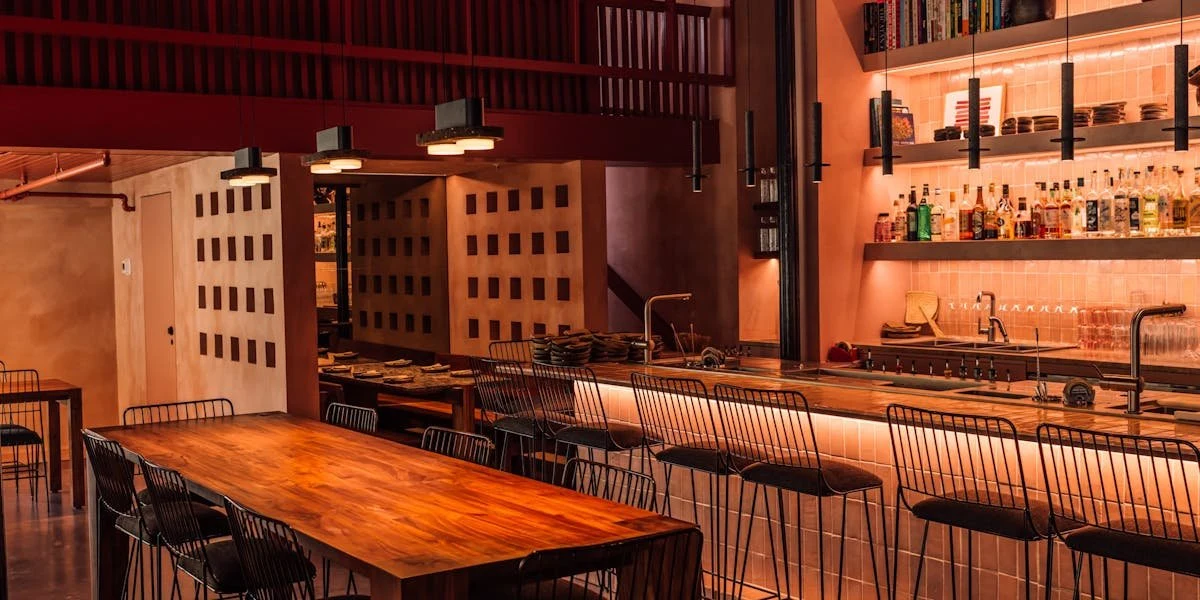
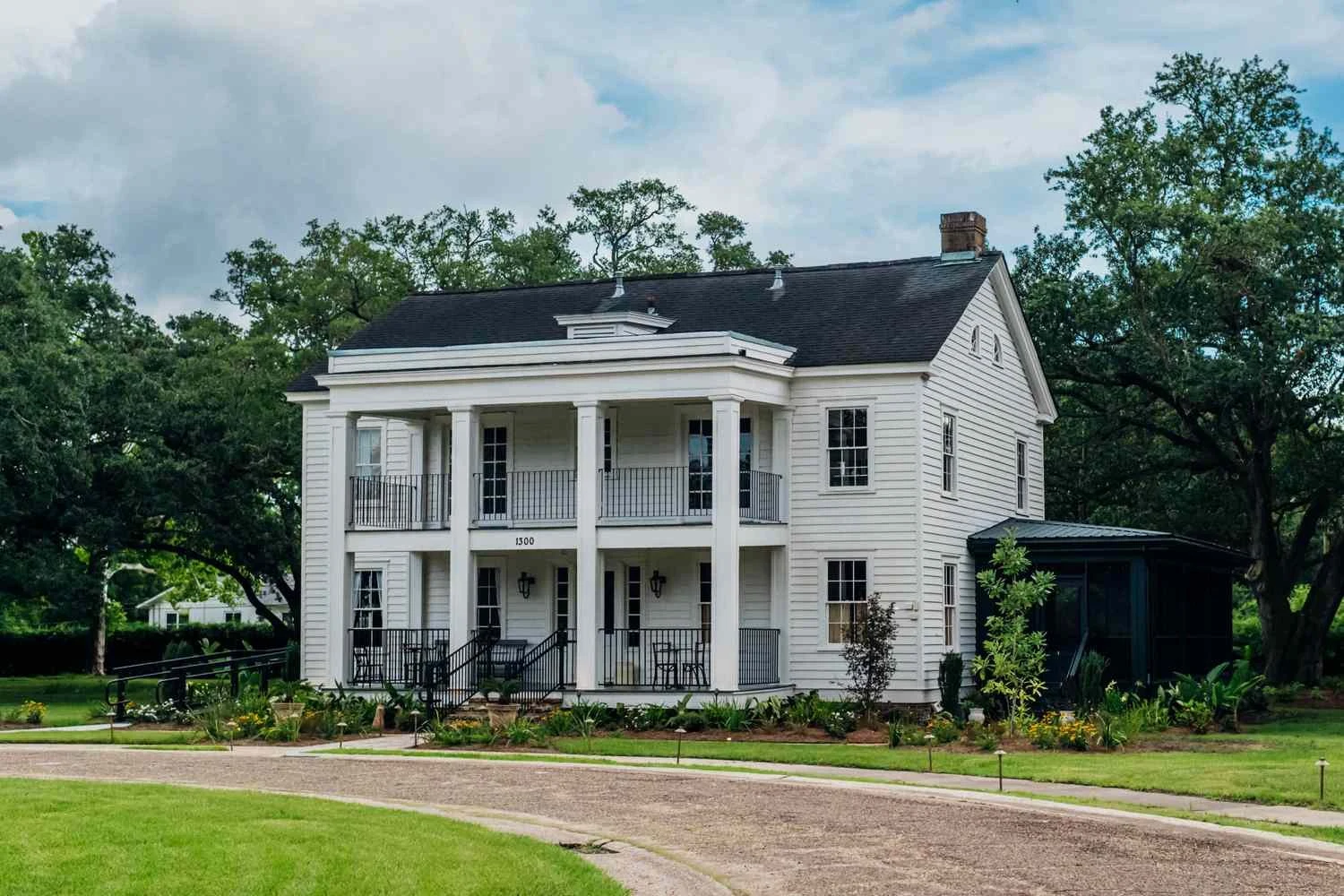
The approach matters here. Crossing the Mississippi from the French Quarter to the West Bank is not simply a transit decision; it recalibrates your expectations before you have eaten a single course. The Algiers neighborhood on the far bank carries a different tempo from the east side of the river, and the corner of it that Saint Claire occupies amplifies that shift. A century-old property, oak trees overhead, a high levee close enough to feel its presence, the physical setting is doing editorial work before the kitchen begins. Saint Claire earned Resy Best of the Hit List recognition in 2025, a credentialing signal that carries weight in a city that runs deep with established institutions.
New Orleans dining has long split between the ceremonial grandeur of its white-tablecloth Creole houses and the looser, more democratic registers of neighborhood spots. What Saint Claire introduces is a third mode: a kind of stylish country refuge that draws from both traditions without being fully absorbed by either. The antiques, the dark roux gumbo, the way seasonal produce moves through the menu, figs, muscadine grapes, pickled peaches, sautéed plums, these are not decorative touches. They are structural choices that tell you this kitchen is thinking about place and season as primary ingredients, not garnishes.
Cajun and French, Treated as a Single Grammar
The hyphenated identity of Cajun-French cooking is common shorthand in Louisiana, but few kitchens treat the two traditions as genuinely integrated rather than layered. The menu at Saint Claire uses French technique as a verb, not a noun: it is how the kitchen does things, not what it declares itself to be. Rabbit rillettes, rare tuna paillard, duck confit, these are preparations with a clear French skeletal structure. But the seasonal produce that moves through them, the figs, the muscadines, the pickled peaches, is coastal Louisiana in its sourcing logic and its timing.
This approach places Saint Claire in a specific and not crowded peer group. Across the river, New Orleans has strong examples of French-inflected Creole cooking at the ceremonial end, and coastal Cajun cooking done with city-dwelling sophistication. Bayona has operated in the French Quarter for decades as a model of how New American cooking can absorb European technique without losing its Louisiana footing. Emeril's established the template for Cajun cooking given a fine-dining frame. Saint Claire's particular contribution is to bring that synthesis out of the city proper and into a setting where the rural idyll is not metaphorical, it is the actual address.
The Logic of the Plate as a Structured Sequence
The editorial angle that matters most at Saint Claire is how the meal is curated rather than how individual dishes perform in isolation. The kitchen's use of seasonal produce as a transitional element, moving from preserved and pickled preparations toward fresh and sautéed, suggests a menu logic that thinks in sequences. Pickled peaches and sautéed plums appearing alongside rabbit rillettes and duck confit is not coincidence; it is a considered tension between preservation and immediacy, between the rich and the bright.
That structural thinking is what separates a well-executed tasting experience from a collection of good dishes. Venues that hold this level of curation tend to cluster in a particular comparable set nationally: Lazy Bear in San Francisco, Single Thread Farm in Healdsburg, and, at the more formally constructed end, Alinea in Chicago all treat the sequencing of a meal as a compositional problem. Saint Claire operates at a different register of formality, but the underlying logic, that the meal is a curated whole rather than a menu of options, is the same ambition. For the Gulf South, that ambition is still comparatively rare.
The Setting as Part of the Proposition
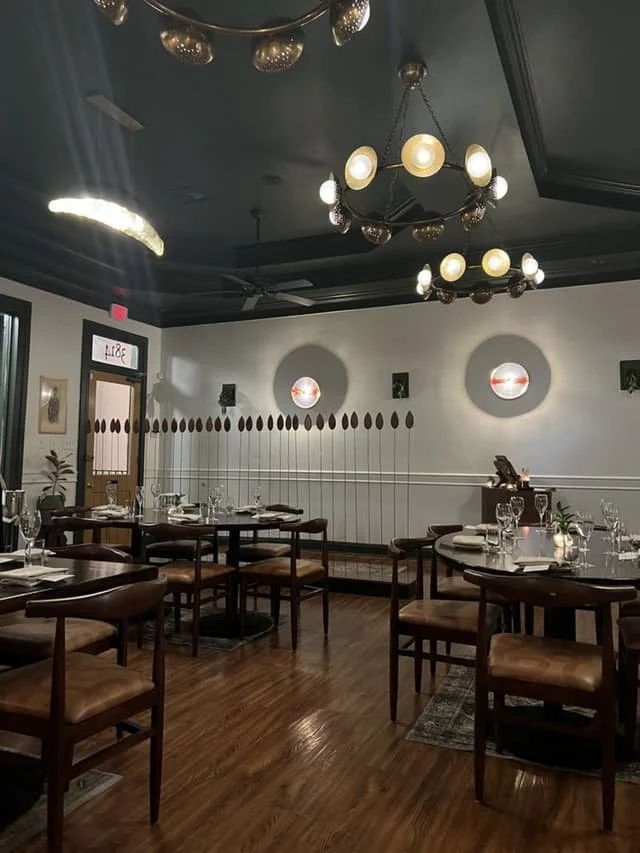
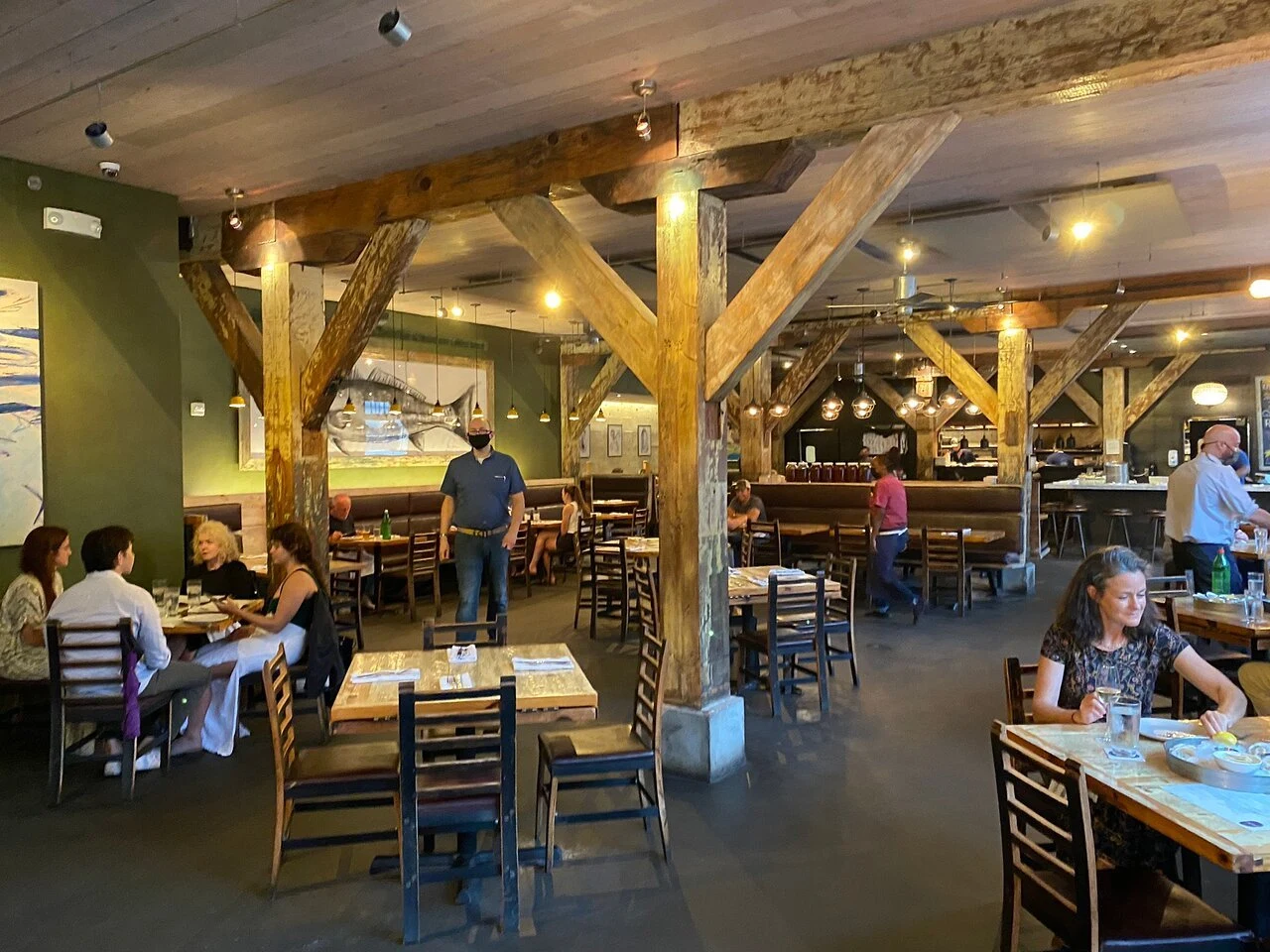
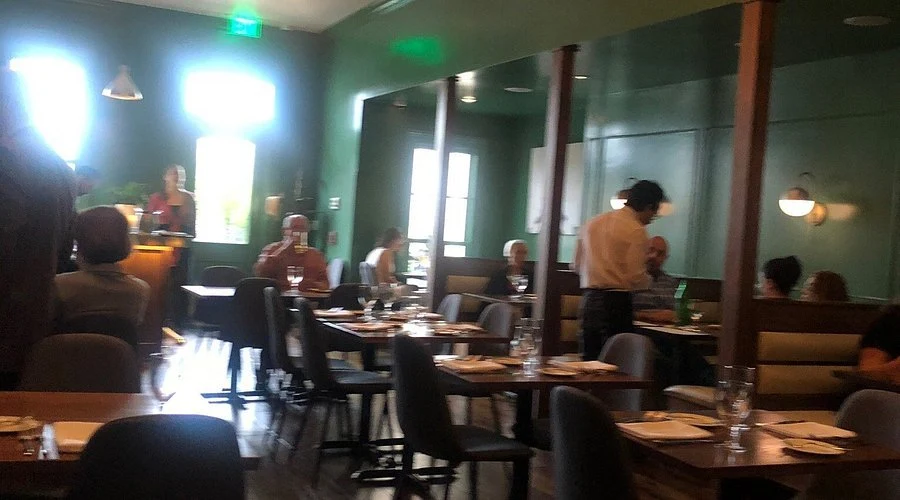
It is worth being specific about what a century-old property in this corner of Algiers actually delivers. The antiques are not set-dressing applied to a modern dining room; they are the bones of the building, and the conversion retained rather than renovated over them. Oak trees at scale are a different atmospheric condition than potted plants or a courtyard garden. The levee proximity gives the site a particular relationship to the river that you feel without necessarily seeing it. These physical conditions compound the experience of the food in ways that are hard to separate cleanly. The cooking tastes different in a room that feels genuinely old, not because of any mystical quality, but because the setting's specificity gives the seasonal, rooted menu a context that reinforces its logic.
Among New Orleans dining, this is a considered counterpoint to venues that achieve atmosphere through interior design rather than architecture and site. Saint-Germain and Re Santi e Leoni represent the east bank's approach to contemporary fine dining with considered settings. Zasu operates in a different register of American contemporary. Saint Claire's West Bank location is not a liability to be explained away, it is a deliberate condition of the restaurant's identity, one that requires a short journey and rewards it.
Planning Your Visit
Saint Claire sits at 1300 Richland Rd, New Orleans, LA 70114, on the West Bank in the Algiers neighborhood, approximately 15 minutes from the French Quarter by car or the Canal Street Ferry. Reservations are essential. Dress expectation aligns with the setting, the antique-filled room and the cooking's French sensibility suggest something beyond casual, without requiring formality.
Visitors comparing Saint Claire against the broader spectrum of American destination dining may also find useful reference points in Le Bernardin in New York City, The French Laundry in Napa, Providence in Los Angeles, and Atomix in New York City, each representing the tier of American dining where setting and sequence are as considered as the plate. At the international level, 8½ Otto e Mezzo Bombana in Hong Kong offers a useful comparison for how French-rooted cooking takes on specific regional character when the setting asserts itself strongly.
Questions
Frequently asked
What recognition does Saint Claire hold?
Saint Claire holds a James Beard award.
How expensive is Saint Claire?
Saint Claire is listed at a price level of $$$.
Where is Saint Claire and what does it serve?
Saint Claire is in U.S. Naval Base, New Orleans, serving Seasonal Southern Fine Dining.
The field
How it compares
| Place | Awards | Cuisine | Notes |
|---|---|---|---|
| Saint Claire | James Beard | Seasonal Southern Fine Dining | U.S. Naval Base, $$$ |
| Acamaya | World's 50 Best | Contemporary Mexican Seafood | New Orleans |
| Commander’s Palace | · | Modern Creole | New Orleans |
| Dakar NOLA | World's 50 Best | Modern Senegalese Pescatarian Tasting Menu | New Orleans |
| Emeril’s | Michelin 2 Stars, World's 50 Best | Modern Creole-Cajun Fine Dining | New Orleans |
| Pêche Seafood Grill | · | Modern Seafood Grill | New Orleans |
| Zasu | Michelin 1 Star | Modern American Seafood | New Orleans |
Similar places
Contemporary Mexican Seafood
Acamaya
New Orleans, United States
50 Best
Modern Creole
Commander’s Palace
New Orleans, United States
Modern Senegalese Pescatarian Tasting Menu
Dakar NOLA
New Orleans, United States
50 Best
Modern Creole-Cajun Fine Dining
Emeril’s
New Orleans, United States
★★ · 50 Best
Modern Seafood Grill
Pêche Seafood Grill
New Orleans, United States
Modern American Seafood
Zasu
New Orleans, United States
★