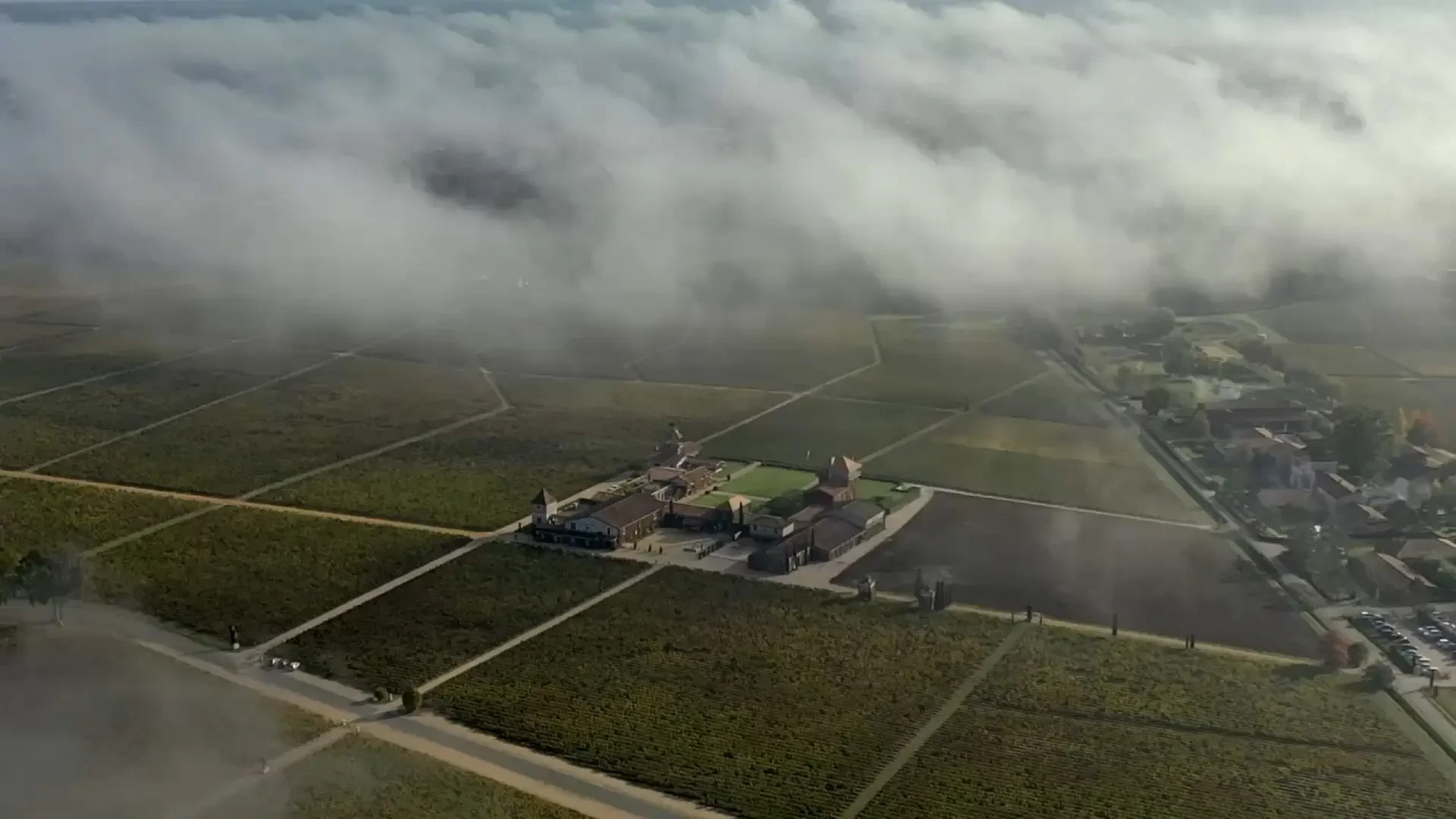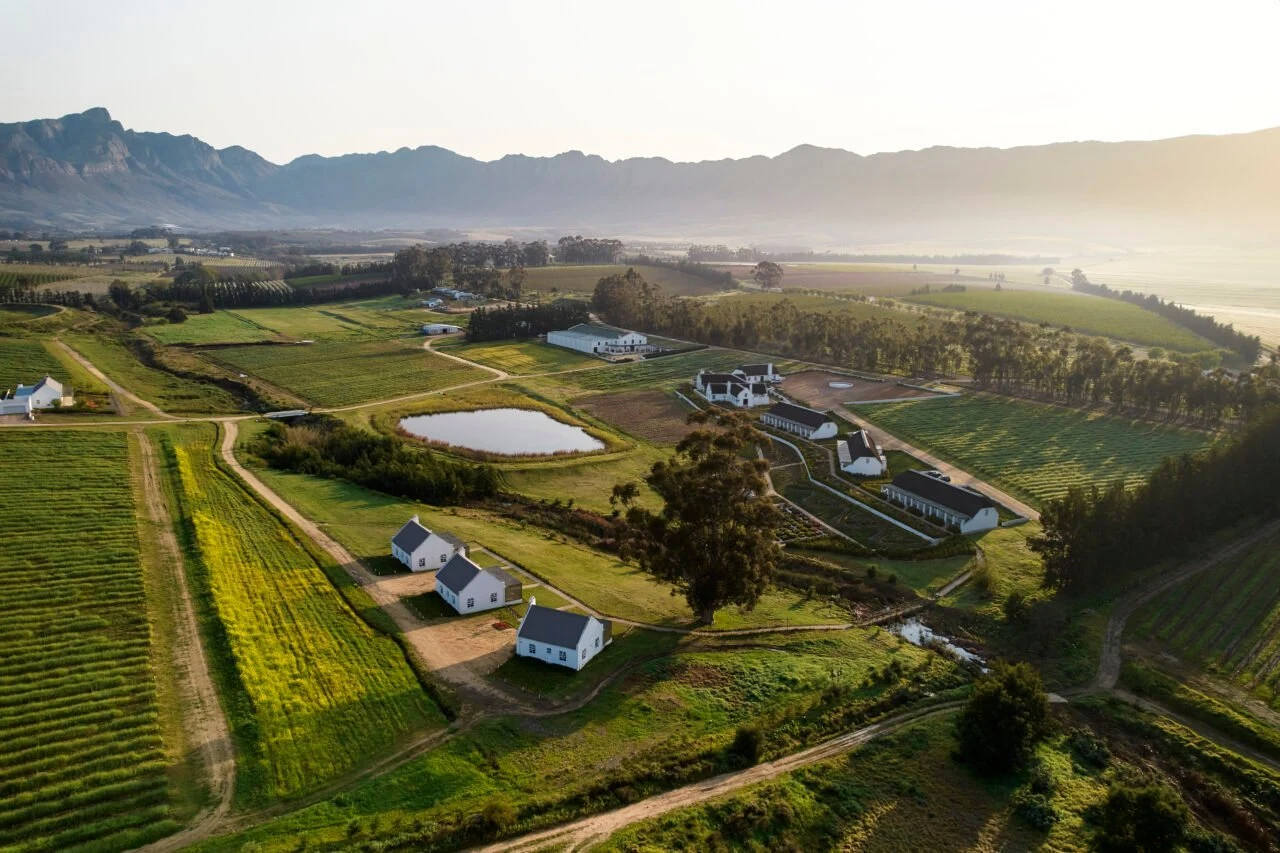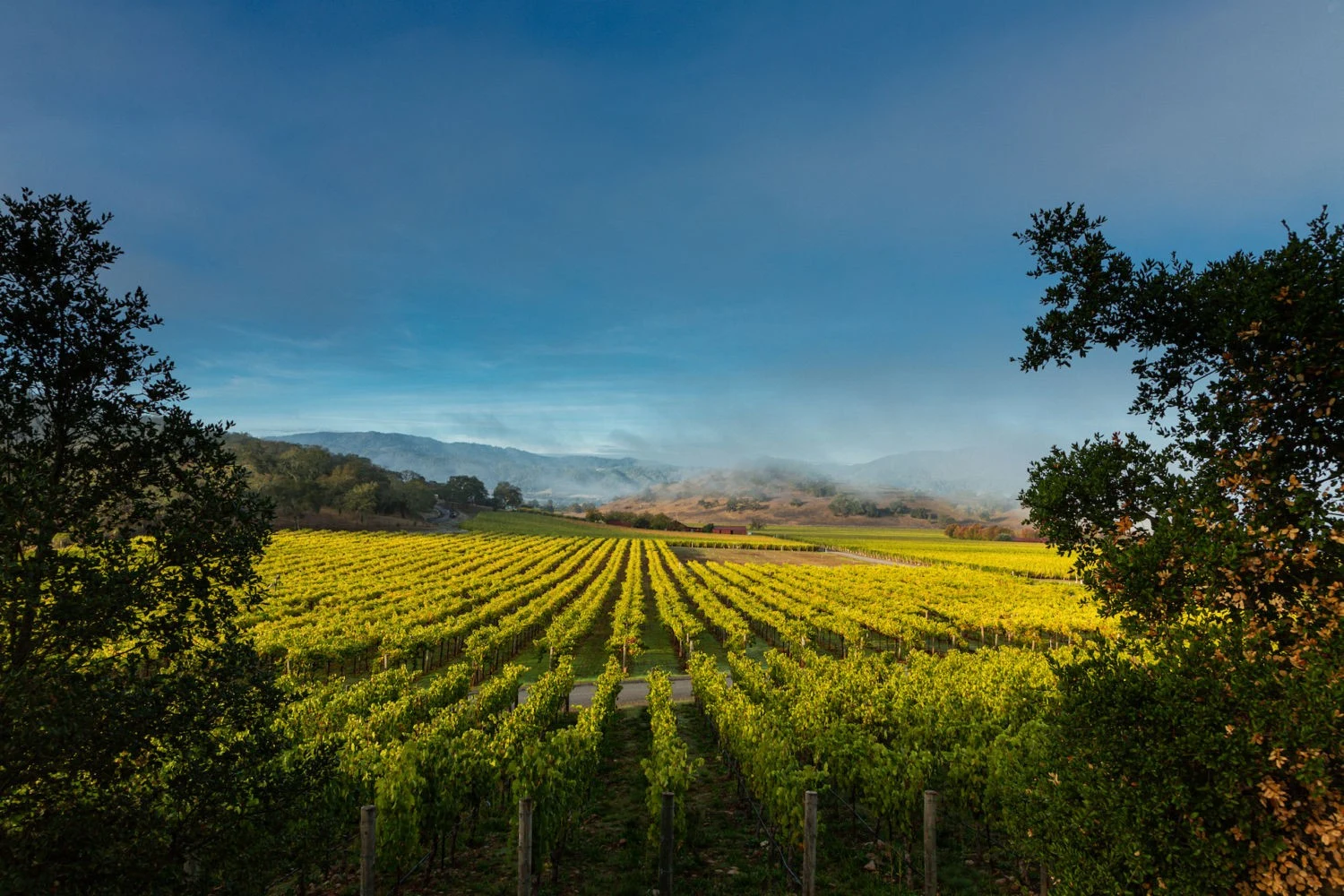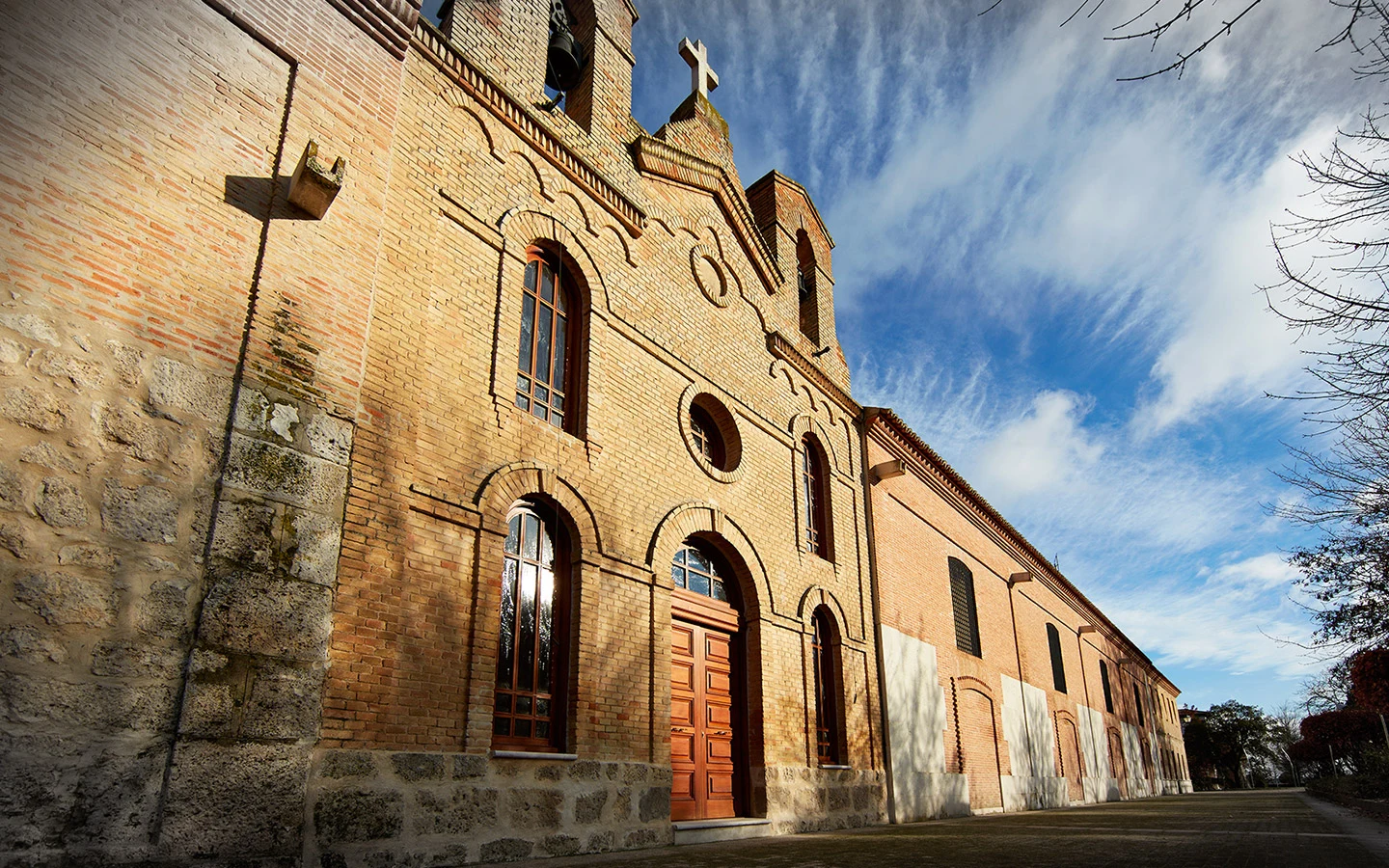
Saronsberg Cellar sits on Waveren Road in Tulbagh, one of the Western Cape's most geologically distinct valleys, and carries a Pearl 2 Star Prestige rating for 2025. The estate positions itself among the Breede River Valley's more serious producers, with wines that reflect the valley's granite and shale soils rather than chasing a broader commercial register.
<h2>Tulbagh's Valley Floor and What It Demands of a Winemaker</h2><p>The Tulbagh Valley sits inside a near-closed amphitheatre of mountain ranges, the Winterhoek to the north, the Witzenberg to the east, the Obiqua to the west, that creates growing conditions measurably different from those in Stellenbosch or Franschhoek. Nights are cold, radiation is intense, and the soils shift between decomposed granite and shale as you move across the valley floor. These are not abstract geological footnotes; they translate directly into wine with higher natural acidity, slower phenolic development, and a structural tension that warmer valley fruit rarely achieves at equivalent ripeness. Saronsberg Cellar, on Waveren Road at the valley's edge, works within this specific terroir rather than against it, and its Pearl 2 Star Prestige recognition for 2025 reflects where it sits in the national quality conversation.</p><p>The Pearl ratings, issued annually, rank South African estates across a prestige tier with 2 Stars representing sustained, measurable quality rather than a single exceptional vintage. For a valley that many Cape wine drinkers still associate primarily with tourism infrastructure rather than fine wine ambition, a 2 Star Prestige placement in 2025 signals something worth paying attention to. <a href="https://www.enprimeurclub.com/wineries/rijk-s-wine-estate-tulbagh-winery">Rijk's Wine Estate</a>, also in Tulbagh, operates in a comparable register, and together these two properties anchor the valley's case for serious production beyond the scenic appeal.</p><h2>Approaching the Estate</h2><p>Waveren Road runs south from the Tulbagh village toward the mountain wall, and the approach to Saronsberg gives you an immediate read on the estate's character. The setting is working farm before it is visitor destination: vineyards run close to the road, the architecture keeps a low profile against the mountain backdrop, and the scale is domestic rather than resort-like. This is not the parkland grandeur of <a href="https://www.enprimeurclub.com/wineries/babylonstoren-franschhoek-winery">Babylonstoren in Franschhoek</a> or the manicured formality you find at <a href="https://www.enprimeurclub.com/wineries/vergelegen-wine-estate-somerset-west-winery">Vergelegen Wine Estate in Somerset West</a>. The atmosphere at Saronsberg is oriented around the cellar and the tasting room rather than the wider estate experience, which concentrates attention on the wines themselves rather than the surrounding amenities.</p><p>For visitors coming from Cape Town, Tulbagh sits roughly 90 minutes north via the N1 and the R44 through the Bainskloof pass, a route that qualifies as an argument for the trip on its own terms. Timing matters here: the mountain-enclosed valley heats quickly mid-day in summer, and morning visits allow you to experience the tasting room before the afternoon temperature peaks.</p><h2>The Winemaking Register: Restraint in a Warm-Country Context</h2><p>South African wine's most interesting recent development has been the emergence of producers willing to work at lower intervention levels in a country where the default technical approach has historically favoured extraction and oak influence. The estates drawing the most international attention, <a href="https://www.enprimeurclub.com/wineries/sadie-family-wines-swartland-winery">Sadie Family Wines in Swartland</a> most conspicuously, have demonstrated that South African terroir, when treated with restraint, produces wines with genuine structural complexity rather than the blowsy, fruit-forward profile that once defined the country's export identity.</p><p>Saronsberg occupies a different position from Sadie in terms of style and market positioning, but the valley conditions in Tulbagh naturally push production toward wines with tension and longevity rather than immediate accessibility. Granite soils slow ripening, preserve acidity, and produce smaller berries with concentrated flavour at lower sugar levels than alluvial valley floor sites. A winemaker working this terroir honestly has to make decisions about extraction and barrel influence with more care than one working richer, warmer soils where structure comes easily. The Pearl 2 Star Prestige rating implies those decisions are being made well.</p><p>The estate's comparable set within the national quality framework sits alongside producers like <a href="https://www.enprimeurclub.com/wineries/constantia-glen-cape-town-winery">Constantia Glen in Cape Town</a> and <a href="https://www.enprimeurclub.com/wineries/creation-wines-hermanus-winery">Creation Wines in Hermanus</a>, both of which carry sustained recognition for structured, site-expressive wines. <a href="https://www.enprimeurclub.com/wineries/beaumont-family-wines-bot-river-winery">Beaumont Family Wines in Bot River</a> offers a useful regional comparison: another estate working in a cooler, less-visited valley where the wines' character reflects the geography before the market. These are producers whose quality signals accumulate over multiple vintages rather than through single-release spectacle.</p><h2>What to Taste, and Why It Matters</h2><p> Tulbagh's climate profile suits red varieties that benefit from slow phenolic development: Shiraz and Cabernet Sauvignon historically perform well, retaining savouriness at full ripeness in a way that warmer sites rarely achieve. The valley's altitude and diurnal temperature range also support white varieties with aromatic precision, and Chenin Blanc in particular has shown strong results across the Breede River catchment at producers investing in older-vine fruit.</p><p>Pearl 2 Star Prestige rating provides a reasonable basis for expecting at least one range of wines performing at the level where critics and collectors pay serious attention. For context, <a href="https://www.enprimeurclub.com/wineries/graham-beck-wines-robertson-winery">Graham Beck Wines in Robertson</a> carries comparable national standing and demonstrates the tier's consistency expectations: releases rated at this level are expected to perform across multiple vintages, not just in exceptional years.</p><p>Visitors planning a tasting at Saronsberg should consider building a broader Tulbagh itinerary around it. For those extending the trip into the wider Winelands circuit, <a href="https://www.enprimeurclub.com/wineries/val-de-vie-estate-paarl-winery">Val de Vie Estate in Paarl</a> and <a href="https://www.enprimeurclub.com/wineries/neethlingshof-estate-stellenbosch-winery">Neethlingshof Estate in Stellenbosch</a> provide different terroir references within a day's driving range.</p><h2>Planning Your Visit</h2><p>Saronsberg Cellar is located at Waveren Road, Tulbagh, 6820. Saronsberg Cellar is open by appointment, and advance booking is recommended. The valley is at its most accessible between October and April, when road conditions and daylight hours support a comfortable drive.</p>
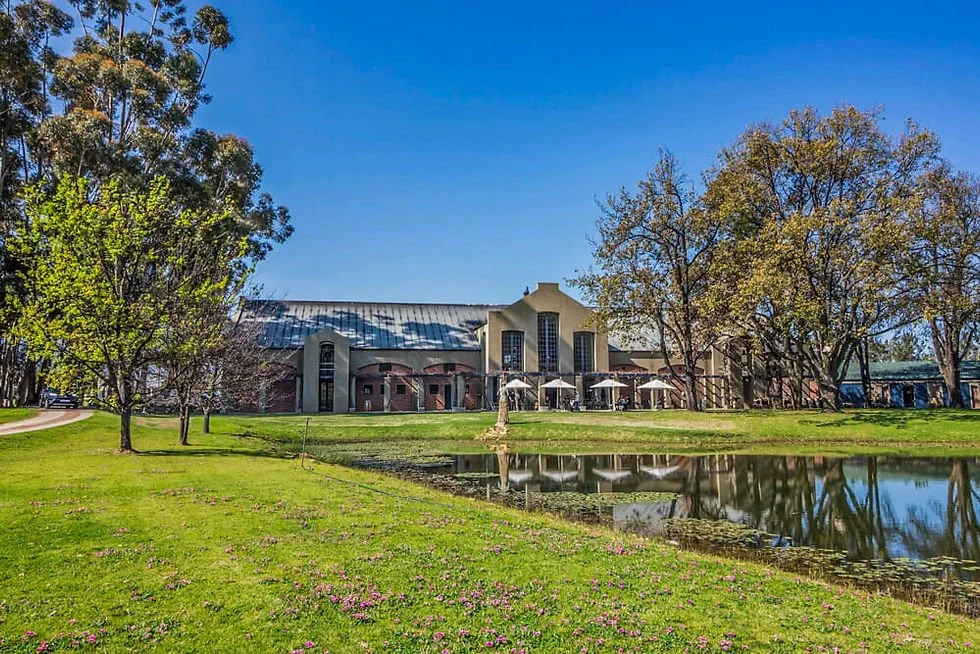
The setting is defined by Tulbagh's near-enclosed mountain amphitheatre — Winterhoek to the north, Witzenberg to the east, Obiqua to the west — which gives the estate a contained, serious character. Waveren Road leads you directly toward the mountain wall, so the approach alone signals you are somewhere with genuine geographical identity. It reads as a working wine estate rather than a lifestyle destination.
Saronsberg Cellar has received recognition including: Pearl 2 Star Prestige (2025).
The Tulbagh Valley's cool mountain air and well-defined terroir favour wines with structure and restraint, which is what Saronsberg has built its Pearl 2 Star Prestige (2025) reputation on. The cellar's focus on lower-intervention winemaking is the thread worth following across whatever is on the tasting list.
Saronsberg Cellar is located at Waveren Road, Tulbagh, 6820, Tulbagh.
Saronsberg is recognised for producing wines that reflect the specific conditions of the Tulbagh Valley, where mountain ranges create a sheltered, thermally distinct growing environment. The estate holds a Pearl 2 Star Prestige rating for 2025, placing it among the more formally acknowledged cellars in the Western Cape. Its address on Waveren Road, at the southern end of the valley, positions it close to the mountain wall where altitude and aspect have the most pronounced effect on viticulture.
Phone and online booking details are not confirmed in the current database record, so walk-in availability cannot be guaranteed. The estate is at Waveren Road, Tulbagh, 6820 — contacting them directly before making the drive is advisable, particularly during harvest season when cellar operations take priority.
Tulbagh is one of the Western Cape's most geographically contained valleys, ringed on three sides by the Winterhoek, Witzenberg, and Obiqua mountain ranges, which moderate temperature and limit wind exposure in ways that few other South African appellations can match. This terroir compression is a significant factor in why Saronsberg has earned a Pearl 2 Star Prestige rating in 2025, a credential that reflects consistent quality at the estate level rather than a single vintage result. For wine travellers serious about understanding how South African geography shapes style, the Tulbagh Valley offers a more legible case study than the broader Coastal Region.
Waveren Road, Tulbagh, 6820
Tulbagh