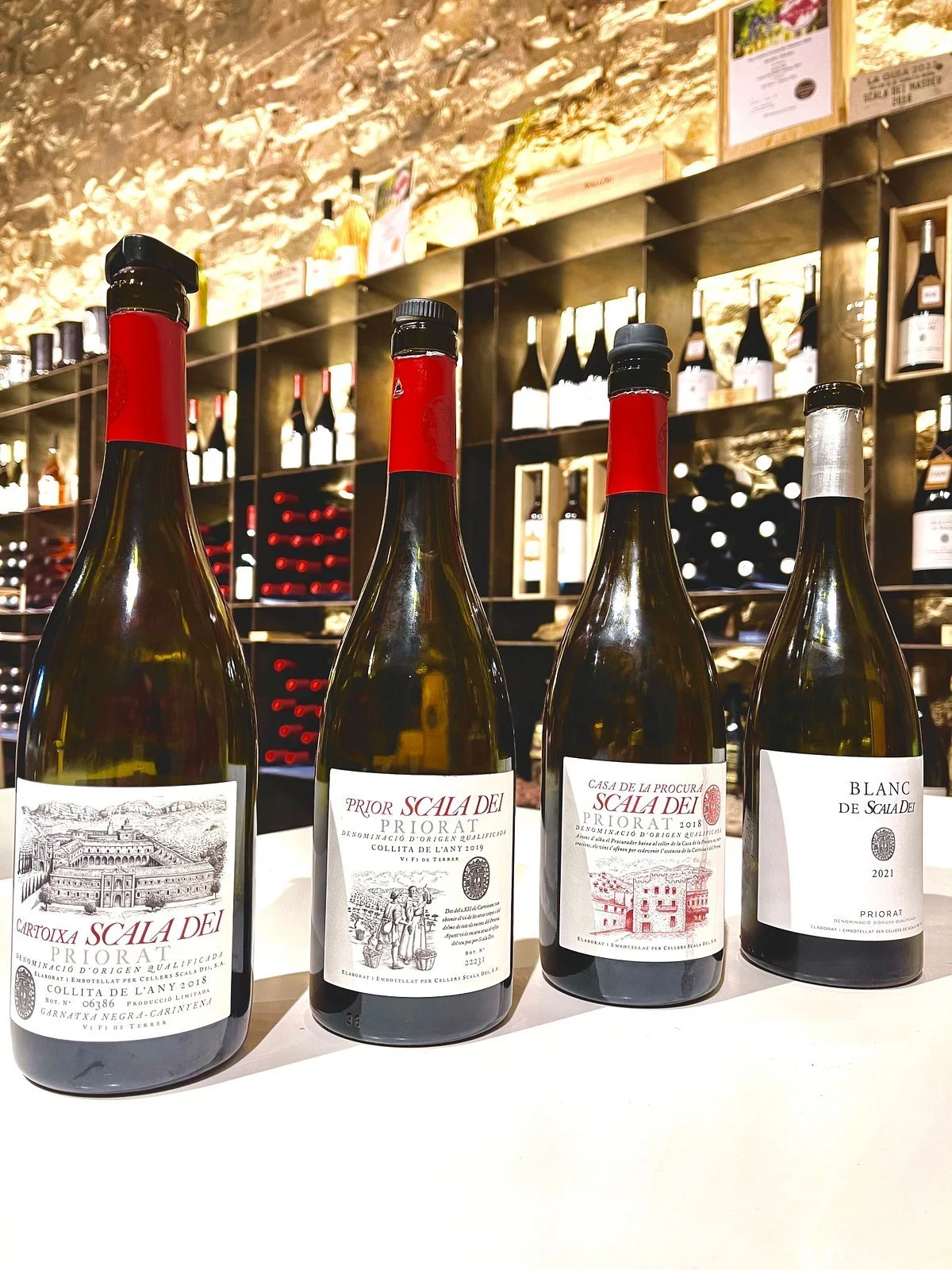
Sitting at the foot of the Serra de Montsant in the medieval village of Escaladei, Scala Dei is one of Priorat's oldest and most historically grounded producers, holding a Pearl 2 Star Prestige award for 2025. The winery draws directly from the region's distinctive llicorella slate soils, producing wines that have helped define what Priorat means at an international level. Visits here connect the glass to the geology in ways few other Catalan producers manage.
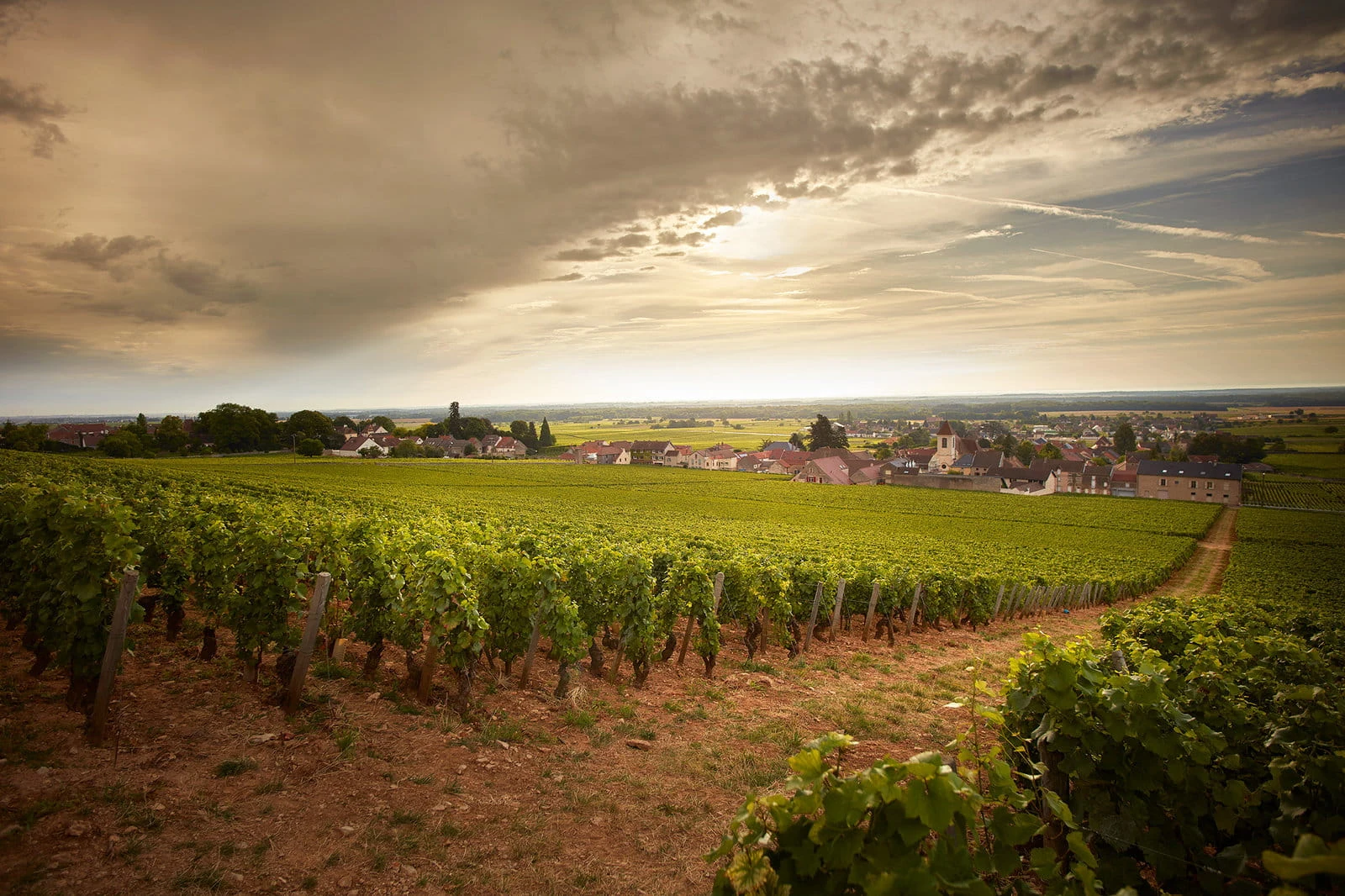
<h2>Stone, Slate, and the Village That Named a Wine Region</h2><p>The road into Escaladei ends at the village itself. There is nowhere further to go. The Serra de Montsant rises behind the settlement, the ruins of the old Carthusian monastery sit at its edge, and the vineyards occupy every terrace the land allows. This is not an incidental location for a winery. The name Scala Dei, meaning "stairway to God" in Latin, was the name of that monastery, and the monks who planted vines here in the twelfth century effectively founded the wine culture that the modern Priorat DOCa now builds upon. When you arrive at Plaça del Priorat 3, the address itself tells you something about where the winery sits in the regional story.</p><p>Priorat is a small DO by Spanish standards, with around 1,900 hectares under vine, but its reputation among collectors and sommeliers runs well ahead of its output volume. The region earned DOCa status in 2000, one of only two in Catalonia, the other being Rioja. That classification acknowledges both the terroir's distinctiveness and the quality discipline that producers here have maintained. Scala Dei, as one of the region's founding modern producers, operates in that context rather than apart from it.</p><h2>What the Llicorella Actually Does</h2><p>Priorat's identity is inseparable from its soil. The llicorella, a local term for the dark, mica-flecked slate and quartzite bedrock that defines the appellation, forces vines to root deeply in search of moisture, a process that concentrates flavour and reduces yields dramatically. Average yields across the region can fall to fifteen or twenty hectolitres per hectare, a figure that puts Priorat in the same conversation as the most demanding terroirs in France. The result is wines with structural density and a mineral signature that does not replicate easily elsewhere.</p><p>Grenache and Carignan are the dominant varieties, both well-adapted to the arid climate and the poor, well-drained soils. Old-vine Carignan, in particular, produces something in Priorat that it does almost nowhere else: wines with both concentration and freshness, where the mountain altitude, typically between 200 and 700 metres, prevents the oxidative heaviness that warmer, lower-altitude Carignan plantings can produce. Scala Dei's position in Escaladei places it at the northern edge of the appellation, where the influence of the Montsant range moderates temperatures and extends the growing season.</p><p><a href="https://www.enprimeurclub.com/wineries/clos-mogador-gratallops-winery">Clos Mogador in Gratallops</a> represents the appellation's other canonical address, while operations like <a href="https://www.enprimeurclub.com/wineries/cvne-cune-haro-winery">CVNE (Cune) in Haro</a> and <a href="https://www.enprimeurclub.com/wineries/marques-de-caceres-cenicero-winery">Marqués de Cáceres in Cenicero</a> illustrate how Rioja built its DOCa standing through a different combination of variety, oak tradition, and aging classification.</p><h2>Recognition and Peer Position</h2><p>Scala Dei holds a Pearl 2 Star Prestige rating for 2025, a recognition that positions it within the upper tier of producers assessed under EP Club's framework. In a region where the quality gap between producers can be significant, that signal matters. Priorat has attracted serious investment over the past three decades, and the field of producers now includes internationally traded names alongside smaller, estate-focused operations. Scala Dei's historical grounding gives it a different kind of authority from newer arrivals.</p><p> In Ribera del Duero, producers like <a href="https://www.enprimeurclub.com/wineries/bodegas-protos-penafiel-winery">Bodegas Protos in Peñafiel</a> and <a href="https://www.enprimeurclub.com/wineries/emilio-moro-pesquera-de-duero-winery">Emilio Moro in Pesquera de Duero</a> work within a Tempranillo-dominant tradition where estate reputation is calibrated against a different comparable set. Priorat's blend-driven, terroir-expressive model puts it closer in spirit to certain Rhône Valley producers than to northern Spanish appellations, even if the varieties and soils differ. Further afield, <a href="https://www.enprimeurclub.com/wineries/abadia-retuerta-sardon-de-duero-winery">Abadía Retuerta in Sardón de Duero</a> and <a href="https://www.enprimeurclub.com/wineries/arzuaga-navarro-quintanilla-de-onesimo-winery">Arzuaga Navarro in Quintanilla de Onésimo</a> show how Duero producers have carved distinct identities within the same broad national conversation.</p><h2>The Village as Context</h2><p>Escaladei is one of those places that functions almost entirely around the wine trade and the visitors it draws. The population is small, the infrastructure modest, and the experience of arriving here requires some commitment. From Reus, the nearest city with a rail connection, the drive through the Montsant foothills takes roughly forty-five minutes. From Barcelona, the journey is approximately ninety minutes by car. There is no realistic public transport option into the village itself, which means a visit to Scala Dei requires planning around transport in both directions.</p><p>That degree of effort is consistent with the character of the appellation. Priorat has never positioned itself as a high-volume destination, and the difficulty of access is part of what has kept the region from the kind of mass tourism that has changed the visitor experience in parts of Rioja. For those making the journey, our full Escaladei restaurants and visitor guide covers what to expect from the village and how to structure time in the area.</p><p><a href="https://www.enprimeurclub.com/wineries/codorniu-sant-sadurn-danoia-winery">Codorníu in Sant Sadurní d'Anoia</a> operates at a very different scale, with a heritage estate built around high visitor volumes and a Cava production model. <a href="https://www.enprimeurclub.com/wineries/bodegas-vivanco-valle-de-mena-winery">Bodegas Vivanco in Valle de Mena</a> and <a href="https://www.enprimeurclub.com/wineries/bodegas-ysios-laguardia-winery">Bodegas Ysios in Laguardia</a> illustrate how Rioja producers have built architectural and museum-led visitor programs. Priorat producers, including Scala Dei, operate in a quieter register.</p><h2>Planning a Visit</h2><p> The best approach is to contact the winery well ahead of a planned visit, particularly during summer and early autumn harvest periods when demand from both trade and private visitors tends to concentrate.</p><p>The season matters here in ways beyond logistics. Priorat's Mediterranean-continental climate means that late spring visits offer a different experience from harvest-season visits in September and October, when the vineyards are active and the winery team is at its most stretched. Spring and early summer allow more focused attention on the winery itself and the surrounding monastery ruins, which are publicly accessible and provide context for the site's history.</p><p><a href="https://www.enprimeurclub.com/wineries/lustau-jerez-de-la-frontera-winery">Lustau in Jerez de la Frontera</a> represents the sherry tradition at the country's southern extreme, while <a href="https://www.enprimeurclub.com/wineries/marques-de-grinon-dominio-de-valdepusa-malpica-de-tajo-winery">Marqués de Griñón in Malpica de Tajo</a> shows how Castilla-La Mancha has developed its own premium tier. Further afield in spirit if not in geography, <a href="https://www.enprimeurclub.com/wineries/accendo-cellars">Accendo Cellars in St. Helena</a> and <a href="https://www.enprimeurclub.com/wineries/aberlour-aberlour-winery">Aberlour in Aberlour</a> demonstrate how terroir-led prestige arguments are constructed in very different climates and traditions.</p>
Low-key, definitively. Escaladei is a small village built around the winery and the ruins of the Carthusian monastery that gave Scala Dei its name. There is no nightlife infrastructure, and the visit experience is shaped by the landscape and the wine rather than any kind of curated hospitality theatre. The Pearl 2 Star Prestige rating (2025) reflects the seriousness of the producer, not the showiness of the surroundings.
Scala Dei is located at Cellers de Scala Dei - ESPAI VI:, Plaça del Priorat, 3, 43379 Escaladei, Tarragona, Escaladei.
Scala Dei has received recognition including: Pearl 2 Star Prestige (2025).
Priorat's two reference varieties are Grenache and Carignan, and both should be on any serious tasting list here. Old-vine Carignan is the region's most structurally distinctive expression, shaped by the llicorella slate and quartzite soils that force deep root penetration and concentrate flavour. Scala Dei, as one of the region's historically rooted producers based in Escaladei itself, is a relevant reference point for understanding how those soils translate to the glass.
The address is the argument: Plaça del Priorat, 3, Escaladei — the village where the Carthusian monks established the wine tradition that eventually gave the entire DO its name. Few producers in any region occupy the literal origin point of their appellation's history. The Pearl 2 Star Prestige recognition in 2025 confirms that the historical position is matched by current production quality.
Yes. Phone and website details are not currently published, so the most reliable route is direct correspondence to the winery at Plaça del Priorat, 3, 43379 Escaladei, Tarragona, or through a regional tourism contact. Escaladei has minimal walk-in infrastructure, and arriving without a confirmed arrangement at a Pearl 2 Star Prestige producer is a risk not worth taking.
Cellers de Scala Dei - ESPAI VI:, Plaça del Priorat, 3, 43379 Escaladei, Tarragona
Escaladei