Seki Hanare
In Residence
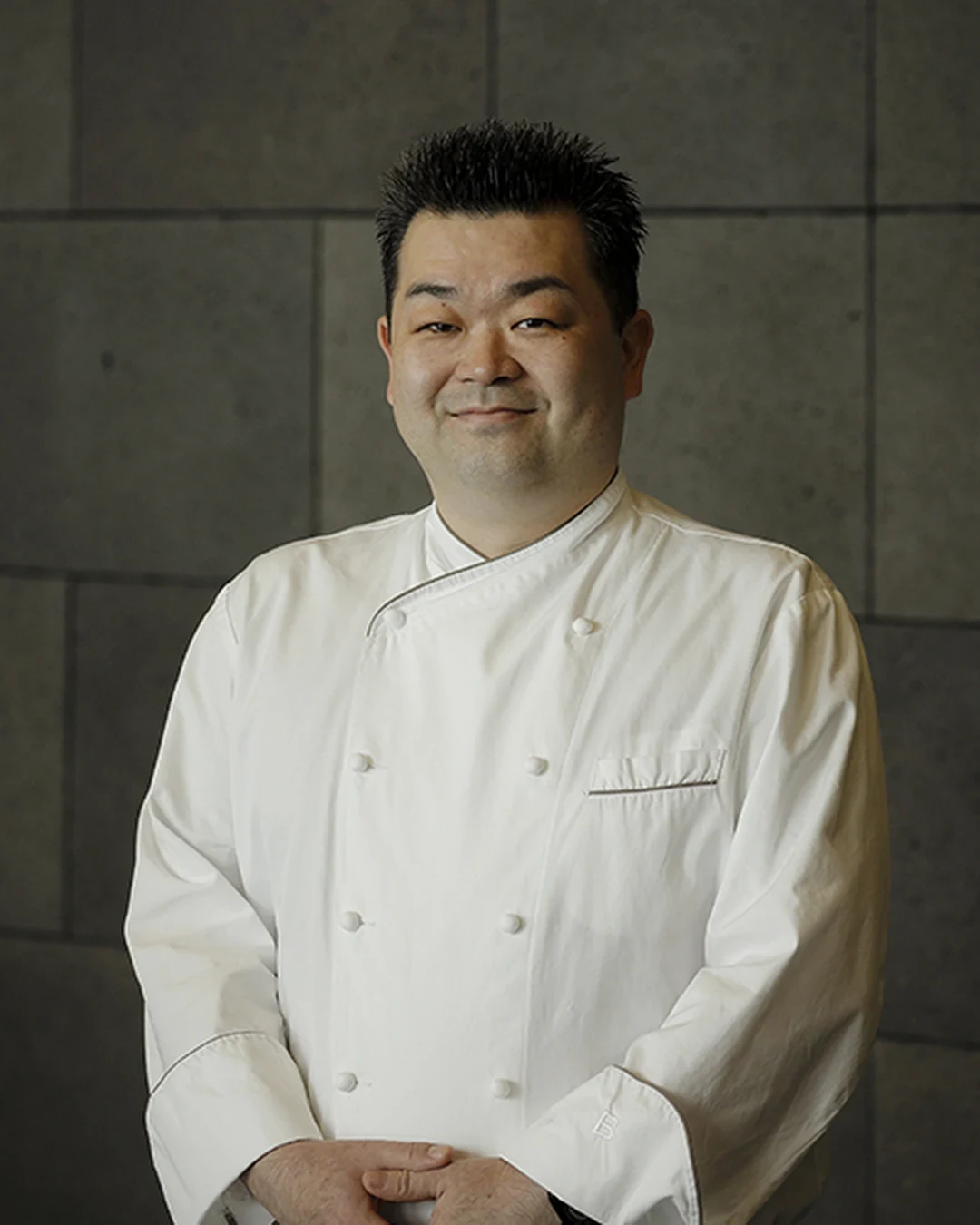
Kawakubo Satoshi
Chef
- 01CuisineModern Kaiseki with Sake Pairings
- 02CityTokyo, Japan
- Michelin Bib Gourmand · Michelin Guide
- Michelin Bib Gourmand · 2026
- Michelin Bib Gourmand · 2024
Setagaya's Sake-Driven Counter and the Value Case for Creative Japanese Dining
Tokyo's Michelin map has long been read as a hierarchy of price tiers. At the leading, three-star kaiseki rooms at venues like Kagurazaka Ishikawa or the austere precision of Azabu Kadowaki command four-symbol price points and multi-month booking windows. Below them sits a tier that the Michelin guide has increasingly recognised through its Bib Gourmand designation, creative, serious kitchens that price against the neighbourhood rather than against the global luxury market. Seki Hanare, in the residential Setagaya ward, sits at the ¥¥ price tier, which in practical terms means the cooking is doing most of the work that much more expensive rooms claim as their exclusive territory.
The Bib Gourmand category exists precisely to surface this gap. Michelin's inspectors award it to tables offering quality they consider above its price bracket, a structural claim that the guide rarely makes casually. For a creative Japanese kitchen to receive this designation is notable because the category's logic cuts against the assumption that serious sake programmes and inventive tsukuri arrangements require a kaiseki budget to execute.
The Sunday letter
Find new places through the people who run them.
Our Sunday email brings you the chefs, winemakers and hoteliers behind our newest stories. See a sample before you subscribe.
See a sample of the Sunday emailOne email a week. Unsubscribe from any issue.
What the Menu Architecture Signals
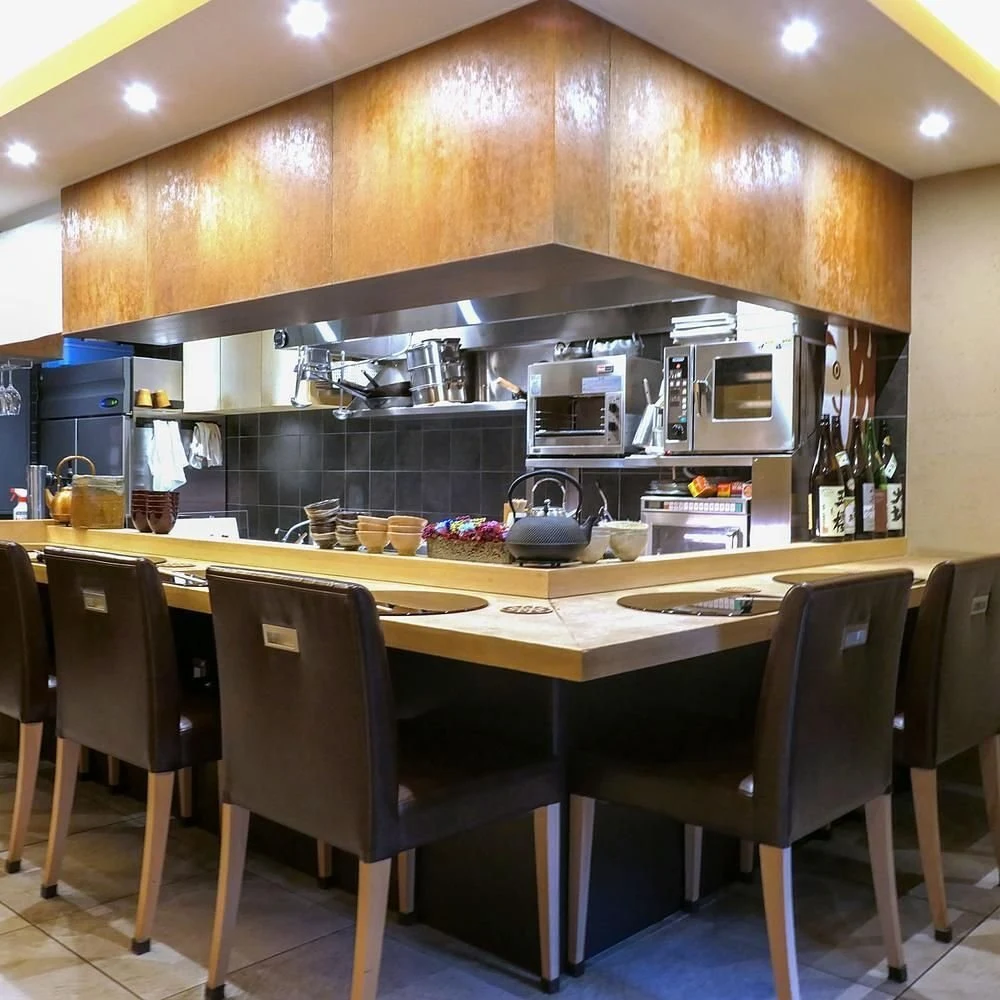
Creative Japanese dining at this level tends to organise the meal around a core logic. At Seki Hanare, that logic is the relationship between food and sake. The opening combination platter of appetisers is constructed not simply for variety but to support sustained drinking across multiple pour styles, a structural choice that shapes portion size, salt levels, and the sequencing of flavours in ways a conventional kaiseki progression does not. This is a different proposition from, say, the wine-integration approach at Jingumae Higuchi, which operates at a higher price point and within a different stylistic tradition.
The tsukuri course, raw fish presentations, employs what the kitchen describes as ingenious condiment arrangements. In the broader context of Tokyo's sashimi culture, the condiment suite surrounding a tsukuri course is often where a kitchen signals its depth: the quality of wasabi, the variety of supporting elements, and how those elements are calibrated to the fish. At Seki Hanare, the framing of tsukuri as a sake-pairing vehicle rather than a standalone showpiece is a coherent editorial decision about what the meal is for.
Meat courses are treated as indispensable rather than supplementary. In traditional kaiseki, meat occupies a contested position, many purist rooms minimise it or exclude it entirely in favour of fish and vegetable progressions. The deliberate inclusion of meat as a structural element here aligns more with the creative izakaya tradition than with kaiseki orthodoxy, which helps explain both the price tier and the generous portioning philosophy.
The Sake and Shochu Collection
The drinks programme at Seki Hanare was assembled through direct brewery visits, which in Japan's sake world carries a specific meaning. Breweries do not wholesale to everyone; relationships with small regional producers, particularly for local and limited releases, are built over years of personal contact. The resulting collection of sake and shochu leans toward regional specificity rather than the prestige-label approach common in higher-end Tokyo rooms.
The strict Japanese-only policy on wine and whisky extends this logic. Rather than maintaining an imported wine list alongside the Japanese spirits, the default at many restaurants in this price tier, Seki Hanare treats the constraint as a curation statement. Japanese whisky has achieved its own premium market position globally; Japanese wine, particularly from Yamanashi and Hokkaido, has grown in seriousness over the past decade. Presenting both alongside sake and shochu builds a drinks menu that functions as a survey of domestic fermentation and distillation.
For comparison, Ginza Fukuju operates in a higher price tier with a different drinks emphasis, and the kaiseki rooms referenced above integrate their beverage programmes quite differently. Seki Hanare's approach, sake-first, all-Japanese, brewery-sourced, is a coherent identity claim rather than a budget compromise.
Setagaya as a Dining Address
Setagaya ward sits southwest of central Tokyo. It is one of the city's most populous wards and has a character defined by residential density and a cluster of neighbourhood-scale restaurants rather than the destination-dining concentration of Ginza, Shinjuku, or Minami-Aoyama. Eating in Setagaya involves making a deliberate choice to leave the central dining corridors, which in practice means the tables here draw a local crowd rather than the hotel-guest and expense-account traffic that fills more central rooms.
This matters for the value proposition. A ¥¥ creative Japanese kitchen in Setagaya prices against Setagaya competition, not against Ginza. The address is not a liability, Tokyo's most discussed neighbourhood restaurants frequently sit outside the obvious luxury zones. Myojaku is another example of serious cooking operating outside the central tier at a price point that reflects its neighbourhood context.
Seki Hanare's address at 3 Chome-1-3 Setagaya, Setagaya City, sits within a walkable reach of Setagaya Station on the Setagaya Line, one of Tokyo's smaller private tramlines. For visitors based centrally, the journey is modest but intentional.
Planning Your Visit
The Google rating of 4.2 across 88 reviews is consistent with a kitchen that delivers reliably. Volume is low enough that individual visits register meaningfully in the review record.
| Venue | Price Tier | Cuisine Focus | Recognition | Location |
|---|---|---|---|---|
| Seki Hanare | ¥¥ | Creative Japanese, sake-driven | Michelin Bib Gourmand 2024 | Setagaya |
| Myojaku | Not specified | Japanese | Michelin recognised | Tokyo |
| Kagurazaka Ishikawa | ¥¥¥¥ | Kaiseki | Michelin starred | Kagurazaka |
| Jingumae Higuchi | Higher tier | Creative Japanese | Michelin recognised | Jingumae |
Booking is recommended, and the restaurant is open Tue-Sun from 6 to 11 PM; it is closed on Mondays. Given the Bib Gourmand designation and limited neighbourhood scale, advance planning is advisable.
Chef Kawakubo Satoshi runs the kitchen. Chef Kawakubo Satoshi runs the kitchen.
Broader Japan Context
The creative izakaya-adjacent tradition that Seki Hanare works within has produced some of the most argued-about tables in Japan over the past decade. For readers building a broader Japan itinerary, Gion Sasaki in Kyoto represents a different but related approach to Japanese creativity at a higher price point, while HAJIME in Osaka and Kashiwaya Osaka Senriyama illustrate how the Osaka dining scene handles the same territory. In Nara, akordu offers a European-inflected comparison point, and Goh in Fukuoka shows how regional cities have developed their own distinct creative Japanese registers. Isshisoden Nakamura in Kyoto provides further context on the traditional kaiseki lineage that creative kitchens like Seki Hanare are, in various ways, departing from.
Questions
Frequently asked
What recognition does Seki Hanare hold?
Seki Hanare holds a Michelin Bib Gourmand.
Who works at Seki Hanare?
Made By profiles Kawakubo Satoshi (Chef) at Seki Hanare.
How expensive is Seki Hanare?
Seki Hanare is listed at a price level of $$$$.
Where is Seki Hanare and what does it serve?
Seki Hanare is in Setagaya, Tokyo, serving Modern Kaiseki with Sake Pairings.
The field
How it compares
| Place | Cuisine | Notes | Awards |
|---|---|---|---|
| Seki Hanare | Modern Kaiseki with Sake Pairings | Setagaya, $$$$ | · |
| Den | Modern Japanese Kaiseki | Tokyo | Michelin 2 Stars, World's 50 Best |
| Florilège | Modern French-Japanese Plant-Based Fine Dining | Tokyo | Michelin 2 Stars, World's 50 Best |
| Narisawa | Modern Japanese Satoyama Fine Dining | Tokyo | Michelin 2 Stars, World's 50 Best |
| Quintessence | Modern French Fine Dining | Tokyo | Michelin 3 Stars |
| Sazenka | Modern Chinese Fine Dining | Tokyo | Michelin 3 Stars, World's 50 Best |
| Sézanne | Modern French Fine Dining | Tokyo | Michelin 3 Stars, World's 50 Best |
In residence
Similar places
Modern Japanese Kaiseki
Den
Tokyo, Japan
★★ · 50 Best
Modern French-Japanese Plant-Based Fine Dining
Florilège
Tokyo, Japan
★★ · 50 Best
Modern Japanese Satoyama Fine Dining
Narisawa
Tokyo, Japan
★★ · 50 Best
Modern French Fine Dining
Quintessence
Tokyo, Japan
★★★
Modern Chinese Fine Dining
Sazenka
Tokyo, Japan
★★★ · 50 Best
Modern French Fine Dining
Sézanne
Tokyo, Japan
★★★ · 50 Best
The Sunday letter
Get the next Made By story in your inbox.
We send one email every Sunday morning with the places and people we covered that week.
See a sample of the Sunday emailOne email a week. Unsubscribe from any issue.