Smoked Room
- 01CuisineFire Omakase
- 02CityDubai, United Arab Emirates
- 03RecognitionOne Michelin Star
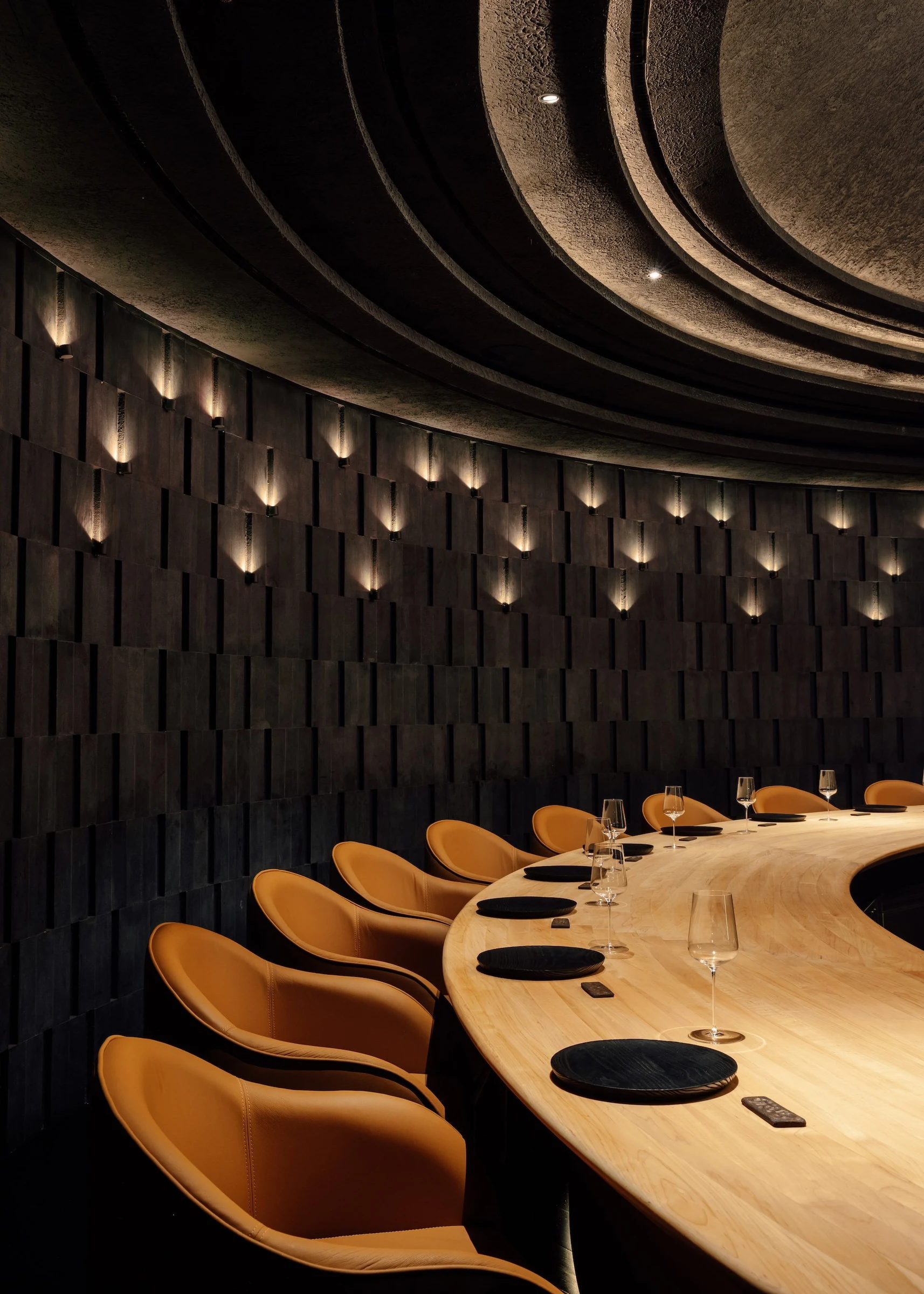
Fourteen seats around live fire
Smoke held to the pass
The first decision is fire, not garnish. Smoked Room in Dubai works inside that discipline at the pass, where smoke has to season without blurring the line of a course. The concept belongs to the Andalusian chef Dani García, who trained at La Cónsula in Málaga and under Martín Berasategui before building a portfolio that now holds three Michelin stars, and who adapts Japanese omakase principles around open fire rather than raw fish. No head chef is named to the public for the Dubai counter, so the work has to be read where it happens: timing, composure, and the ability to hold a tasting menu together while the guest sits close enough to watch the hands move.
The Dubai room opened in January 2024 as the Palm Jumeirah outpost of a fire omakase idea first shaped in Madrid, a restaurant within a restaurant hidden at the back of Leña at St. Regis Gardens. The format compresses the kitchen into a 14-seat counter, so the work reads bench-side rather than distant. Seasonality and precision drive the cooking, with Japanese technique used to refine texture and flavor rather than decorate them. The restaurant holds 1 Michelin star and was ranked 45 on MENA's 50 Best Restaurants in 2025, but the more exacting pressure is built into the room itself. There is little space for drift.
The Sunday email
Read about the people behind restaurants like Smoked Room in the Sunday email.
Every Sunday we send a lead story and up to four more about the chefs, winemakers, sommeliers and hoteliers behind the restaurants, bars, wineries and hotels we cover.
Recent stories

Free. One email a week, and you can unsubscribe from any issue.
A tasting menu built around embers
The program moves as omakase, with the guest handing over sequence, temperature, and pace to the pass. Fire supplies the method: grilling, smoking, ember heat, dry-aging, fermentation, and extraction all appear in the cooking described around the menu. The signatures carry that thread without repeating it in the same register. Amaebi may take smoke and brown butter; Smoked Duck Anolini brings pasta work into a broth shaped by smoked olive oil and herbs; A5 Wagyu is grilled for fat and texture, then cut with soy and wasabi. Smoked Eel Nitro Tomato shows the same instinct in colder form, where smoke meets acidity instead of fat.
The tasting menu has been described across 11-13 courses, though the house also presents it through named seasonal menus such as Kõsei no Hi and Matsuri. That elasticity suits the format. Bread with red miso butter can set a quiet opening; seaweed-steamed langoustine, charcoal-grilled pigeon, chawanmushi with smoked leek vichyssoise, or smoked risotto with Parmesan and black truffle can pull the meal toward heat, fat, and umami. The beverage program follows with wine pairings, tea pairings, and non-alcoholic alternatives, chosen to sit beside smoke rather than compete with it.
The counter, the mirror, the dessert room
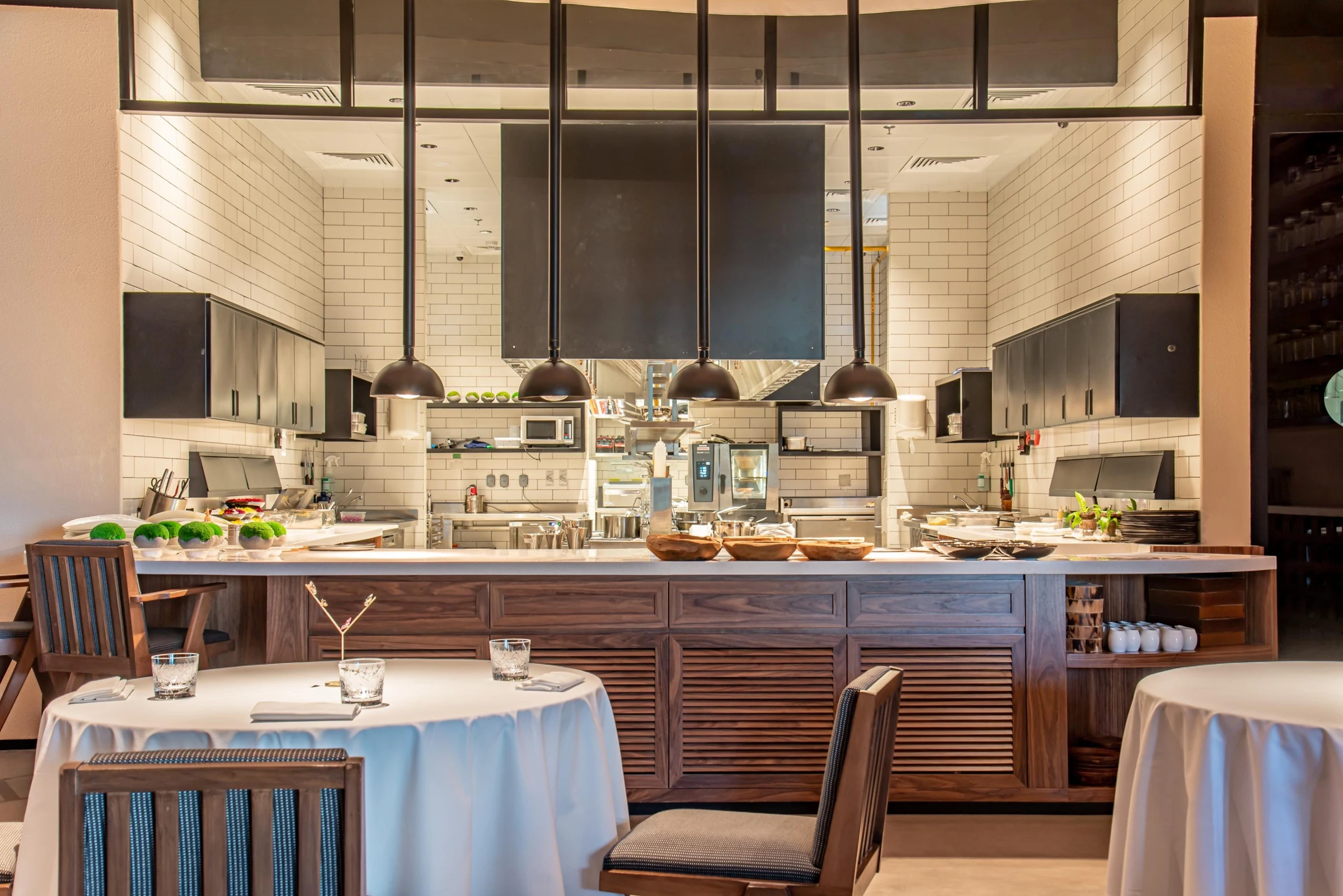
The room keeps the work close. Fourteen guests face the counter, while an open kitchen and ceiling mirror make the pass legible without turning it into spectacle. Smoke appears in plumes rather than clouds. The lighting stays low, the conversation level controlled, and the fire-inspired surfaces keep the eye on what is happening at the station. It is an intimate restaurant by design, but not a hushed one; chefs explain, plate, grill, and move in view.
After the savoury progression, the meal shifts into a moody dessert room, a change of station that gives the final courses their own register. Burnt pumpkin purée with mandarin sorbet, chocolate with barley miso and smoke, or apple with green shiso and yoghurt continue the same discipline in another temperature. The close here belongs to the room as much as to the menu: a small counter, a live fire, and the last trace of Smoked Duck Anolini in the smoke.
Questions
Frequently asked
What kind of restaurant is Smoked Room?
Smoked Room is a 14-seat fire omakase restaurant on Palm Jumeirah in Dubai, shaped around smoke, open fire, and a tasting menu format.
Who is behind the concept?
The concept belongs to the Andalusian chef Dani García, and the Dubai room is his Palm Jumeirah outpost of a fire omakase idea first shaped in Madrid.
What recognition does it hold?
Smoked Room holds 1 Michelin star and was ranked 45 on MENA's 50 Best Restaurants in 2025.
Do you need to book, and what is the dress code?
Reservation is essential, bookings are handled through Mozrest, and the dress code is smart casual.
What are some of the dishes it is known for?
Named dishes include A5 Wagyu, Smoked Duck Anolini, Amaebi, and Smoked Eel Nitro Tomato.
The field
How it compares
| Place | Awards | Cuisine | Notes |
|---|---|---|---|
| Smoked Room | Michelin 1 Star, 50 Best | Fire Omakase | Palm Jumeirah, $$$$ |
| 11 Woodfire | Michelin 1 Star, 50 Best | Modern Woodfire Grill | Dubai |
| FZN by Björn Frantzén | Michelin 3 Stars, 50 Best | Modern Scandinavian-Japanese Fine Dining | Dubai |
| Orfali Bros | Michelin 1 Star, 50 Best | Contemporary Middle Eastern Bistro | Dubai |
| Ossiano | Michelin 1 Star, 50 Best | Modern Seafood Fine Dining | Dubai |
| Row on 45 | Michelin 2 Stars, 50 Best | Modern Japanese Fine Dining | Dubai |
| Trèsind Studio | Michelin 3 Stars, 50 Best | Modern Indian Fine Dining | Dubai |
Similar places
Modern Woodfire Grill
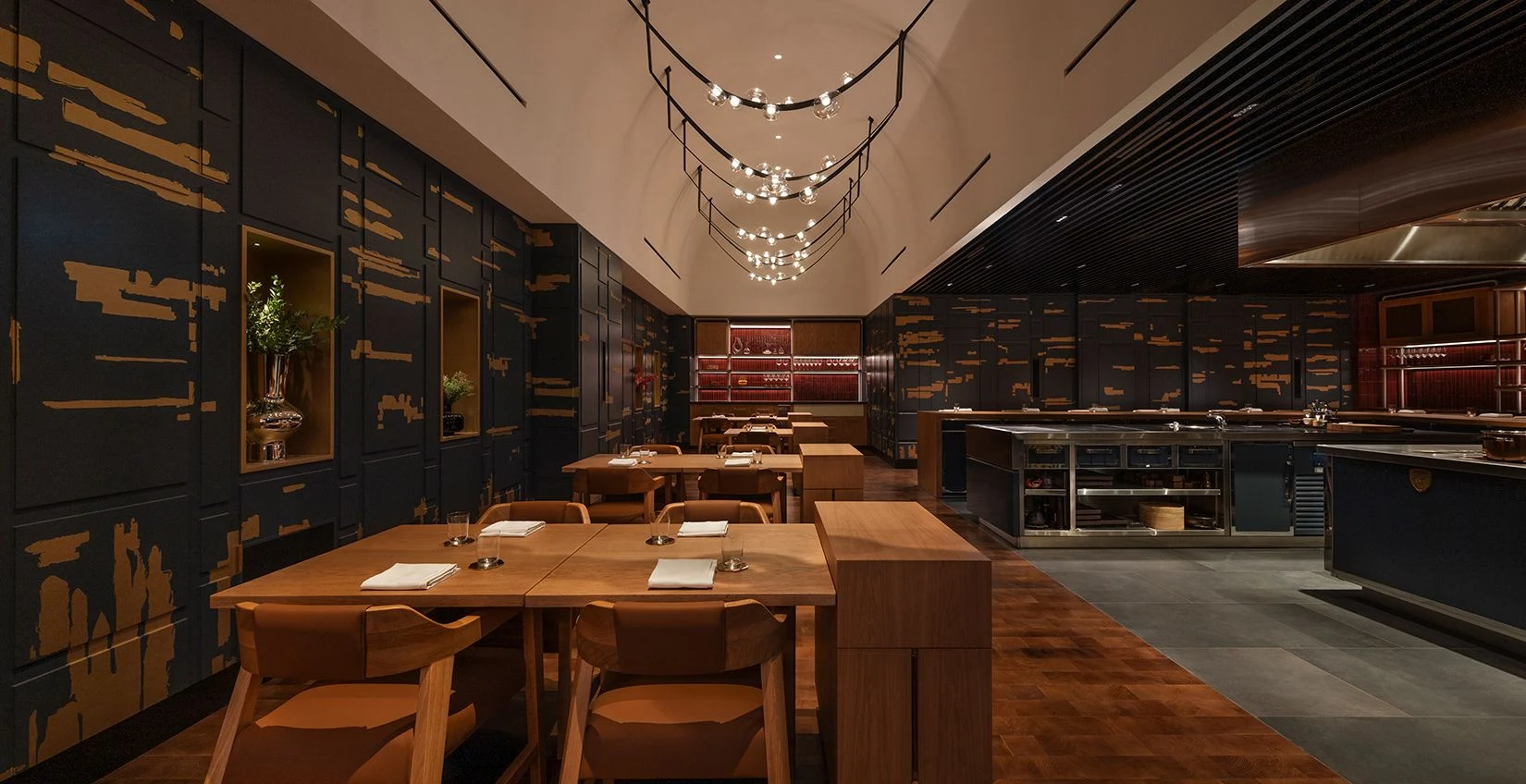
11 Woodfire
Dubai, United Arab Emirates
★ · 50 Best
Modern Scandinavian-Japanese Fine Dining
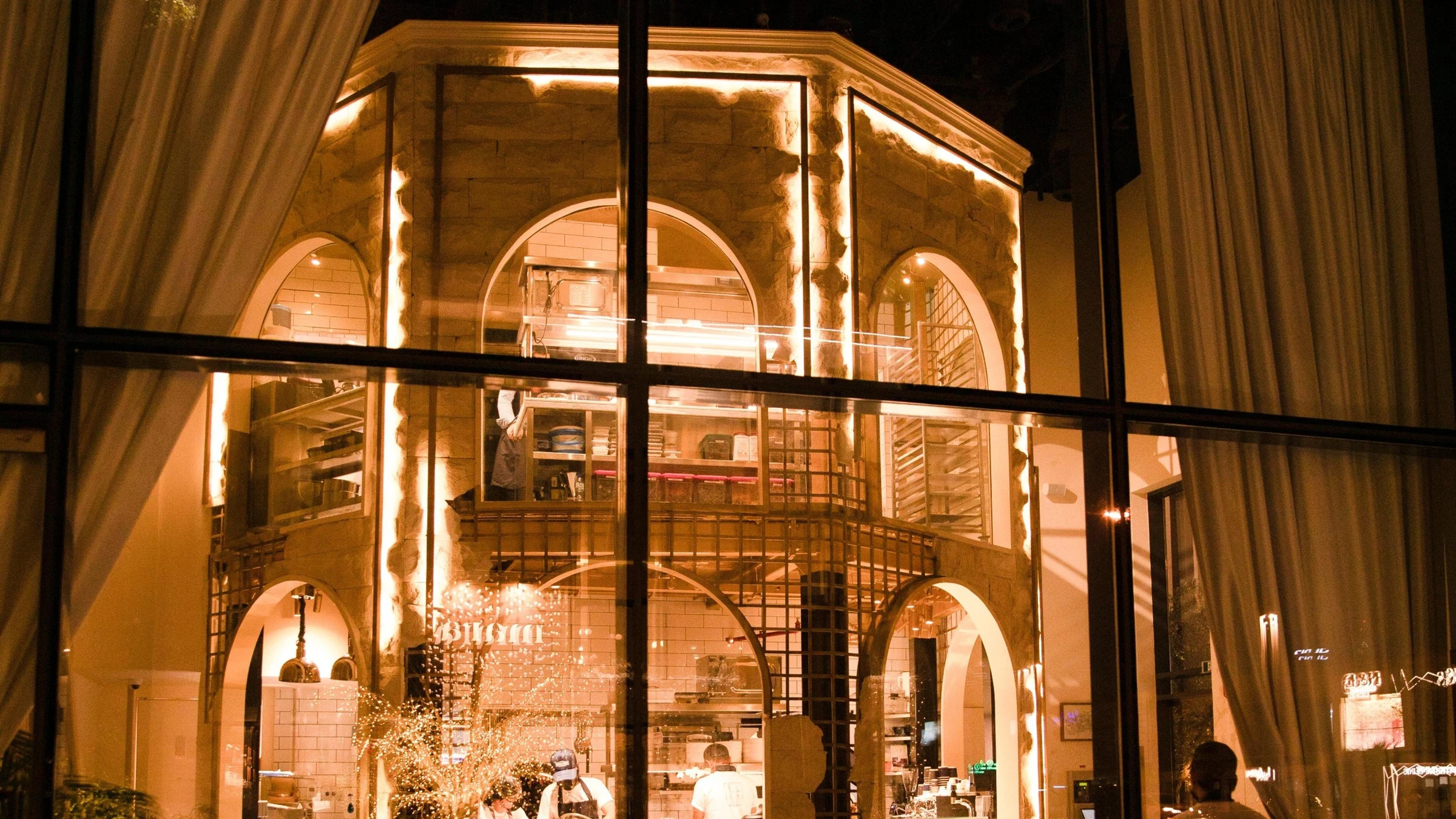
FZN by Björn Frantzén
Dubai, United Arab Emirates
★★★ · 50 Best
Contemporary Middle Eastern Bistro
Orfali Bros
Dubai, United Arab Emirates
★ · 50 Best
Modern Seafood Fine Dining
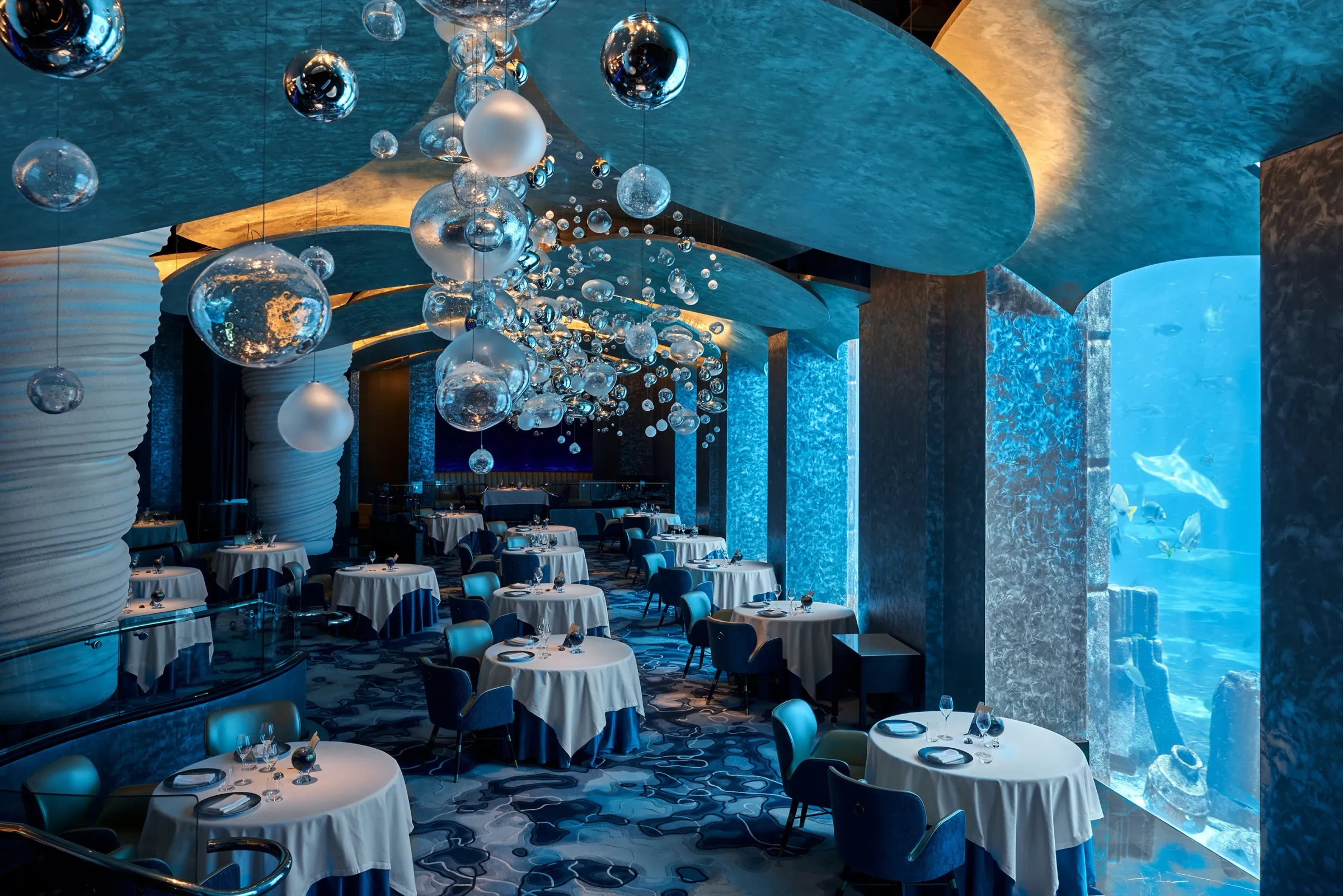
Ossiano
Dubai, United Arab Emirates
★ · 50 Best
Modern Japanese Fine Dining
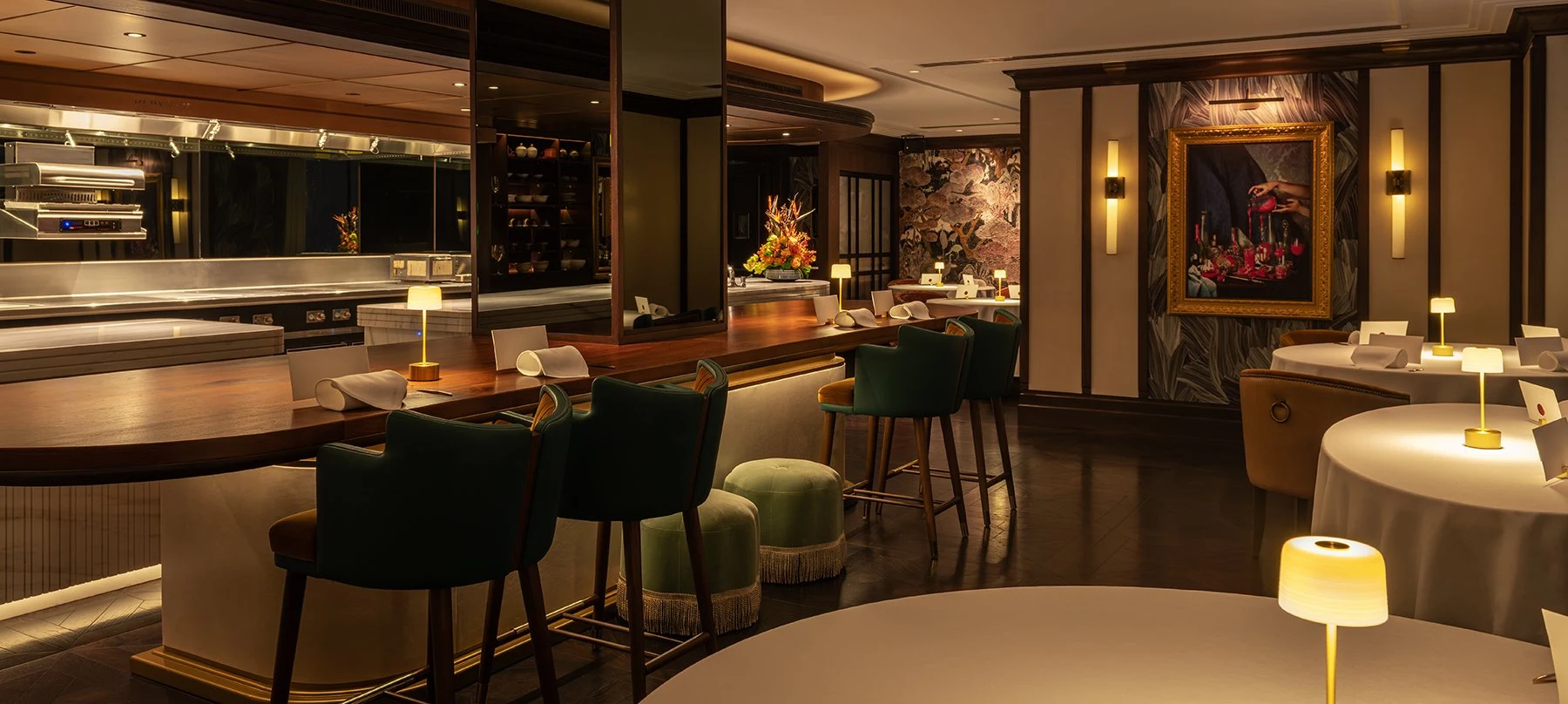
Row on 45
Dubai, United Arab Emirates
★★ · 50 Best
Modern Indian Fine Dining
Trèsind Studio
Dubai, United Arab Emirates
★★★ · 50 Best
The Sunday email
Read about the people behind restaurants like Smoked Room in the Sunday email.
Every Sunday we send a lead story and up to four more about the chefs, winemakers, sommeliers and hoteliers behind the restaurants, bars, wineries and hotels we cover.
Recent stories
Free. One email a week, and you can unsubscribe from any issue.