Sushi Hyun
In Residence
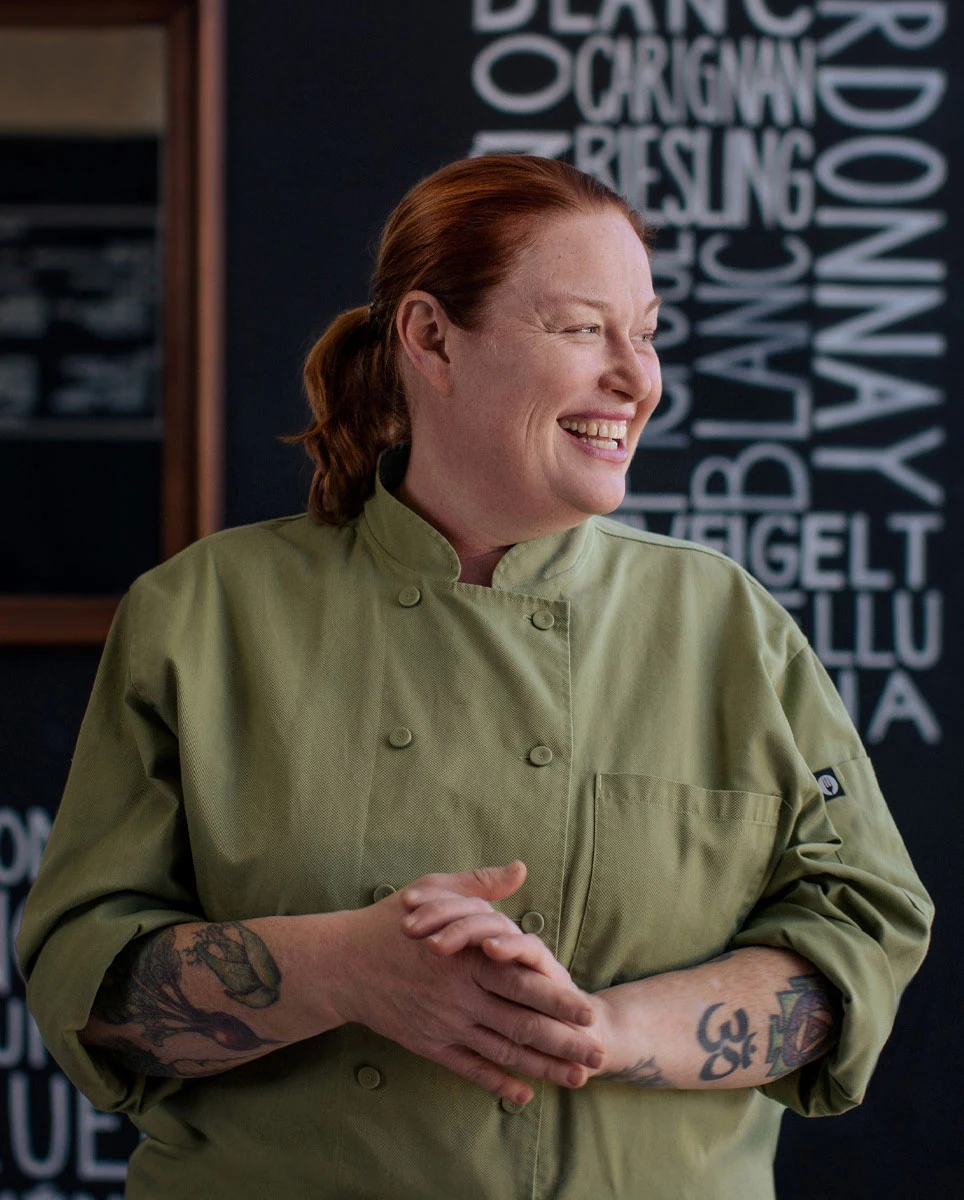
Juhyun Lee
Owner
- 01CuisineTraditional Japanese Omakase
- 02CityVancouver, Canada
- 03RecognitionOne Michelin Star
- 1 Michelin Star · Michelin Guide
- Canada's 100 Best Recommended Restaurant #2 · 2026
- Michelin 1 Star · 2025
Where Vancouver's Omakase Scene Earns Its Reputation
Vancouver's premium Japanese dining tier has contracted and concentrated over the past decade. Where the city once spread its sushi reputation across a wide band of mid-range Japanese restaurants, a smaller cohort of counter-format omakase rooms now anchors the conversation at the leading end. Masayoshi, Okeya Kyujiro, and Sushi Masuda all operate within this compact comparable set, where the format disciplines are consistent: intimate seating, a single tasting sequence, and a chef-to-guest ratio that makes the counter itself the main event. Sushi Hyun, at 795 Jervis Street in the West End, belongs to that cohort, and critical reception has placed it firmly in the upper bracket of the group.
What separates the finest of these rooms from the rest is rarely the fish alone. It is the physical environment, the calibration of service, and the degree to which the counter functions as a stage without becoming theatrical. On Jervis Street, the exterior gives nothing away, a deliberate understatement that has become its own signal in a category where discretion reads as a credential.
The Counter as the Architecture of the Meal
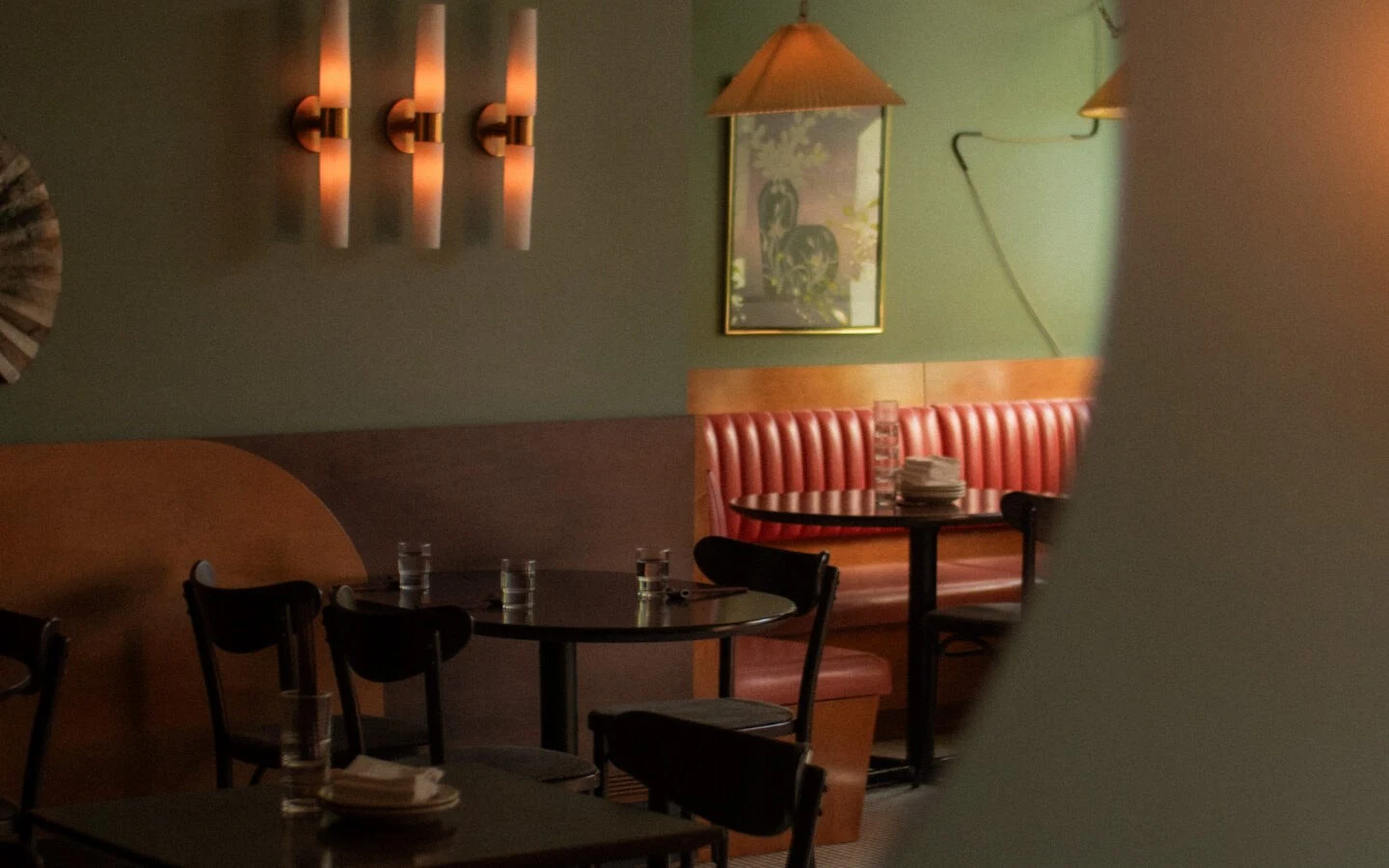
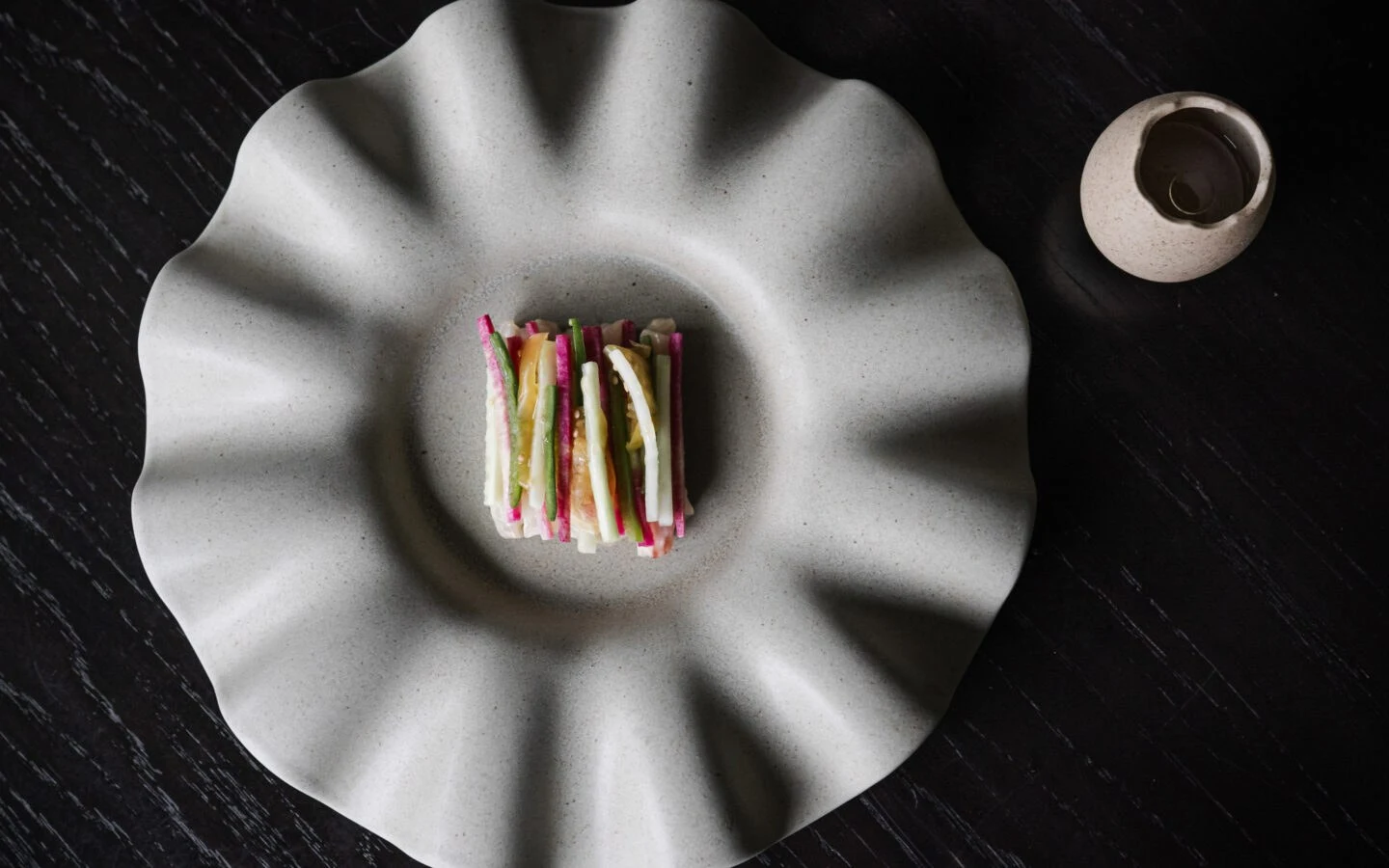
In omakase, the counter is not furniture, it is the primary design decision. At Sushi Hyun, the hinoki counter is milled from a tree more than two centuries old, a material choice that places the room in a specific tradition of Japanese craft where age and provenance of materials carry as much weight as their appearance. Hinoki cypress, prized for its faint, clean fragrance and its warmth against the hand, has long been the material of choice in high-end Japanese counter design, and a piece sourced from timber of this age is a statement about the seriousness of the project. The ceramics in service are hand-made, reinforcing a coherent design philosophy where every object at the table has been considered rather than specified from a catalogue.
The result is a room that reads as Japanese luxury in a specific, non-decorative register: materials with history, restraint in the visual field, and an atmosphere calibrated to direct attention toward the food rather than away from it. For diners familiar with Tokyo's premium omakase rooms, the reference points are legible. For those coming to this format for the first time, the room does the interpretive work without requiring any explanation.
The Food: Edomae Discipline with a Korean Undertone
Edomae sushi, as a technique, is defined by the handling of fish before it reaches the rice, curing, marinating, aging, and temperature management that transform raw material into something with layered flavour and texture. It is a tradition with strict internal logic, and counters that practice it seriously tend to attract critical attention because the work is visible in every piece. At Sushi Hyun, the nigiri program is described in those terms, with temperature control and ingredient quality at the centre of the approach.
The menu does not restrict itself to pure Edomae orthodoxy, however. A fried karei flounder rice dish, positioned as a nod to Chef Juhyun Lee's Korean background, introduces a different register into the sequence: comforting, textured, and grounded in a culinary tradition that sits adjacent to but distinct from Japanese kaiseki logic. This kind of considered cross-reference, where a chef's full biographical range appears in a single dish rather than dominating the menu, is a marker of confidence. It tells the diner something specific without requiring any statement about identity or influence. The critical reception has noted exactly this quality: that the meal holds together as a coherent whole while allowing room for something personal to surface.
Kaiseki Yu-zen Hashimoto in Toronto and, in different idioms, at Alo in Toronto and Tanière³ in Québec City. In each case, the critical argument turns on whether the personal reference enriches or interrupts the primary format. At Sushi Hyun, the evidence points to the former.
Service and Beverage: The Other Half of the Equation
In a counter format, service has nowhere to hide. The attentiveness or its absence is experienced at close range, and the pacing of a meal lives or dies on how well the room reads its guests. Critical notices for Sushi Hyun have specifically flagged the service as effortlessly attentive and unobtrusive, a pairing that is harder to achieve than it sounds. Unobtrusiveness in a small room requires active discipline: knowing when to speak, when to step back, and how to sustain presence without creating the pressure of being watched.
The wine and sake program is assembled by Chef Lee himself, which in practice means the beverage list functions as an extension of his editorial voice on the food rather than a separate purchasing exercise. At this price tier, a chef-curated drink list signals that pairings have been considered from the kitchen side first, with specific courses in mind, rather than built around a general idea of what Japanese food requires. For guests who want to follow the chef's selections rather than choose independently, this is a meaningful structural advantage.
Where Sushi Hyun Sits in Vancouver's Broader Scene
The $$$$ omakase format in Vancouver now competes with a broader set of premium dining options across cuisines and styles. Octopus Garden and Sumibiyaki Arashi represent different points on the Japanese dining spectrum in the city, while rooms like Kissa Tanto and AnnaLena anchor the contemporary and fusion tiers. In this context, Sushi Hyun's critical positioning is as a specialist counter where the omakase format is taken seriously as a complete discipline rather than adapted for volume or accessibility.
For Canadian omakase at a comparable level of critical recognition, the comparable set extends beyond Vancouver. Le Bernardin in New York City sets a useful international reference point for what sustained critical attention at the top of a seafood-focused format looks like over time. Domestically, Jérôme Ferrer - Europea in Montreal and Restaurant Pearl Morissette in Lincoln operate in adjacent premium tiers where the critical argument is similarly about restraint, ingredient integrity, and format discipline.
Planning Your Visit
Sushi Hyun is at 795 Jervis Street in Vancouver's West End, a neighbourhood dense with dining options but where this counter sits as a singular format in its tier. The $$$$ price point places it at the premium end of Vancouver's omakase market, where advance booking is essential and demand is consistent enough that last-minute availability is rare. The address is walkable from the West End's main accommodation corridor and accessible from downtown without requiring a car. Given the counter format, the room rewards guests who arrive on time and prepared to follow the chef's sequence at its own pace.
Questions
Frequently asked
What recognition does Sushi Hyun hold?
Sushi Hyun holds 1 Michelin star.
Who works at Sushi Hyun?
Made By profiles Juhyun Lee (Chef-Owner) at Sushi Hyun.
How expensive is Sushi Hyun?
Sushi Hyun is listed at a price level of $$$$.
Where is Sushi Hyun and what does it serve?
Sushi Hyun is in West End, Vancouver, serving Traditional Japanese Omakase.
The field
How it compares
| Place | Awards | Cuisine | Notes |
|---|---|---|---|
| Sushi Hyun | Michelin 1 Star | Traditional Japanese Omakase | West End, $$$$ |
| AnnaLena | Michelin 1 Star, World's 50 Best | Modern Canadian Tasting Menu | Vancouver |
| Burdock & Co | Michelin 1 Star | Farm-to-Table Pacific Northwest Tasting Menu | Vancouver |
| Elisa | · | Modern Steakhouse | Vancouver |
| Hawksworth | · | Contemporary Canadian | Vancouver |
| Kissa Tanto | Michelin 1 Star | Japanese-Italian Fusion | Vancouver |
| Published on Main | Michelin 1 Star, World's 50 Best | Contemporary Canadian | Vancouver |
In residence
Similar places
Modern Canadian Tasting Menu
AnnaLena
Vancouver, Canada
★ · 50 Best
Farm-to-Table Pacific Northwest Tasting Menu
Burdock & Co
Vancouver, Canada
★
Modern Steakhouse
Elisa
Vancouver, Canada
Contemporary Canadian
Hawksworth
Vancouver, Canada
Japanese-Italian Fusion
Kissa Tanto
Vancouver, Canada
★
Contemporary Canadian
Published on Main
Vancouver, Canada
★ · 50 Best