Sushi Ichijo
In Residence
Satoshi Ichjijo
Chef
- 01CuisineEdomae Omakase
- 02CityTokyo, Japan
- 03RecognitionOne Michelin Star
- 1 Michelin Star · Michelin Guide
- Michelin 1 Star · 2026
- Opinionated About Dining Top Restaurants in Japan Recommended · 2026
- Opinionated About Dining Top Restaurants in Japan Ranked #548 · 2025
- Michelin 1 Star · 2024
Edomae on its own terms: what Sushi Ichijo represents in Tokyo's mid-tier omakase market
Tokyo's Michelin-starred sushi scene operates across a wide price band. At one end sit the three-star counters in Ginza and Minami-Aoyama, venues like Harutaka and Sukiyabashi Jiro Roppongiten, where per-head spend routinely clears ¥50,000 and booking windows extend to months in advance. At the other end, one-star counters in less trafficked districts offer the same fundamental format: sequential nigiri, rice seasoned with vinegar, and fish sourced that morning, at a lower price ceiling. Sushi Ichijo, holding one Michelin star, occupies that second tier. Its address in Higashinihonbashi, a commercial district in Chuo City that draws far fewer restaurant tourists than Ginza, is itself a signal: the economics here are shaped by rent, clientele, and a different kind of ambition.
That positioning matters when thinking about value. The ¥¥¥ price designation places Sushi Ichijo below the ¥¥¥¥ bracket that defines Sushi Kanesaka and its lineage counters. For diners calibrating a Tokyo omakase budget, the gap between those tiers can be substantial. What changes at the lower price point is rarely the technical foundation, rice temperature, fish ageing, knife work, and more often the provenance sourcing, the room scale, and the degree of ceremony around the meal. Sushi Ichijo earns its star on craft, not on theatre.
The Edomae argument: tradition as a working method
Edomae sushi is a specific culinary tradition, not a marketing category. It originated in Edo-period Tokyo as a fast food sold from street stalls near the bay, using fish treated with vinegar, salt, soy, or simmering to extend shelf life before refrigeration existed. The red vinegar (akazu) that once coloured Edo-period rice fell out of wide use across the twentieth century as white rice vinegar became dominant. Its continued use at a counter like Sushi Ichijo is a deliberate technical choice, not nostalgia. Red vinegar produces a slightly earthier, more savoury rice that some practitioners argue pairs more honestly with fatty fish than the cleaner acidity of white vinegar blends.
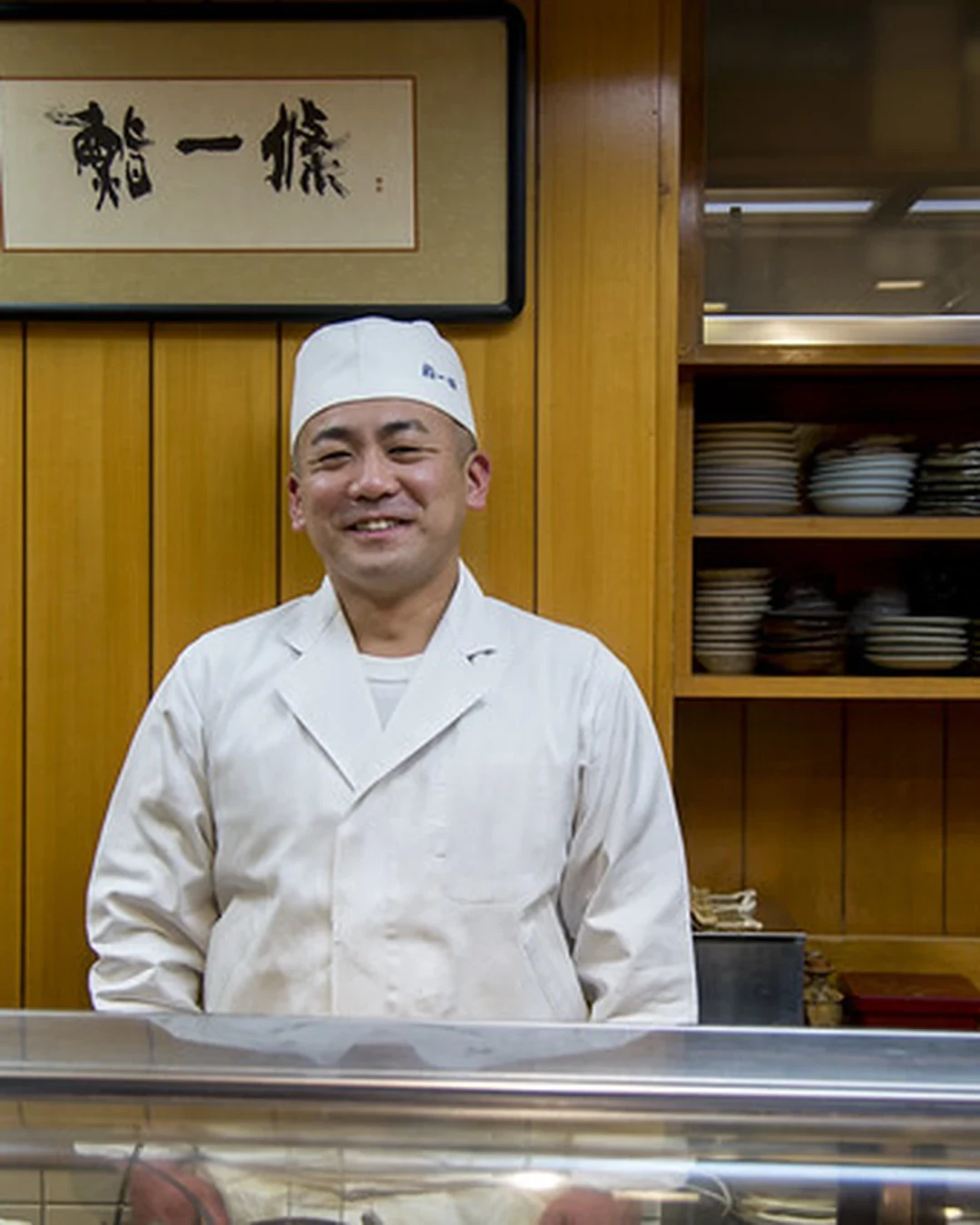
Chef Satoshi Ichijo works within this lineage explicitly. The rice is seasoned with red vinegar, a marker that aligns the counter with Edomae purists rather than with the fusion-inflected sushi that has proliferated across Tokyo's international dining tier. The approach at Edomae Sushi Hanabusa offers a useful comparison point within the same tradition. At Sushi Ichijo, the Edomae framework is not applied as a rigid constraint, small innovations appear in the menu, but the technical base remains orthodox. That orthodoxy is, in part, what the Michelin evaluation is recognising: consistency and precision within a defined discipline.
What the menu tells you about the chef's priorities
Two preparations in the Sushi Ichijo menu stand as clear editorial signals about how the kitchen thinks. The first is Japanese halfbeak (sayori) and horse mackerel (aji), both accented with ginger and a mirin-soy reduction. These are modest, seasonal fish, neither commands the premium of bluefin tuna or the prestige of uni, but they are technically demanding to handle and easy to overshadow with heavy seasoning. Using them as a vehicle for flavour layering rather than defaulting to the safe centre-cuts of expensive fish is a choice that reflects confidence in the tradition.
The second is simmered conger eel (anago), served both salted and with eel sauce, side by side, for direct comparison. This is an instructional gesture. It invites the diner to taste the structural quality of the eel itself before the sauce adds complexity. Anago done well, soft but not collapsing, cooked long enough to lose the chewiness that cheaper preparations retain, is a reliable benchmark for a counter's technical level. Serving it two ways is a teaching method as much as a presentation choice.
The broader omakase format at this price point across Tokyo tends to place its emphasis on fish quality and rice temperature rather than on the kind of garnish and sauce architecture you find in higher-spend kaiseki-influenced sushi. Hiroo Ishizaka is a useful example of how Japanese cuisine at this tier can split between strict formalism and measured innovation. At Sushi Ichijo, the balance leans toward formalism, with the innovations, the dual anago service, the accented hikari-mono, serving as evidence of mastery rather than departure.
Reading the value equation at ¥¥¥
Practical question for anyone considering a Michelin-starred sushi sitting in Tokyo is what the price tier actually buys. At the ¥¥¥ level, the meal is not inexpensive by any global standard, a full omakase sequence at a counter in this bracket will generally run into the mid-tens-of-thousands of yen. But compared to the ¥¥¥¥ tier, the discount is real, and the credential gap is narrower than the price gap suggests. A single Michelin star, regardless of which district it sits in, represents the same inspector-reviewed standard. The OAD ranking at 548 in Japan, a country with more Michelin-starred restaurants per capita than anywhere else, places Sushi Ichijo in a competitive field. The 4.3 Google rating across 169 reviews suggests the counter performs consistently for a general dining audience.
For travellers building a multi-day Tokyo itinerary that includes serious meals, the value case for a counter like Sushi Ichijo is structural: it allows one Michelin-starred omakase sitting without anchoring the entire trip budget to a single dinner. The neighbourhood, Higashinihonbashi, is a working district rather than a tourist circuit, which keeps the surrounding meal logistics practical rather than elaborate.
Tokyo versus Japan's other sushi markets
Edomae sushi is a Tokyo-specific tradition, but high-level sushi has spread across Japan's major cities. The operating economics differ sharply: a counter in Fukuoka or Osaka carries different rent pressures and a different local clientele than one in Chuo City. Japanese dining more broadly outside Tokyo, from HAJIME in Osaka to Gion Sasaki in Kyoto to Goh in Fukuoka, operates within different culinary traditions, but the demand signals around Michelin recognition and OAD ranking work similarly across markets. For regional contrast, akordu in Nara, 1000 in Yokohama, and 6 in Okinawa each show how the premium dining tier operates across different Japanese contexts.
For those interested in how Edomae craft translates to export markets, Sushi Shikon in Hong Kong and Shoukouwa in Singapore represent the tradition operating within Southeast Asian luxury dining ecosystems, with pricing and clientele that differ substantially from the Tokyo source.
Planning your visit
Address: 3 Chome-1-3 Higashinihonbashi, Chuo City, Tokyo 103-0004. Cuisine: Edomae sushi omakase. Price range: ¥¥¥. Awards: Michelin 1 Star. Reservations are recommended. Dress code is smart casual.
Questions
Frequently asked
What recognition does Sushi Ichijo hold?
Sushi Ichijo holds 1 Michelin star.
Who works at Sushi Ichijo?
Made By profiles Satoshi Ichjijo (Chef) at Sushi Ichijo.
How expensive is Sushi Ichijo?
Sushi Ichijo is listed at a price level of $$$.
Where is Sushi Ichijo and what does it serve?
Sushi Ichijo is in Chūō, Tokyo, serving Edomae Omakase.
The field
How it compares
| Place | Awards | Cuisine | Notes |
|---|---|---|---|
| Sushi Ichijo | Michelin 1 Star | Edomae Omakase | Chūō, $$$ |
| Den | Michelin 2 Stars, World's 50 Best | Modern Japanese Kaiseki | Tokyo |
| Florilège | Michelin 2 Stars, World's 50 Best | Modern French-Japanese Plant-Based Fine Dining | Tokyo |
| Narisawa | Michelin 2 Stars, World's 50 Best | Modern Japanese Satoyama Fine Dining | Tokyo |
| Quintessence | Michelin 3 Stars | Modern French Fine Dining | Tokyo |
| Sazenka | Michelin 3 Stars, World's 50 Best | Modern Chinese Fine Dining | Tokyo |
| Sézanne | Michelin 3 Stars, World's 50 Best | Modern French Fine Dining | Tokyo |
In residence
Similar places
Modern Japanese Kaiseki
Den
Tokyo, Japan
★★ · 50 Best
Modern French-Japanese Plant-Based Fine Dining
Florilège
Tokyo, Japan
★★ · 50 Best
Modern Japanese Satoyama Fine Dining
Narisawa
Tokyo, Japan
★★ · 50 Best
Modern French Fine Dining
Quintessence
Tokyo, Japan
★★★
Modern Chinese Fine Dining
Sazenka
Tokyo, Japan
★★★ · 50 Best
Modern French Fine Dining
Sézanne
Tokyo, Japan
★★★ · 50 Best