Tanière3
- 01CuisineModern Quebec Terroir - Avant-Garde Tasting Menu
- 02CityQuebec City, Canada
- 03RecognitionTwo Michelin Stars
- 2 Michelin Stars · Michelin Guide
- World's 50 Best · #5 · World's 50 Best Restaurants
- Relais Chateaux Award · 2026
- Michelin 2 Stars · 2026
- World's 50 Best North America's Best Restaurants #9 · 2026
- La Liste Top Restaurants: 81pts · 2026
- Wine Spectator Best of Award of Excellence · 2026
- AAA Top 10 Restaurants: 200pts · 2026
- Star Wine List · 2026
- The Best Chef One Knife · 2025
- World's 50 Best North America's Best Restaurants #5 · 2025
- AAA 5 Diamond · 2025
- Michelin 2 Stars · 2025
- Canada's 100 Best Restaurants #13 · 2025
Stone, Darkness, and the Smell of Boreal Forest
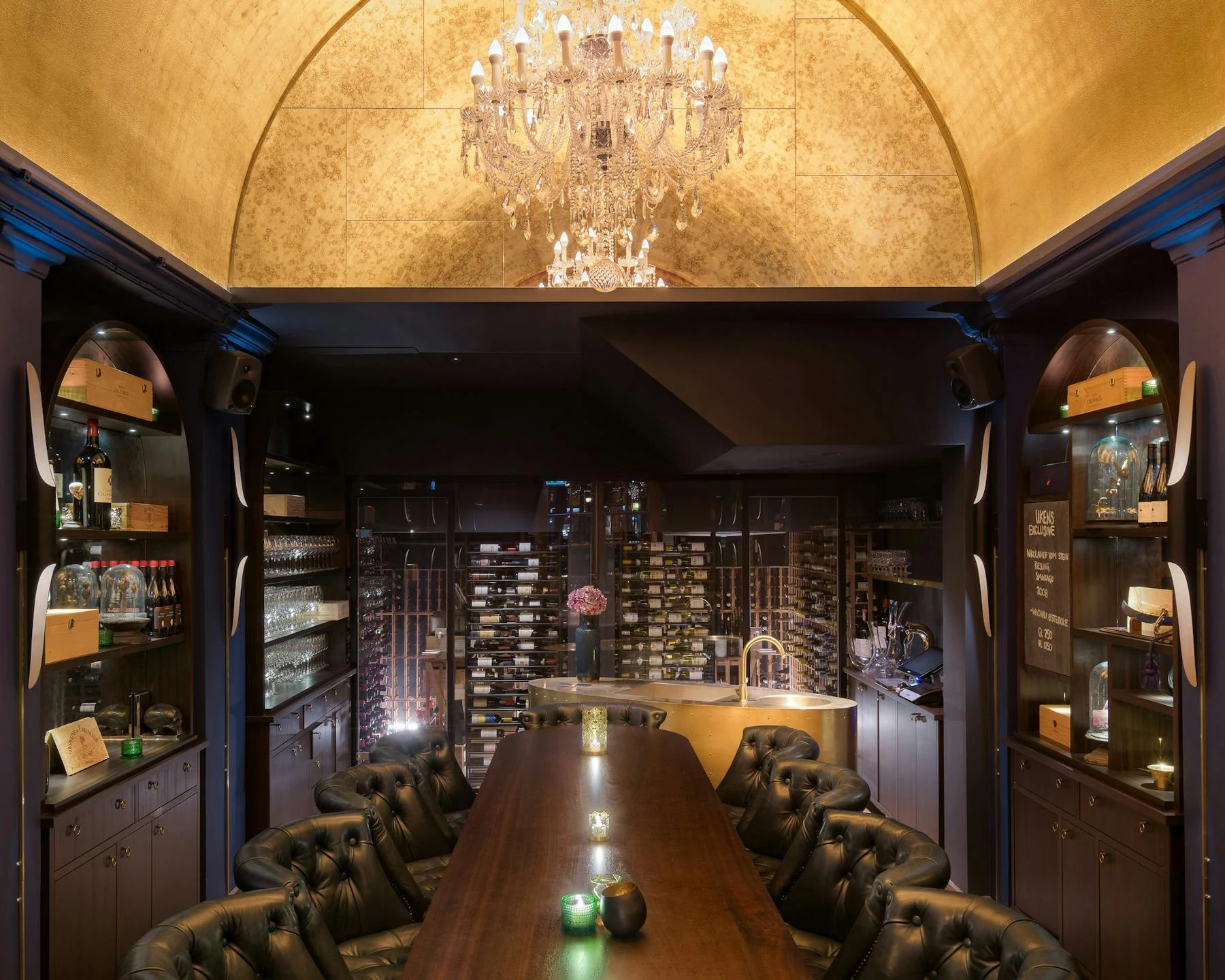
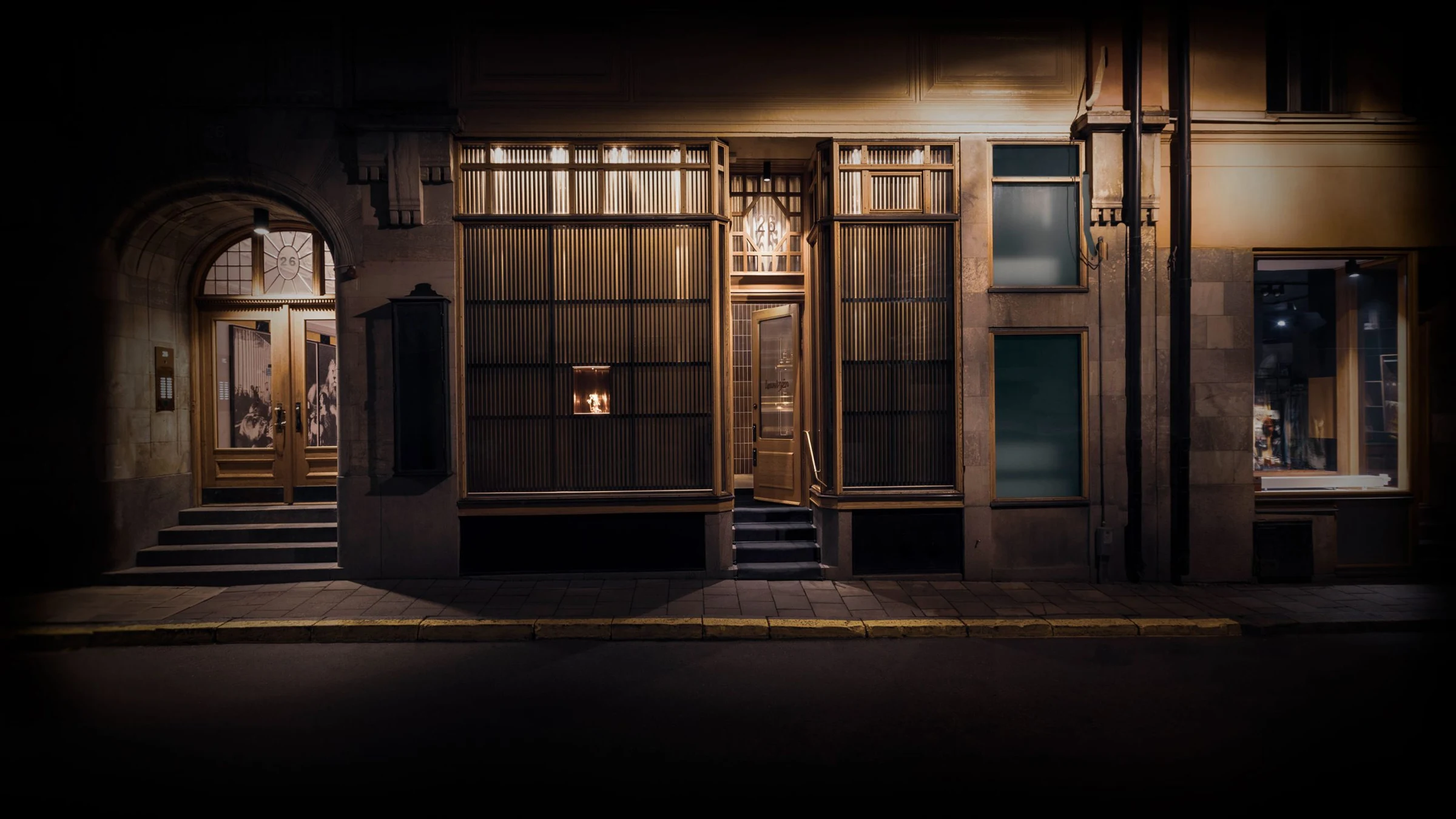
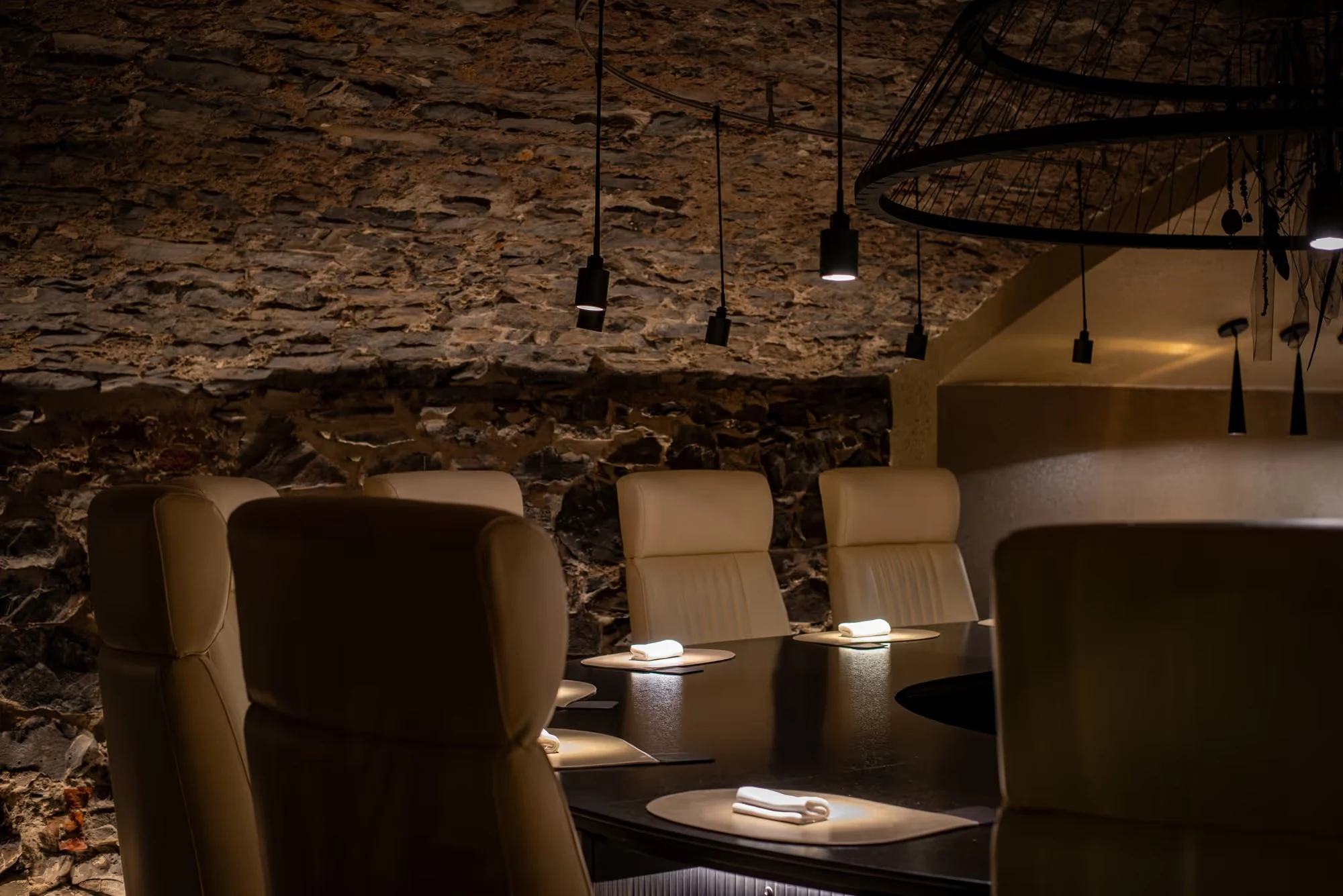
There is a particular kind of anticipation that comes with entering a restaurant through an unmarked door using a personal access code. No signage, no visible host, no familiar cues that a meal is about to begin. The stone vaults beneath Old Québec, a UNESCO World Heritage site, were built in the 17th century, and the architecture does something to the senses before a single dish arrives: the temperature drops slightly, the ambient noise of Rue du Don-de-Dieu disappears, and the smell shifts toward cold mineral and aged stone. This is where Tanière³ has planted itself, and the physical setting is inseparable from what unfolds inside it.
Québec City's creative dining scene has, over the past decade, developed a coherent identity around boreal and terroir-driven cooking that few Canadian cities can match. Where peers like Légende and L'Orygine work within the same regional-produce framework, Tanière³ sits at the more theatrical, technically ambitious end of that spectrum. Its 2025 recognition, two Michelin stars, AAA Five Diamond status, and the Art of Hospitality Award from North America's 50 Best Restaurants, signals a venue operating at a tier above the city's already strong creative cohort.
The Architecture of an Evening
The format at Tanière³ is structural, not accidental. The evening is organised in chapters, moving through distinct physical spaces: the Bar Vault, the Main Dining Room or Chef's Counter, and finally the Dessert Vault. Each transition marks a shift in register, and the progression through these spaces, each with its own lighting, acoustics, and atmosphere, is what separates this from a long tasting menu at a conventional restaurant. You are not simply eating in one room for three hours. The environment itself is sequenced.
This kind of multi-room, multi-act format has become increasingly rare even at the highest levels of dining. More venues have moved toward a single-space model, often centred on an open kitchen or counter. Tanière³'s insistence on spatial progression aligns it more closely with a handful of European references, the theatrical frameworks found at venues like Alléno Paris au Pavillon Ledoyen or Enrico Bartolini in Milan, than with its Canadian contemporaries. Among the latter, Alo in Toronto and AnnaLena in Vancouver pursue technical excellence through a more focused, single-room model.
Québec Terroir as a Technical Argument
The tasting menu runs between 12 and 18 courses, and the constraint that governs every plate is absolute: every ingredient is sourced from Québec. This is not a marketing position. It is an operational and creative discipline that shapes what is possible in the kitchen and, by extension, what arrives at the table. The province's coastline, forests, lakes, and farms are the only pantry available, and the menu rotates daily to reflect what that pantry offers at any given moment.
The dishes documented from the kitchen illustrate how far that discipline can be stretched. A frozen sunchoke mousse, shaped to mimic a truffle and shaved tableside over malted barley caramel agnolotti with a roasted sunchoke filling, demonstrates the kitchen's interest in perceptual misdirection: the ingredient becomes something else before it is eaten. Similarly, a goldenrod oil used in place of pepper sauce, or mignardises that taste of pineapple and passion fruit but are built from marigold, chamomile, and black sunchoke, these are dishes that argue that Québec's natural pantry contains enough sensory range to produce any flavour the kitchen wants to pursue. The scallops from Québec waters, served with wild lake sturgeon caviar from Lac-St-Pierre and beurre blanc, are cited repeatedly as a signature that makes the terroir argument without any misdirection at all: the ingredients are simply outstanding on their own terms.
This approach places Tanière³ in a distinct position relative to the broader Canadian creative dining scene. Restaurant Pearl Morissette in Lincoln and The Pine in Creemore pursue comparable hyper-regional frameworks in Ontario, while Jérôme Ferrer's Europea in Montréal operates at a similar price tier with a broader international palette. Narval in Rimouski works within a similarly tight regional framework but at a different scale of ambition and format.
What the Drinks Program Signals
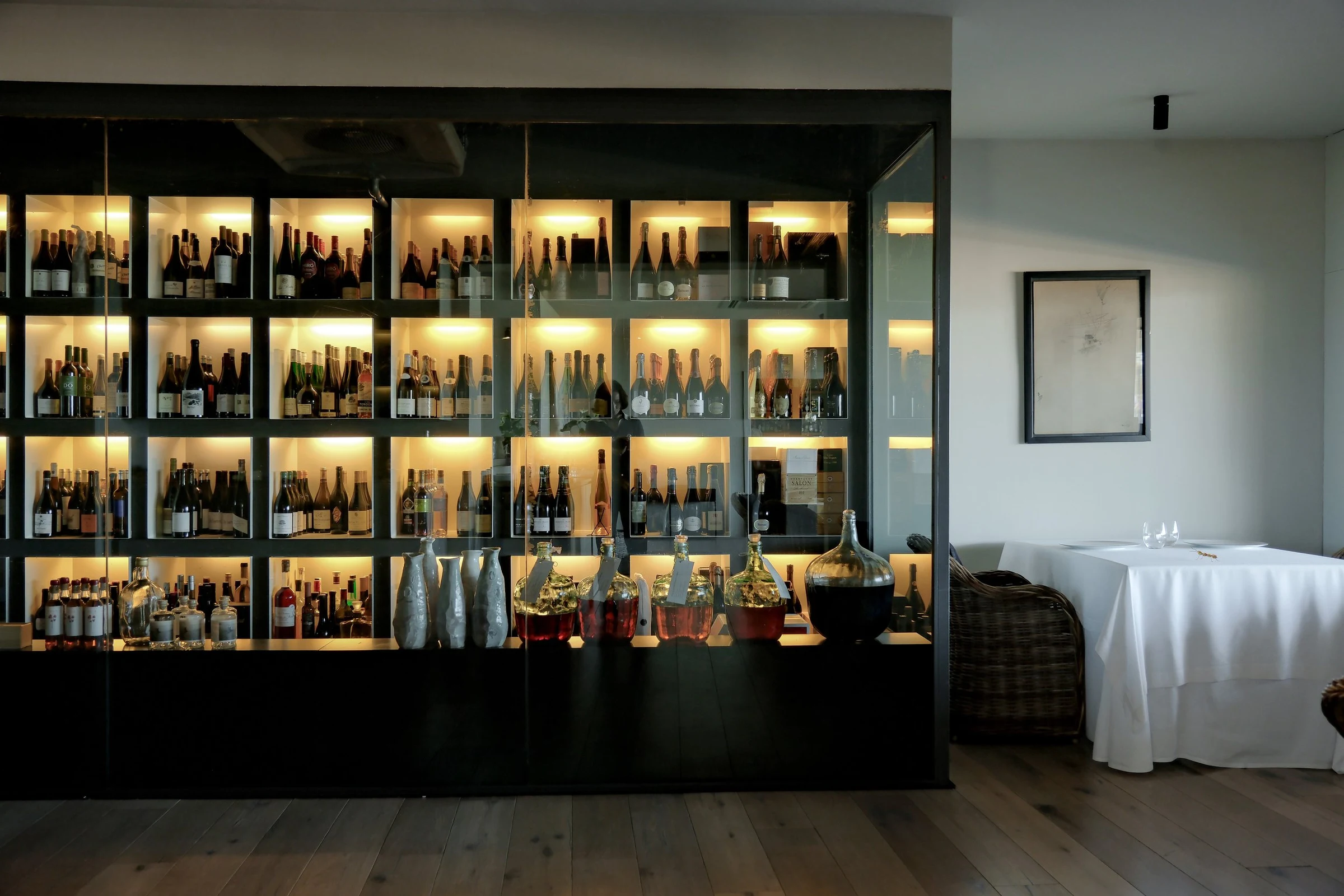
Tanière³ was among the first restaurants in Québec province to offer a structured non-alcoholic pairing alongside the tasting menu. Curated by barman Simon Faucher, the pairings use local botanicals, coltsfoot as syrup, infusion, and bitters, finished with an edible cloud made from the same ingredients, to extend the kitchen's terroir logic into the glass. This is not a tokenistic concession to abstainers; the non-alcoholic program uses the same foraging and hyper-local sourcing ethos as the food menu, and its early adoption of this format preceded the wider industry shift toward serious zero-proof programming by several years.
Positioning in the City's Creative Tier
Among Québec City's restaurants working at the $$$$ price point with a creative or modern cuisine focus, Tanière³ occupies a distinct position by virtue of its award stack and format depth. ARVI and Laurie Raphaël are particularly relevant local comparisons at the same price tier, both bringing serious technique to modern Québécois cuisine. Kebec Club Privé occupies a different format entirely, oriented around private dining and membership access rather than a nightly public tasting menu.
What separates Tanière³ from the rest of the tier is not simply the Michelin recognition, it is the combination of a fixed theatrical format, a hyper-seasonal daily menu, a structurally enforced terroir constraint, and a spatial experience that no other venue in the city replicates. The restaurant's history also matters as context: founded in 1977 as La Tanière, it built its identity as a leader in wild Québec cuisine over four decades before closing in 2015. The 2019 relaunch under Roxan Bourdelais and chef François-Emmanuel Nicol, and the relocation to the Old Québec vaults, represented a deliberate escalation in ambition and format, not a simple continuation.
Planning Your Visit
Tanière³ is located at 7 Rue du Don-de-Dieu in Old Québec, within the UNESCO-designated historic district. The entrance is unmarked; the reservation confirmation provides both instructions and an access code, which is how the evening begins. The price tier sits at $$$$, this is among the more expensive dining formats in the province, and the tasting menu format means the kitchen sets the pace and length of the meal. Plan for a full evening rather than a fixed window. The restaurant holds two Michelin stars, AAA Five Diamond status for 2025, and scored 81 points on the 2026 La Liste ranking.
Questions
Frequently asked
What recognition does Tanière3 hold?
Tanière3 holds 2 Michelin stars and a place on the World's 50 Best list at number 5.
How expensive is Tanière3?
Tanière3 is listed at a price level of $$$$.
Where is Tanière3 and what does it serve?
Tanière3 is in Vieux-Québec—Cap-Blanc—Colline parlementaire, Quebec City, serving Modern Quebec Terroir - Avant-Garde Tasting Menu.
The field
How it compares
| Place | Awards | Cuisine | Notes |
|---|---|---|---|
| Tanière3 | Michelin 2 Stars, World's 50 Best #5 | Modern Quebec Terroir - Avant-Garde Tasting Menu | Vieux-Québec—Cap-Blanc—Colline parlementaire, $$$$ |
| Addison | Michelin 3 Stars, World's 50 Best | Modern California Fusion Fine Dining | San Diego |
| Frantzén | Michelin 3 Stars, World's 50 Best | Modern Nordic Fusion with Japanese Influences | Stockholm |
| Miramar | Michelin 2 Stars | Modern Mediterranean Seafood | Llançà |
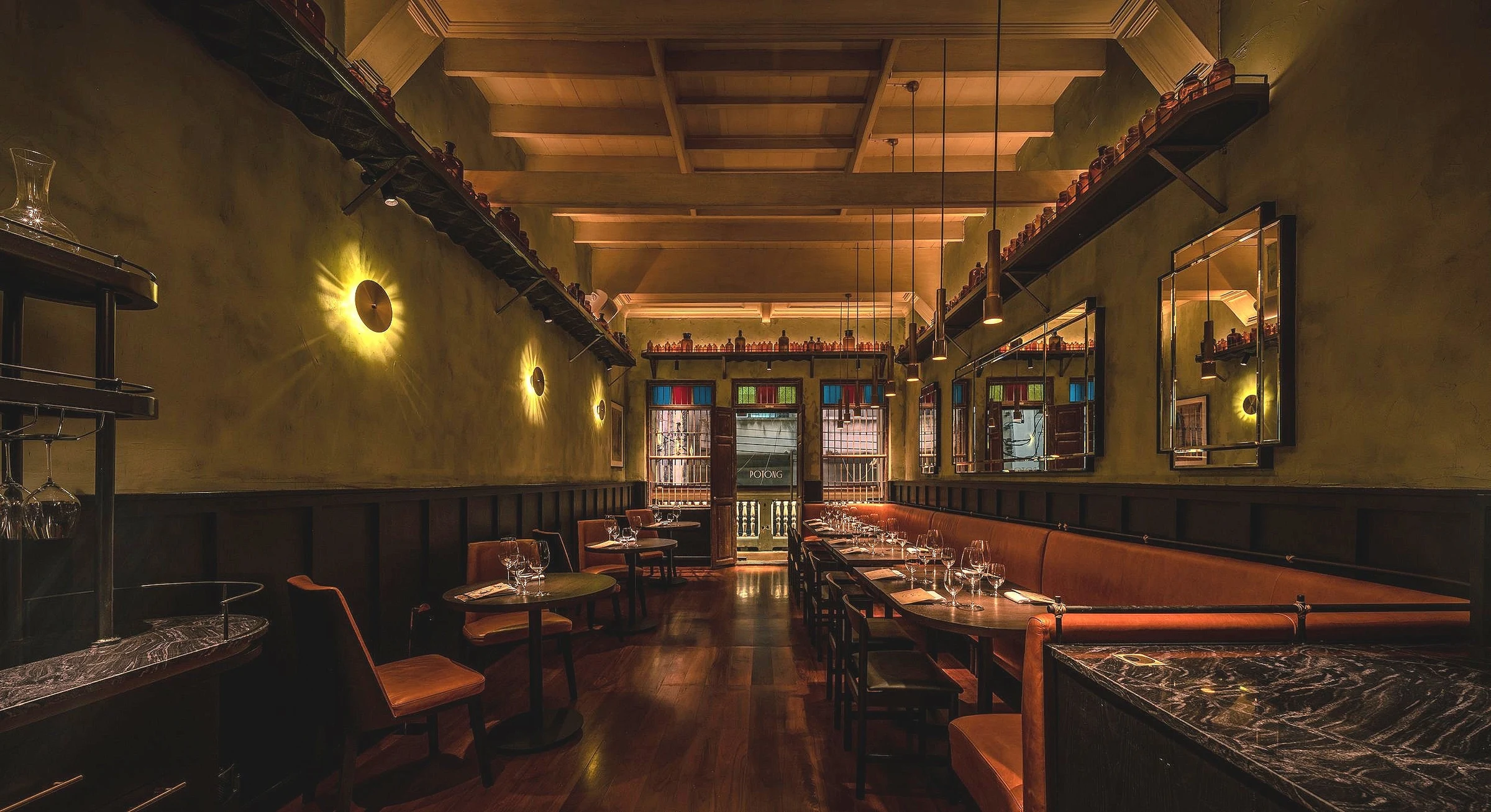
| Potong | Michelin 1 Star, World's 50 Best | Progressive Thai-Chinese Fine Dining | Bangkok |
| The Chairman | Michelin 1 Star, World's 50 Best | Traditional Cantonese | Hong Kong |
| The Ledbury | Michelin 3 Stars, World's 50 Best | Modern British Fine Dining | London |
Similar places
Modern California Fusion Fine Dining
Addison
San Diego, United States
★★★ · 50 Best
Modern Nordic Fusion with Japanese Influences
Frantzén
Stockholm, Sweden
★★★ · 50 Best
Modern Mediterranean Seafood
Miramar
Llançà, Spain
★★
Progressive Thai-Chinese Fine Dining
Potong
Bangkok, Thailand
★ · 50 Best
Traditional Cantonese
The Chairman
Hong Kong, Hong Kong
★ · 50 Best
Modern British Fine Dining
The Ledbury
London, United Kingdom
★★★ · 50 Best