Teuchisoba Kanei
- 01CuisineTraditional Hand-Ground Soba
- 02CityKyoto, Japan
Stone-ground juwari soba in Nishijin
- Michelin Bib Gourmand · Michelin Guide
- Michelin Bib Gourmand · 2026
- Michelin Bib Gourmand · 2025
- Tabelog 100 #11: 3.7pts · 2025
- Michelin Bib Gourmand · 2024
Stone mill before the room fills
On a stone usu before service, the buckwheat is ground at Teuchisoba Kanei in Kyoto, where the noodle is the measure of the meal. The named discipline is old and narrow: handmade soba in Kyoto's Nishijin District, served without decoration or distraction. The restaurant’s daily center is teuchi soba, hand-formed noodles made from juwari buckwheat, ground with a traditional stone mill. The maker in the room is the chef-owner known as Kanei-san, who hand-makes every noodle himself and works with his wife in a small family-run service. No training record, mentor or award is attached to his name, and the bench is where the authority sits instead. That restraint matters. At Teuchisoba Kanei, authority sits in the repeated gesture: milling, mixing, cutting, cooking, and sending noodles to the counter while the room stays almost completely quiet.
Juwari soba, cut for chew
The method is spare enough to expose every fault. Juwari soba uses 100% buckwheat, without wheat flour to help the dough behave, so the grind, hydration, fold, and cut have to stay in balance. Teuchisoba Kanei uses a stone-made usu, a slower way to bring the grain down, and the result is valued for texture as much as aroma. The noodle carries a mochi-like bite, a quality that comes through most plainly in zarusoba, where cold soba rests in a bamboo basket beside tsuyu. Duck soba gives the same noodle a warmer register, either as hot kamo soba or as kamo seiro, cold soba drawn through hot duck broth. The small plates stay close to the sake: soba tofu, yakimiso, wasabi pickles, soba rice crackers, rolled omelette, and seasonal vegetables. Fresh wasabi, grated on sharkskin, sharpens the edge without pulling attention from the buckwheat. The restaurant has been recognized with a MICHELIN Bib Gourmand, and with Soba WEST 100 Best Restaurants 2025, but the plate does not lean on either notice. It leans on the cut noodle.
Tatami, timber, and no music
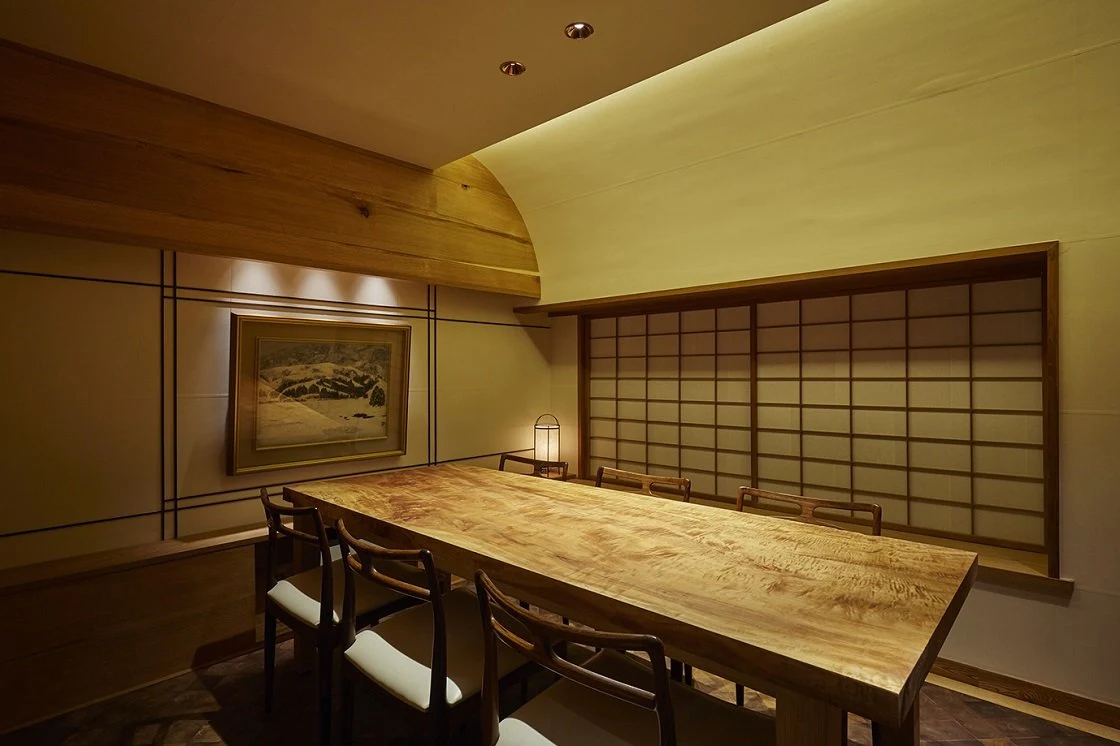
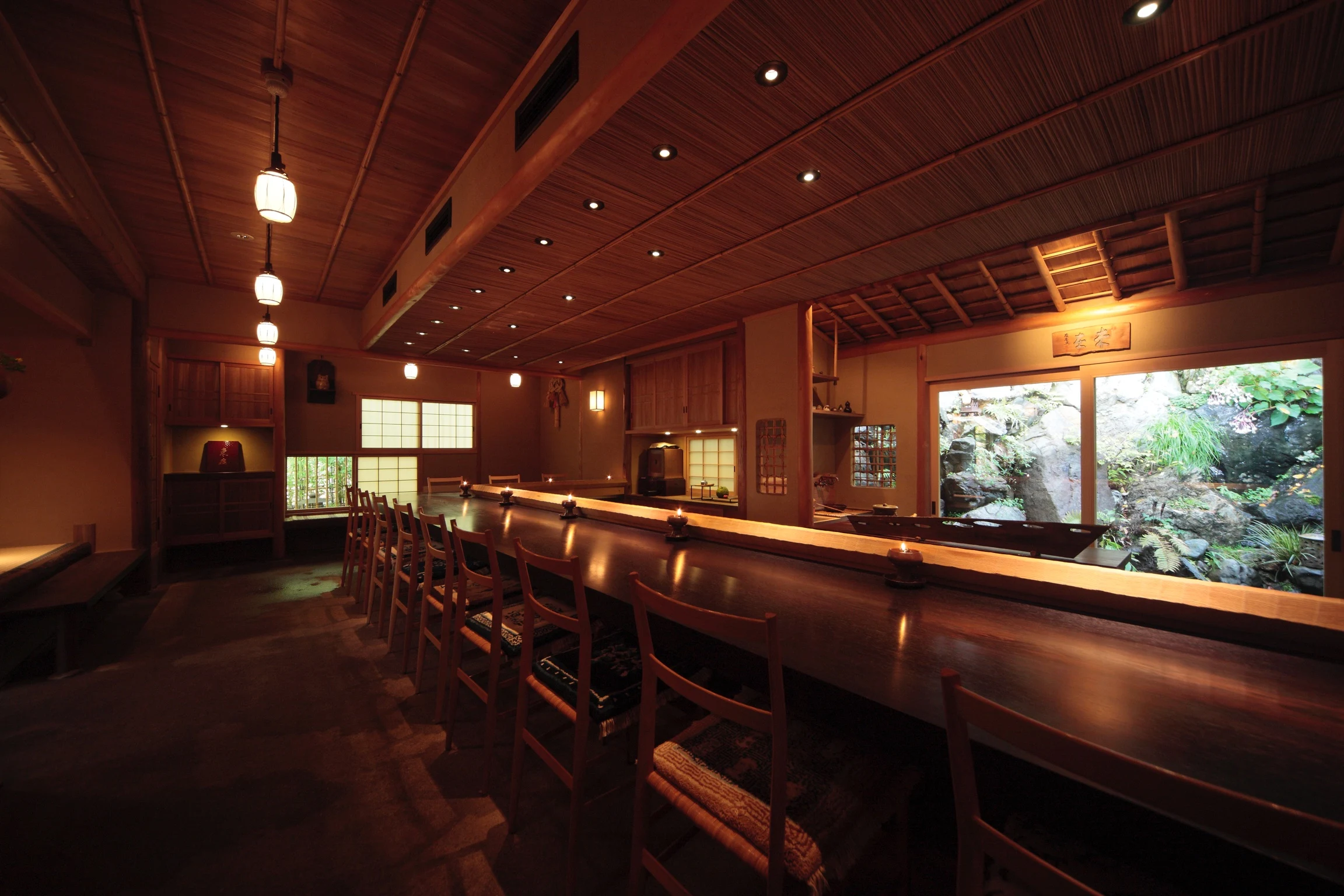
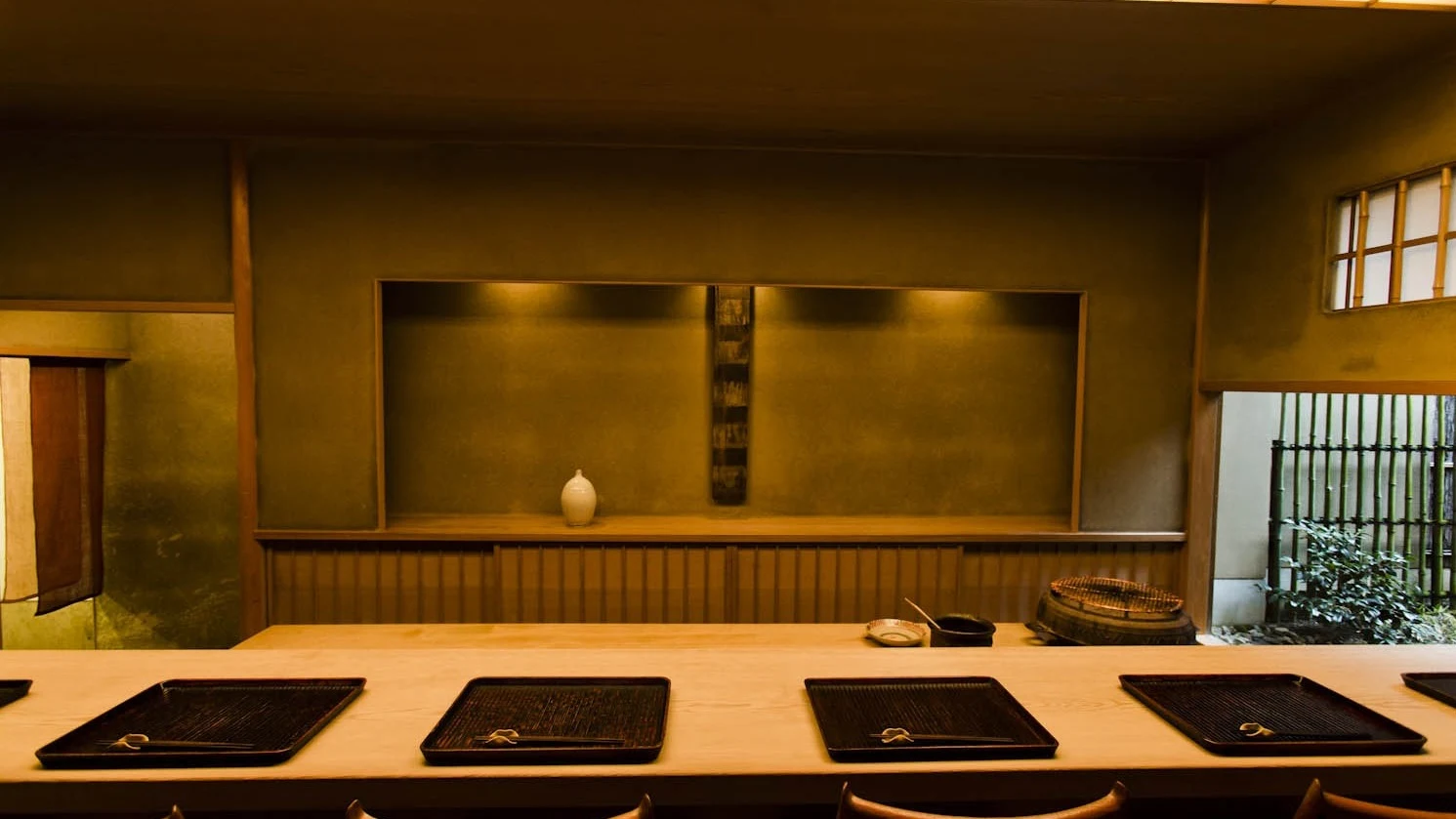
The room sits in a 100-year-old machiya in a residential part of Nishijin, away from Kyoto’s heavier dining corridors. Shoes come off. Guests sit on tatami on an elevated platform, close to the grain of the wood and the low cadence of service. The house keeps minimal decoration, warm natural light, and no background music; the quiet is not theatrical, it is practical. It lets the slurp, the ladle, the porcelain, and the footfall hold their proper scale. A no photography policy keeps the meal inside the room rather than on the table as evidence. The menu is in Japanese, without illustrations, which makes ordering a bench-side act of attention: duck soba, zarusoba, soba tofu, yakimiso, sake. The proprietress is part of the rhythm, guiding guests through the small house and seeing them out with the formality of a home.
The discipline stays narrow
Teuchisoba Kanei does not read like a restaurant chasing a wider program. Its strength is the refusal to widen too far: buckwheat, broth, wasabi, sake, tatami, silence. The closing note belongs to the same set of materials, a bowl of duck soba carried through the old machiya at Teuchisoba Kanei.
Questions
Frequently asked
What is Teuchisoba Kanei known for?
Teuchisoba Kanei is known for traditional hand-ground soba, made from juwari buckwheat that the chef-owner mills himself each day on a stone mill.
What dishes are typically ordered here?
The menu includes duck soba, zarusoba, soba tofu, and yakimiso, alongside small plates such as wasabi pickles, soba rice crackers, rolled omelette, and seasonal vegetables.
What is the dining room like?
The restaurant is in a 100-year-old machiya in Nishijin, with shoes off, tatami seating on an elevated platform, minimal decoration, natural light, and no background music.
Has the restaurant been recognised by Michelin?
Teuchisoba Kanei has been recognised with a MICHELIN Bib Gourmand.
The field
How it compares
| Place | Cuisine | Notes | Awards |
|---|---|---|---|
| Teuchisoba Kanei | Traditional Hand-Ground Soba | Kita, $$ | · |
| Gion Sasaki | Modern Kaiseki | Kyoto | Michelin 3 Stars |
| Hyotei | Traditional Kaiseki | Kyoto | Michelin 3 Stars |
| Isshisoden Nakamura | Traditional Kyoto Kaiseki | Kyoto | Michelin 3 Stars |
| Kikunoi Honten | Kyoto Kaiseki Ryotei | Kyoto | Michelin 3 Stars |
| Mizai | Traditional Kaiseki | Kyoto | Michelin 3 Stars |
| Ogata | Kaiseki Omakase | Kyoto | Michelin 2 Stars |