The Bowery Hotel
- 01CityNew York City, United States
From the people index
Recommended by
2 trusted voices point here.

- 1 Michelin Key · Michelin Guide
- Mr & Mrs Smith Smith Seal of Approval · 2026
- Michelin 1 Key: 500pts · 2026
- Michelin 1 Key · 2025
- Michelin 1 Key · 2024
Downtown Manhattan's Boutique Divide
New York's independent hotel scene has split fairly cleanly over the past decade. On one side sit the stripped-back, hyper-designed properties that arrived in force during the early 2010s minimalist wave, many of which now feel dated in ways their founders did not anticipate. On the other sits a smaller cohort of properties that made a different bet: deep material investment in a specific aesthetic reference, sourced carefully enough to hold its ground over time. The The Greenwich Hotel belongs to this second camp. So does The Bowery Hotel, at 335 Bowery in NoHo, which earned a Michelin Key in 2024 and continues to attract a clientele that reads the lobby as a destination rather than a corridor.
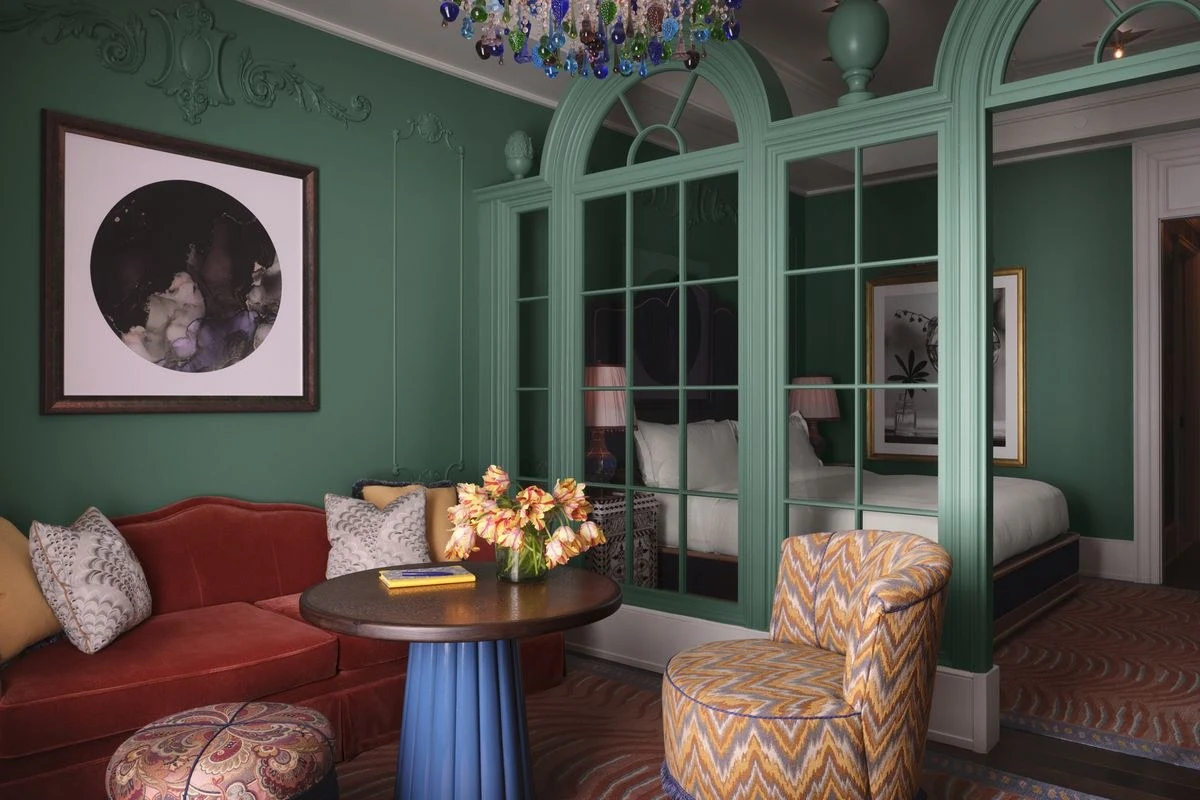
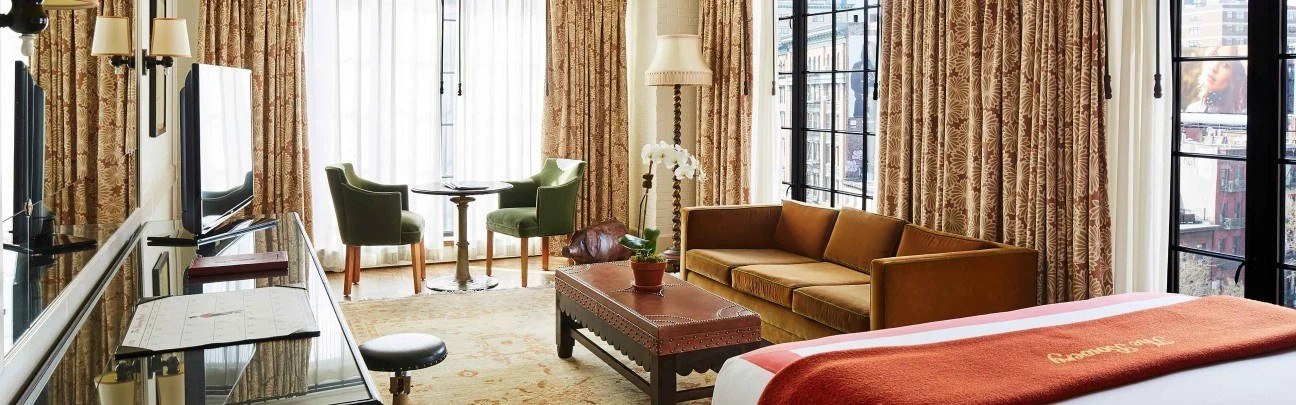
What separates this tier from glossy minimalist contemporaries is the sustained legibility of its references. The Bowery's design premise, prewar Manhattan apartment interpreted through vintage and salvaged furniture sourced from multiple continents, does not depend on any single trend holding. Patterned rugs on hardwood floors, cast-iron frames on full-length windows, weathered brass fixtures in marble-and-tile bathrooms: these are materials with a long track record. They age in ways that feel deliberate rather than accidental, which explains why the hotel's visual register still feels coherent years after opening while some of its peers have begun to read as period pieces.
The Sequence of Arrival
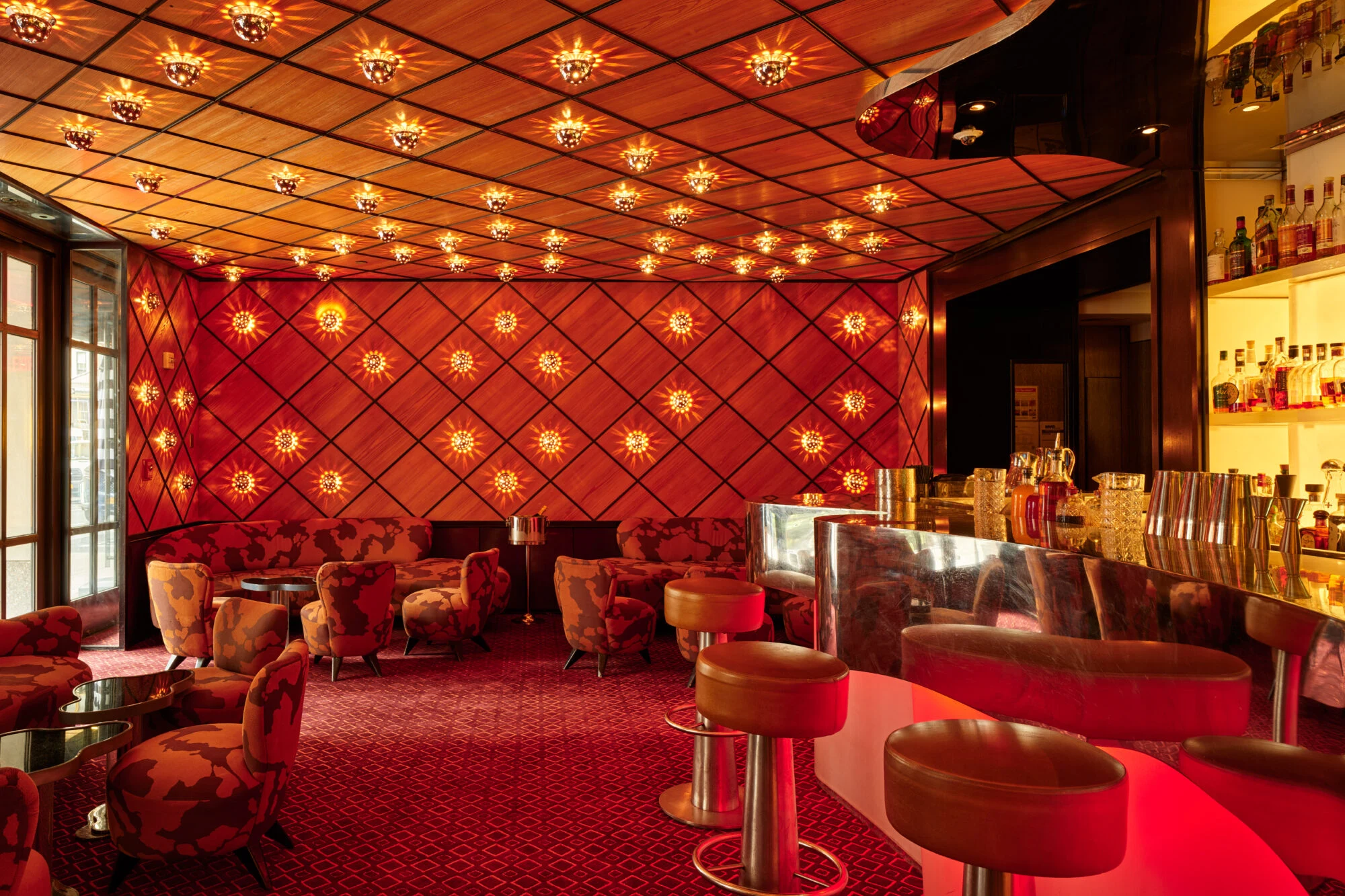
The experience at The Bowery is best understood as a progression. It begins outside, where the building's relatively recent construction is visible in the facade, but the effect inside immediately shifts the frame. The lobby operates on the logic of a well-furnished sitting room rather than a hotel reception area: a warren of armchairs and sofas, typically occupied by a clientele drawn from the neighbourhood's creative and media industries. The lobby bar is not incidental to the hotel's identity. In a city where hotel bars frequently exist to serve guests who have not yet found somewhere better to be, the Bowery's version draws people who have made a specific choice to come here. That distinction matters for a property in this price tier.
At $895, the rate places The Bowery in a bracket that requires justification beyond bed count. The 135-room scale is large enough to carry consistent service but small enough to avoid the anonymity of full-scale hotel operations. Compared to the very top tier of Manhattan boutique properties, which includes places like Aman New York or Casa Cipriani New York, the Bowery sits in a more accessible register while still delivering design-led material quality. Against the Upper East Side institutional properties, The Carlyle, A Rosewood Hotel and The Mark, it occupies an entirely different cultural geography: downtown, rooted in a neighbourhood with its own artistic and countercultural history, and deliberately referencing a version of New York that predates the luxury consolidation of the past thirty years.
The Rooms as Curatorial Exercise
The decision to frame each room as an imaginary prewar Manhattan apartment rather than a hotel room in any conventional sense carries implications for how the space functions. The sourcing of furniture and design elements from international markets, many of them vintage or salvaged, means that no two rooms read identically, which is a material difference from properties that achieve consistency through repetition. The cast-iron window frames give rooms a structural character that reinforces the apartment fiction. The marble-and-tile bathrooms with weathered brass fixtures deliver the kind of material quality that reads well on arrival and holds up over multiple nights, which is the more meaningful test.
For travellers calibrating against the broader downtown boutique tier, the Crosby Street Hotel and The Whitby Hotel offer a contrasting approach: the Firmdale aesthetic, which is colour-saturated and British in its references, versus the Bowery's very specifically American, very specifically New York frame of reference. The choice between them is partly a question of what kind of city story the guest wants to inhabit during their stay.
Gemma and the Neighbourhood Dining Logic
Hotel restaurants occupy a difficult position in New York, where the alternative dining options within a few blocks are often strong enough to make in-house options feel like a concession rather than a choice. Gemma, the Bowery's trattoria, has largely avoided that fate. The modern-classic Italian format operates with enough confidence in its own execution to function as a neighbourhood fixture rather than a captive-audience offering. The atmosphere, warm and convivial rather than formal, suits the hotel's broader register. In a city where Italian restaurants range from three-generation institutions in Carroll Gardens to destination tasting-menu operations, Gemma positions itself at the accessible end of the quality-focused tier, which is probably the right call for a hotel restaurant trying to serve both guests and a local repeat clientele simultaneously.
The combination of a functioning lobby bar and a trattoria with neighbourhood credibility means The Bowery effectively offers two distinct social environments within the same building, a rarer combination than it might appear among properties of comparable scale. This internal programming logic sets it apart from hotels that treat food and drink as ancillary to room revenue.
Placing The Bowery in the Wider Picture
The Michelin Key awarded in 2024 positions The Bowery within the tier of recognised independent properties in New York, a list that also includes The Fifth Avenue Hotel and properties from the Firmdale stable. The Key designation, which Michelin introduced to assess hotels on hospitality quality rather than star-category criteria, aligns well with what the Bowery has consistently delivered: a strong sense of place, material quality that exceeds its price-tier competitors, and programming that gives guests reason to stay in the building.
For travellers whose New York itinerary extends beyond Manhattan, the Bowery's NoHo address is well-placed for the Lower East Side, the East Village, and SoHo, all within walking distance. Those planning wider domestic trips might also consider the contrast in scale offered by properties like Troutbeck in Amenia or Post Ranch Inn in Big Sur, where the design-led boutique logic operates in entirely different geographic registers. The appetite for properties that commit to a specific aesthetic and material language, rather than hedging toward universal appeal, connects the Bowery to hotels as different in setting as Sage Lodge in Pray or SingleThread Farm Inn in Healdsburg. The underlying logic of place-specificity is the same even when the execution differs by continent or climate.
Internationally, the Bowery's approach to materiality and historical reference has parallels in properties like Aman Venice in Venice or Badrutt's Palace Hotel in St. Moritz, where the commitment to a specific cultural moment and material vocabulary produces a coherence that more eclectic approaches rarely achieve. The Bvlgari Hotel Tokyo in Tokyo sits at the opposite end of the investment-per-key spectrum, but the underlying argument, that specificity of reference creates lasting appeal, is identical. For those planning extended US trips, Amangiri in Canyon Point, Four Seasons at The Surf Club in Surfside, Raffles Boston in Boston, Hotel Bel-Air in Los Angeles, Kona Village, A Rosewood Resort in Kailua Kona, Little Palm Island Resort & Spa in Little Torch Key, Canyon Ranch Tucson in Tucson, and 1 Hotel San Francisco in San Francisco each represent distinct takes on the boutique-to-luxury spectrum worth mapping before committing to an itinerary.
Questions
Frequently asked
What recognition does The Bowery Hotel hold?
The Bowery Hotel holds 1 Michelin key.
How expensive is The Bowery Hotel?
The Bowery Hotel is listed at a price level of $$$$.
The field
How it compares
| Place | Awards | Notes |
|---|---|---|
| The Bowery Hotel | Michelin 1 Key | East Village, $$$$ |
| Aman New York | Michelin 3 Keys, World's 50 Best | New York City |
| Baccarat Hotel New York | Michelin 1 Key | New York City |
| Pendry Manhattan West | Michelin 2 Keys | New York City |
| The Carlyle, A Rosewood Hotel | Michelin 2 Keys, World's 50 Best | New York City |
| The Fifth Avenue Hotel | Michelin 2 Keys, World's 50 Best | New York City |
| The Mark | Michelin 2 Keys, World's 50 Best | New York City |
Similar places
Aman New York
New York City, United States
3K · 50 Best
Baccarat Hotel New York
New York City, United States
1K
Pendry Manhattan West
New York City, United States
2K
The Carlyle, A Rosewood Hotel
New York City, United States
2K · 50 Best
The Fifth Avenue Hotel
New York City, United States
2K · 50 Best
The Mark
New York City, United States
2K · 50 Best