The Restaurant at Hotel Bel-Air
- 01CuisineModern Californian with Mediterranean Influences
- 02CityLos Angeles, United States
From the people index
Recommended by
One trusted voice points here.

- Wine Spectator · Tier 2
- Wine Spectator Best of Award of Excellence · 2026
A Physical Space Built Before the Era of Designed Restaurants
Hotel Bel-Air opened in 1946, when California’s idea of luxury hospitality was organized around landscape rather than interior theatrics. The property’s twelve acres of private grounds, fed by a swan lake and dense with mature plantings, established the physical logic that would define the restaurant inside it for generations. This is worth stating plainly: the dining room at Hotel Bel-Air predates the design-led restaurant movement by several decades. It did not arrive at its architectural proposition through a creative brief; it arrived through accumulated time, and the interior reflects that accumulation in ways that newer rooms cannot replicate.
That origin point matters when situating the venue within the current Los Angeles dining scene. The city’s high-end restaurant cohort has splintered in the years since Hotel Bel-Air was established. On one side sit the precision-format rooms: counters like Hayato with its strict kappo sequence, or Somni with its tightly controlled theatrical arc. On the other side sit the full-service rooms with classical service proportions and table spacing that allows genuine conversation. The Restaurant at Hotel Bel-Air belongs to that second category, and in a city where that format has contracted, it is one of the few surviving examples operating at this address tier.
The Architecture of the Room
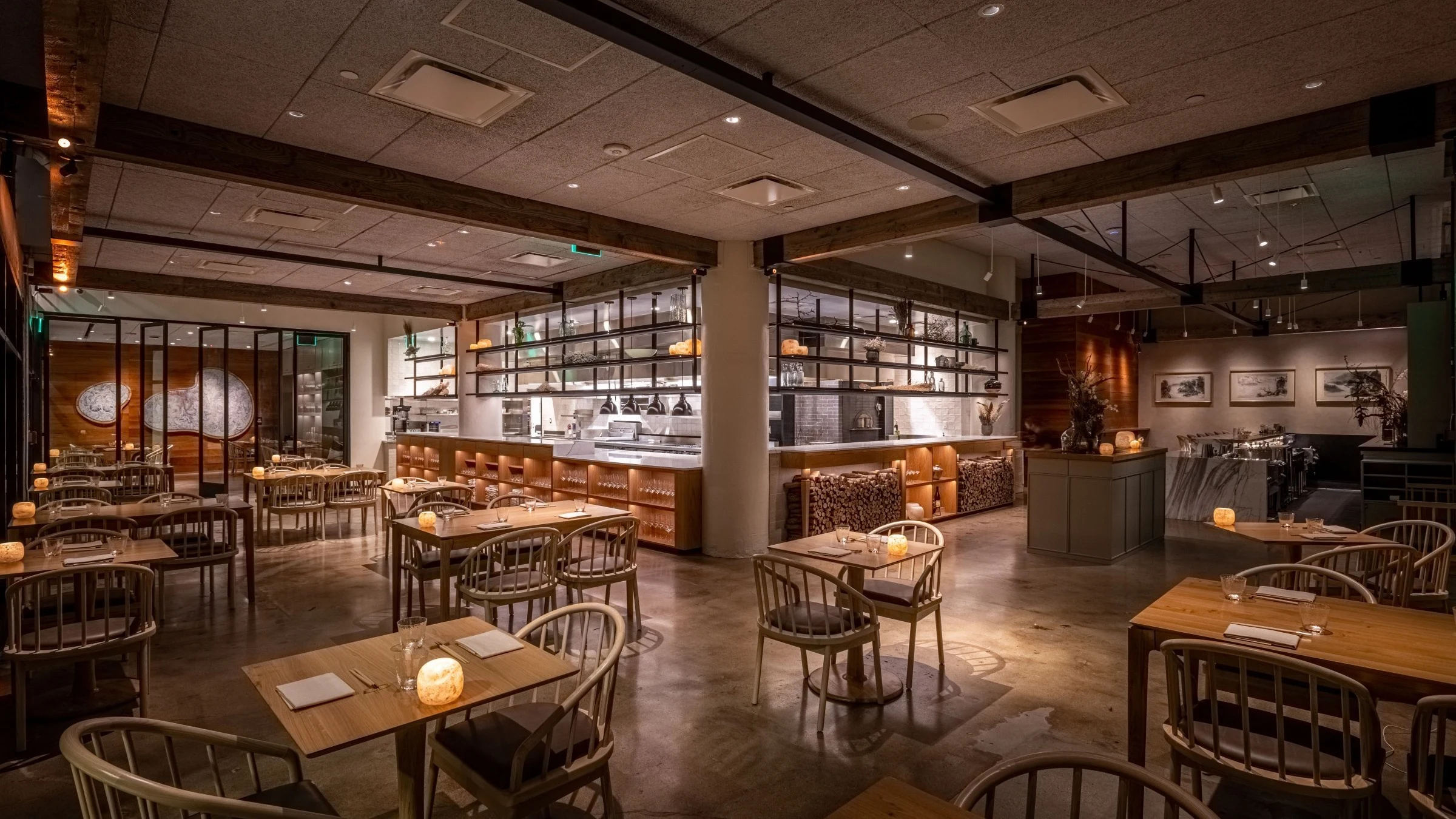
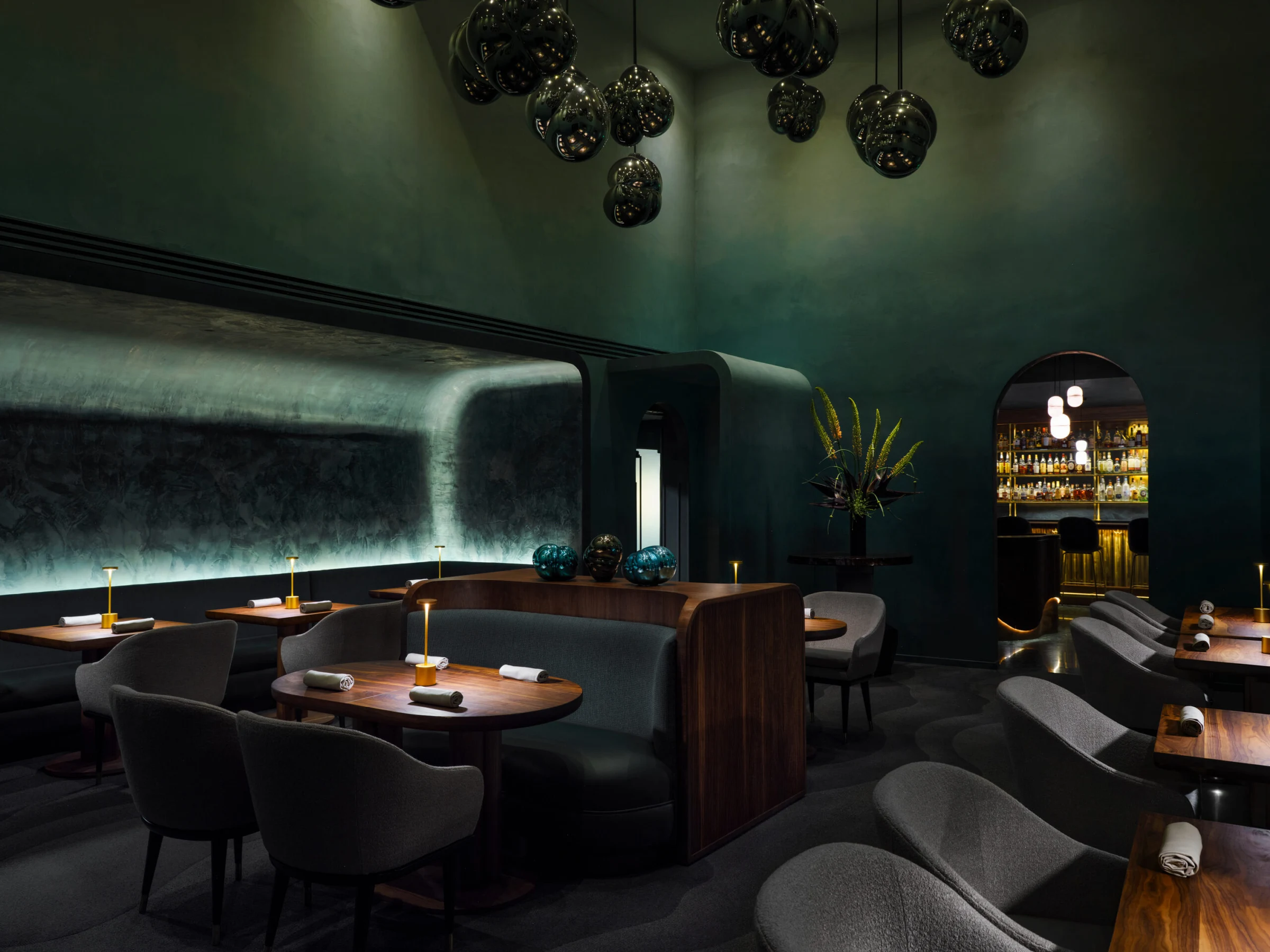
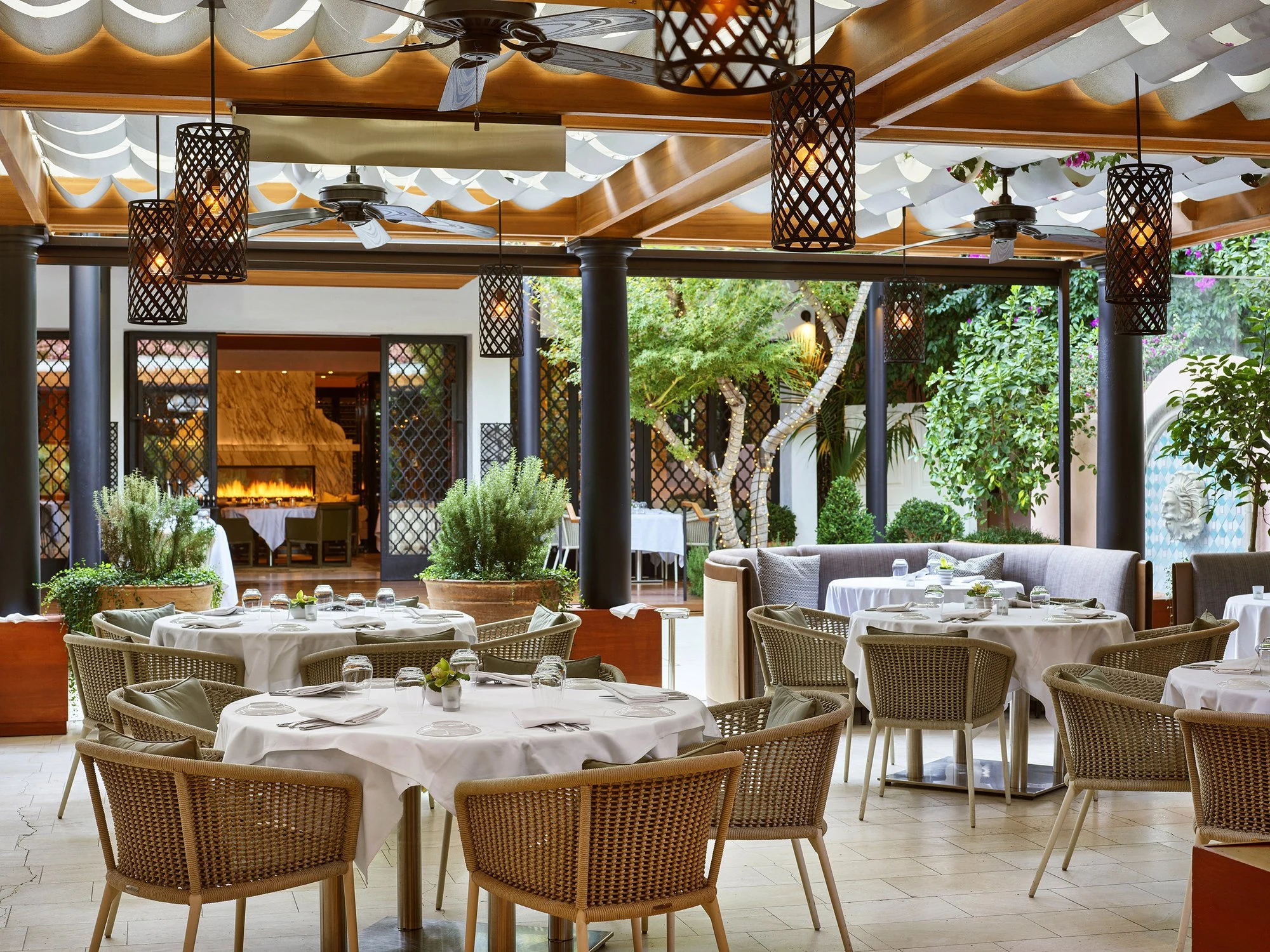
The dining room’s physical container is the thing that separates it from peers. Many of Los Angeles’s formal restaurants operate in purpose-built or converted interiors that lean heavily on material contrast: raw concrete against soft leather, exposed steel against handmade tile. The Hotel Bel-Air dining room works from a different palette entirely. The approach here is continuity with the grounds outside: soft plaster tones, natural light drawn through garden-facing windows, and a spatial arrangement that makes the boundary between indoor and outdoor dining intentionally ambiguous.
The Swan Lake setting earns repeated mention in coverage of the property, and it functions less as decorative feature than as spatial anchor. Tables positioned near the garden perimeter carry a material advantage in terms of light and outlook that changes the character of a meal. This is the kind of architectural intelligence that gets built in over decades, not designed in from a floor plan. The effect is closer to dining inside a well-maintained private estate than inside a hotel restaurant, which is a meaningful distinction in a category where hotel dining rooms often feel aggressively branded.
By comparison, the interior dining at rooms like Kato is deliberately spare and counter-focused, and at Providence, the room is formal but urban in its proportions. The Bel-Air room operates at a different scale, one where the grounds are part of what you’re buying when you book a table.
How This Fits the Los Angeles Occasion-Dining Tier
Los Angeles has a specific upper tier of occasion dining that operates somewhat independently from the tasting-menu circuit. Venues like Osteria Mozza anchor the Italian-inflected end of that tier; Providence holds the contemporary seafood position. The Restaurant at Hotel Bel-Air occupies a position defined primarily by setting and legacy rather than by cuisine category, which puts it in a narrower comparable set: hotel dining rooms with enough architectural and historical weight to compete with standalone restaurants on reputation alone.
Nationally, that comparable set is also small. The Inn at Little Washington in Virginia and The French Laundry in Napa represent the format at its most decorated end, with Michelin recognition and decades of critical attention. Addison in San Diego demonstrates that California hotel dining can operate at that level of recognition. The Bel-Air restaurant plays in adjacent territory: the address, the setting, and the clientele it has historically drawn place it within the same conversation, even if the specific format differs.
Outside California, the reference points for this kind of integrated estate dining are places like Blue Hill at Stone Barns in Tarrytown, where the physical surround is inseparable from the proposition, or Single Thread Farm in Healdsburg, where the agricultural setting does comparable contextual work. The difference is that Hotel Bel-Air’s setting is urban-adjacent rather than agricultural, which means it functions as a retreat from the city rather than an immersion in landscape for its own sake.
The Broader Hotel Restaurant Question in California
California’s luxury hotel dining has never quite resolved the tension between rooms that serve the hotel’s own guests first and rooms that compete as standalone restaurant destinations. Some properties have solved it by installing a named chef with an independent following, a model visible at properties from San Francisco down through Los Angeles. Others maintain a more traditional full-service format that prioritizes consistency and breadth over culinary edge. The Restaurant at Hotel Bel-Air has historically operated closer to the second model, which means its comparison set includes properties like Emeril’s in New Orleans or Bacchanalia in Atlanta in terms of register and occasion function, even if the specific food traditions differ.
For those who want the edge of Los Angeles’s more technically ambitious rooms, Alinea in Chicago or Atomix in New York City define what that ceiling looks like nationally. Lazy Bear in San Francisco demonstrates the dinner-party format that now sits between the tasting counter and the classic hotel room. What the Bel-Air dining room offers is categorically different: a physical setting with no contemporary equivalent in Los Angeles, anchored by grounds that took decades to mature, and a format that prioritizes the stability of the occasion over the novelty of the experience.
For context on where The Restaurant at Hotel Bel-Air sits within the broader Los Angeles dining scene, see our full Los Angeles restaurants guide.
Planning a Visit
The hotel is located at 701 Stone Canyon Road in Bel-Air, in the western hills above UCLA. Stone Canyon Road is residential and quiet, which sets the approach to the property apart from most urban hotel arrivals. For reservation planning, the hotel’s website is the appropriate starting point; given the property’s clientele and the limited number of garden-facing tables, advance booking for peak evenings is advisable. Garden terrace seating carries a different character than interior dining and operates seasonally in line with Los Angeles weather patterns, which favors outdoor dining from spring through early fall. Valet parking is available at the property, which is relevant given that Stone Canyon Road does not offer meaningful street parking.
Questions
Frequently asked
How expensive is The Restaurant at Hotel Bel-Air?
The Restaurant at Hotel Bel-Air is listed at a price level of $$$$.
Where is The Restaurant at Hotel Bel-Air and what does it serve?
The Restaurant at Hotel Bel-Air is in Bel Air, Los Angeles, serving Modern Californian with Mediterranean Influences.
The field
How it compares
| Place | Cuisine | Notes | Awards |
|---|---|---|---|
| The Restaurant at Hotel Bel-Air | Modern Californian with Mediterranean Influences | Bel Air, $$$$ | · |
| Hayato | Traditional Japanese Kaiseki | Los Angeles | Michelin 2 Stars |
| Holbox | Modern Mexican Seafood | Los Angeles | Michelin 1 Star, World's 50 Best |
| Kato | Modern Taiwanese Fine Dining | Los Angeles | Michelin 2 Stars, World's 50 Best |
| Mélisse | California-French Fine Dining | Los Angeles | Michelin 2 Stars |
| Providence | Modern Seafood Fine Dining | Los Angeles | Michelin 3 Stars, World's 50 Best |
| Somni | Modern Spanish Fine Dining | Los Angeles | Michelin 3 Stars, World's 50 Best |
Producers
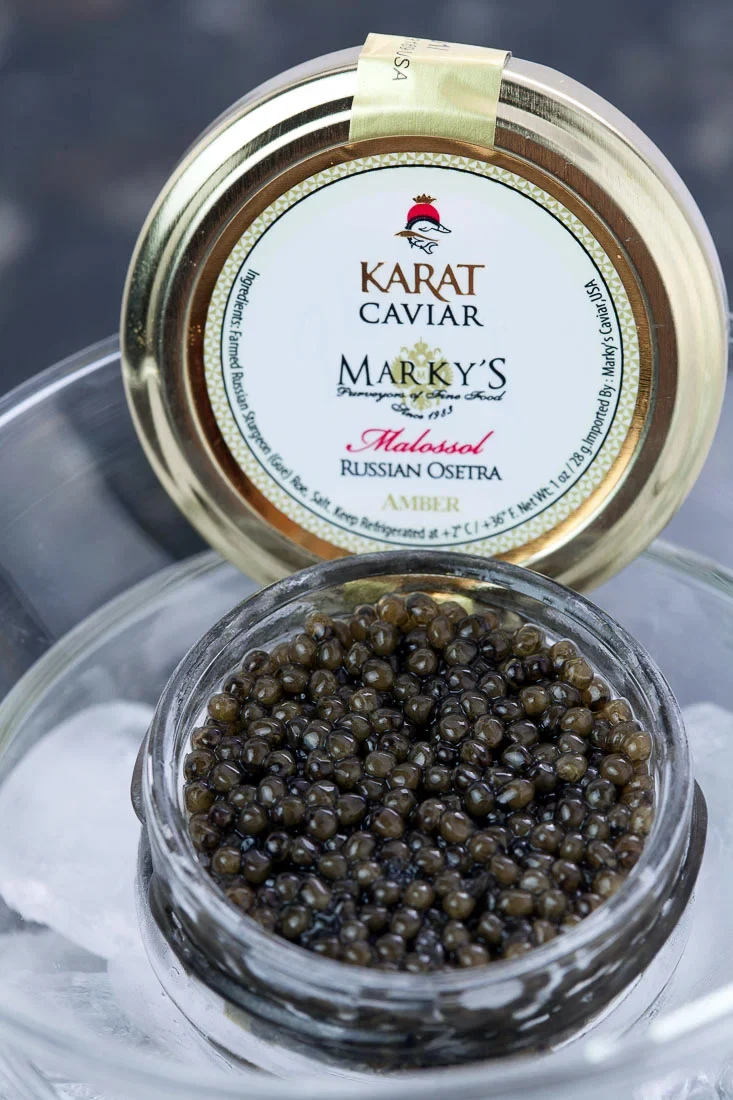
Sourced from / Made with
Similar places
Traditional Japanese Kaiseki
Hayato
Los Angeles, United States
★★
Modern Mexican Seafood
Holbox
Los Angeles, United States
★ · 50 Best
Modern Taiwanese Fine Dining
Kato
Los Angeles, United States
★★ · 50 Best
California-French Fine Dining
Mélisse
Los Angeles, United States
★★
Modern Seafood Fine Dining
Providence
Los Angeles, United States
★★★ · 50 Best
Modern Spanish Fine Dining
Somni
Los Angeles, United States
★★★ · 50 Best