Uroko
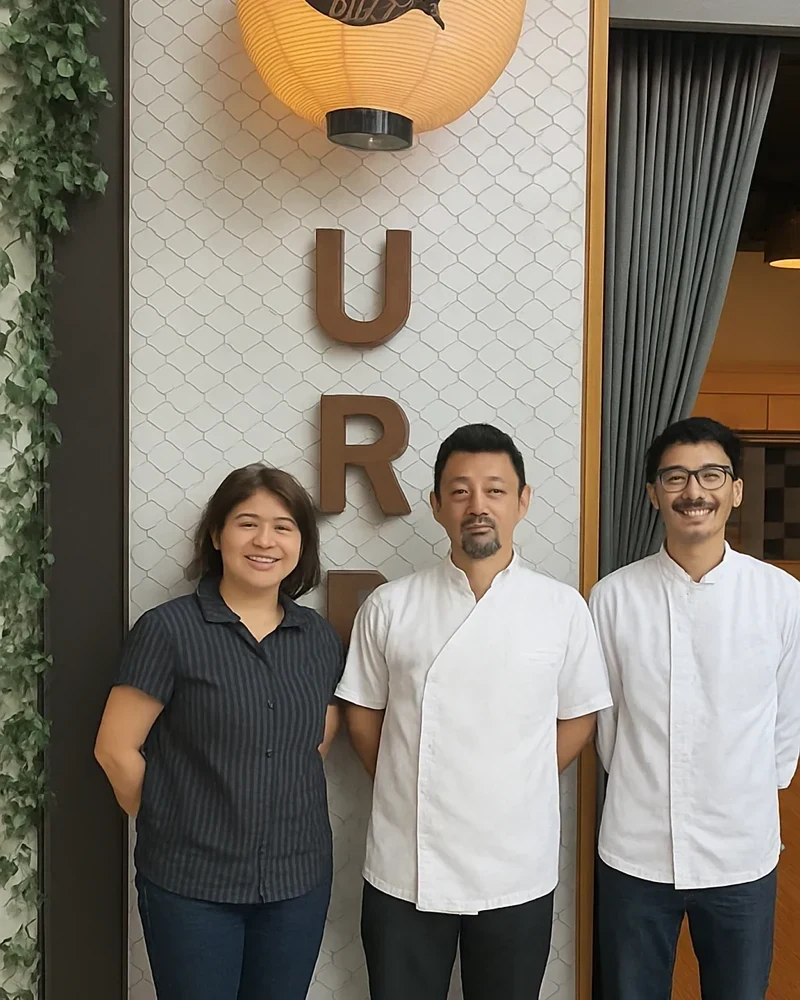
In Residence
Masazumi Saio
Chef
- 01CuisineJapanese Temaki & Omakase
- 02CityAustin, United States
- 03RecognitionJames Beard Award
- James Beard Winner · James Beard Foundation
- James Beard Award Semi Finalist · 2025
East Austin's Springdale Corridor and the Art of Arrival
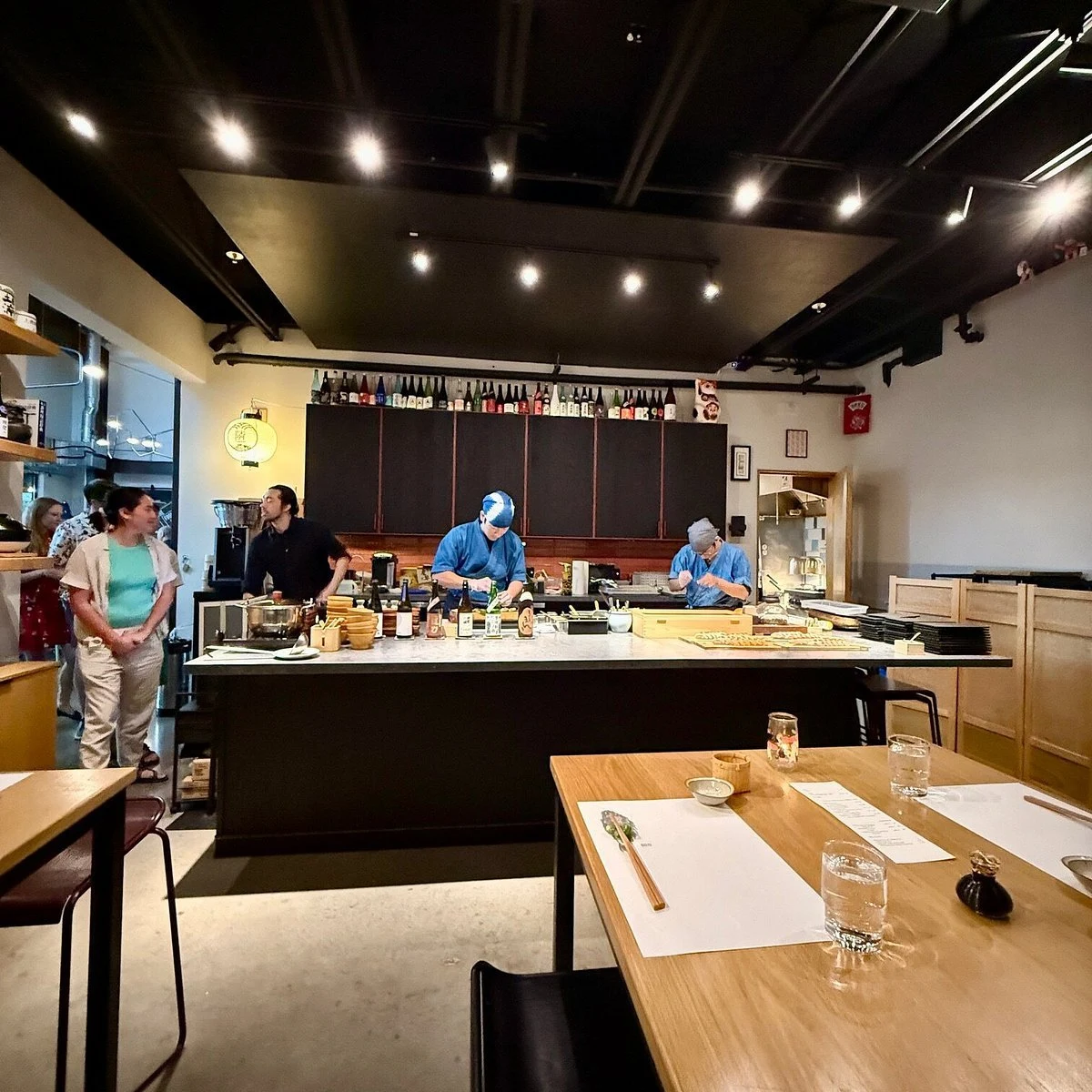
The drive down Springdale Road past auto shops, warehouse studios, and food-producer suites has become one of Austin's more telling dining routes. What was industrial infrastructure a decade ago is now a dispersed collection of operations that prioritize craft over foot traffic, breweries, roasters, butchers, and increasingly, restaurants that have no interest in the 6th Street orbit. Uroko occupies a suite in Building 1 of the Springdale complex, and the address communicates something before a single course arrives: this is a place you go to on purpose.
That physical context matters for how you read the meal. Restaurants that set up in converted warehouse space inside food corridors tend to operate with a particular discipline, lower overhead permits smaller menus, and smaller menus permit more attention per plate. Austin has enough examples of this format now to treat it as a distinct tier within the city's dining scene, sitting above the casual counter and below the full-scale white-tablecloth room. Uroko belongs in that tier, and the experience tracks accordingly.
The Progression from First Bite Forward
The tasting-progression format, when executed with rigor, works as a structured argument: each course establishes a premise that the next one builds on or reframes. At its weakest, the format becomes a parade of discrete dishes with no connective tissue. The better operations in Austin's current fine-dining generation, among them Barley Swine for its New American sequencing and Hestia for its live-fire arc, use the format to build momentum rather than simply demonstrate range.
Uroko's approach to sequencing reflects the broader Japanese-influenced sensibility that has shaped some of Austin's more focused contemporary kitchens. Japanese culinary frameworks, whether kaiseki's seasonal logic, omakase's implied trust, or the izakaya's graduated intensity, are particularly well-suited to multi-course construction because they begin with restraint and build toward richness. Austin has developed a small but committed cluster of restaurants working in this register. Craft Omakase operates at the counter-format end of that spectrum; Uroko appears to occupy a slightly different position within it.
A meal built around this sensibility typically opens with smaller, brighter compositions designed to orient the palate, lighter preparations that establish the kitchen's vocabulary before it shifts register. The middle courses carry the structural weight: proteins and preparations that demand more from both the kitchen and the diner. By the time a meal in this format reaches its final savory course, the sequencing should feel earned rather than arbitrary. Pastry or dessert, when it appears, functions as punctuation rather than destination.
This kind of graduated meal architecture places Uroko in conversation with a national set of tasting-format restaurants that use Japanese technique or sensibility as their organizing principle. On the coasts, venues like Atomix in New York City and Providence in Los Angeles have demonstrated how this approach can sustain deep critical recognition. Regionally, Lazy Bear in San Francisco and Single Thread Farm in Healdsburg have made the multi-course format central to their identity. The comparison is not one of direct equivalence, Austin operates in a different market context, but of shared structural ambition. Closer in price and format to Uroko's likely positioning, those venues show what disciplined sequencing can accomplish when it's given full operational commitment.
Where Uroko Sits in Austin's Dining Range
Austin's dining tier structure has clarified over the past several years. At the accessible end, operations like la Barbecue and InterStellar BBQ represent the city's most culturally embedded dining tradition: smoked-meat programs with lines, cash transactions, and no pretension. One tier up, mid-range restaurants in the $$$ bracket, a category that includes venues working in Southern and New American modes, offer composed cooking with more service structure. Above that sits a smaller group of destination-format operations where tasting menus, premium ingredients, and reservation scarcity define the experience.
Uroko's Springdale address and format suggest it operates in the upper portion of that spectrum. The guests driving out to Suite C on Springdale Road are not browsing for dinner; they have made a decision. That self-selection changes the room's atmosphere in ways that are difficult to manufacture at higher-volume establishments. The dining public that seeks out this kind of address tends to arrive with attention already calibrated.
The National Tasting-Menu Context
Uroko is entering a period in American fine dining when the tasting-menu format is under legitimate scrutiny. Critics and guests alike have questioned whether fixed multi-course formats justify their price premiums, particularly as the format has proliferated from coast to coast. The venues that have survived that scrutiny, Alinea in Chicago, Blue Hill at Stone Barns in Tarrytown, The French Laundry in Napa, The Inn at Little Washington, Addison in San Diego, and internationally 8 1/2 Otto e Mezzo Bombana in Hong Kong, have done so by making the progression feel inevitable rather than imposed. The format works when each course answers a question the previous one raised. It fails when it simply accumulates.
Likewise, Emeril's in New Orleans and Le Bernardin in New York City have sustained guest loyalty through format consistency and ingredient discipline rather than novelty alone. That's the standard the genre sets. A focused East Austin operation working in the same structural mode is operating with that implicit expectation in the room, regardless of scale.
Planning a Visit
Uroko is located at 1023 Springdale Road, Building 1, Suite C, a warehouse-format address in East Austin that sits outside the walkable dining corridors of East 6th or South Congress. Given the format and neighborhood, Uroko functions leading as a standalone evening destination rather than part of a multi-stop night.
Questions
Frequently asked
What recognition does Uroko hold?
Uroko holds a James Beard award.
Who works at Uroko?
Made By profiles Masazumi Saio (Chef) at Uroko.
How expensive is Uroko?
Uroko is listed at a price level of $.
Where is Uroko and what does it serve?
Uroko is in Oak Springs, Austin, serving Japanese Temaki & Omakase.
The field
How it compares
| Place | Awards | Cuisine | Notes |
|---|---|---|---|
| Uroko | James Beard | Japanese Temaki & Omakase | Oak Springs, $ |
| Emmer & Rye | · | Seasonal American Farm-to-Table | Austin |
| Jeffrey's | · | Modern American Steakhouse | Austin |
| la Barbecue | Michelin 1 Star | Texas Barbecue | Austin |
| Lenoir | · | Modern Farm-to-Table with Goan Influences | Austin |
| Olamaie | Michelin 1 Star | Modern Southern | Austin |
| Suerte | · | Modern Mexican Masa | Austin |
In residence
Similar places
Seasonal American Farm-to-Table
Emmer & Rye
Austin, United States
Modern American Steakhouse
Jeffrey's
Austin, United States
Texas Barbecue
la Barbecue
Austin, United States
★
Modern Farm-to-Table with Goan Influences
Lenoir
Austin, United States
Modern Southern
Olamaie
Austin, United States
★
Modern Mexican Masa
Suerte
Austin, United States