Executive Chef
Émile de France
Executive Chef, Le Jardin
- Discipline
- Executive Chef
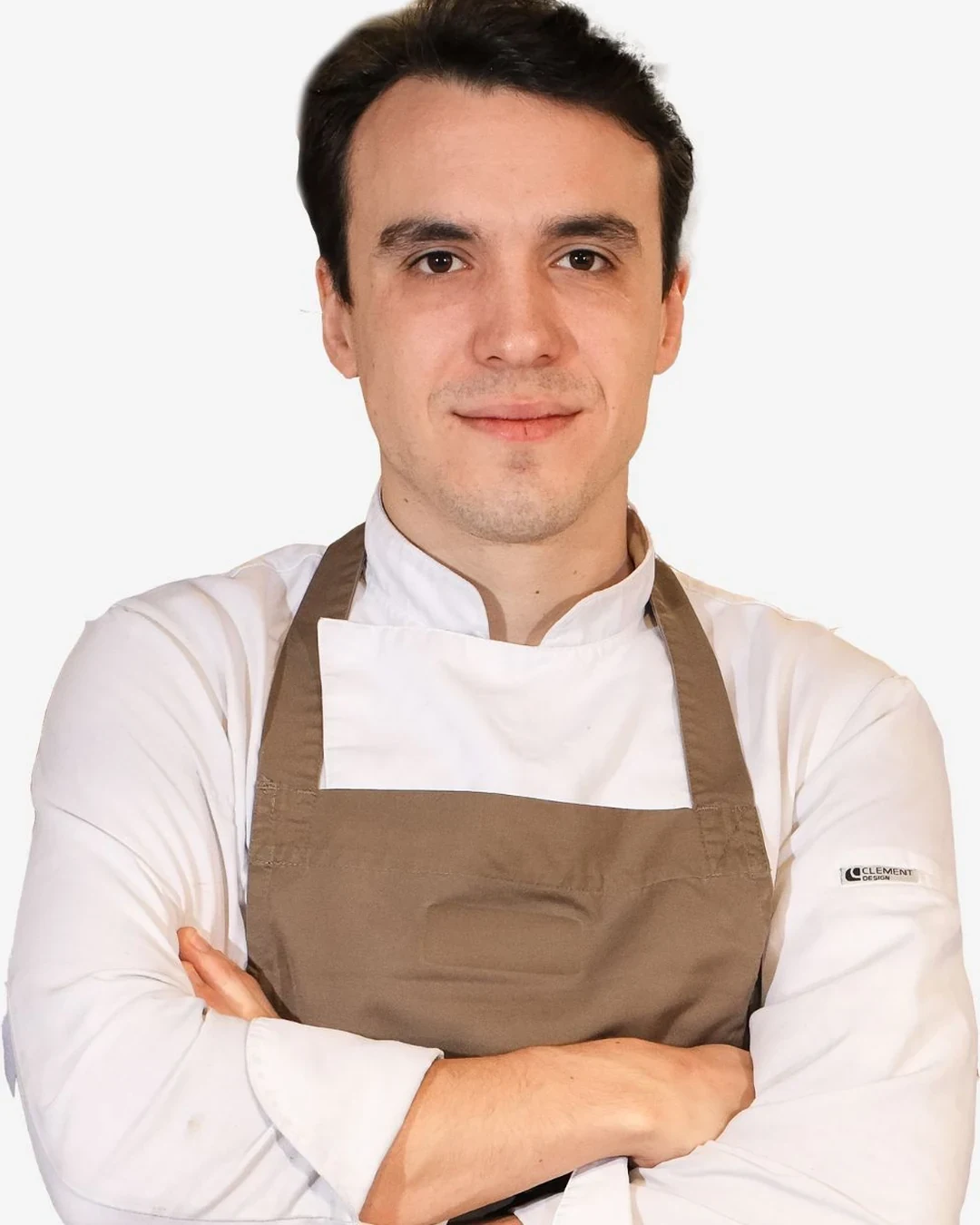
Portrait of Émile de France
i. Biography
The cooking is built from seasonal products put under pressure by contrast. In Émile de France’s current plates, spring-menu lamb rib is set with morels, St George mushrooms, tarragon and mustard seeds; tasting-menu work includes scallops with bone marrow, caviar, and whisky. The method reads through tension rather than volume: earth against sea, fat against acidity, meat depth checked by herbs, wine, or mustard seed.
The Path
The chef role at Auberge Nicolas Flamel places Émile de France inside a Paris house where the room is part of the service context. The cooking has to hold its line against stone, candlelight, expectation, and the particular stillness of an old Paris table without turning the address into decoration. The Paris progression runs through named kitchens and named chefs. Émile de France’s route includes time with Sylvestre Wahid at Thoumieux and Yannick Alléno at Pavillon Ledoyen, followed by nearly three years as chef exécutif at Restaurant Alan Geaam. The sequence points to exacting rooms, clear hierarchies, and repetition under pressure, the conditions that make technique usable during service.
The Work Today
The title carries a direct operational meaning: chef of the house, responsible for leading the kitchen at the restaurant. At Auberge Nicolas Flamel, Émile de France’s work is not framed as a manifesto; it is read plate by plate, through the arrangement of flavor, season, and texture. The spring menu gives a precise example in lamb rib with morels, St George mushrooms, tarragon and mustard seeds. The dish is seasonal without relying on a general idea of spring. Lamb brings depth and warmth; morels and St George mushrooms set an earthy register; tarragon adds a green, anise-like lift; mustard seeds give a clean peppered edge. The construction stays specific: lamb, two mushrooms, an herb, and mustard seed. The multi-course tasting options widen the range without abandoning that structure. Scallops with bone marrow, caviar, and whisky move through sweetness, salinity, smoke, and richness. Monkfish with sunchokes and yellow wine sets firm fish against root depth and wine aroma. Racan pigeon appears by breed, carrying its own implication of concentration and structure. These dishes give the clearest read on Émile de France’s current cooking: shellfish with marrow and caviar, fish with root vegetable and wine, pigeon presented by breed.
Career - Chef, Auberge Nicolas Flamel, Paris
Signature
Émile's signature dishes include Lamb rib with morels, St George mushrooms, tarragon and mustard seeds, scallops with bone marrow, caviar, whisky, monkfish with sunchokes and yellow wine, and Racan pigeon.
Acclaim
The recognition frame rests on a Paris line of kitchens and chefs rather than decoration around it. Émile de France’s record includes Sylvestre Wahid at Thoumieux and Yannick Alléno at Pavillon Ledoyen, then nearly three years as chef exécutif at Restaurant Alan Geaam. The current weight is in the title, the address, and the dishes attached to the kitchen’s leadership: spring lamb with morels, scallops with bone marrow and caviar, monkfish with yellow wine, and Racan pigeon.
FAQ What is Émile de France's current role? Émile de France is a chef at Flamel, Contemporary.