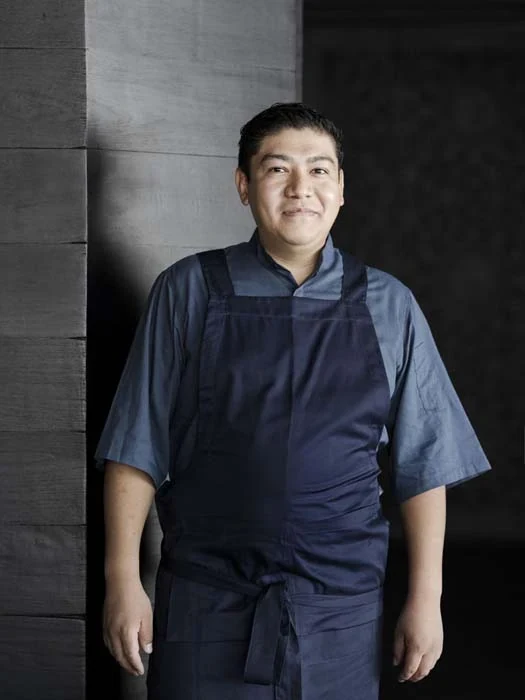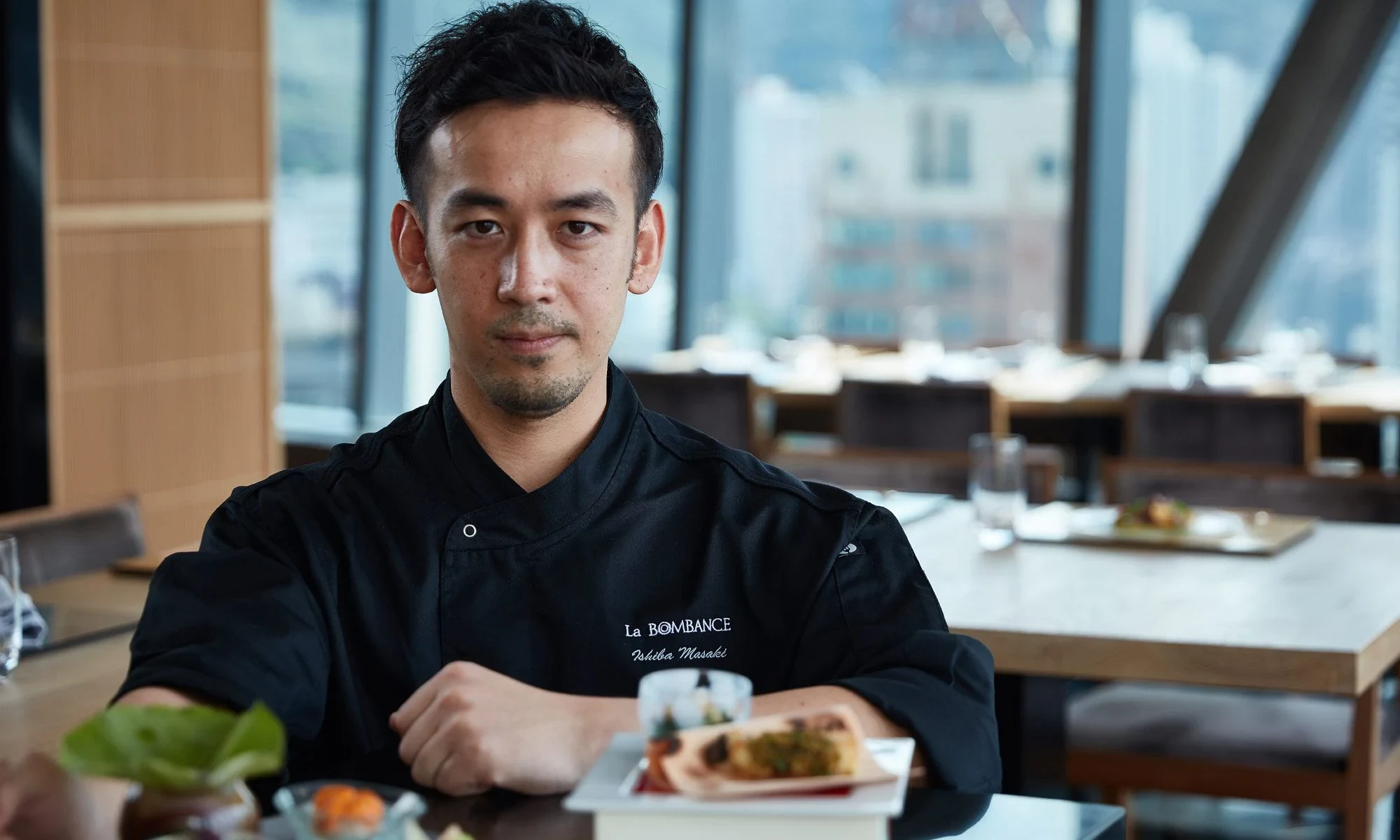
i. Biography
Charcoal sits inside the flavor architecture as well. At Le Bec Fin in Hong Kong, Japanese bichotan is used for wagyu and chargrilled fish, adding a fine smoke to the surface while drawing out natural umami. That detail matches Ishiba Masaki’s wider method: precision first, heat measured, intensity kept quiet, with flavor allowed to come forward on its own terms.
The Climb
Opening-team work at Kikunoi Tokyo, Japan placed Ishiba Masaki inside a disciplined kitchen from the start. The setting matters: it is the kind of environment where standards are set early, and where a cook learns how control, timing, and repetition shape the line before any title does. A long run as chef at La Bombance from 2009–2016 followed, and that span points to continuity in practice as much as advancement in rank. In a restaurant of that kind, consistency is not decorative; it is the daily requirement, and the work depends on keeping timing, texture, and finish aligned. The Hong Kong branch of La Bombance marked the next shift. As Sous Chef at La Bombance (Hong Kong branch) in Hong Kong from 2016–2017, Ishiba Masaki moved into a role defined by support, adjustment, and closer command of the kitchen’s pace. In 2017, he became Head Chef at La Bombance (Hong Kong branch) in Hong Kong, taking on a broader responsibility for the pass, the rhythm, and the final expression of the dining room. Since 2020, Ishiba has been Head Chef of Le Bec Fin, while also serving as Executive Chef of Na Jia Xiao Guan. The two roles show a split practice: Hong Kong work centered on bichotan, wagyu, and chargrilled fish; Beijing work extending into Manchu cuisine. Together they point to a method built on control rather than excess, with each kitchen revealing a different register of the same discipline.
Today
Hong Kong gives this work a setting where technique and restraint can carry as much weight as product. That suits Ishiba Masaki’s style, which favors clarity over display and treats exactness as a primary tool. In that frame, the smallest decisions matter most: the cut, the temperature, the contact with charcoal. The current posts also keep the practice legible across two different cuisines. Na Jia Xiao Guan in Beijing connects to a lineage-shaped approach in Manchu cuisine, while Le Bec Fin in Hong Kong shows how bichotan can sharpen wagyu and chargrilled fish without burying them. Smoke is handled as a precise instrument, and natural umami is given room to surface.
Career - Head Chef — Le Bec Fin, Hong Kong (2020–present) - Executive Chef — Na Jia Xiao Guan, Beijing, China - Opening Team Member — Kikunoi Tokyo, Japan - Chef — La Bombance (2009–2016) - Sous Chef — La Bombance (Hong Kong branch), Hong Kong (2016–2017) - Head Chef — La Bombance (Hong Kong branch), Hong Kong (from 2017)
Recognition
Japanese bichotan charcoal is a dense, clean-burning fuel, and in Ishiba Masaki’s Hong Kong work it gives wagyu and chargrilled fish a fine smoky edge while lifting natural umami. The material point is clear: fire, fuel, scent, and finish all matter, but none of them should overpower the dish. Ishiba works with a controlled hand, letting charcoal register as part of the flavor rather than as a display of it.
FAQ What is Ishiba Masaki's current role? As of 2026, Ishiba Masaki is Executive Chef. Where did Ishiba Masaki work before? Ishiba Masaki's earlier career included Kikunoi Tokyo, La Bombance, and La Bombance (Hong Kong branch). What is Ishiba Masaki known for? Manchu cuisine.