Chef
Kunihide “Nakaji” Nakajima
- Discipline
- Chef
- Based in
- New York City, New York, United States
- Venue
- Nakaji · Restaurant

i. Biography
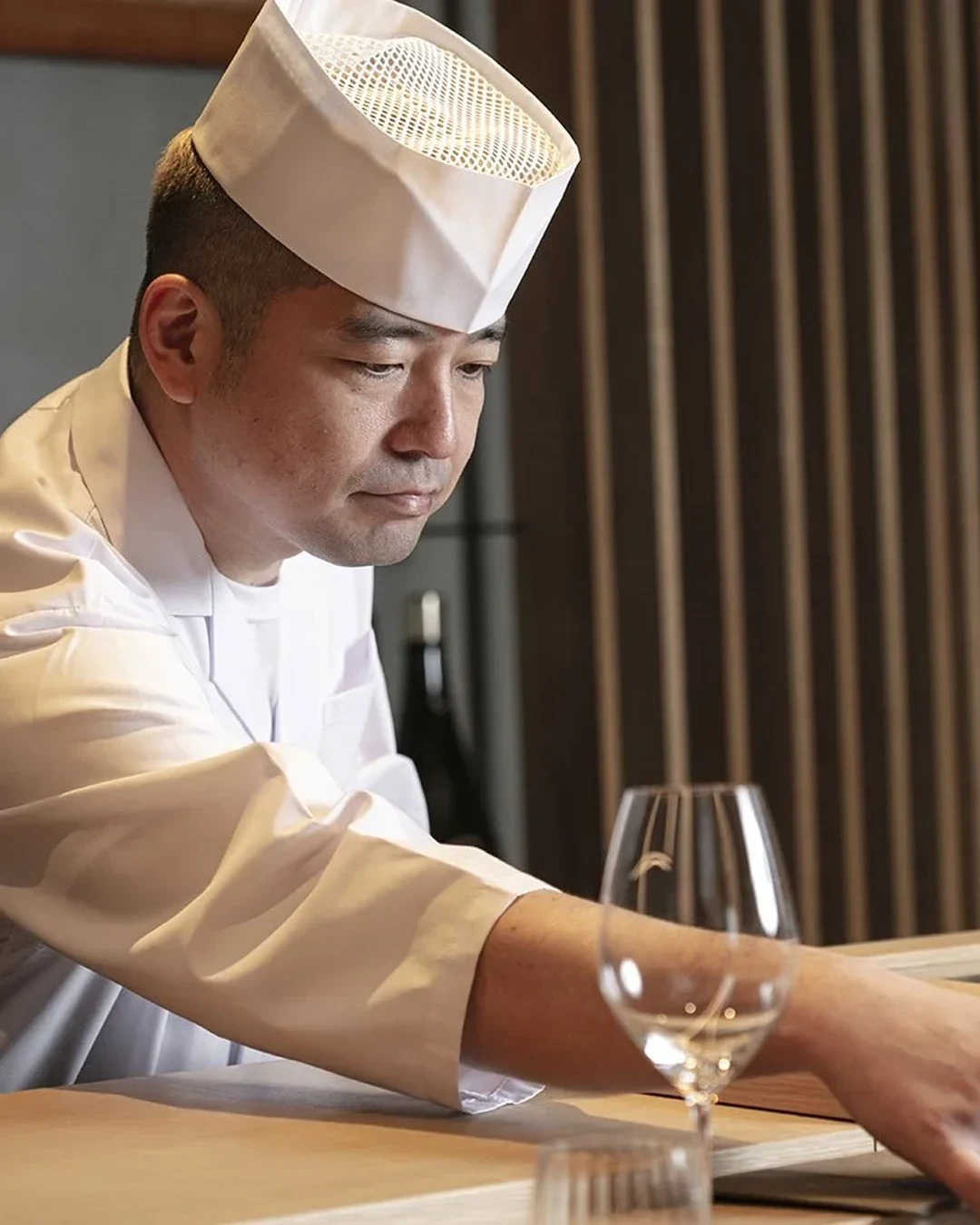
Training that starts at 18 sets a cook inside repetition before authorship. In the case of Kunihide “Nakaji” Nakajima, the work moved through a 1997 arrival in Midtown, a Harlem chapter, and the small counter where nightly omakase now takes place. The through-line is sushi as accumulated practice: rice handled with attention, fish cut with control, timing held under service pressure, and each gesture reduced to what is needed.
The Path
Early training at 18 placed Kunihide “Nakaji” Nakajima in a discipline where progress is measured in small corrections: hand pressure, rice temperature, knife angle, and the ability to repeat exacting work through service. That foundation remains the practical base of the craft. A 1997 arrival in Midtown, New York, NY, put that training into a faster market. For sushi, New York tests whether tradition can keep its structure under pace, volume, and expectation. The counter becomes both workstation and point of contact, with technique exposed to the guest in real time. The Executive Chef role at Sushi Inoue in Harlem, New York, NY, gave Kunihide “Nakaji” Nakajima a chapter defined by counter rhythm and precision. In that setting, the craft depended on sequence: how the meal builds, how each piece lands, and how timing carries as much weight as visible flourish. The chef role at Nakaji continues that counter-based work under his own name. The room is built around the direct exchange among chef, rice, fish, and guest, with the format keeping technique close enough to be read piece by piece.
The Work Today
“The most important aspect of homemade sushi is the rice.” That statement places the craft at its base. Rice is not accompaniment; it is the structure that carries fish, seasoning, temperature, and pace. It must be warm against cool fish, seasoned without taking over, firm enough to hold, and delicate enough to release cleanly. Sourcing at the sushi counter is noted for all fish coming directly from Japan through family purveyor relationships spanning generations. For Nakaji, that means the Bowery service is tied to established channels of trust rather than anonymous supply. The work joins New York service to Japanese fish and to relationships already in place before the meal begins. Nightly omakase at Nakaji uses the close visibility of the counter without treating the counter as theater. The value is in concentration: purposeful movement, controlled pauses, rice held as the measure, sourcing treated as part of the technique, and service shaped by a cook who has spent years reducing the work to what matters.
Signature
Signature dishes include Signature omakase at Nakaji.
In Their Words “My parents did several things that profoundly shaped my life and career.” “I strive to be better, always honoring their influence in my life.”
Profile updated July 2026
FAQ
Asked of Kunihide
What is Kunihide “Nakaji” Nakajima's current role?
Kunihide “Nakaji” Nakajima is Executive Chef at Nakaji.
Where did Kunihide “Nakaji” Nakajima work before?
Earlier in their career, Kunihide “Nakaji” Nakajima worked at Sushi Inoue.
What is Kunihide “Nakaji” Nakajima known for?
Edomae-style sushi.