i. Biography
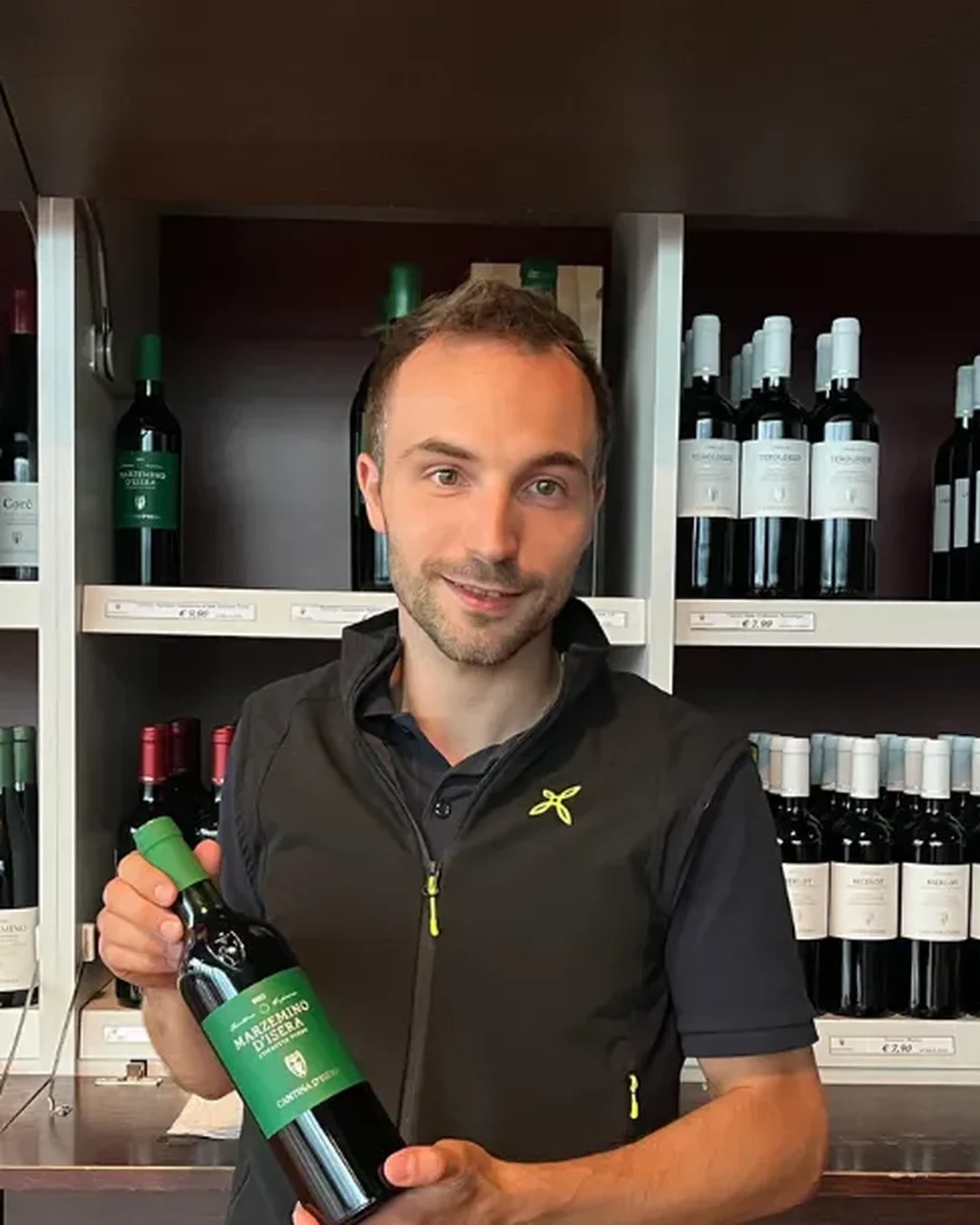
As General Manager and winemaker of Cantina d'Isera, Ludovico Berteotti is formed by a cooperative idea as much as by cellar practice. His work gathers place, growers, machinery, bottling, and Marzemino into one line of inheritance: a winery shaped by its territory, and a winemaker shaping decisions around what that territory can sustain.
The Training The clearest school in Berteotti’s story is the cooperative winery itself. At Cantina d'Isera, the work is not framed only through taste or commerce, but through the daily mechanics of making wine with less waste and more control over each step. That training shows in the strategy associated with him there: concrete operational sustainability, autonomy in bottling, and relaunching Marzemino. Each phrase carries a practical weight. Autonomy in bottling speaks to control; Marzemino links the cellar to a local grape; operational sustainability keeps the conversation close to presses, tanks, water, yeast, and energy. His language is plain and exact: "For us, sustainability means efficiency and intelligent saving." In that sentence, sustainability is not treated as decoration. It is a method for running a winery with care, thrift, and attention to consequences.
The Lineage The inheritance Berteotti works within is cooperative. He sees Cantina d'Isera's cooperative model as a way to enhance its territory, regions, and local area, and he puts that idea in direct words: "The fact of being a cooperative winery gives us the opportunity to enhance our territory, our regions, our area." That belief gives the work its family-story rhythm. The winery is not presented as a solitary signature, but as a structure that carries many local contributions toward a common bottle. In that structure, his role as General Manager and winemaker joins management to cellar decisions, and cellar decisions back to the land around Isera. He also names the scale and market position of the house as part of its identity: "Our peculiarity lies in our size and in our approach to the market." Size, in this telling, is not a neutral statistic; it shapes how the cooperative moves, how it presents its wines, and how it protects the link between local area and finished bottle.
The Table Berteotti’s craft is visible in specific operational choices. Photovoltaic energy is used for harvest-time presses and machinery, water is reused for tank rinsing, and yeast inoculation is reduced when quality remains unchanged. These are not abstract gestures. They belong to the working hours of a winery: harvest pressure, cellar hygiene, fermentation choices, and the discipline of changing only what can be changed without harming the wine. The result is a style of leadership in which sustainability is measured by function as well as principle. Marzemino sits at the center of the relaunching strategy associated with him at Cantina d'Isera. In that focus, the cooperative’s local vocation and the winemaker’s operational discipline meet: a grape brought forward through a house that understands itself as part of its area. There is also a public dimension to his work. "It is a great pride to be here, even very far from home, to be able to bring our wines and let people taste them." The sentence carries the cooperative outward without loosening its tie to home.
FAQ What tradition or house shaped Ludovico Berteotti? Cantina d'Isera’s cooperative tradition shapes his approach to bottling autonomy, operational sustainability, and the relaunch of Marzemino.