Chef
Masa Takayama
- Discipline
- Chef
- Based in
- New York City, New York, United States
i. Biography
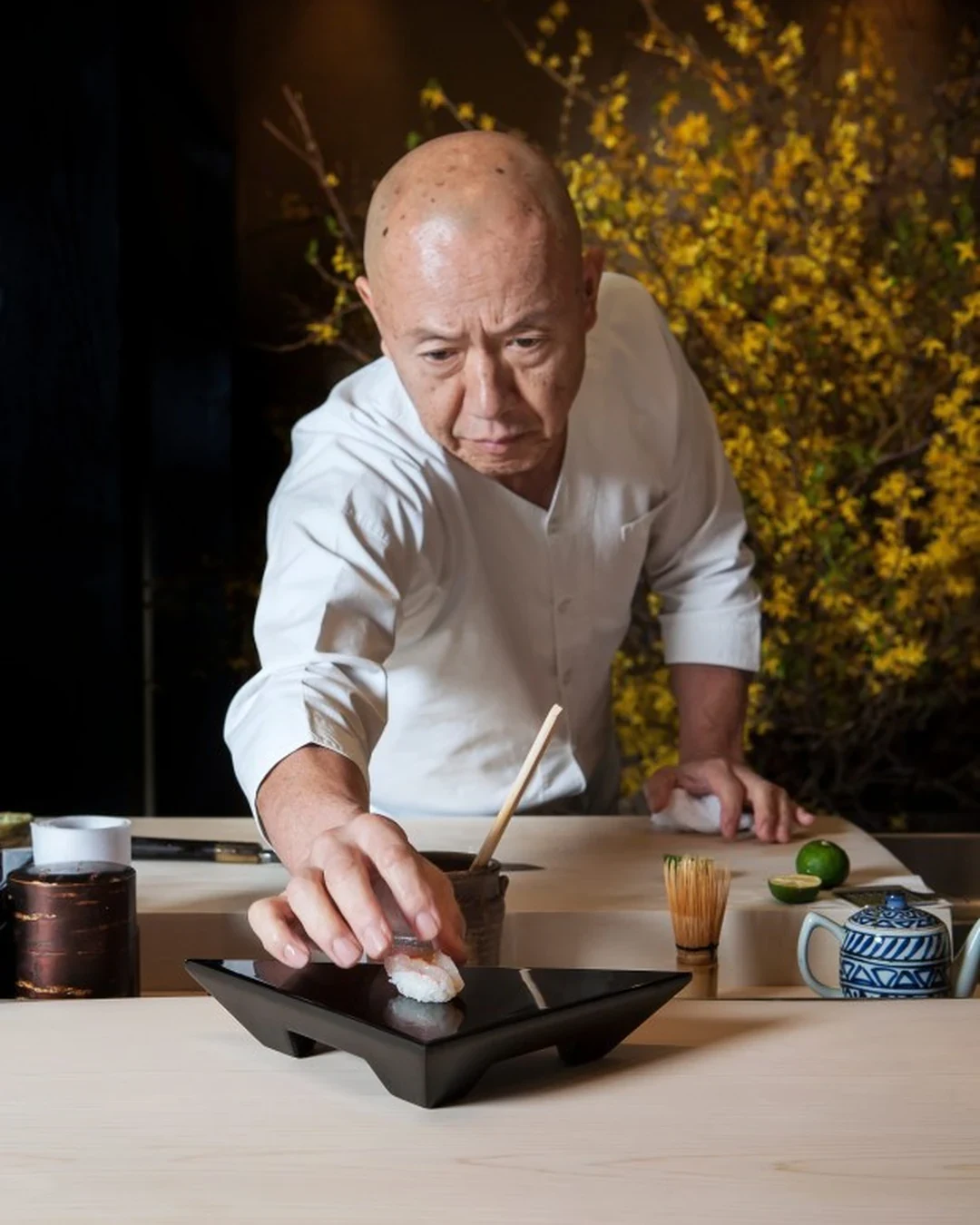
Japanese cuisine and sushi, as practiced at Masa in New York City by owner Masa Takayama, are organized around attention, timing, and restraint. The omakase form is present, but not treated as a fixed procession. The meal is built against the day’s fish and ingredients: availability, season, texture, and the judgment required to decide how little or how much to do. Abundance is secondary to calibration.
Coming Up
Sushi craft begins with apprenticeship because repetition trains the hand before it trains the menu. Early in his career, Masa Takayama trained as an apprentice before becoming sushi chef at Sushiko in Ginza, Tokyo, Japan. That foundation sits in the practical details of the counter: knife angle, rice temperature, hand pressure, and the ability to read when fish should be served simply or given another kind of attention. Japanese sushi practice changed register when carried into California dining culture, and Takayama brought that precision to Los Angeles, California, USA, founding Saba-ya (from 1980). The work stayed tied to the rigor of his training while meeting a different audience. As founder / owner at Ginza Sushiko in Los Angeles / Beverly Hills, California, USA (from 1987), the chef-restaurateur role became part of the craft: sourcing, sequencing, restraint, luxury, and a personal reading of ingredients had to hold together in service. The counter expanded into a broader restaurant practice across several projects and cities. Takayama became restaurateur at Kappo Masa, extending the work beyond sushi into another expression of Japanese dining. He was also founder at Tetsu in Las Vegas Strip, Paradise, Nevada, USA (from 2012), and founder at Tetsu in Tribeca, New York City, New York, USA (from 2017). Across those addresses, the constant is immediacy: craft held between simplicity and richness, with the ingredient setting the terms. Today, Masa is owner of Masa (since 2004) and owner of Bar Masa.
Today
Shibui gives Masa in New York City its working principle: elegance carried through proportion, texture, and restraint rather than display. In Takayama’s ownership, the restaurant remains centered on omakase, fresh fish, and a meal structure that responds to what the ingredients allow. The menu is not only selected; it is adjusted through contact with the day’s product. Ingredient-led cooking at this level is not a slogan but a service discipline. Takayama describes it directly: "Actually the ingredients are my teachers. They tell me, “Hey Masa, cook me this way, that way. I want to be changed that way.” I talk to ingredients every day." The point is practical. Availability is part of the architecture of the meal. What reaches the guest depends on what has arrived, what is at its peak, and what Takayama believes it requires in that moment. Masa’s Toro Caviar is a signature dish served as the second course in the omakase menu, pairing rich toro with the salty brine of Osetra caviar. The dish uses luxury as a controlled contrast rather than as excess: fat, salinity, and depth set into a precise early position. Takayama states the function plainly: "This dish is always served as the second course in the Omakase menu because it prepares the guest for what’s to come." It works as a palate-setting course for the progression ahead. Restaurant ownership remains part of the same craft system. Takayama’s current restaurant work includes ownership of Bar Masa, and he also opened Tobi Masa in London.
Career - Owner — Masa, Manhattan, New York City, New York, USA (2004–present) - Owner — Bar Masa, New York City, New York, USA; Las Vegas Strip, Paradise, Nevada, USA - Apprentice; sushi chef — Sushiko, Ginza, Tokyo, Japan - Founder — Saba-ya, Los Angeles, California, USA (from 1980) - Founder / owner — Ginza Sushiko, Los Angeles / Beverly Hills, California, USA (from 1987) - Restaurateur — Kappo Masa - Founder — Tetsu, Las Vegas Strip, Paradise, Nevada, USA (from 2012) - Founder — Tetsu, Tribeca, New York City, New York,