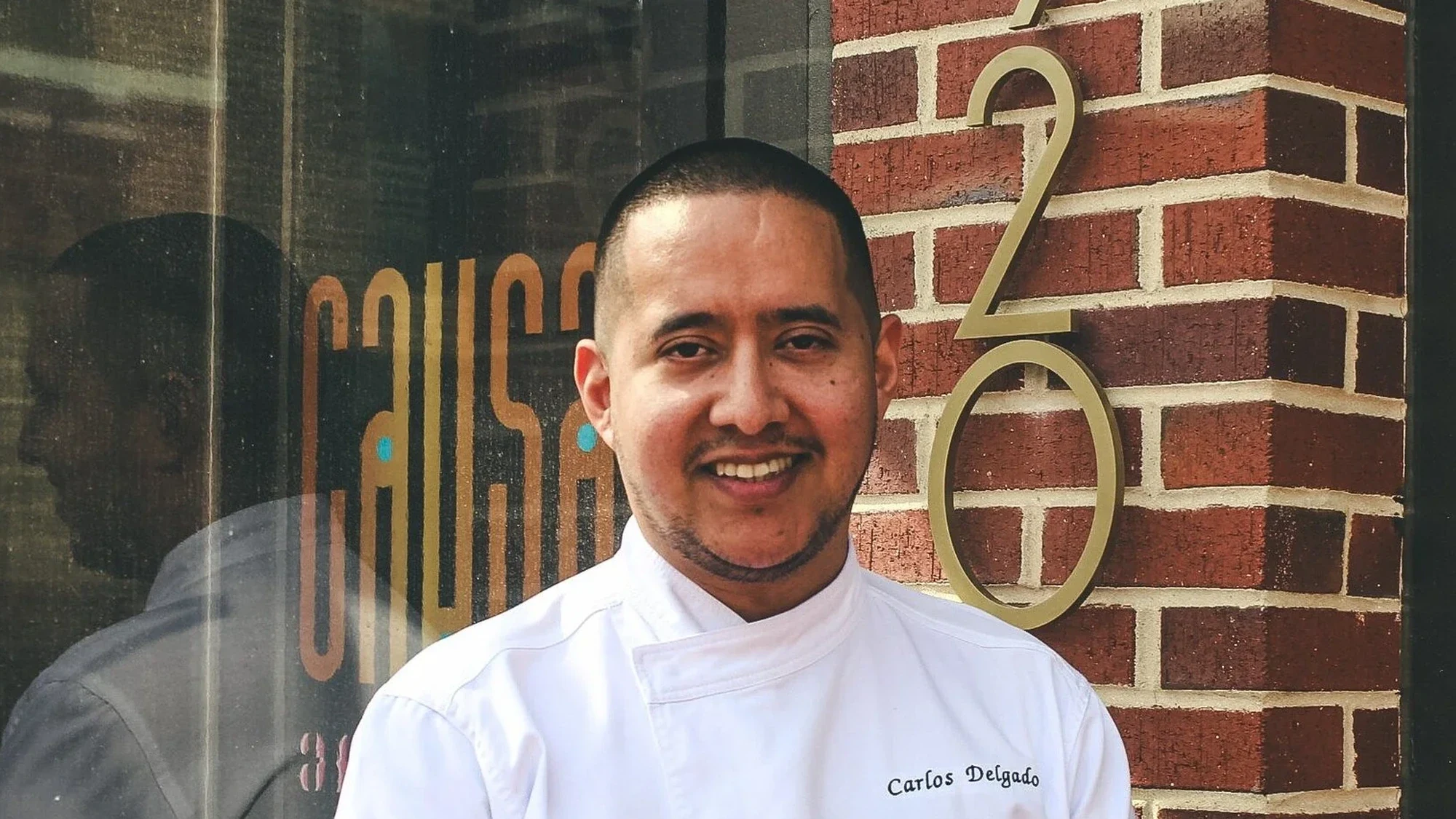
The kitchen at Brisa will mold a chocolate confection into a golden coin, bringing together chocolates with different flavors and textures from cacao-producing countries. At 2121 First St., SW, the restaurant coming to Buzzard Point this summer will use that same one-form, many-origin logic across coastal Latin American cooking. Carlos Delgado, behind Michelin-starred Causa in Shaw and the Peruvian-Japanese handroll counter Maru San in Capitol Hill, is culinary director and partner. The Wharf restaurant group that runs La Vie and Nara-Ya is developing the project.
Why Brisa Buzzard Point Belongs on DC’s Opening Watch
Audi Field anchors the Buzzard Point development, and The Point is already part of the restaurant landscape there. Brisa takes its name from the Spanish word for “breeze,” tied to the air off the water.
“It’s almost like when you go to a Mediterranean restaurant and they’re showcasing multiple things from various places in many styles,” Delgado says. Brisa will take that approach with Latin cuisines, which “I feel like DC hasn’t had.”
The useful test will be variation rather than breadth: one form shown across cultures, one coastline answered by another, each dish needing its own texture, acid, filling, or seasoning logic.
What the Coastal Latin American Menu Signals for Buzzard Point
Brisa will draw from coastal destinations including Mexico, Venezuela, Delgado’s native Peru, and beyond. Arepas show the method plainly: fresh corn Venezuelan arepas filled with cheese alongside a fried-egg-stuffed Colombian arepa.
Ceviche will come in Peruvian, Mexican, and Ecuadoran styles. The Ecuadoran version is less acidic, with shrimp, tomatoes, and red onion. Guacamole will be served with salsas from different countries.
Puerto Rico appears through arroz mamposteao, a rice dish with beans, and bacalaitos, thin salt cod fritters. El Salvador enters with seafood-stuffed pupusas. The rotisserie will turn Peruvian-style jerk chickens seasoned with habanero, Scotch bonnet peppers, thyme, rosemary, and garlic. “When you eat it, it definitely tastes Peruvian, but then you get these jerk chicken spices,” Delgado says.
Carlos Delgado’s Role at the New Restaurant
Delgado is overseeing the menu and setting the frame for how the kitchen moves across Latin cuisines without treating them as one interchangeable category. The restaurant is not a repeat of a Peruvian dining room, and it is not an expansion of a handroll counter; it asks for a wider hand.
That range can be generous only if each preparation keeps its own structure. A pupusa needs masa that can carry its filling. A bacalaito has to stay thin while holding salt cod. An arepa succeeds or fails in the first tear.
Favio Gonzales and the Daily Work Behind Brisa
Favio Gonzales, a Peruvian-born chef formerly of Sardi’s and Barca in Old Town, will handle day-to-day operations. On a menu this broad, that work is where the restaurant either keeps its shape or becomes a collection of references.
Dessert adds its own bench discipline. Brisa will serve tres leches, a Basque-style corn cheesecake, and a faux mango filled with mango mousse. Each depends on a different kind of control: absorption without slackness, corn carried through the cheesecake rather than hidden by sugar, mousse clean enough to justify the molded fruit form.
Cocktails, Takeout, and the Dishes That Should Not Travel
Cocktails will follow the cross-continental line through mojitos, margaritas, pisco sours, and caipirinhas. Familiar names still require structure: citrus, dilution, sugar, spirit, and timing decide the glass.
Brisa will also have a takeout menu with quesadillas, tacos, arepas, and carryout-friendly versions of other dishes. Ceviches will stay off that menu because Delgado says they do not travel well.
That boundary matters. Some dishes can survive a container; some depend on temperature, timing, and acid in ways that make the trip part of the damage.