Marcus Jernmark works fish between sheets of kelp before it reaches the plate, the kombujime doing its quiet work: tightening texture, drawing out savor, asking time to season what salt alone cannot. The Swedish-born chef builds that kind of detail into a hyper-seasonal $150 four-course prix fixe menu at Lielle, his Pico-Robertson restaurant opened in February 2026. The choice is pointed in Los Angeles fine dining, where a new chef-led room often arrives with a longer, more expensive tasting-menu commitment.
Jernmark moved his family from Stockholm to Los Angeles in 2022, then spent four years learning California through its markets. "No place is like Los Angeles, where you actually go with your chefs to a farmers' market, buying produce, loading it into your car, saying hello to your customers buying their home produce," said Marcus Jernmark. The sentence gives his kitchen its working grammar: cooks in the aisles, produce in the car, customers recognized outside the dining room.
By early March, Jernmark had moved into his second menu, and reservations remained scarce in the restaurant's first months. He changes the menu every five weeks, so the kitchen is not asking diners to memorize a fixed signature sequence. It is asking them to follow Jernmark's cadence: market, station, plate, repeat.
Where Jernmark Fits in Los Angeles Fine Dining
Los Angeles fine dining has a familiar apprenticeship-to-ownership pattern. A chef leaves a major kitchen, opens a personal dining room, and sets the meal around a tasting menu priced from $195 to $700 per person. Dave Beran was chef de cuisine at Chicago's Alinea before opening Seline and Pasjoli. Michael Cimarusti departed Water Grill and went on to operate the Michelin-rated tasting menu at Providence. The path is legible: years on the tools, a room of one's own, a guest asked to commit.
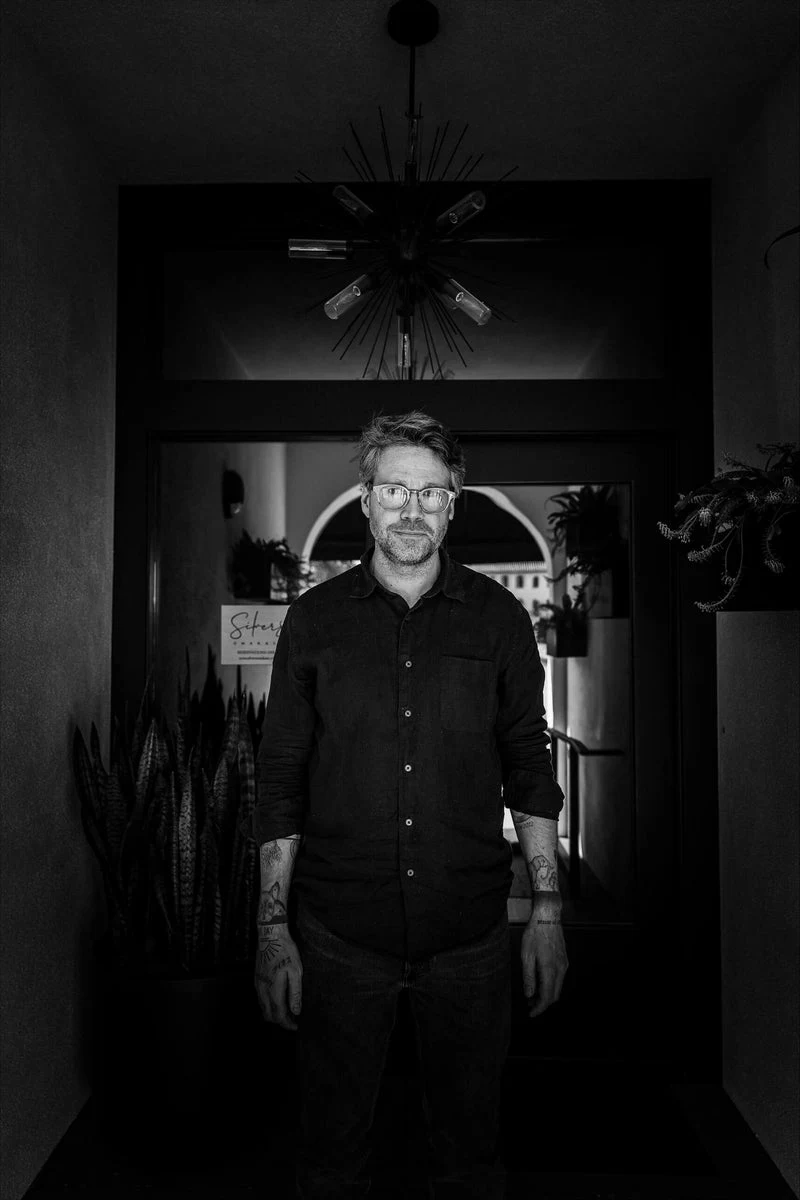
Jernmark enters that conversation through compression. A shorter format gives him less space to hide a weak course and more reason to make each decision count. There is no padding in a sequence built this tightly; one fish, one shellfish, one bird, one dessert can carry the whole argument only if his buying and technique stay sharp.
Early scarcity gives Jernmark pressure beyond the booking calendar. A new dining room can fill on curiosity once. Return attention depends on whether he and his cooks keep finding a reason for the menu to turn. When asparagus leaves its peak, when a fish wants kelp more than smoke, when the market sends the team toward a special rather than the printed path, Jernmark has to show his hand again.
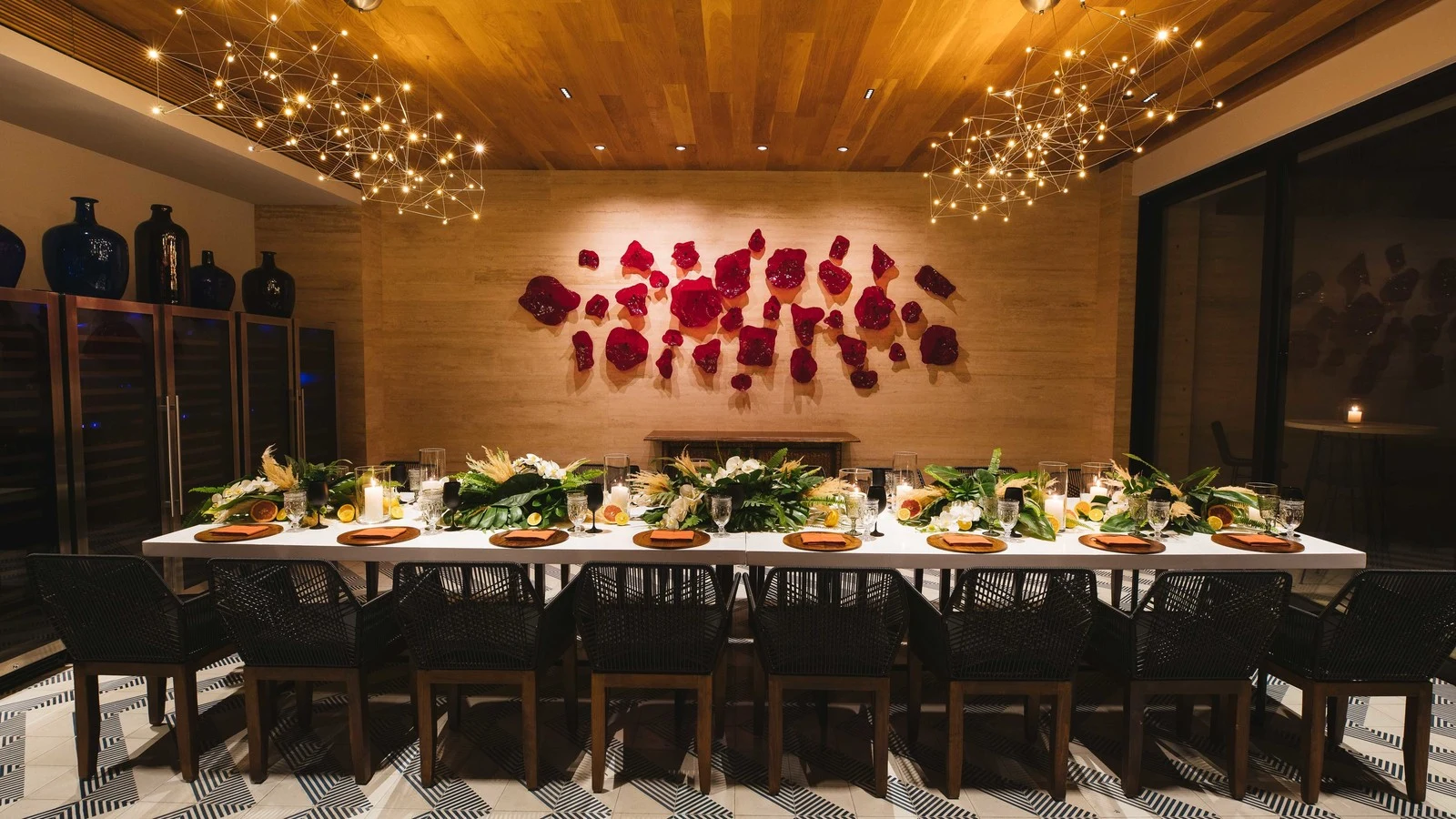
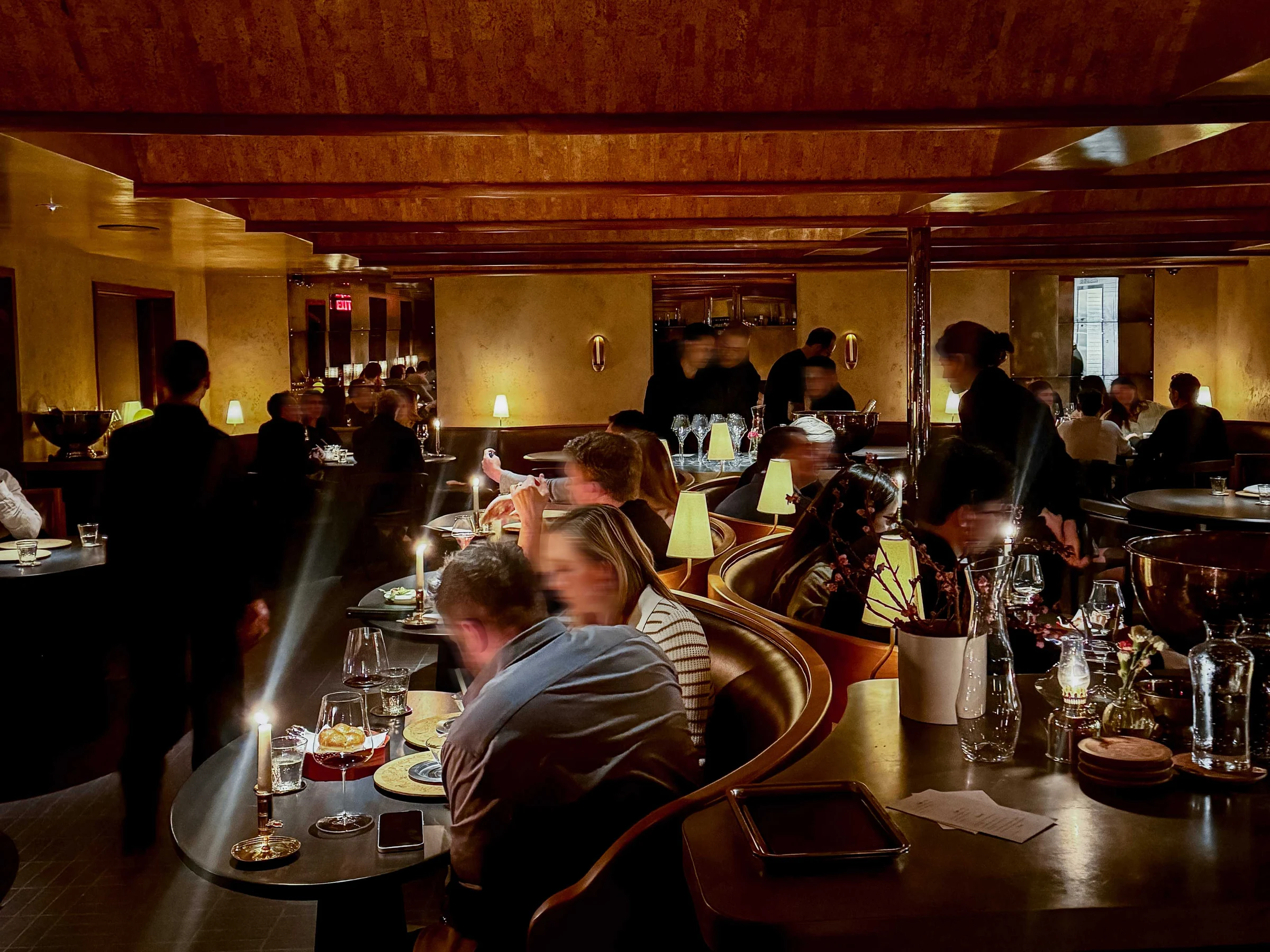
The former Bicyclette space gives Jernmark a room already known to many Los Angeles diners, but the more useful details are practical. Soundproofing and individual speakers near each seat allow the playlist to stay audible without forcing the table to raise its voice. Diners can dress up, but T-shirts and jeans have also moved through the room without friction. Fine dining here does not depend on making the guest solve the room before the first course lands.
How Jernmark Reads the California Market
The second menu showed Jernmark's market discipline in green tones first. He prepared aged jack through kombujime and paired it with peas, cucumber, green gooseberry, and wasabi. The fish had marine depth from contact and time; the produce pulled it back toward spring. That is the kind of balance a market-led kitchen has to earn quickly, before the season moves under its feet.
Another course paired smoky abalone with delta asparagus, nori seaweed rice, and fermented white asparagus sauce. The timing mattered: peak asparagus season gave the vegetable its snap, while Jernmark used fermentation to extend it into a deeper register. Fresh asparagus and fermented asparagus did different jobs on the same plate. One cut clean; the other carried length.
That is where Jernmark's five-week cycle becomes part of the craft rather than a scheduling note. A dish has enough time to be cooked repeatedly, corrected, and tightened at the station. It does not have enough time to drift away from the produce that justified it in the first place.
How Jernmark Makes the Meal More Contained
The accessibility at Lielle begins with structure, not informality. Jernmark has chosen constraint: fewer courses, a defined progression, and a kitchen that has to decide what belongs now rather than what can be folded into a long tasting sequence. A compact menu makes the meal easier to read and harder to blur.
That restraint does not make Jernmark's cooking casual. It makes the ask more contained. The guest still pays attention to technique, sourcing, sauce work, and pacing, but the meal does not require the same endurance or check size that often comes with the city's most ambitious tasting rooms.
The room supports Jernmark's position. Staff guided a sober diner toward non-alcoholic options that went beyond the predictable mocktail, and the dress range signals a dining room more interested in the work than in gatekeeping the audience. Accessibility in fine dining is not only a price question. It is also whether a guest can enter the room without performing fluency before dinner begins.
What Jernmark Sends Off the Pass
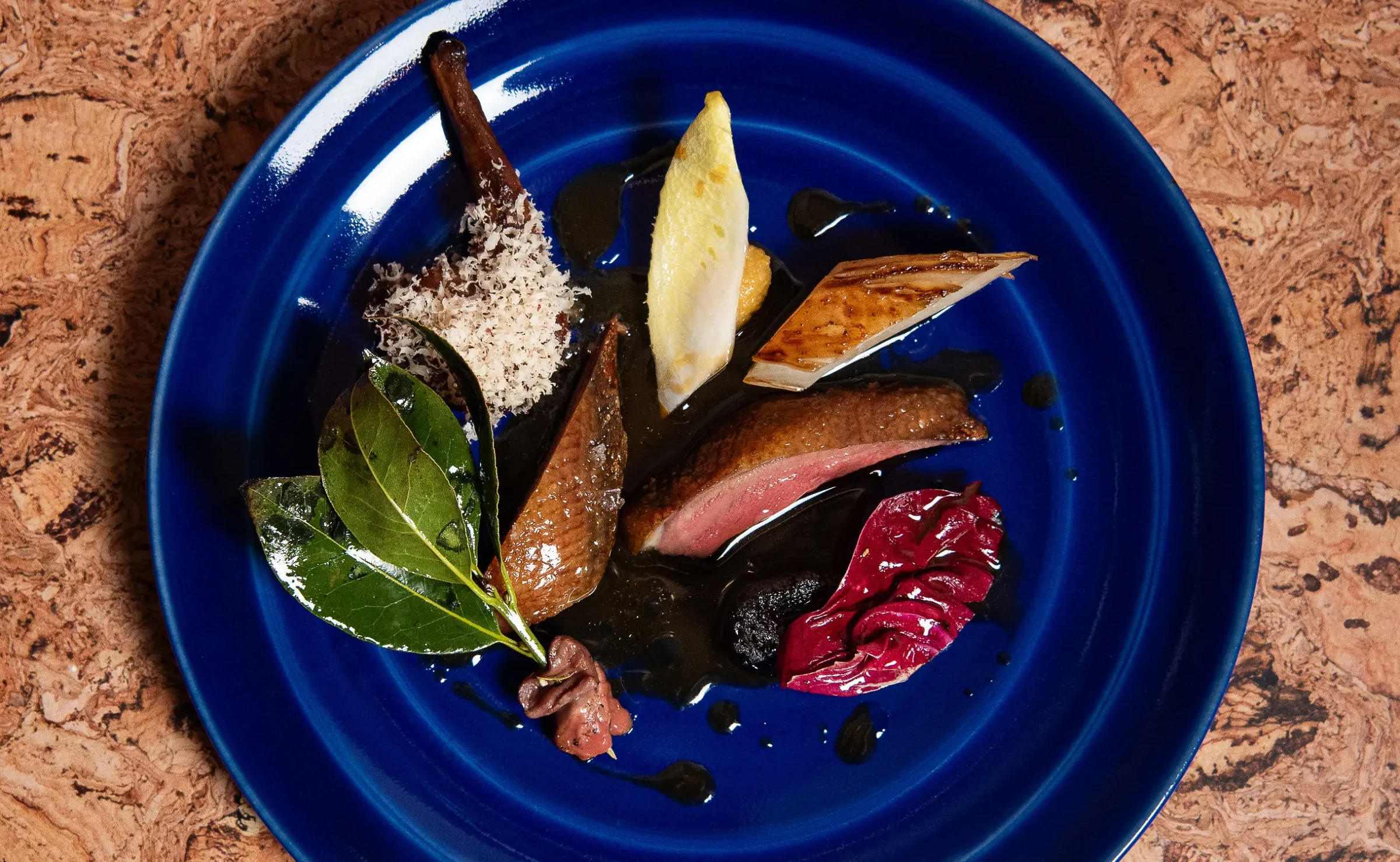
The squab course placed the bird with hazelnut miso, smoked matcha butter, hen of the woods mushrooms, and black truffle jus. Jernmark brought richness in layers rather than one luxury signal: fermentation and fat from the miso, bitterness and smoke from the butter, a darker register from the mushrooms and jus. The plate did not lean on truffle alone to announce itself.
A mid-spring special moved in another direction: spaghetti all'assassina with lobster, sea urchin, yuzu, and preserved yellow tomato. The dish turned on brine and acidity, with preserved tomato doing a different job than fresh fruit would. Specials at Lielle reflect what Jernmark's team finds at the market, so the side path can reveal as much about the day's buying as the core menu.
Dessert kept the same attention to texture. Jernmark used Jersey cow milk sherbet, chamomile meringue, black currant, black tea, and an infusion of dried beet. The spoon had to crack the baked meringue layer before the dish opened. That gesture matters. Fine dining can become too smooth when every texture is softened in advance; a shell that asks to be broken brings the hand back into the eating.
How Jernmark Treats the Sober Guest
Wine has its place at Lielle, but the more distinctive beverage work sits with Jernmark's non-alcoholic pairings. He paired apple-oxidized wine with the third and fourth courses, giving the finish of the meal structure rather than sweetness. For a sober guest, that changes the conversation. Abstention does not become a placeholder; it becomes another pairing track with acid, oxidation, and enough shape to stand beside sauce, fat, meringue, tea, and fruit.
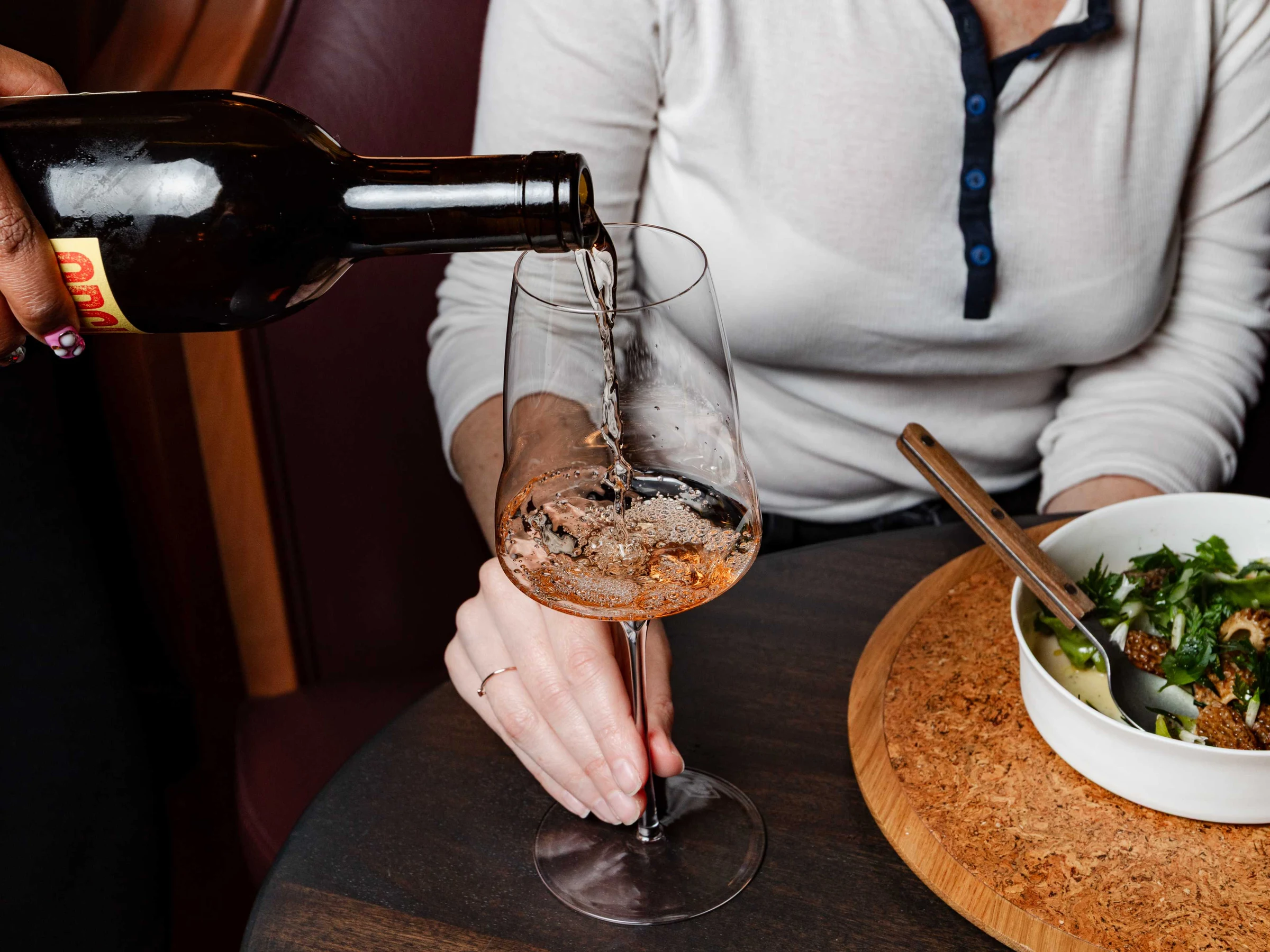
Jernmark does not offer a formal wine-pairing flight; he has a serious wine list with by-the-glass and bottle suggestions for each dish, so the check rises if a guest adds wine. That spread gives diners a clear decision before booking: stay with the base menu, or treat the beverage program as part of the full construction. Either way, the central question remains the same: what does Jernmark's team do with the California market in its current cycle?
What to Watch as Jernmark's Menus Turn
Lielle's next test is repetition under change. Attention can gather around an opening; craft has to survive the next buy, the next correction, the next plate that no longer has novelty to protect it. Jernmark's strongest early signals are not decorative. They sit in aged fish, fermented vegetable sauces, market specials, non-alcoholic pairing work, and desserts that use bitterness and texture to keep sweetness in check.
Notable Los Angeles chefs and seasoned diners have been part of the early conversation around Lielle, but the more durable measure will come from Jernmark and his cooks' routine. Load the produce. Choose the sequence. Tighten the sauce. Break the meringue. Then let the menu turn again.