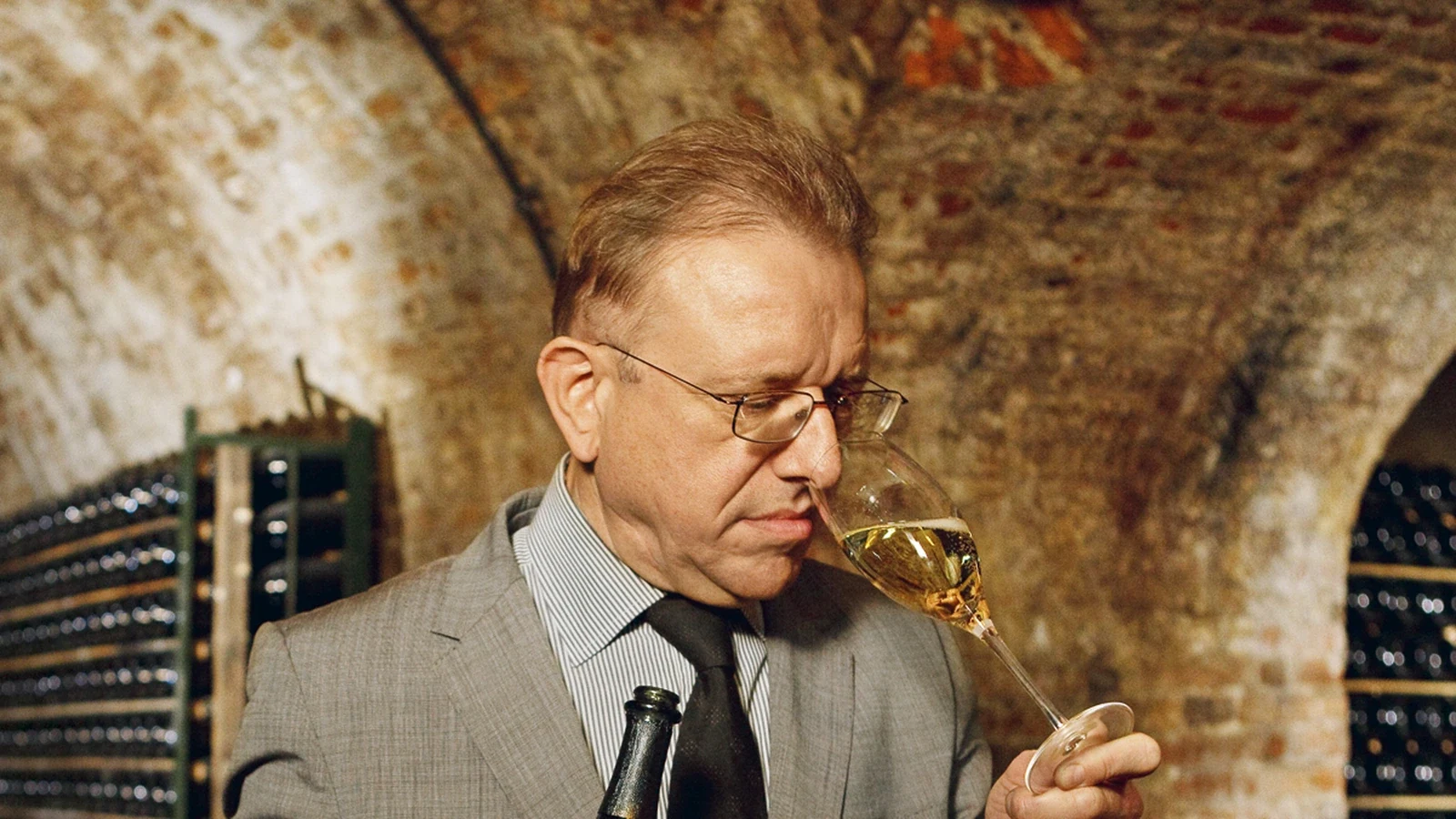
In the chalk tunnels, where bottles rest at eight degrees Celsius, a riddler turns glass by hand so the sediment travels, degree by degree, toward the neck. Richard Geoffroy spent twenty-eight years as chef de cave at Dom Pérignon before stepping down in 2019, and the house has not published a public tasting program in his name since. That tells you something plain about access in Champagne: the riddlers, the chefs de cave, and the cellar hands are not usually waiting behind a booking page. To stand bench-side with the people who make the wine takes relationship, time, and more patience than most visitors bring.
Direct, named access to a working chef de cave or a riddler at their bench is not available through any public channel at the major houses. The winemaking teams at Moët, Krug, Bollinger, and Pol Roger do not take part in the visitor programs their houses sell.
What the visitor centers offer is proximity to the finished work: the wine in the glass, the chalk caves, the riddling racks. To stand beside the person who blended that wine, you need a trade relationship, a journalist's credential, or a merchant connection built over time.
For most readers, the truer route is a structured cellar visit at a grower-producer, where the chef de cave is often also the owner, and the person pouring may be the person who set the dosage.
Why the Cellar Masters at Grand Houses Stay Out of Reach
The chefs de cave at the grandes maisons work at a scale that does not bend easily toward individual visits. A winemaker blending several hundred reserve wines into a non-vintage cuvée cannot step away from that work for a consumer appointment. The chef de cave at a major house manages a team, a library of reserves, and a release calendar that runs years ahead; the house does not sell that time at retail.
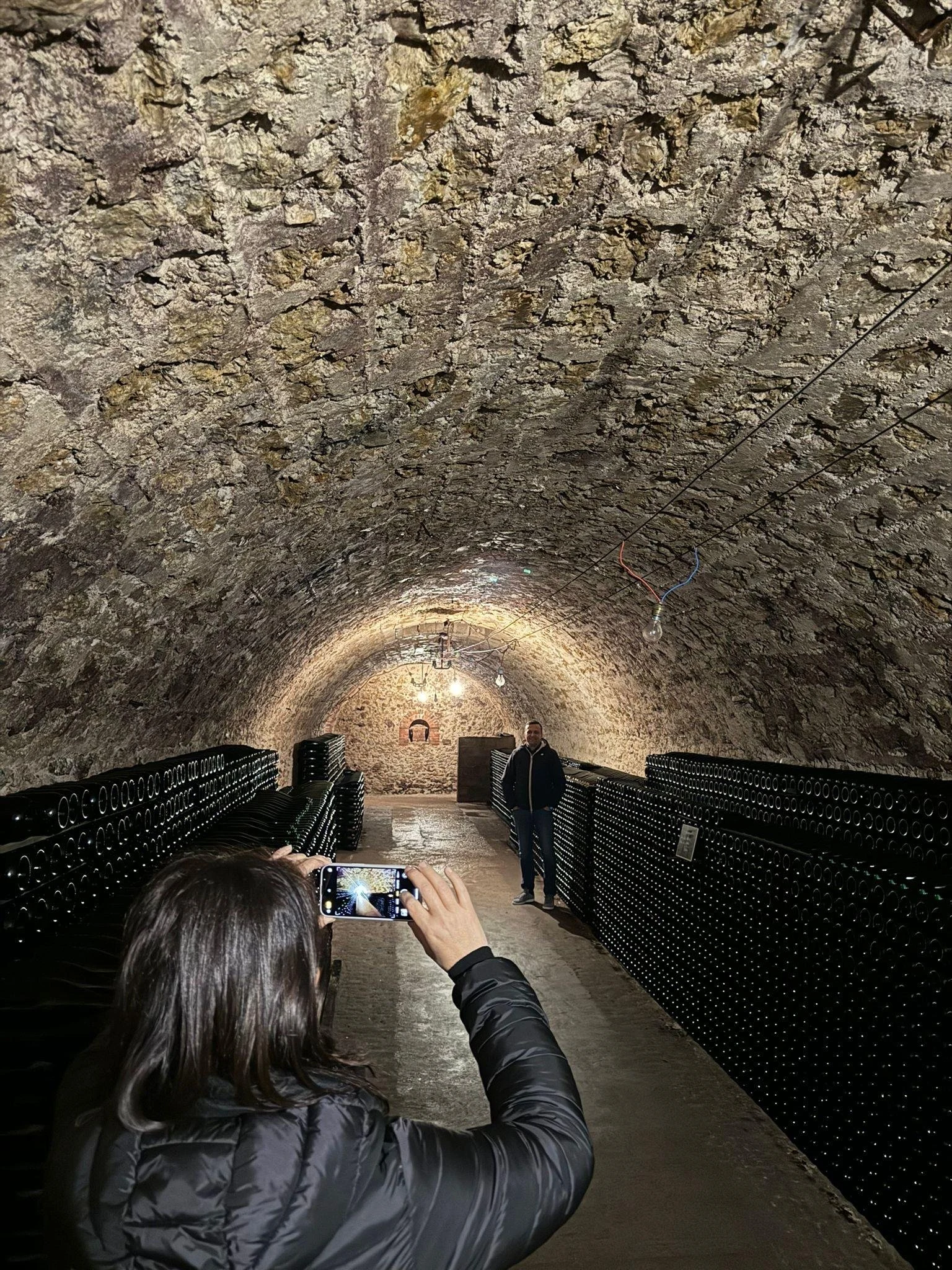
The riddlers who once worked at every major house, rotating and tilting bottles so the sediment gathered at the neck before disgorgement, were largely replaced by gyropalettes decades ago. The traditional hand-riddling pace, still practiced by teams on prestige cuvées, now belongs almost entirely to those cuvées and to grower-producers who have chosen the labor as part of the method. Where hand-riddling teams still work at scale, they work out of public view, in tunnels closed to visitors.
The grower-producer movement, which has grown steadily since the 1990s, is where the line shifts. At a domaine of two to ten hectares, the person who answers the email may also have riddled the bottles and set the dosage. That proximity is real, and it is available, but it asks for advance contact and a willingness to leave the main tourist circuit around Épernay and Reims.
When Growers and House Teams Open the Cellar Door
The major houses, including the teams at Moët & Chandon, Veuve Clicquot, and Taittinger, run structured visitor programs year-round through their own booking platforms and through regional tourism offices. Canard-Duchêne,1 located in Ludes, in the Montagne de Reims, is one house whose cellar tours can be booked online,1 with cellars extending for more than six kilometers1 beneath the village. The Comité Champagne producer directory at champagne.fr and the relevant regional tourism offices remain the public records to consult. Specific release windows, drop times, and capacity limits for these programs are not published in a single consolidated source; the venue does not always publish availability windows in advance, so confirm directly with each house before planning around a specific date.
For grower-producers, the practical window is narrower. Harvest runs from late August through October, and most small domaines close to visitors during that period while the winemaker and their team are in the vineyards and the cellar. The quieter months of January through March, and the post-harvest window of November and December, are when a grower is most likely to have time to sit across a table and work through a disgorgement date or a dosage decision. Contact the domaine directly, in French where possible, and place the request around the wine rather than the experience.
The Comité Champagne, the regional trade body, maintains a directory of producers open to visits at champagne.fr. It is the most reliable public starting point for identifying which growers have structured their access and which still require a direct approach.
The Channels That Reach the Winemakers
Ranked by realistic yield for a reader without a trade credential:
1. Grower-producer direct contact. Email the domaine. A one-paragraph note that names a specific wine you have drunk, asks a specific question about the method, and proposes a date will draw a response more often than a generic visit request. Growers known for méthode traditionnelle work, zero-dosage conviction, or single-vineyard parcels are used to serious visitors and will often make time for them.
2. Specialist wine merchants. A merchant who imports directly from a grower-producer can often arrange an introduction. This is the route insiders use. The merchant has a commercial relationship with the domaine; a client they vouch for arrives in a different category than a cold inquiry.
3. House visitor programs. For the grandes maisons, the structured tour is the only public route. Krug is not a publicly bookable Champagne house visit; access is limited to existing clients with proof through a retailer, trade contacts, or invitation, typically arranged well in advance. Bollinger offers visits at Aÿ. These are worth doing for the architecture, the chalk caves, and the library wines sometimes poured at the end, but the chef de cave will not be in the room. Book through the house's own site; third-party booking platforms sometimes list these tours, but the house site is the authoritative source for availability.
4. Trade and press events. The Union des Maisons de Champagne and the Syndicat Général des Vignerons both organize trade weeks and press tastings where chefs de cave present their wines in person. If you have a trade or press credential, these are the events where the access problem loosens. A wine school qualification or a WSET Diploma is a credible basis for requesting press-adjacent access at smaller houses.
What Insiders Do to Reach the Cellar Masters, and the Mistakes That Lose Access
What insiders do: They build the relationship before they ask for the visit. A buyer who has ordered a grower's wine through a merchant for three years, who has written about it or recommended it, arrives at the domaine as a known quantity. The chef de cave at a small house remembers who has followed the work across vintages. Insiders also visit in the off-season, when the cellar is quiet and the grower has time to open a disgorgement from a different year and talk through what changed.
Insiders seeking access to the chefs de cave at the grandes maisons build relationships with export directors and brand ambassadors, not visitor center staff. A brand ambassador at Krug or Billecart-Salmon has the authority to arrange a cellar visit with a senior winemaker that the public booking system cannot offer.
Mistakes that close doors:
- Arriving at a grower-producer without an appointment during harvest. The winemaker and their team are not available for visitors in September and October; showing up unannounced signals that you have not done the basic reading.
- Asking to meet the chef de cave at a grande maison through the visitor center booking line. The visitor center and the winemaking team are separate operations. The request will not be passed on.
- Framing the visit as a tasting experience rather than a conversation about the work. Growers who have spent years developing a zero-dosage style or a particular approach to reserve wine management are not running a tasting room. They are running a farm and a cellar. The framing matters.
- Contacting multiple houses simultaneously with the same templated email. Growers talk to each other. A generic inquiry that arrives at six domaines in the same week will be recognized as such.
Champagne Cellar Access: Grower Visits vs. Grande Maison Programs vs. Trade Events
| Route | Access to Named Winemaker | Booking Channel | Lead Time | Cost Range | Realistic for Public? |
|---|---|---|---|---|---|
| Grower-producer direct visit | High (often the owner) | Direct email to domaine | Off-season (Nov to Mar) | Variable; often free or small tasting fee | Yes, with preparation |
| Grande maison visitor program (e.g., Bollinger, Taittinger) | Low (guide, not winemaker) | House website or tourism office | Days to weeks | Paid; varies by house | Yes |
| Merchant-arranged introduction | High | Via importing merchant | Weeks to months | Relationship-dependent | Yes, with merchant relationship |
| Trade/press tasting week | Very high (chef de cave presents) | Trade body or press credential | Months (annual calendar) | Credential-dependent | No (trade/press only) |
Lead times and costs in this table are editorial estimates based on general industry practice; verify current terms directly with each house or domaine before planning travel.
The Grower-Producers Worth Approaching in 2026
If the grande maison chef de cave is out of reach, these are the makers whose cellar conversations repay the effort:
Jacques Selosse (Avize). Selosse's work with oxidative aging and solera-style reserves has shaped a generation of grower-producers. The domaine does not run a public visitor program; access is through allocation and merchant relationship. The waiting list for allocation is long and the domaine does not publish it publicly.
Roses de Jeanne (Côte des Bar). The winemaker at this domaine farms single-parcel Pinot Noir and produces zero-dosage wines from individual plots. The producer is known for receiving serious visitors who contact the domaine directly and frame the conversation around the viticulture. The Côte des Bar is a considerable drive from Reims; the distance filters out casual inquiries.
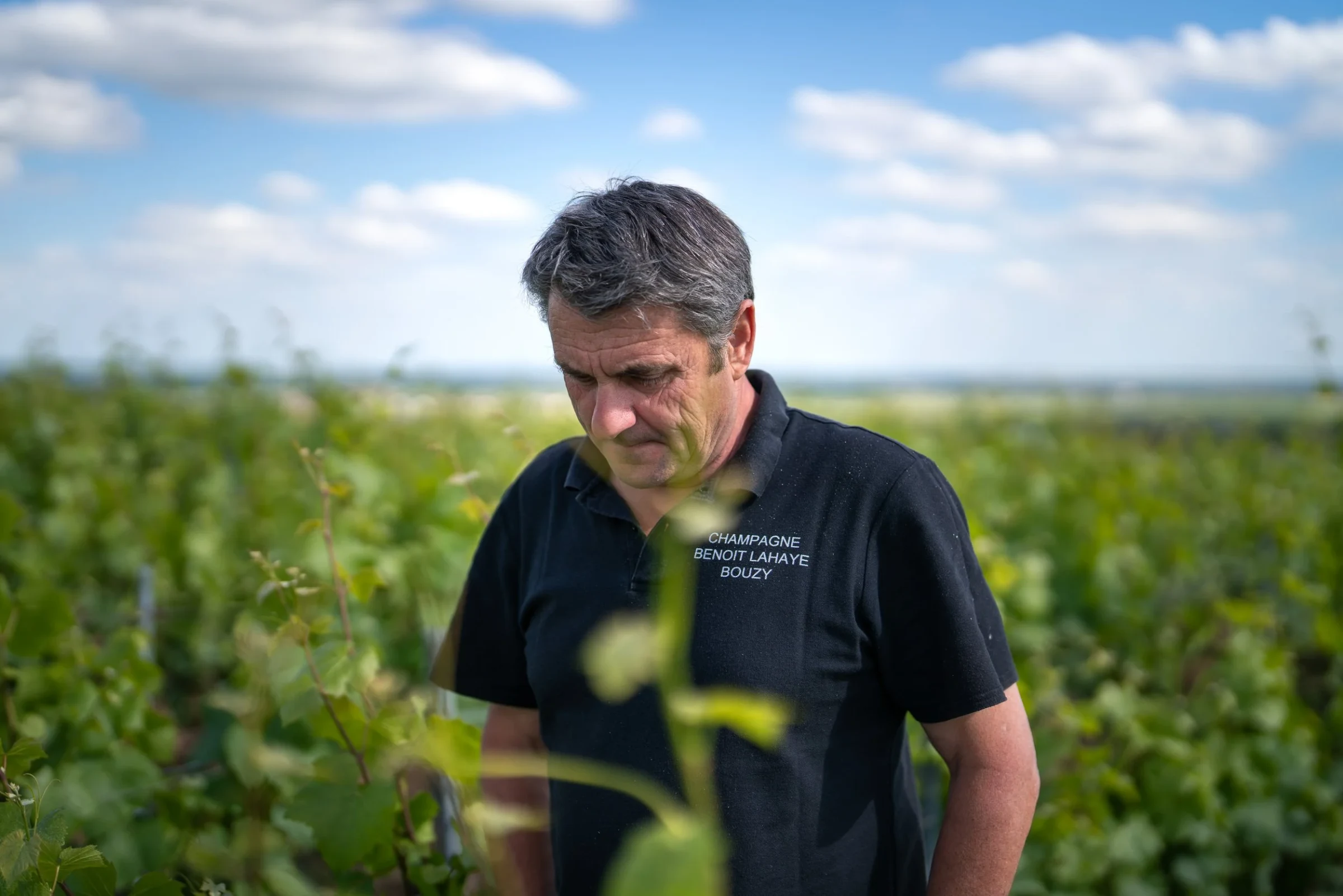
Benoît Lahaye (Bouzy). Lahaye converted to biodynamic farming and has been one of the more accessible growers for visitors who approach with real curiosity about the method. His work with late disgorgement and low-intervention cellar practice is documented in the wine press and gives a visitor a specific entry point for conversation.
None of these domaines publish a booking platform. Contact is by email, in French, with a specific question about the work.
What a Grower Cellar Visit With the Winemaker Is Actually Like
At a working grower-producer, the visit begins in the vineyard if you arrive in the morning, and in the cellar if you arrive after lunch, with the grower as your guide.
The chalk tunnels, cut into the hillside over centuries, hold a temperature that does not vary much across seasons; the cold is immediate, and the silence comes from several meters of rock above your head. Riddling racks line the walls, the bottles angled at varying degrees depending on where they are in the remuage cycle.
At a domaine that still hand-riddles, the grower will demonstrate the quarter-turn, the slight lift of the wrist, and the way the sediment moves toward the neck over weeks.
The tasting that follows is not a flight of finished wines presented in order. It is more likely to be a conversation across a kitchen table or a cellar bench, with the grower opening bottles as the subject requires: a base wine before dosage, a reserve from a different year, a disgorgement from the same cuvée at two different ages. The grower will talk about the vintage, the parcel, the decision to hold or release. If you have done the reading, you can ask about the specific choices; the conversation goes further when the visitor knows what they are looking at.
At the grandes maisons, the experience is more structured and less intimate. The caves at Taittinger, cut into Roman chalk quarries beneath Reims, are among the most architecturally significant in the region. The tour covers the history of the house, the riddling process as it was practiced before mechanization, and the disgorgement line. The tasting at the end is of the house's current range. The chef de cave is not present. What you take away is a sense of scale and a better understanding of why the chalk matters to the wine. For a house like Canard-Duchêne, whose cellar tours are bookable online,1 the process of moving through more than six kilometers of chalk passages gives a physical sense of the scale that no tasting note can replicate.
Who Should Make the Trip, and When Meeting the Winemaker Is Worth the Effort
The grower-producer visit rewards the reader who has already spent time with the wines and wants to understand a specific decision the winemaker made: why this parcel, why zero dosage, why the reserve wine held for years before blending. It is not the right trip for someone who wants a tasting experience with a clear beginning and end. The winemaker is in the middle of ongoing work; the visit is an interruption they are willing to make for the right person.
The grande maison tour is the right choice for a first visit to the region, for a group that includes people at different levels of wine knowledge, or for anyone who wants to understand the industrial and historical scale of Champagne production before narrowing their focus. It is also the right choice if the architecture of the caves is itself the draw.
The trade event route is for professionals who want to taste across houses in a single week and build relationships with the chefs de cave and export teams. If you are a buyer, a sommelier, or a wine educator, the annual tasting calendar in Champagne is the most efficient use of the trip.
Meet the Winemaker on Their Terms
The riddlers and chefs de cave of Champagne are not behind a booking page. They are behind a relationship, and the relationship is built the long way: through the wine, through the merchant, through the years of following the winemaker's work across vintages. For most readers, the realistic and genuinely rewarding route in 2026 is a grower-producer visit arranged by direct contact, off-season, with a specific question about the method as the entry point. The grandes maisons offer structured access to the caves and the history, and that is worth doing once; it will not put you in the room with the person who made the wine.
The comparison that matters is not between houses. It is between the visitor who arrives with a generic request and the visitor who arrives having drunk the wine, read the vintage notes, and asked a question that only someone who has paid attention could ask. The second visitor gets the cellar conversation with the winemaker. The first gets the tour.
For the chef de cave access that the grandes maisons do not sell publicly, the allocation list and the merchant relationship are the only routes that reliably compound over time. The access problem in Champagne is, at its core, a people problem: find the maker, follow their method across vintages, and the cellar door opens on its own schedule, to the visitor who has already done the work.
Frequently Asked Questions
Can you visit a Champagne chef de cave in person without a trade credential?
At the grandes maisons, no: the chef de cave does not participate in public visitor programs. At grower-producer domaines, yes, but it requires direct contact with the domaine, a specific and informed request, and a visit timed outside the harvest window (roughly late August through October). The Comité Champagne directory at champagne.fr lists producers who accept visits.
Which Champagne houses offer public cellar tours where you can see hand-riddling demonstrated?
Several houses, including Taittinger in Reims and Bollinger in Aÿ, include riddling demonstrations or riddling racks in their visitor programs. Whether hand-riddling is actively demonstrated rather than shown as a historical practice varies by house and by season; confirm with the house directly before booking if this is the specific draw.
How far in advance should you contact a Champagne grower-producer to arrange a cellar visit?
No single published standard governs lead times for grower-producer visits; the domaine does not publish a booking window. Contact the domaine directly, propose a specific date outside the harvest period, and allow enough time for a reply. Off-season months (November through March) are generally the most workable.
Does Jacques Selosse or Roses de Jeanne offer public tastings or visits in 2026?
Neither domaine runs a public visitor program or a published booking platform. Access to Jacques Selosse is primarily through allocation and merchant relationship; Roses de Jeanne is known to receive serious visitors who contact the domaine directly, but there is no public booking channel. Contact each domaine by email for current availability.
When should you visit Champagne cellars if you want to meet the makers?
The quietest and most productive period for cellar visits is January through March, when harvest is finished, the wines are in process, and the growers have time to talk. November and December are also workable. The grandes maison visitor programs run year-round, but the grower-producer window narrows significantly during harvest and the weeks immediately before it.