Ballyfin
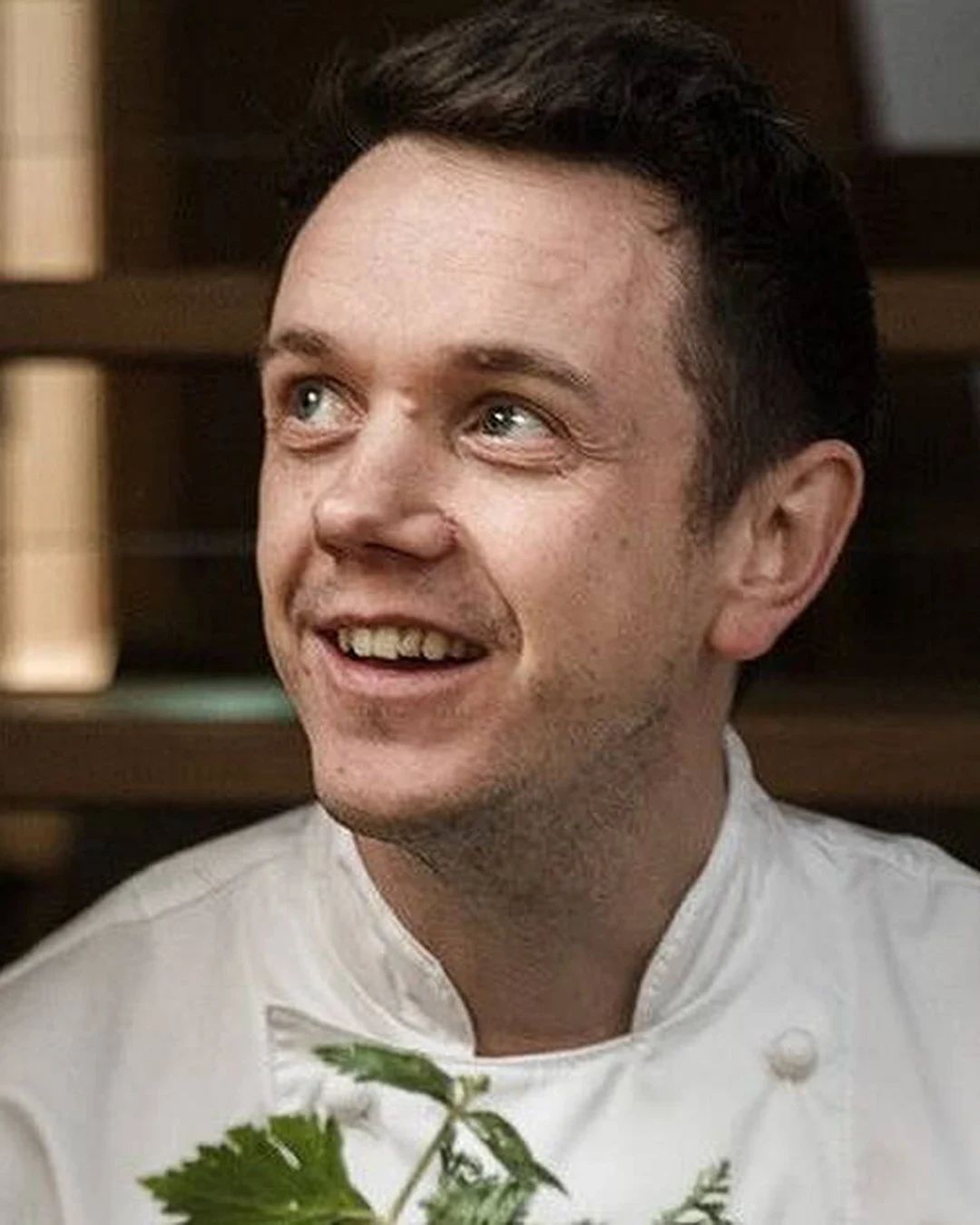
In Residence
Richard Picard-Edwards
Executive Chef
- 01CuisineModern French Fine Dining
- 02CityBallyfin, Ireland
- 03RecognitionOne Michelin Star
The Weight of the Estate
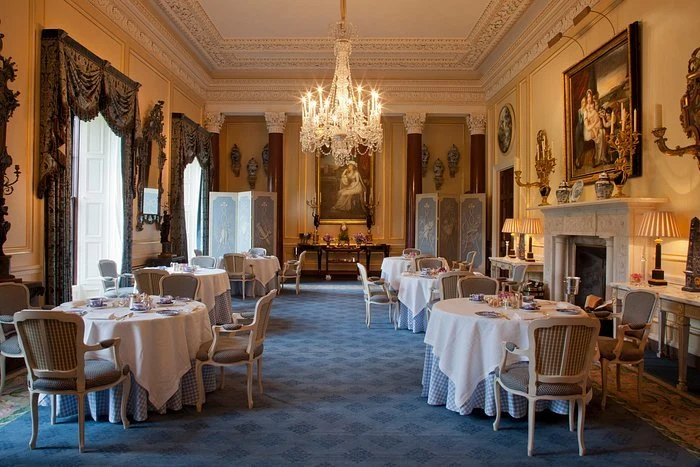
There is a particular pressure that comes with dining inside a building this serious. Ballyfin Demesne is a Regency-era manor in County Laois, masterfully restored to a standard that places it among Ireland's most architecturally significant country houses. The restaurant holds one Michelin star and serves modern French fine dining. Before a plate arrives, the proportions of the room, the plasterwork ceilings, and the quality of light through tall sash windows have already set an expectation. What happens in the kitchen is obliged to hold its own against all of that.
That it does is not incidental. The broader pattern across Ireland's leading country house hotels has been uneven: the dining room frequently trails the accommodation, sustained on legacy reputation rather than genuine kitchen momentum. Ballyfin represents the opposite trajectory. Since Richard Picard-Edwards took over the kitchen, the cooking has moved in step with the estate's ambition rather than sheltering beneath it.
The Sunday email
Read about the people behind restaurants like Ballyfin in the Sunday email.
Every Sunday we send a lead story and up to four more about the chefs, winemakers, sommeliers and hoteliers behind the restaurants, bars, wineries and hotels we cover.
Recent stories


Free. One email a week, and you can unsubscribe from any issue.
Eight Acres as a Culinary System
Ballyfin's kitchen gardens extend across eight acres of the demesne, producing a year-round supply that gives the kitchen a degree of ingredient control rare among Irish restaurants at any price point. This is not the decorative kitchen garden that appears on a hotel website to signal pastoral intent and then contributes a handful of herbs to a garnish. The gardens at Ballyfin function as a genuine supply system, shaping the menu from season to season in ways that make the cooking legible as a response to place.
Ireland's most compelling dining has increasingly moved in this direction. At Aniar in Galway, the premise has long been that Irish land and sea define the plate. At Chestnut in Ballydehob and dede in Baltimore, West Cork's larder provides both the material and the editorial logic of the menu. What distinguishes the Ballyfin model is that the source is entirely self-contained: a walled estate producing for a single kitchen, insulating the menu from supply chain compromise and giving the kitchen team direct relationships with what they cook.
The results carry that coherence onto the plate. Broths, purées, and sauces have been singled out as the kitchen's sharpest technical expression. A roasted onion consommé is cited specifically for its depth and clarity of flavour, the kind of preparation that reveals whether a kitchen has genuine command of fundamentals or is masking gaps with garnish. The cooking has been described as earthy yet supremely elegant, a combination that is easier to state than to achieve, requiring that produce-driven directness and refined technique pull in the same direction rather than against each other.
Dishes documented from the current programme include chicken wing with hand-rolled macaroni, braised turbot with Pedro Ximenez, braised lamb shoulder with turnip and broad beans, and a lemon tart noted as textbook in execution. The kitchen has been observed leaning occasionally toward gold leaf and caviar flourishes, which sit in some tension with the estate-garden logic that otherwise drives the menu. When the cooking holds to that garden-led register, the results make a coherent argument that the surrounding landscape is not just backdrop but actual ingredient.
Dining Room and Service
Grand Irish country houses have historically operated as closed ecosystems where the dining room existed primarily to complete the residential offer rather than to function as a destination in its own right. Ballyfin has moved away from that model, and the move has consequences for the dining room's energy: it opens the table to guests whose primary reason for being there is the food and wine programme, which tends to raise the collective register of the room.
Service is described as charming and attentive, and the sommelier programme is anchored by head sommelier Carmel Boyle, whose appointment signals that the wine offer is taken seriously as a component of the experience rather than as a secondary consideration. In country house dining at this tier, wine direction can be the variable that most dramatically affects the quality of an evening. That Ballyfin has invested in dedicated, named sommelier leadership is a structural signal worth noting.
The dining room's atmosphere has been characterised as having a humour-filled ambience, a specific quality in an environment that could easily tip toward the intimidatingly formal. Country house dining at the €€€€ price point risks performing its own grandeur at the expense of warmth. That Ballyfin appears to have avoided this places it in a different register from some of its Irish peers. For comparison, Lady Helen in Thomastown and Terre in Castlemartyr operate within similar country house hotel frameworks, each navigating the same tension between formality of setting and accessibility of experience.
Where Ballyfin Sits in the Irish Fine Dining Field
Ireland's upper-tier restaurant field has consolidated around a relatively small number of addresses. Chapter One by Mickael Viljanen in Dublin operates at two Michelin stars and anchors the urban end. Liath in Blackrock, Bastion in Kinsale, and Campagne in Kilkenny sit within the one-star cohort outside Dublin. Internationally, the garden-to-kitchen discipline that defines Ballyfin's approach has counterparts in the Nordic-influenced programmes at venues like Frantzén in Stockholm, though the Irish country house setting produces a fundamentally different context and register.
Ballyfin's dinner menu at €105 and tasting menu at €145 position it accessibly within the country house hotel category at this level. The pricing has been deliberately held at approachable levels since Picard-Edwards's appointment, which is an editorial choice about who the dining room is for. Other Irish country house kitchens in comparable settings have not always made the same call.
Questions
Frequently asked
What recognition does Ballyfin hold?
Ballyfin holds 1 Michelin star.
Who works at Ballyfin?
Made By profiles Richard Picard-Edwards (Executive Head Chef) at Ballyfin.
How expensive is Ballyfin?
Ballyfin is listed at a price level of $$$$.
Where is Ballyfin and what does it serve?
Ballyfin is in Ballyfin, County Laois, Ballyfin, serving Modern French Fine Dining.
The field
How it compares
| Place | Awards | Cuisine | Notes |
|---|---|---|---|
| Ballyfin | Michelin 1 Star | Modern French Fine Dining | Ballyfin, County Laois, $$$$ |
| Daniel | Michelin 1 Star, 50 Best | Modern French Fine Dining | New York City |
| Mirazur | Michelin 3 Stars, 50 Best | Modern French Fine Dining | Menton |
| Odette | Michelin 3 Stars, 50 Best | Modern French Fine Dining | Singapore |
| Quintessence | Michelin 3 Stars | Modern French Fine Dining | Tokyo |
| Sézanne | Michelin 3 Stars, 50 Best | Modern French Fine Dining | Tokyo |
| Tantris | Michelin 2 Stars, 50 Best | Modern French Fine Dining | Munich |
Similar places
Modern French Fine Dining
Daniel
New York City, United States
★ · 50 Best
Modern French Fine Dining
Mirazur
Menton, France
★★★ · 50 Best
Modern French Fine Dining
Odette
Singapore, Singapore
★★★ · 50 Best
Modern French Fine Dining
Quintessence
Tokyo, Japan
★★★
Modern French Fine Dining
Sézanne
Tokyo, Japan
★★★ · 50 Best
Modern French Fine Dining
Tantris
Munich, Germany
★★ · 50 Best

The Sunday email
Read about the people behind restaurants like Ballyfin in the Sunday email.
Every Sunday we send a lead story and up to four more about the chefs, winemakers, sommeliers and hoteliers behind the restaurants, bars, wineries and hotels we cover.
Recent stories
Free. One email a week, and you can unsubscribe from any issue.