Bees Cafe & Bar by Narisawa
In Residence
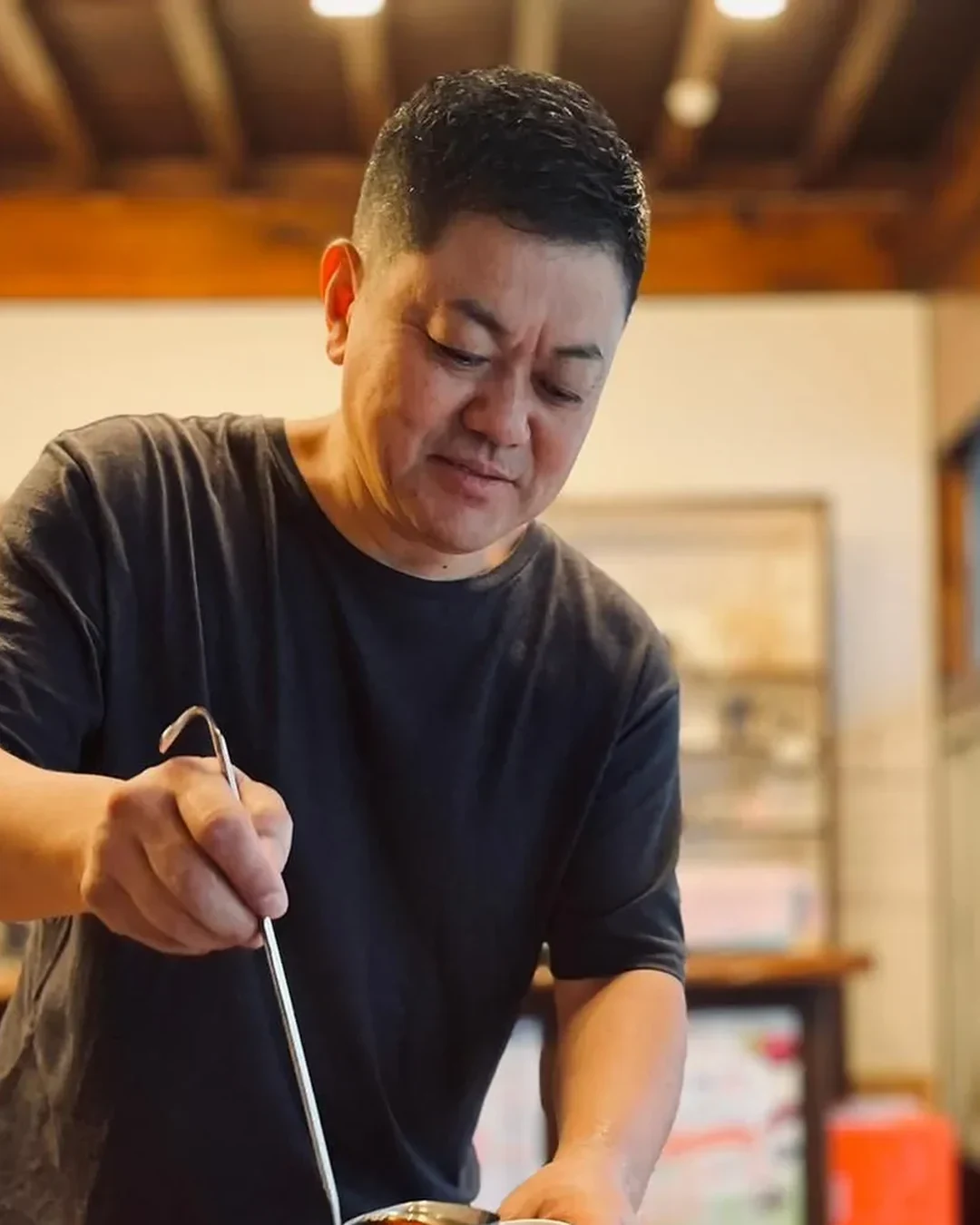
Yoshiro Narisawa
Chef
- 01CuisineModern Japanese Satoyama Bar
- 02CityTokyo, Japan
- Opinionated About Dining Casual in Japan Ranked #89 · 2026
- Opinionated About Dining Casual in Japan Ranked #97 · 2025
- Opinionated About Dining Casual in Japan Ranked #81 · 2024
Minami-Aoyama and the Logic of the Casual Outpost
Minami-Aoyama moves at a different pace from most of central Tokyo. The streets around 2-chome feel considered: galleries sit alongside architecture studios, and the cafes tend to have fewer seats than the ambition behind them. It is the kind of neighbourhood where a high-end name opening a casual format does not read as a contradiction, it reads as a natural extension of a district that has always preferred restraint to spectacle. Bees Cafe & Bar by Narisawa lands in that context with some precision. The address places it within walking distance of Omotesando's denser retail corridor, but far enough away to belong to Aoyama's quieter residential character rather than its commercial edge.
For anyone tracking Tokyo's dining geography, this location matters. The neighbourhood has long attracted a particular kind of diner: someone with enough familiarity with the city to prefer a low-key address over a high-visibility one. Casual formats by serious names have proliferated across Tokyo in the past decade, but the ones that survive on merit rather than novelty tend to cluster in districts like this, where the clientele is local, repeat, and harder to impress with reputation alone. See also Jingumae Higuchi, another address that uses its neighbourhood positioning as part of its editorial identity.
What the Narisawa Name Means in This Context
Tokyo's fine-dining tier has produced a handful of names with sufficient recognition to operate in multiple registers simultaneously. Chef Yoshiro Narisawa sits in that group. His flagship has carried Michelin recognition and appeared on global lists for years, placing it alongside Tokyo's most cited French-Japanese addresses, a comparable set that includes Michelin three-star operations like RyuGin and L'Effervescence. That positioning matters here because Bees operates in deliberate contrast to it.
The casual outpost format, when done with discipline, is not a dilution of a main restaurant's identity, it is a different proposition with different measures of success. The comparison venues in Tokyo's serious dining tier, from Myojaku to Azabu Kadowaki to Kagurazaka Ishikawa, operate long tasting menus at price points that require planning. Bees operates in a different tier entirely, one where the measure of success is consistent daily quality rather than occasion-driven performance. The two Opinionated About Dining Casual Japan rankings, 97th in 2025 and 81st in 2024, are the relevant credentials here.
OAD's casual list draws from a community of dedicated diners and critics, and a ranking movement from 81 to 97 between years reflects the competitive density of the category rather than any decline in the venue itself. Japan's casual dining tier, as tracked by OAD, is one of the most contested in the world. Holding a position in the top 100 across two consecutive years indicates a baseline of quality that a 4.6 Google rating from 693 reviews corroborates from the other direction.
The Casual Format and Its Demands
Serious chefs opening casual formats face a specific challenge: the format must be coherent on its own terms, not simply a lower-cost version of the main restaurant. The Tokyo dining market is particularly demanding on this point. The city has enough casual Japanese options at every price point that a casual outpost riding on name recognition alone tends to plateau quickly in terms of repeat custom. The OAD ranking and Google volume at Bees suggest it has moved past that plateau.
Across Tokyo's broader casual dining scene, the strongest performers in this category share a few structural features: a focused menu rather than an expansive one, consistent execution that rewards return visits, and a neighbourhood fit that generates local rather than purely destination traffic. Bees's Minami-Aoyama address positions it for exactly that dynamic. The area's resident and professional population, creative industries, design, fashion, skews toward informed daily diners rather than occasional visitors, which places different demands on a kitchen than a tourist-heavy location would. For comparison, Ginza Fukuju operates in a district that attracts a different customer profile.
Placing Bees in Tokyo's Wider Casual Tier
Japan's casual dining tier, as a critical category, has grown in visibility partly because of how serious chefs have engaged with it. Den, with two Michelin stars and a studied informality, is often cited as the template for the genre, a counter-example to the idea that serious food requires serious ceremony. Bees operates in a different register from Den but within the same broader argument: that quality and accessibility are not mutually exclusive, and that casual does not mean careless.
Within Tokyo, the OAD casual list provides the most granular ranking of this tier. The venues on it range from long-standing neighbourhood institutions to newer formats by trained chefs moving away from the rigidity of tasting-menu service. Bees's position in that list, alongside its parent name's fine-dining context, places it in the second category, a deliberate format choice by a serious kitchen, not an accident of scale. For readers building a multi-day Tokyo itinerary that moves between registers, it represents the kind of address that fits between a formal dinner at Kagurazaka Ishikawa and a neighbourhood lunch with no particular agenda.
Beyond Tokyo: The Broader Japan Context
For travellers moving through Japan's major dining cities, casual outposts by serious names appear across the country in different forms. HAJIME in Osaka and Gion Sasaki in Kyoto occupy the fine-dining end of their respective cities, while akordu in Nara, Goh in Fukuoka, and Isshisoden Nakamura in Kyoto each represent distinct regional casual or mid-range traditions. Kashiwaya Osaka Senriyama in Osaka and 1000 in Yokohama add further range. 6 in Okinawa extends the picture further south. The point is that Bees does not exist in isolation, it is part of a national pattern of serious culinary names finding appropriate casual expressions, each shaped by its neighbourhood and city as much as by its kitchen.
Planning a Visit
Bees Cafe & Bar by Narisawa is located at 2 Chome-6-15 Minamiaoyama, Minato City, Tokyo. Reservations are recommended, and the dress code is smart casual.
What Regulars Order
What do regulars order at Bees Cafe & Bar by Narisawa?
The venue's cuisine type is listed as Japanese, and its casual OAD ranking positions it within a tier that typically emphasises accessible but precise cooking rather than elaborate multi-course formats. Given the Narisawa name's association with nature-forward, seasonal Japanese technique, and the neighbourhood's preference for quality over ceremony, repeat visitors tend to treat the menu as a reflection of what the kitchen considers worth doing on any given day, rather than arriving with a fixed order in mind. Specific dishes are best confirmed on arrival. The 4.6 rating across 693 reviews suggests consistent satisfaction.
Questions
Frequently asked
Who works at Bees Cafe & Bar by Narisawa?
Made By profiles Yoshiro Narisawa (Chef) at Bees Cafe & Bar by Narisawa.
How expensive is Bees Cafe & Bar by Narisawa?
Bees Cafe & Bar by Narisawa is listed at a price level of $$$.
Where is Bees Cafe & Bar by Narisawa and what does it serve?
Bees Cafe & Bar by Narisawa is in Minato, Tokyo, serving Modern Japanese Satoyama Bar.
The field
How it compares
| Place | Cuisine | Notes | Awards |
|---|---|---|---|
| Bees Cafe & Bar by Narisawa | Modern Japanese Satoyama Bar | Minato, $$$ | · |
| Den | Modern Japanese Kaiseki | Tokyo | Michelin 2 Stars, World's 50 Best |
| Florilège | Modern French-Japanese Plant-Based Fine Dining | Tokyo | Michelin 2 Stars, World's 50 Best |
| Narisawa | Modern Japanese Satoyama Fine Dining | Tokyo | Michelin 2 Stars, World's 50 Best |
| Quintessence | Modern French Fine Dining | Tokyo | Michelin 3 Stars |
| Sazenka | Modern Chinese Fine Dining | Tokyo | Michelin 3 Stars, World's 50 Best |
| Sézanne | Modern French Fine Dining | Tokyo | Michelin 3 Stars, World's 50 Best |
In residence
Similar places
Modern Japanese Kaiseki
Den
Tokyo, Japan
★★ · 50 Best
Modern French-Japanese Plant-Based Fine Dining
Florilège
Tokyo, Japan
★★ · 50 Best
Modern Japanese Satoyama Fine Dining
Narisawa
Tokyo, Japan
★★ · 50 Best
Modern French Fine Dining
Quintessence
Tokyo, Japan
★★★
Modern Chinese Fine Dining
Sazenka
Tokyo, Japan
★★★ · 50 Best
Modern French Fine Dining
Sézanne
Tokyo, Japan
★★★ · 50 Best