Grillo from high altitude vineyards
- Falstaff Winery - Listed · 2026
The family name on the label
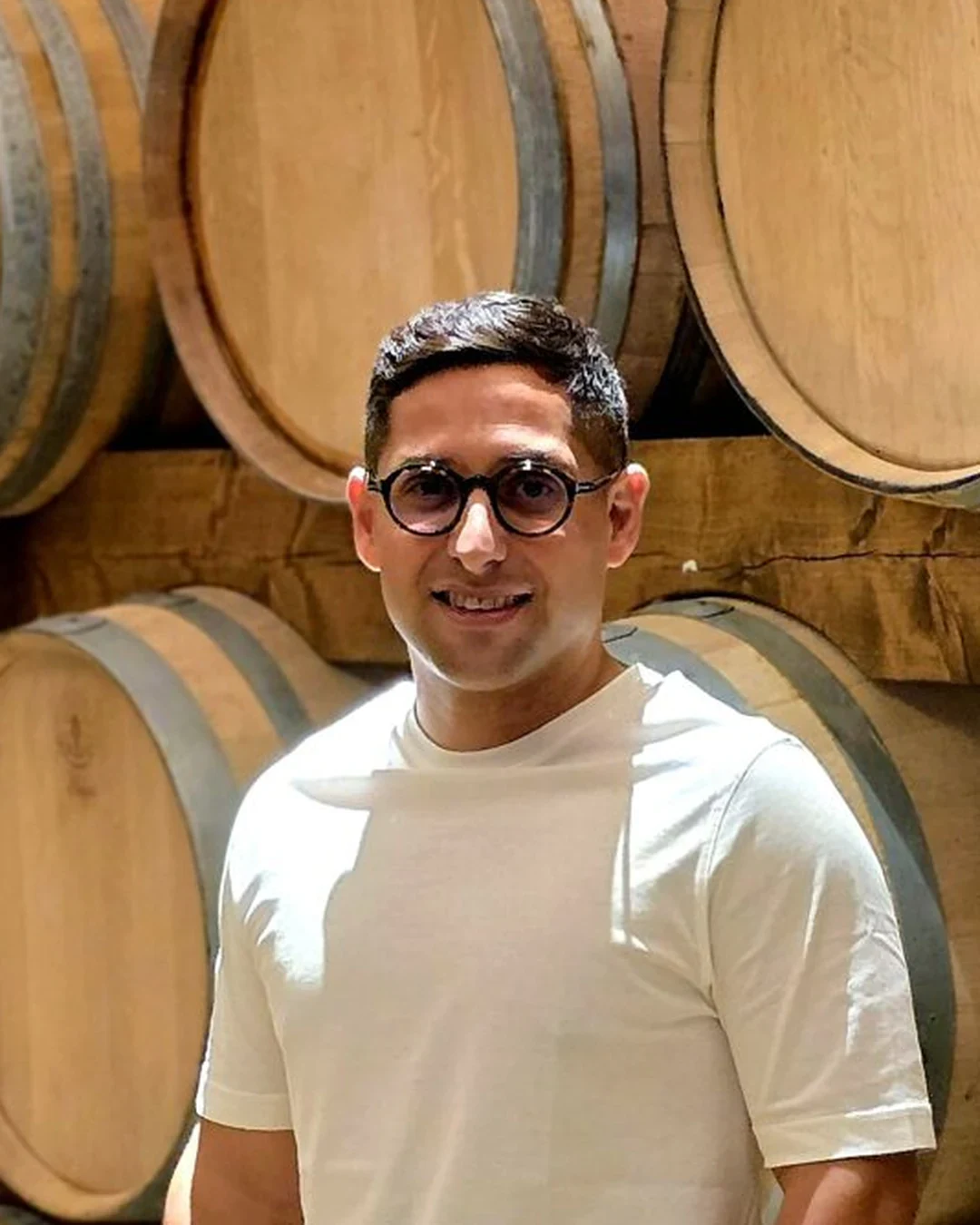
A restyling decision in 2022 put Francesco Brugnano, Winemaker at BRUGNANO WINES in Partinico, Italy, inside the daily discipline of a family cellar. The company presents the renewal as the work of Francesco and Giuseppe Brugnano, a younger turn for a producer with about fifty years of family history behind it. In a house named for the family, direction is not abstract. The name travels from office to label to tasting room, and it asks for accountability at each point.
Francesco’s current brief is chief executive leadership, and at this address that means setting the pace for production, representation, and the business side of winemaking. The winery’s public language stays close to territory, authenticity, and native Sicilian grapes, especially the landscape between the Monreale DOC and Alcamo DOC areas. That is the working frame: not a detached brand exercise, but a family project trying to carry an older root system into a sharper present tense.
Grillo, Nero d’Avola and altitude
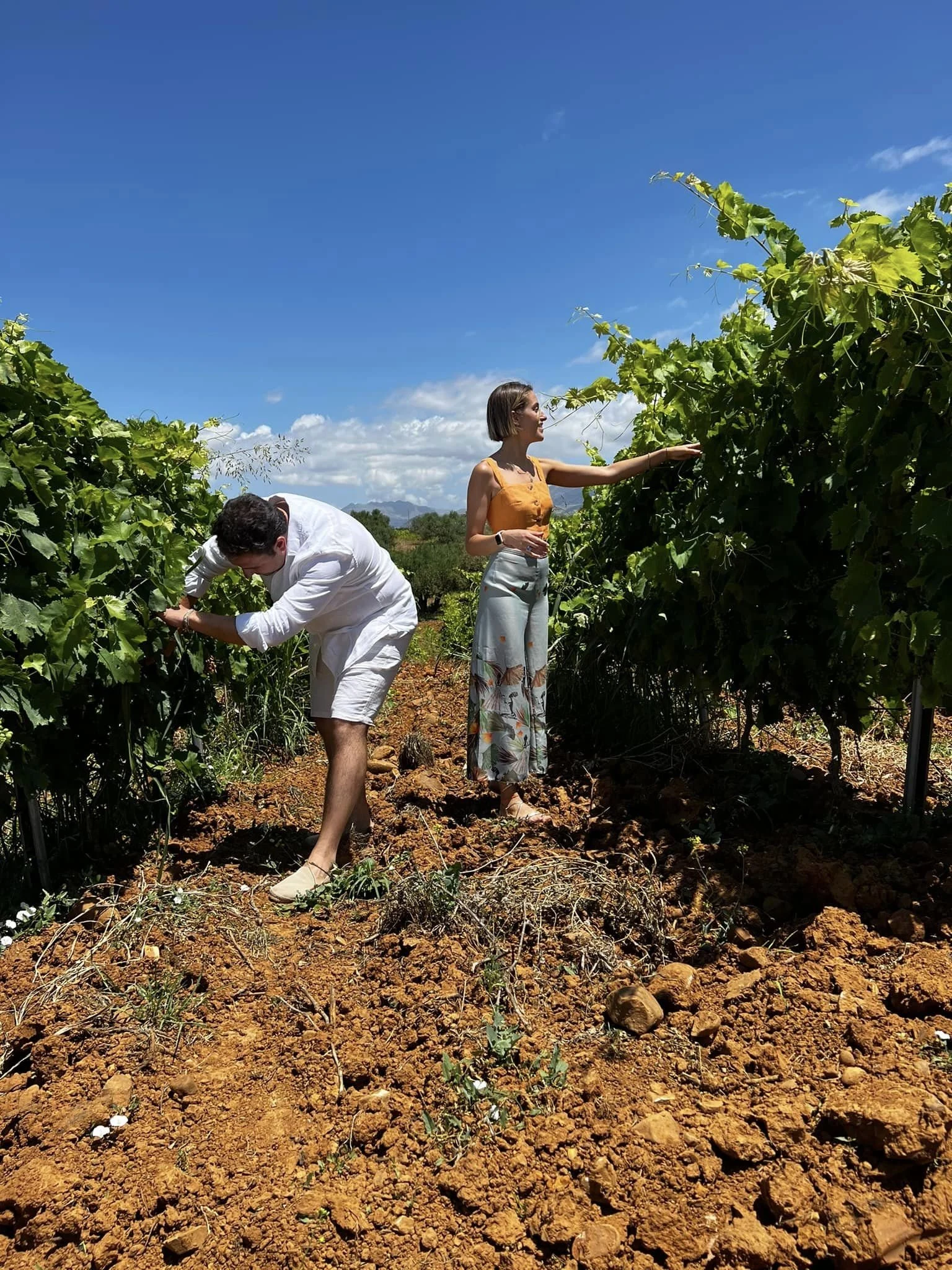
The program at BRUGNANO WINES is built around Sicilian appellations and grapes that read clearly from this part of the island. Lunario 2023 is made from 100% Grillo from high-altitude vineyards. An Alcamo DOC red blend is listed as 75% Nero d’Avola and 25% Cabernet Sauvignon, a composition that places a native grape beside an international one without hiding the percentages. A Brugnano Nero d’Avola 2023 appears in retail and tasting material with fruit and savory spice at its center.
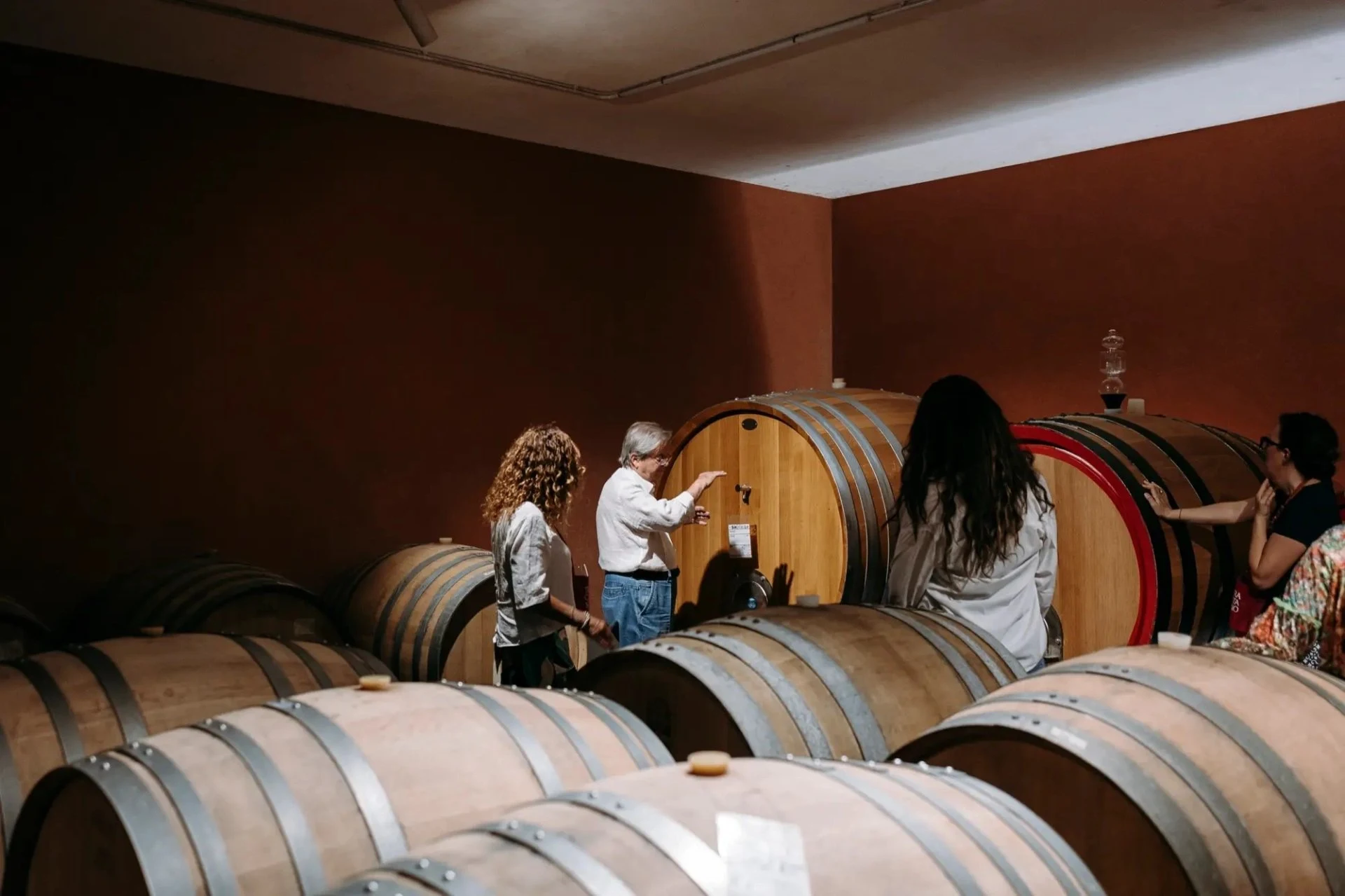
The vineyards are described in the hills of Partinico, in the province of Palermo, with parcels cited at about 300 to 500 meters, and another mention of grapes from the 2020 harvest grown in contrada Mirto at about 650 meters above sea level. Altitude matters here because it is part of the method, not scenery. The house points to pedoclimatic variation, differing exposures, and the way those conditions shape ripening. In the cellar, the more prestigious wines age in a subterranean barrel room before bottling, a quiet technical choice beneath the visible hospitality of the property.
A barrel door before the cellar
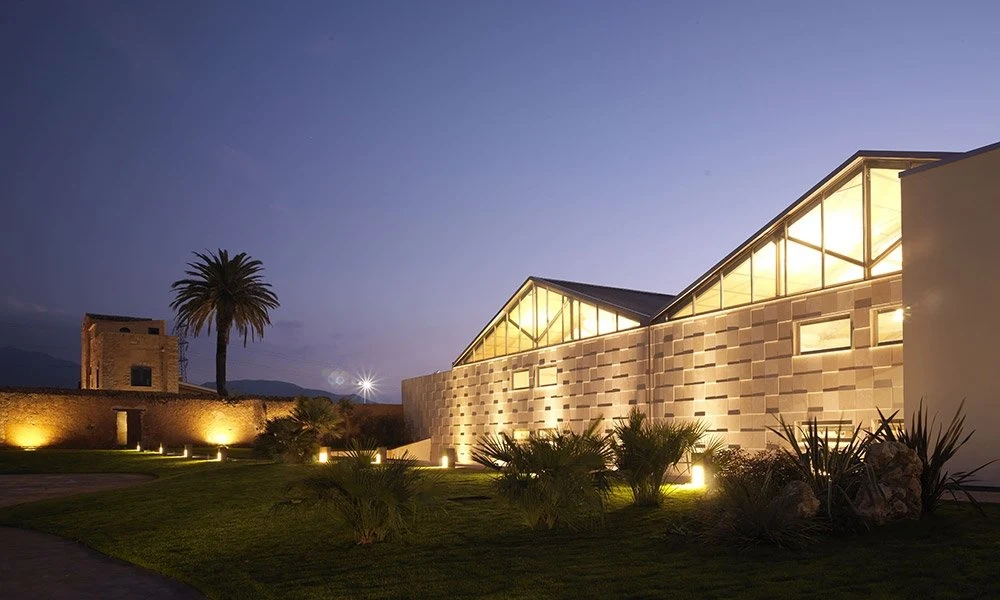
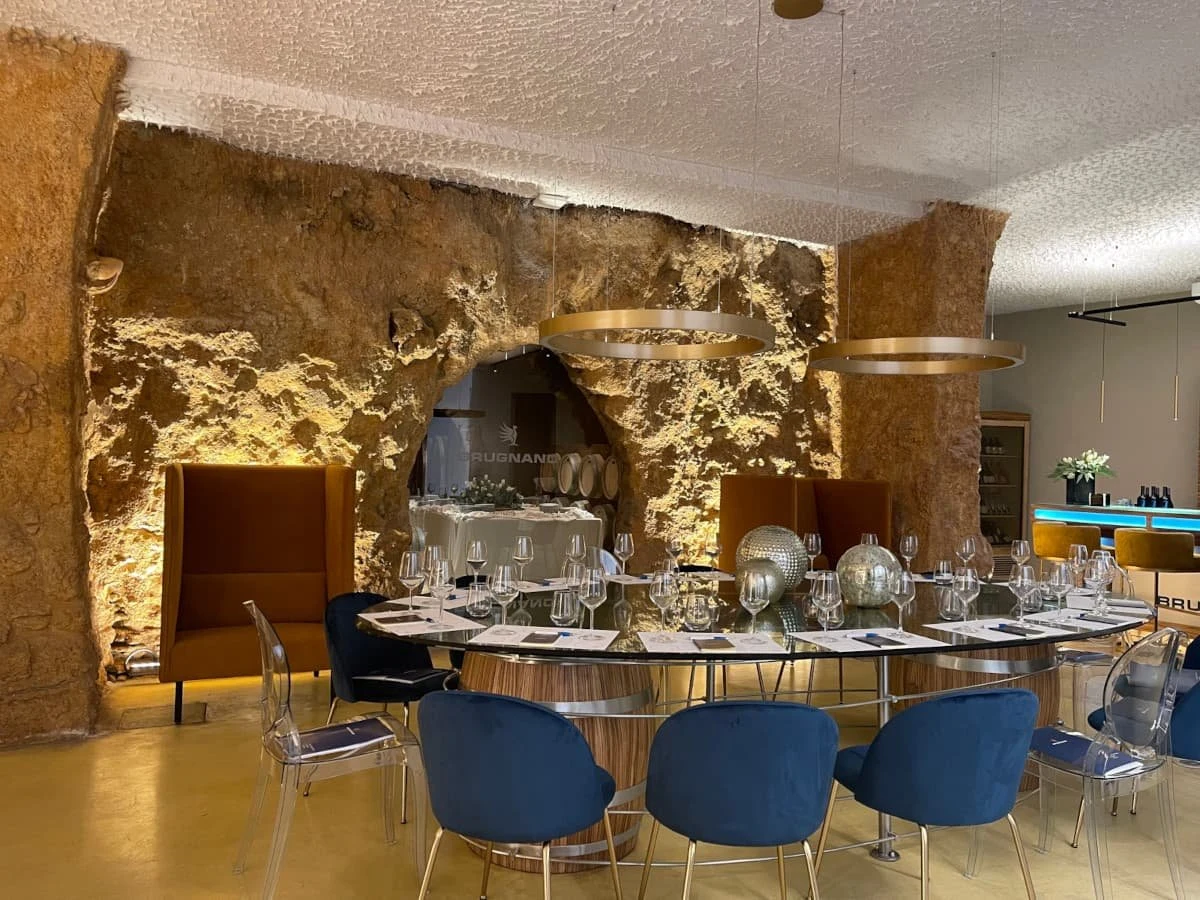
The approach to the cellar begins with a giant wooden barrel entrance, the Brugnano logo set on the door. It is theatrical in outline, but the gesture still belongs to the winery’s own vocabulary: wood, threshold, cellar, family mark. Past that entrance, the property is modernized while retaining original charm, with a retail shop and tasting welcome area built into the visitor side of the house.
The setting remains rural rather than industrial. Greenery surrounds the estate, and the working image is of a countryside winery with a public face, not a hidden production shed. The tasting room and cellar sit near the practical work of direct sales, guided visits, aging, and bottling. The passage from the wooden barrel door to the subterranean barrel room narrows the Brugnano name back to wood, wine, and time.
Questions
Frequently asked
Who is behind Brugnano Wines?
Francesco Brugnano leads the winery, working with Giuseppe Brugnano as part of a family business with about fifty years of history behind it.
What does Brugnano Wines focus on?
The winery works with Sicilian appellations and native grapes, especially Grillo and Nero d’Avola, and its public language stays close to territory, authenticity, and the landscape between the Monreale DOC and Alcamo DOC areas.
What is the visit and booking setup?
Visits are by appointment only, and the property has a retail shop and tasting welcome area for visitors.
Is there parking on site?
There is an on-site lot at the winery.
What stands out about the winery building and cellar?
The approach to the cellar begins with a giant wooden barrel entrance carrying the Brugnano logo, and the more prestigious wines age in a subterranean barrel room before bottling.
The field
How it compares
| Place | Notes |
|---|---|
| BRUGNANO WINES | Contrada San Carlo, $$ |
| Azienda Agricola Costantino | Partinico |
| Azienda Vitivinicola Tola | Partinico |
| Cusumano | Partinico |
| Masseto | Castagneto Carducci |
| Vieux Château Certan | Pomerol |
| Weingut Egon Müller | Wiltingen |