Ciabot Berton
- 01CityLa Morra, Italy

Nebbiolo from La Morra crus
- Falstaff Winery - Listed · 2026
Ownership kept close to the cask
Nebbiolo moves from cask to cask under Marco Oberto, winemaker at Ciabot Berton in La Morra, where ownership and cellar work stay in the same hands. He leads the company as owner and winemaker, a position that keeps vineyard decisions, cellar judgment, and the direction of the estate within one discipline. At this address, the work is not divided into departments for effect. The person responsible for the wine also carries the long view of the family estate.
The Oberto family first bottled Barolo under the Ciabot Berton name in 1961, moving from grape growing into a more structured house style. Today the estate remains in its fifth generation, with its vineyards held within the La Morra zone and its attention fixed on Nebbiolo for Barolo DOCG. Marco’s signature at the bench is not a single flourish. It is the continuity between vine, cellar, and bottle, visible in wines such as Barolo Roggeri, Barbera d'Alba Fisetta DOC, and Barolo Rocchettevino. Each one gives a different angle on the same hillside inheritance.
Fourteen hectares in La Morra crus
The estate works about 14 hectares of vineyards in La Morra, with holdings across Bricco San Biagio, Roggeri, Rive, Cappallotti, Pria, and Rocchettevino. The rows face toward Alba, on slopes where drainage, exposure, and cooler nights matter to Nebbiolo’s tannin and scent. Ciabot Berton’s scale stays small enough for the fruit to remain legible by parcel, and the house’s Barolo work depends on cru character rather than a blended anonymity.
In the cellar, Barolo follows the discipline of time. The appellation requires at least 3 years of aging, including 18 months in oak, and Ciabot Berton often carries its Barolo to 30 months in wood casks before further rest in bottle. Racking remains part of the method, moving wine from one barrel to another for controlled oxygen and gradual tannin integration. The house also keeps a “1961” Barolo tied to the original vineyard, where old vines still connect the label to the year the family began bottling Barolo under its own name.
The cellar below the hillside
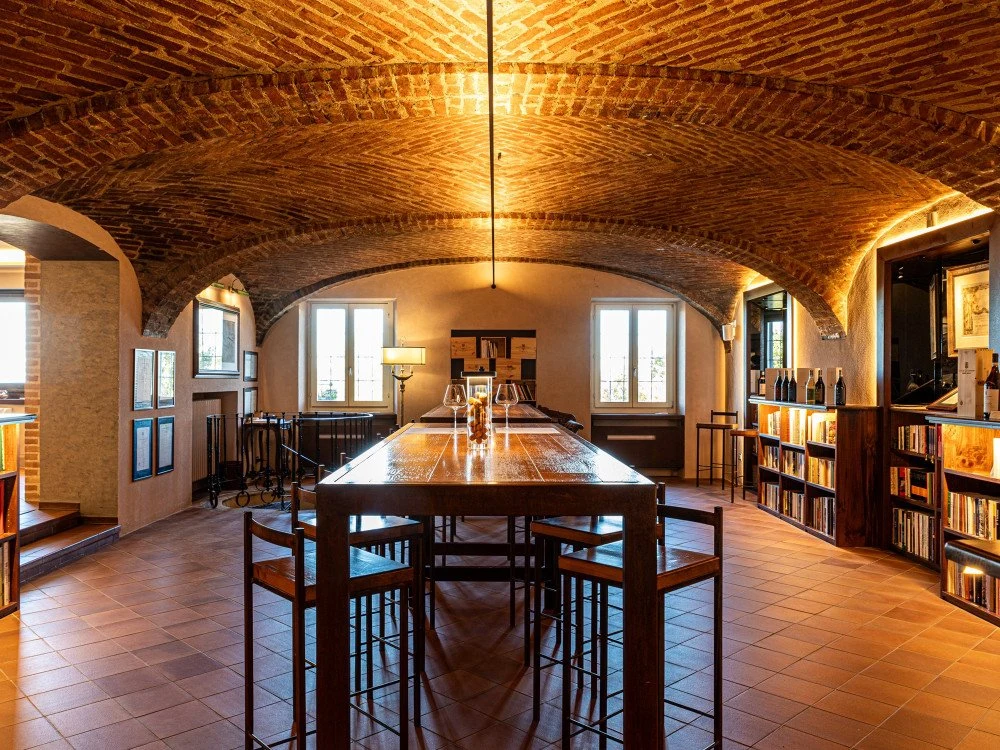
The cellar has the quiet of a family Barolo estate rather than the polish of a designed stage. The work points outward, toward the vineyard, then back into wood, bottle, and time. Tastings here sit close to the source: Nebbiolo, Barbera, and Dolcetto are not presented as a range for breadth, but as a way to read La Morra through different grapes and different weights of structure.
The setting keeps the old Piedmont meaning of ciabòt near the surface, a small rural hut or shed used by farmers. That word matters because it lowers the temperature of the place. The estate looks across the Barolo hills, with views toward the Alps and the Alta Langa, yet the center of gravity remains the cellar and the vineyard names written on the bottles. When the next release arrives, the measure is still Roggeri, Rive, Rocchettevino, and the old-vine “1961” Barolo.
Questions
Frequently asked
Who is behind Ciabot Berton?
Marco Oberto is the winemaker, owner, and the person who carries both vineyard decisions and cellar work at Ciabot Berton in La Morra.
What is the estate known for?
Ciabot Berton is a family Barolo estate rooted in Nebbiolo and cru work, with vineyards in La Morra and wines that include Barolo Roggeri, Barolo Rocchettevino, Barbera d'Alba Fisetta DOC, and a “1961” Barolo tied to the family’s first bottling under its own name.
What vineyards does the winery work with?
The estate works about 14 hectares in La Morra, with holdings across Bricco San Biagio, Roggeri, Rive, Cappallotti, Pria, and Rocchettevino.
Is booking recommended?
Reservation is recommended.
The field
How it compares
| Place | Notes |
|---|---|
| Ciabot Berton | Frazione Santa Maria, $$$ |
| Cascina Rocca – Franco Molino | La Morra |
| Negretti | La Morra |
| Oddero | La Morra |
| Poderi Gianni Gagliardo | La Morra |
| Rocche Costamagna | La Morra |
| Trediberri | La Morra |