Cordero
In Residence
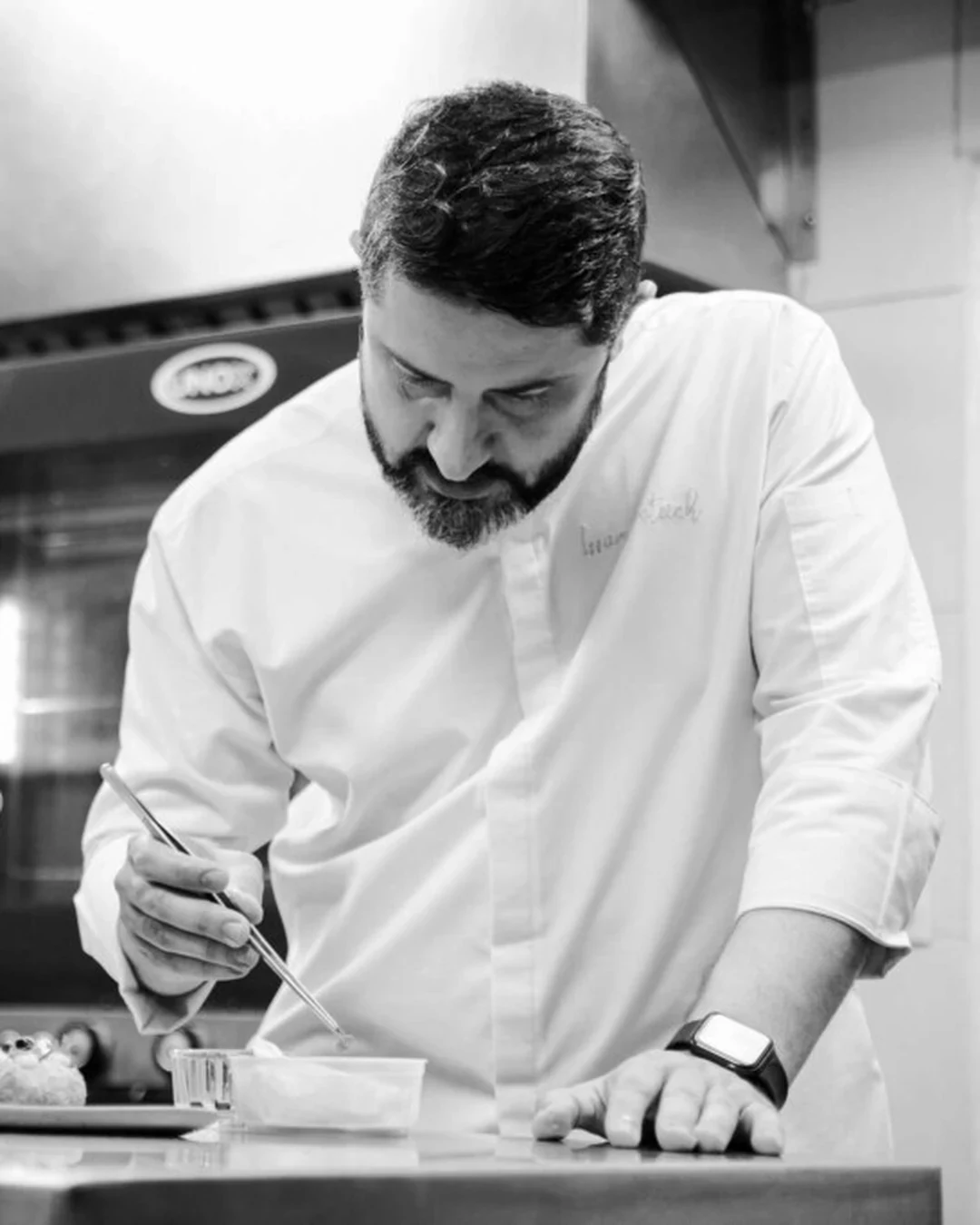
Isaam Koteich
Chef
- 01CuisineFarm-to-Table Lamb Specialty
- 02CityCaracas, Venezuela
- 03RecognitionWorld's 50 Best — No. 29
- World's 50 Best · #29 · World's 50 Best Restaurants
- World's 50 Best Latin America's Best Restaurants #29 · 2025
- The Best Chef Two Knives · 2025
A Single Protein, Followed All the Way Down
Most ambitious restaurants in Latin America define themselves through range: a parade of proteins, a range of techniques, a menu that gestures toward the breadth of a cuisine. Cordero does the opposite. The entire tasting menu is built around lamb, and nothing else. That kind of single-ingredient discipline is rare anywhere; in Caracas, where dining ambition has historically meant European eclecticism or regional Venezuelan plurality, it represents a genuinely different proposition. The restaurant's ranking at No. 29 on Latin America's 50 Best Restaurants 2025 confirms that the concept lands.
The name makes the commitment plain: cordero is simply the Spanish word for lamb. There is no secondary reading, no conceptual sleight of hand. Chef Isaam Koteich has built the menu around this protein in ways that extend well past the expected, treating it less as a category and more as a complete culinary system. For diners accustomed to tasting menus that use protein as punctuation in an otherwise technique-led progression, Cordero asks a different question: how many distinct expressions can a single animal yield?
Where the Lamb Comes From
The sourcing arrangement at Cordero is structural. The restaurant draws its lamb exclusively from Proyecto Ubre, a local partner farm, which means the kitchen operates with a degree of supply chain visibility that most tasting-menu restaurants in the region cannot claim. In cities where top-tier dining often depends on imported proteins or anonymous domestic supply, that direct farm relationship has real implications for what the kitchen can do: specific cuts can be requested at specific ages, the quality of the animal can be tracked across seasons, and the range of the menu can extend into parts of the animal, and preparations of it, that a kitchen buying through distributors would never reliably attempt.
This farm-to-table model places Cordero among Latin American fine-dining restaurants reorienting around provenance rather than prestige imports. The decision to anchor the menu to a Venezuelan farm rather than sourcing from Argentina or Uruguay, which have historically supplied the region's premium lamb, is also a statement about what Caracas-based cooking can be when it commits to its own geography. Restaurants at this recognition tier across the continent, from Bogotá to Lima, have increasingly found that specificity of sourcing sharpens both the kitchen's creative constraints and the diner's sense of place. Cordero follows that logic to its endpoint.
What the Menu Does With That Commitment
The multi-course format at Cordero moves through lamb in forms that range from the immediately familiar to the genuinely unexpected. Lamb chops, the protein's most legible expression in a fine-dining context, appear alongside preparations that require either significant processing time or a willingness to treat lamb as a medium for techniques rarely associated with it. Lamb jerky, for instance, sits at one end of the preservation spectrum; lamb cheese, if executed as a product derived from sheep milk within the farm system, sits at another entirely. The progression implies a kitchen that thinks about its ingredient in terms of transformation and time rather than simply temperature and seasoning.
That range is what separates a single-ingredient concept from a gimmick. The question any such menu faces is whether the constraint generates creative pressure or creative exhaustion, and whether the diner experiences accumulation or monotony across the courses. At the level of recognition Cordero has received from Latin America's 50 Best, the former appears to hold. Comparison points exist elsewhere in the world: tasting menus built around singular commitments, whether to a single producer, a single technique system, or a single protein, have appeared at tables as varied as Lazy Bear in San Francisco and Atomix in New York City, each using constraint as a forcing function for depth. Cordero's version of that logic is grounded in Venezuelan agricultural reality rather than imported framework.
Cordero in the Context of Caracas Dining
Caracas operates as a dining city under conditions that make its ambitious restaurants harder to sustain and, in some ways, more interesting to evaluate. The city's fine-dining cohort has had to develop creative resilience around supply, cost, and infrastructure. Within that context, a restaurant that resolves its supply problem by building a direct farm partnership, and then constructs its entire creative identity around that partnership, represents a form of adaptation that goes beyond pragmatism into genuine concept development.
Among the Caracas restaurants worth pairing with Cordero for a multi-night visit, Alto and El Bosque Bistró operate in a different register, offering broader menus that cover more of the city's culinary range. La Casa Bistró similarly represents the more eclectic end of Caracas dining. Cordero is the focused counter-argument to that breadth: a restaurant that has staked its reputation on going deep rather than wide.
Regionally, Cordero sits in the same conversation as Portarossa in Pampatar, another Venezuelan table building a distinct identity through ingredient focus. Internationally, the single-protein tasting menu format has proven durable at the highest recognition tiers: Le Bernardin in New York City built a James Beard-anchored reputation on seafood exclusivity, while Alinea in Chicago and Amber in Hong Kong demonstrate that formal constraint and sustained critical recognition can coexist over long periods. Cordero is at an earlier point in that trajectory, but the 2025 ranking puts it on the map in a meaningful way.
Planning Your Visit
Cordero is located at C. París, Caracas 1080, Miranda, Venezuela. Given its ranking and tasting-menu format, advance booking is advisable; restaurants at this level of regional recognition typically fill several weeks out, and the single-focus concept likely means a fixed or limited-choice menu rather than à la carte flexibility. Reservations are recommended. For broader trip planning, our full Caracas hotels guide, bars guide, wineries guide, and experiences guide provide additional context for building a visit around the city's most credentialed options.
Questions
Frequently asked
What recognition does Cordero hold?
Cordero holds a place on the World's 50 Best list at number 29.
Who works at Cordero?
Made By profiles Isaam Koteich (Chef) at Cordero.
How expensive is Cordero?
Cordero is listed at a price level of $$$.
Where is Cordero and what does it serve?
Cordero is in Los Palos Grandes, Caracas, serving Farm-to-Table Lamb Specialty.
The field
How it compares
| Place | Awards | Cuisine | Notes |
|---|---|---|---|
| Cordero | World's 50 Best #29 | Farm-to-Table Lamb Specialty | Los Palos Grandes, $$$ |
| Arpège | Michelin 3 Stars, World's 50 Best | Vegetable-Focused French Fine Dining | Paris |
| Forest Side | Michelin 1 Star | Modern British Fine Dining | Grasmere |
| La Grenouillère | Michelin 2 Stars, World's 50 Best | Contemporary French Terroir | La Madelaine-sous-Montreuil |
| Providence | Michelin 3 Stars, World's 50 Best | Modern Seafood Fine Dining | Los Angeles |
| Ricard Camarena | Michelin 2 Stars, World's 50 Best | Modern Vegetable-Focused Mediterranean Fine Dining | València |
| The Modern | Michelin 2 Stars | Contemporary American Fine Dining | New York City |
In residence
Similar places
Vegetable-Focused French Fine Dining
Arpège
Paris, France
★★★ · 50 Best
Modern British Fine Dining
Forest Side
Grasmere, United Kingdom
★
Contemporary French Terroir
La Grenouillère
La Madelaine-sous-Montreuil, France
★★ · 50 Best
Modern Seafood Fine Dining
Providence
Los Angeles, United States
★★★ · 50 Best
Modern Vegetable-Focused Mediterranean Fine Dining
Ricard Camarena
València, Spain
★★ · 50 Best
Contemporary American Fine Dining
The Modern
New York City, United States
★★