- Opinionated About Dining Casual in North America Recommended · 2026
- Opinionated About Dining Casual in North America Ranked #607 · 2025
- Opinionated About Dining Casual in North America Ranked #640 · 2024
- Opinionated About Dining Casual in North America Recommended · 2023
Hell's Kitchen, Korean Style
West 52nd Street is not where most New Yorkers would think to look for serious Korean cooking. The blocks around Danji belong to the pre-theatre crowd, the Midtown office lunch circuit, and the kind of all-day brasseries that exist to absorb tourists between Broadway shows. Against that backdrop, a restaurant operating with the logic of a Seoul pojangmacha, small plates arriving in sequence, the table filling with bowls before anyone has ordered a main, reads as a deliberate act of cultural confidence.
Korean dining in New York has historically concentrated in Koreatown along 32nd Street, with a secondary cluster pushing into Flushing. The Hell's Kitchen placement always carried a degree of friction with expectation, which may explain why Danji built its following through word of mouth more than geography. The 4.4-star average across 838 Google reviews reflects a sustained consistency rather than a viral moment.
The Sunday letter
Find new places through the people who run them.
Our Sunday email brings you the chefs, winemakers and hoteliers behind our newest stories. See a sample before you subscribe.
See a sample of the Sunday emailOne email a week. Unsubscribe from any issue.
The Banchan Table as Editorial Argument
The structural logic of Korean dining is fundamentally different from the Western tasting menu or the single-plate main-and-sides model. The banchan table, the array of small, prepared accompaniments that precede or accompany the central dishes, encodes a philosophy of variety, balance, and deliberate contrast. Fermented against fresh. Cold against warm. Sharp against neutral. The meal is designed to be read across the whole table, not consumed sequentially.
Danji operates inside that tradition while making specific adaptations for the New York dining room. The format sits closer to the Korean small-plates izakaya model than to the formal hanjeongsik banquet tradition, which allows the pacing to feel more improvisational, dishes arriving as they're ready, the table reconfiguring around them. This is the dining style that has found the most traction with non-Korean audiences in American cities: approachable in format, complex in flavour, and naturally suited to groups that want to share rather than commit to individual plates.
The comparison set for this approach in New York is broader than it might appear. bōm and Jeju Noodle Bar both work within Korean tradition but with different emphases, bōm leaning into fermentation and seasonality, Jeju anchored to a single noodle discipline. Jua and Meju have pushed Korean cooking into formal tasting menu territory, and 8282 occupies a more casual, late-night register. Danji sits between the casual and the considered, more composed than a Korean barbecue hall, less ceremonial than the tasting menu tier.
For the Seoul equivalent of that composed, mid-register Korean dining, Mingles and Kwonsooksoo represent what happens when that same philosophy scales toward full formal expression.
Recognition and Competitive Positioning
Danji has appeared on Opinionated About Dining's Casual North America list in each of the past three published cycles: Recommended in 2023, ranked 640th in 2024, and rising to 607th in 2025. OAD's Casual list is built on aggregated critic and industry votes rather than a single inspector's judgment, which means sustained presence reflects accumulated professional opinion rather than a single favourable review. Movement from Recommended to a numbered ranking, and then upward within that ranking, indicates a restaurant gaining rather than maintaining ground.
In New York's Korean dining scene, Danji occupies a different tier from the Michelin-decorated modern Korean restaurants. Danji does not compete on that axis. Its OAD placement positions it within a different critical conversation, one about value, accessibility, and the quality of everyday cooking rather than the architecture of a tasting menu.
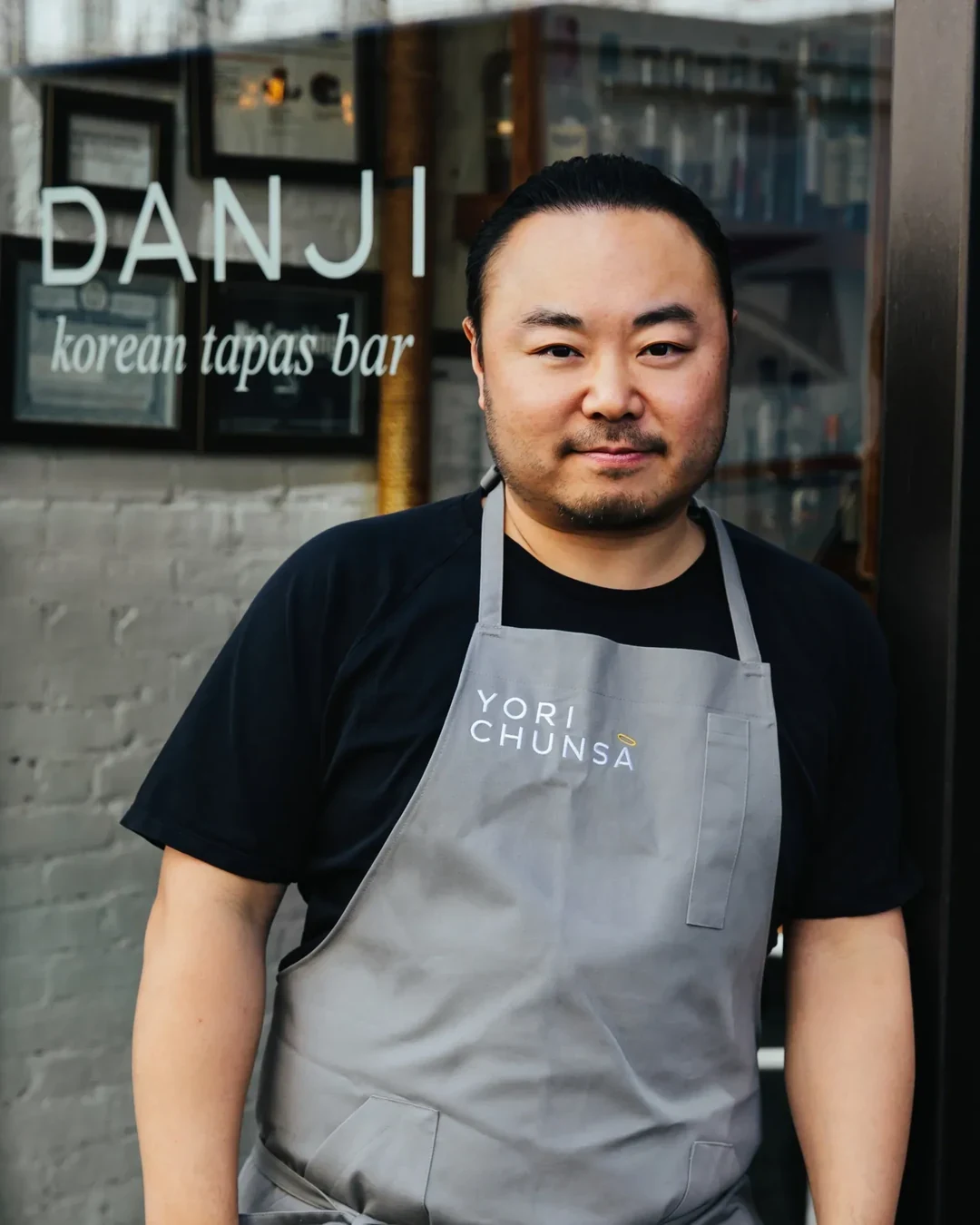
Chef Hooni Kim, who trained in French kitchens before turning to Korean cooking, is among the earlier figures to have made that crossover legible to New York audiences. That culinary bilingualism, fluency in Western technique alongside genuine Korean cooking knowledge, shaped how the restaurant calibrated its menu for a Midtown dining room that was not initially a Korean food destination.
What the Room Demands
Hell's Kitchen as a dining neighbourhood has evolved considerably since Danji opened. The area now draws a more food-literate crowd than its pre-theatre reputation suggests, and the density of independent restaurants along the West 40s and 50s has increased the level of ambient competition. A Korean small-plates format that felt novel a decade ago now operates in a city where Korean cooking at every price point has achieved mainstream acceptance.
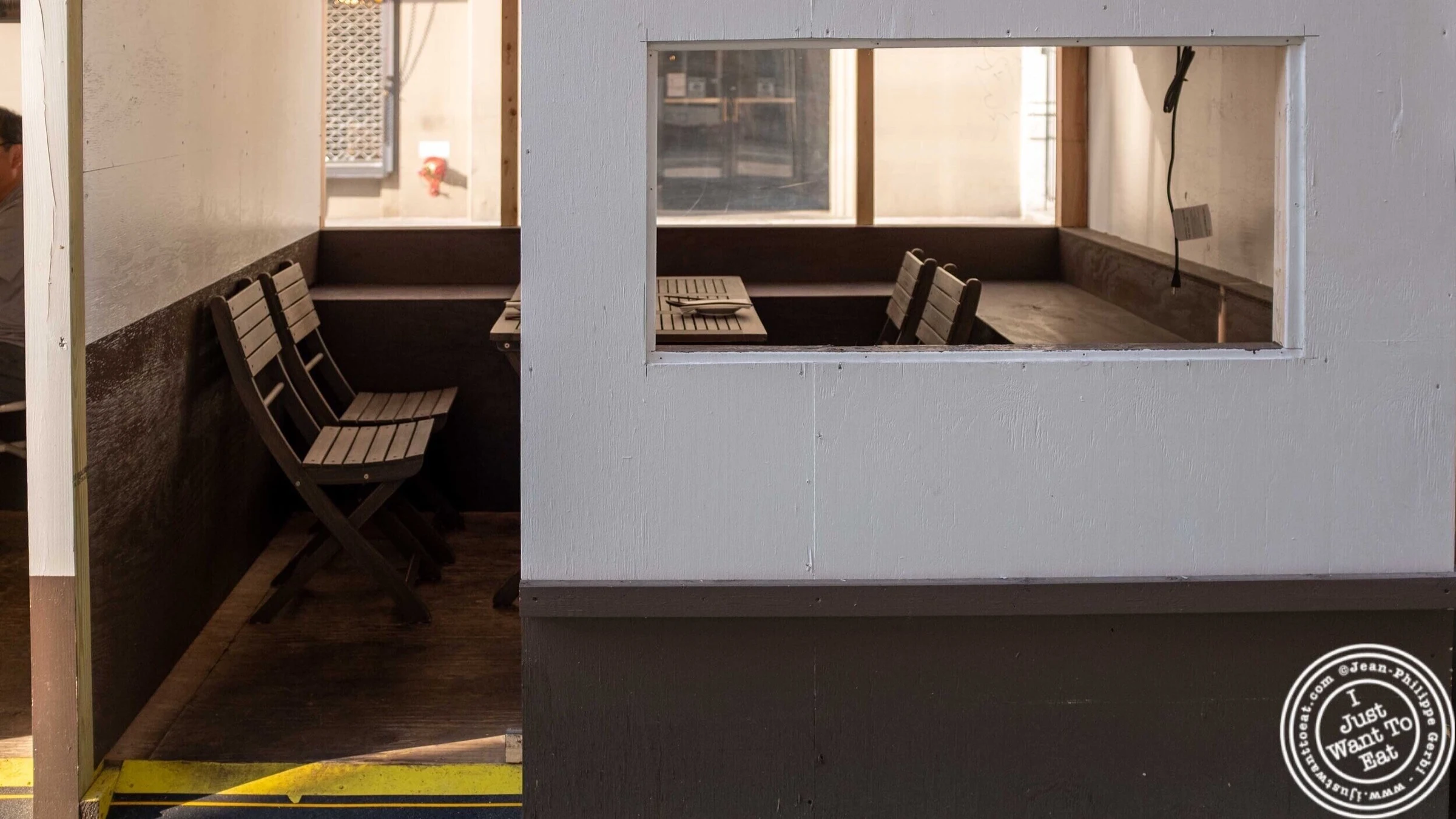
The practical rhythm of dining at Danji favours a pace that the kitchen controls rather than the guest. Dishes arrive when ready, which means the table requires some tolerance for the organised improvisation that defines Korean shared dining. Groups of two to four generally extract the most from this format, with enough ordering range to cover the width of the menu without redundancy.
Planning Your Visit
| Venue | Cuisine | Price Tier | Critical Recognition | Format |
|---|---|---|---|---|
| Danji | Korean | Casual | OAD Casual NA #607 (2025) | Small plates, shared |
| Atomix | Modern Korean | $$$$ | Michelin 2 Stars | Tasting menu |
| Jeju Noodle Bar | Korean | Casual | OAD recognised | Noodle-focused, à la carte |
| bōm | Korean | Mid | OAD recognised | Seasonal small plates |
Danji is located at 346 W 52nd St. The Midtown West location makes it a practical choice before or after Lincoln Center events, though it draws a distinct crowd from the conventional pre-theatre circuit.
For broader context on where Danji sits in the New York dining scene, see our full New York City restaurants guide. For accommodation near Midtown West, our full New York City hotels guide covers the relevant options. Danji also fits naturally into a broader New York itinerary that includes bars, wineries, and experiences across the city.
For those building a broader American dining itinerary, comparable levels of regional recognition attach to Emeril's in New Orleans, Lazy Bear in San Francisco, Alinea in Chicago, Single Thread Farm in Healdsburg, The French Laundry in Napa, and Providence in Los Angeles, each representing a different regional inflection of serious American dining.
Questions
Frequently asked
Who works at Danji?
Made By profiles Hooni Kim (Chef) at Danji.
How expensive is Danji?
Danji is listed at a price level of $$$.
Where is Danji and what does it serve?
Danji is in Hell's Kitchen, New York City, serving Modern Korean Tapas.
The field
How it compares
| Place | Cuisine | Notes | Awards |
|---|---|---|---|
| Danji | Modern Korean Tapas | Hell's Kitchen, $$$ | · |
| Atomix | Modern Korean Tasting Menu | New York City | Michelin 2 Stars, World's 50 Best |
| Daniel | Modern French Fine Dining | New York City | Michelin 1 Star, World's 50 Best |
| Eleven Madison Park | Contemporary Plant-Based Fine Dining | New York City | Michelin 3 Stars, World's 50 Best |
| Jungsik New York | Modern Korean Fine Dining | New York City | Michelin 3 Stars, World's 50 Best |
| Kabawa | Modern Caribbean Prix Fixe | New York City | World's 50 Best |
| Le Bernardin | French Seafood Fine Dining | New York City | Michelin 3 Stars, World's 50 Best |
In residence
Similar places
Modern Korean Tasting Menu
Atomix
New York City, United States
★★ · 50 Best
Modern French Fine Dining
Daniel
New York City, United States
★ · 50 Best
Contemporary Plant-Based Fine Dining
Eleven Madison Park
New York City, United States
★★★ · 50 Best
Modern Korean Fine Dining
Jungsik New York
New York City, United States
★★★ · 50 Best
Modern Caribbean Prix Fixe
Kabawa
New York City, United States
50 Best
French Seafood Fine Dining
Le Bernardin
New York City, United States
★★★ · 50 Best
The Sunday letter
Get the next Made By story in your inbox.
We send one email every Sunday morning with the places and people we covered that week.
See a sample of the Sunday emailOne email a week. Unsubscribe from any issue.