Dhamaka
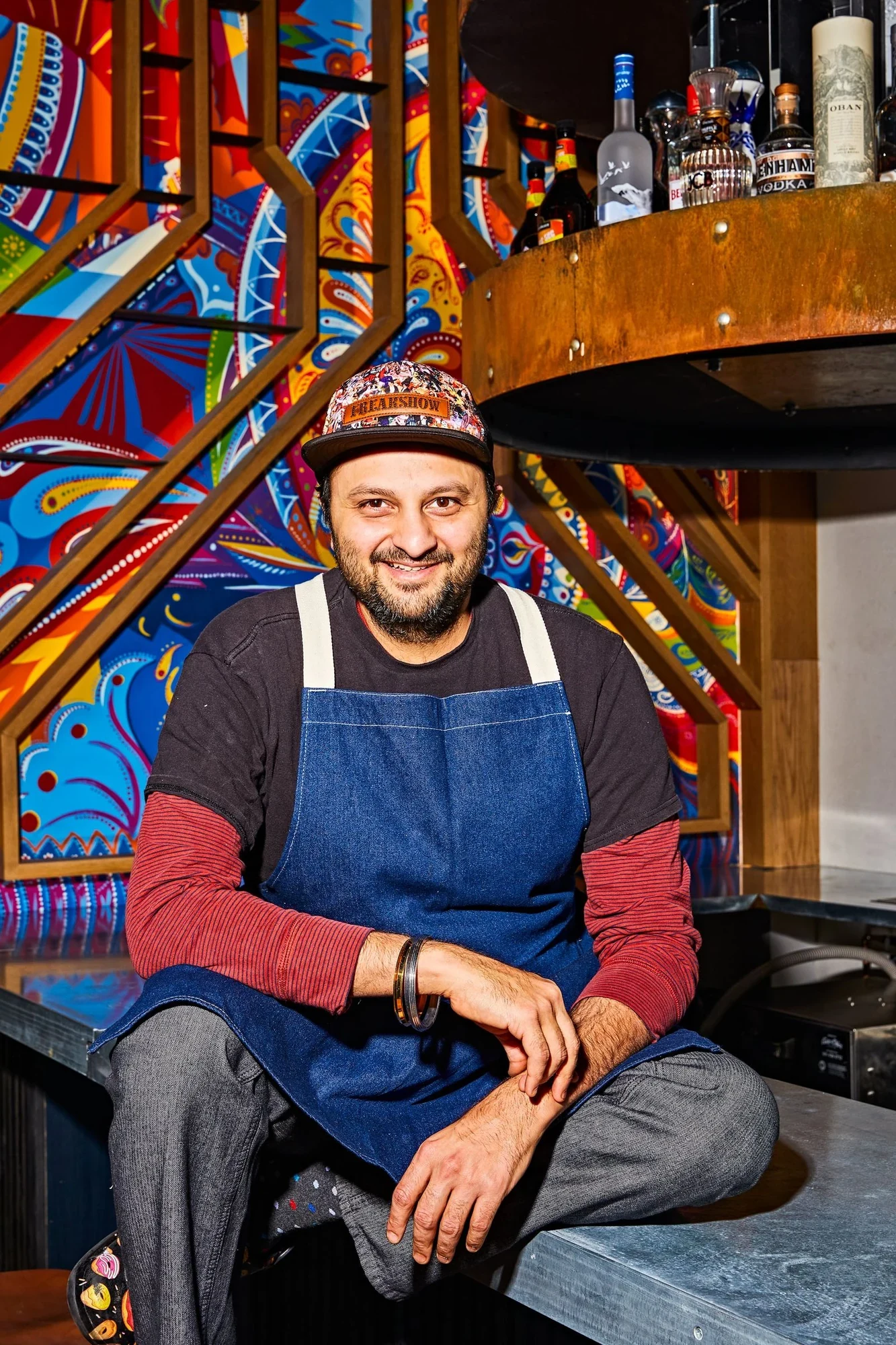
In Residence
Chintan Pandya
Chef
- 01CuisineRustic Regional Indian
- 02CityNew York City, United States
- 03RecognitionJames Beard Award
From the people index
Recommended by
One trusted voice points here.

- Michelin Bib Gourmand · Michelin Guide
- James Beard Winner · James Beard Foundation
- New York Times Best Restaurants in New York City #66 · 2026
- Opinionated About Dining Casual in North America Recommended · 2026
- Opinionated About Dining Casual in North America Ranked #199 · 2025
- New York Times Best Restaurants in New York City · 2025
- Michelin Bib Gourmand · 2025
- Michelin Bib Gourmand · 2024
- Opinionated About Dining Casual in North America Ranked #309 · 2024
- Opinionated About Dining Casual in North America Recommended · 2023
- James Beard Award Best Chef: New York State · 2022
- Esquire Best New Restaurants #1 · 2021
The Lower East Side and the Case for Regional Indian Cooking
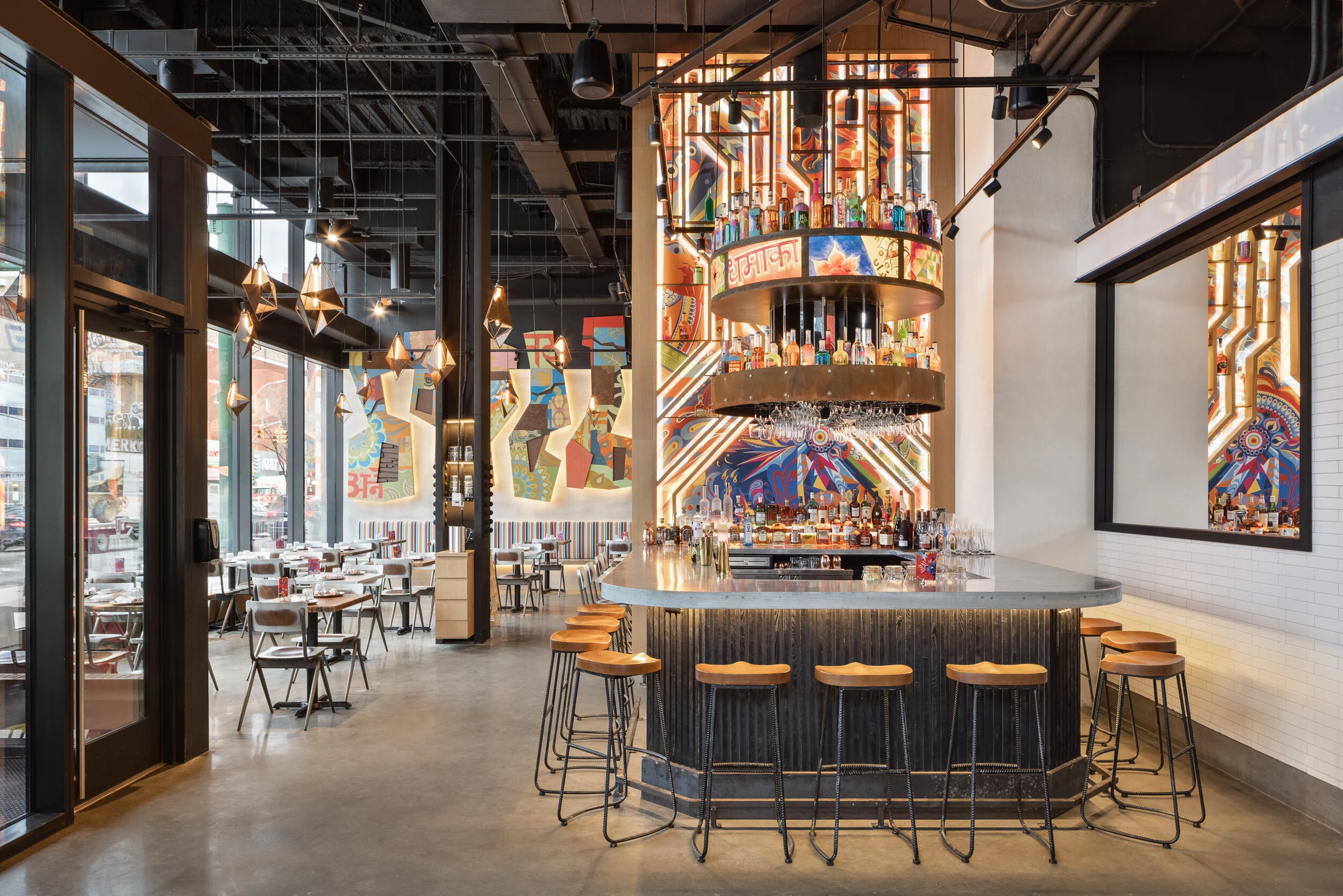
Essex Market on Delancey Street sits at the intersection of two of New York's most food-dense traditions: the immigrant-driven Lower East Side and the newer wave of serious casual dining that has redrawn what a $$ restaurant can accomplish. Dhamaka is a restaurant in New York City that serves Rustic Regional Indian cooking and has earned a James Beard Award in 2022. Where much of New York's Indian dining has historically defaulted to a Mughal-leaning, curry-house grammar familiar from London or suburban New Jersey, the restaurant that opened here chose a different direction entirely, one grounded in the regional specificity of subcontinental cooking rather than its most exportable face.
That choice has consequences on the plate. The cuisine of Uttarakhand looks nothing like the cuisine of Goa. A clay-pot preparation from one tradition shares almost no vocabulary with a coastal garlic-and-pepper crab from another. Dhamaka's menu treats those distinctions as the point, not a footnote, building a case through food that India's culinary geography is as varied as its linguistic one. For a New York diner whose frame of reference for Indian food stops at butter chicken, this is a recalibrating experience.
The Sunday letter
Find new places through the people who run them.
Our Sunday email brings you the chefs, winemakers and hoteliers behind our newest stories. See a sample before you subscribe.
See a sample of the Sunday emailOne email a week. Unsubscribe from any issue.
What the Awards Say, and What They Don't
The credential stack here is straightforward. The 2022 James Beard Award for Leading Chef: New York State, held by Chef Chintan Pandya, places Dhamaka in a different competitive register from most casual Indian restaurants in the city. The James Beard recognition is not a hospitality award, it is a culinary one, which means it is assessing what happens in the kitchen rather than how the room is dressed or how the reservation system works. A Michelin Bib Gourmand, added in 2024, signals a different kind of recognition: exceptional cooking at a price point that does not require a corporate expense account. Opinionated About Dining's Casual North America list ranked it at #199 in 2025, up from #309 in 2024, a trajectory that reflects sustained critical attention rather than a single-year spike.
Esquire named it the number one new restaurant in the United States in 2021. That kind of lead placement in a national publication at debut is unusual; it set expectations that the restaurant has, by the evidence of subsequent awards, continued to meet. For context, the best of New York's French and Japanese tasting-menu tier, venues like Le Bernardin, Eleven Madison Park, Per Se, Masa, and Atomix, operate at the $$$$ tier and in rooms engineered around precision service. Dhamaka operates at $$ in a market hall. That gap tells you something about the cooking.
From Dhaba Logic to Restaurant Discipline
Dhamaka's significance reflects the movement of street food and home-kitchen traditions into formal restaurant contexts. In Indian cooking specifically, this involves a set of deliberate choices. Bone-in preparations require a different relationship between kitchen and diner than boneless plating, they are messier, more intimate, and more technically demanding to execute consistently. Spice levels that mirror what you would find at a roadside dhaba or a family banquet in Rajasthan read differently to a Lower East Side crowd than to the original context, which means the kitchen has to hold its ground against the pressure to moderate.
Dhamaka holds that ground. The kitchen grinds many of its spices daily, a practice that shifts the aromatic register of the food in ways that pre-ground spices cannot replicate. This is not a stylistic flourish, it is the difference between a spice that delivers heat and one that delivers heat plus depth plus volatility. The preparations described in OAD's cited notes, goat belly with coriander seeds wrapped in cedar wood, mutton in clay pot with dark chili oil and a full bulb of roasted garlic, are not restaurant inventions dressed as street food. They are the kind of preparations that exist in regional Indian cooking precisely because they require time, specific vessels, and a willingness to let the ingredient lead. Translating that into a consistent restaurant operation is the technical achievement the awards are recognizing.
The same logic applies to the menu's geographic range. Moving from an Uttarakhand okra dish to a Goan crab preparation in a single meal is not eclectic programming for its own sake. It is a demonstration that Indian cuisine does not have a single spine, and that the restaurant is confident enough in its audience to make that argument through the food rather than explaining it on a menu insert.
How Dhamaka Sits in the New York Indian Dining Scene
New York has seen a broader recalibration of Indian cooking at the serious-casual and fine-dining tiers over the past decade. That shift has moved in two directions simultaneously: upward into tasting-menu formats with wine pairings and composed plating, and lateral into deeper regional specificity at accessible price points. Dhamaka occupies the lateral track, a position that arguably requires more culinary confidence than the vertical one. Refinement through reduction and plating technique is a legible grammar for a New York audience trained on French and Japanese fine dining. Refinement through fidelity to a regional tradition most diners cannot reference from prior experience requires the kitchen to do more persuasive work.
The Google review average of 4.5 across nearly 3,600 reviews confirms that the persuasion is working at volume, not just at the level of professional criticism. A high average score across that sample size suggests consistent execution rather than occasional brilliance, which matters for a restaurant whose spice-forward cooking requires precision to avoid tipping from fierce to punishing.
Planning Your Visit
Dhamaka is located at 119 Delancey St inside Essex Market on the Lower East Side. It operates at the $$ price range, making it one of the more accessible serious dining options in the city at any cuisine category. The tables are small, which is relevant for groups ordering across the menu's full geographic range. Bringing a larger group increases the number of preparations you can cover in a single visit.
For comparison with serious casual formats in other American cities, Lazy Bear in San Francisco and Emeril's in New Orleans represent different regional approaches to the same question of culinary ambition outside the white-tablecloth tier. At the tasting-menu end of the American spectrum, Alinea in Chicago, Single Thread Farm in Healdsburg, The French Laundry in Napa, and Providence in Los Angeles represent the $$$$ counterpoint against which Dhamaka's price-to-recognition ratio becomes especially clear. Internationally, 8½ Otto e Mezzo Bombana in Hong Kong and Alain Ducasse at Louis XV in Monte Carlo anchor the global fine-dining tier for further comparison.
Quick Comparison: Dhamaka vs. Peer Venues in New York
| Venue | Cuisine | Price Tier | Key Award | Format |
|---|---|---|---|---|
| Dhamaka | Regional Indian | $$ | James Beard 2022; Bib Gourmand 2024 | À la carte, casual |
| Atomix | Modern Korean | $$$$ | Michelin 2 Stars | Tasting menu |
| Le Bernardin | French Seafood | $$$$ | Michelin 3 Stars | Prix fixe |
| Eleven Madison Park | French / Vegan | $$$$ | Michelin 3 Stars | Tasting menu |
| Masa | Japanese / Sushi | $$$$ | Michelin 3 Stars | Omakase |
Questions
Frequently asked
What recognition does Dhamaka hold?
Dhamaka holds a Michelin Bib Gourmand and a James Beard award.
Who works at Dhamaka?
Made By profiles Chintan Pandya (Chef) at Dhamaka.
How expensive is Dhamaka?
Dhamaka is listed at a price level of $$$.
Where is Dhamaka and what does it serve?
Dhamaka is in Lower East Side, New York City, serving Rustic Regional Indian.
The field
How it compares
| Place | Awards | Cuisine | Notes |
|---|---|---|---|
| Dhamaka | James Beard | Rustic Regional Indian | Lower East Side, $$$ |
| Atomix | Michelin 2 Stars, World's 50 Best | Modern Korean Tasting Menu | New York City |
| Daniel | Michelin 1 Star, World's 50 Best | Modern French Fine Dining | New York City |
| Eleven Madison Park | Michelin 3 Stars, World's 50 Best | Contemporary Plant-Based Fine Dining | New York City |
| Jungsik New York | Michelin 3 Stars, World's 50 Best | Modern Korean Fine Dining | New York City |
| Kabawa | World's 50 Best | Modern Caribbean Prix Fixe | New York City |
| Le Bernardin | Michelin 3 Stars, World's 50 Best | French Seafood Fine Dining | New York City |
In residence
Similar places
Modern Korean Tasting Menu
Atomix
New York City, United States
★★ · 50 Best
Modern French Fine Dining
Daniel
New York City, United States
★ · 50 Best
Contemporary Plant-Based Fine Dining
Eleven Madison Park
New York City, United States
★★★ · 50 Best
Modern Korean Fine Dining
Jungsik New York
New York City, United States
★★★ · 50 Best
Modern Caribbean Prix Fixe
Kabawa
New York City, United States
50 Best
French Seafood Fine Dining
Le Bernardin
New York City, United States
★★★ · 50 Best
The Sunday letter
Get the next Made By story in your inbox.
We send one email every Sunday morning with the places and people we covered that week.
See a sample of the Sunday emailOne email a week. Unsubscribe from any issue.