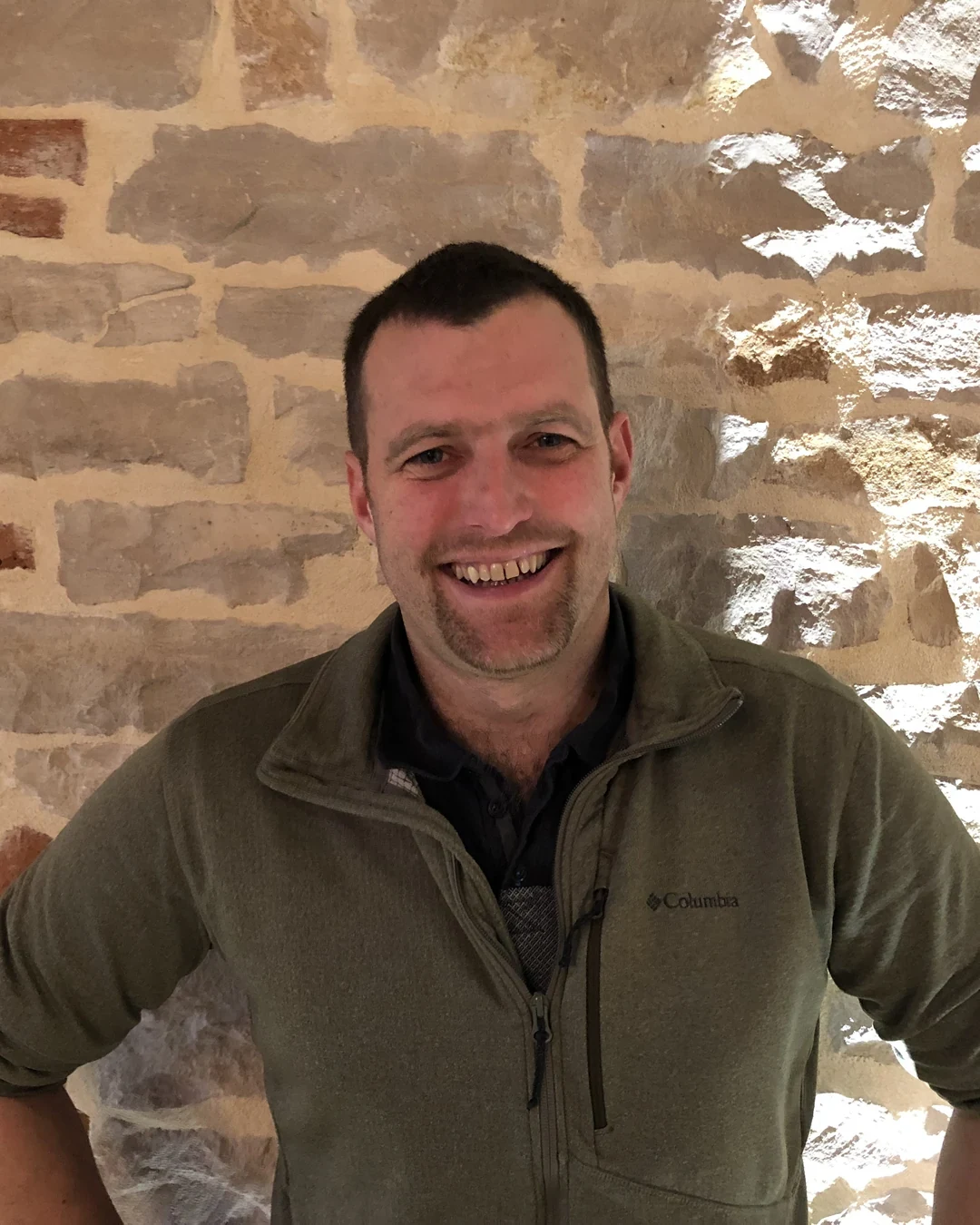
Laurent Fournier makes Marsannay as winemaker at Domaine Jean Fournier in Marsannay-la-Côte, using old vines and low-intervention cellar craft.
The grapes arrive in 15 kg boxes before Laurent Fournier, winemaker at Domaine Jean Fournier in Marsannay-la-Côte, decides what stays whole bunch and what is de-stemmed. That first decision belongs to the bench-side logic of the domaine: protect the fruit, sort it close to the vat house, and let each cuvée carry its site without excessive cellar noise. Fournier trained in Beaune, then held responsibility at the estate from 2001 to 2003 as head of the domaine. His current work keeps him at the same Marsannay address, inside a family name recorded in the village since the 17th century and formalized as a winegrowing estate in 1962 by Jean Fournier. The lineage matters here because Marsannay is not a backdrop. It is the material. Fournier works with Aligoté and Marsannay wines as part of a wider Burgundy program, but the village remains the center of gravity, both for the family history and for the domaine’s present discipline. Organic farming, certified by Ecocert and AB in 2008, gives the work its frame. The rest is repetition, judgment, and time on the tools.
The domaine farms around 22.5 hectares across the Côte de Nuits and Côte de Beaune, producing roughly 25 cuvées from Pinot Noir, Chardonnay, and Aligoté. In the reds, Fournier vinifies 30 to 50% of the fruit as whole bunches, with the remainder de-stemmed to complete the vat. Cold pre-fermentation maceration precedes fermentation, and the cellar uses light punching down and pumping over rather than extraction for its own sake. Indigenous yeasts begin the work. Temperature and density are followed during vatting, but the method stays close to Burgundy’s older grammar: observe, adjust, do less when less is enough. Red wines age in barrel for 16 to 20 months, depending on the cuvée, with weekly topping up, tastings, and checks on SO2 and malolactic fermentation. For whites, Chardonnay is harvested by hand in the same 15 kg boxes, sorted, then pressed long and progressively as whole grapes, partially crushed. The juice settles lightly in stainless steel before barrel fermentation and aging. Sulfur waits until after malolactic fermentation.
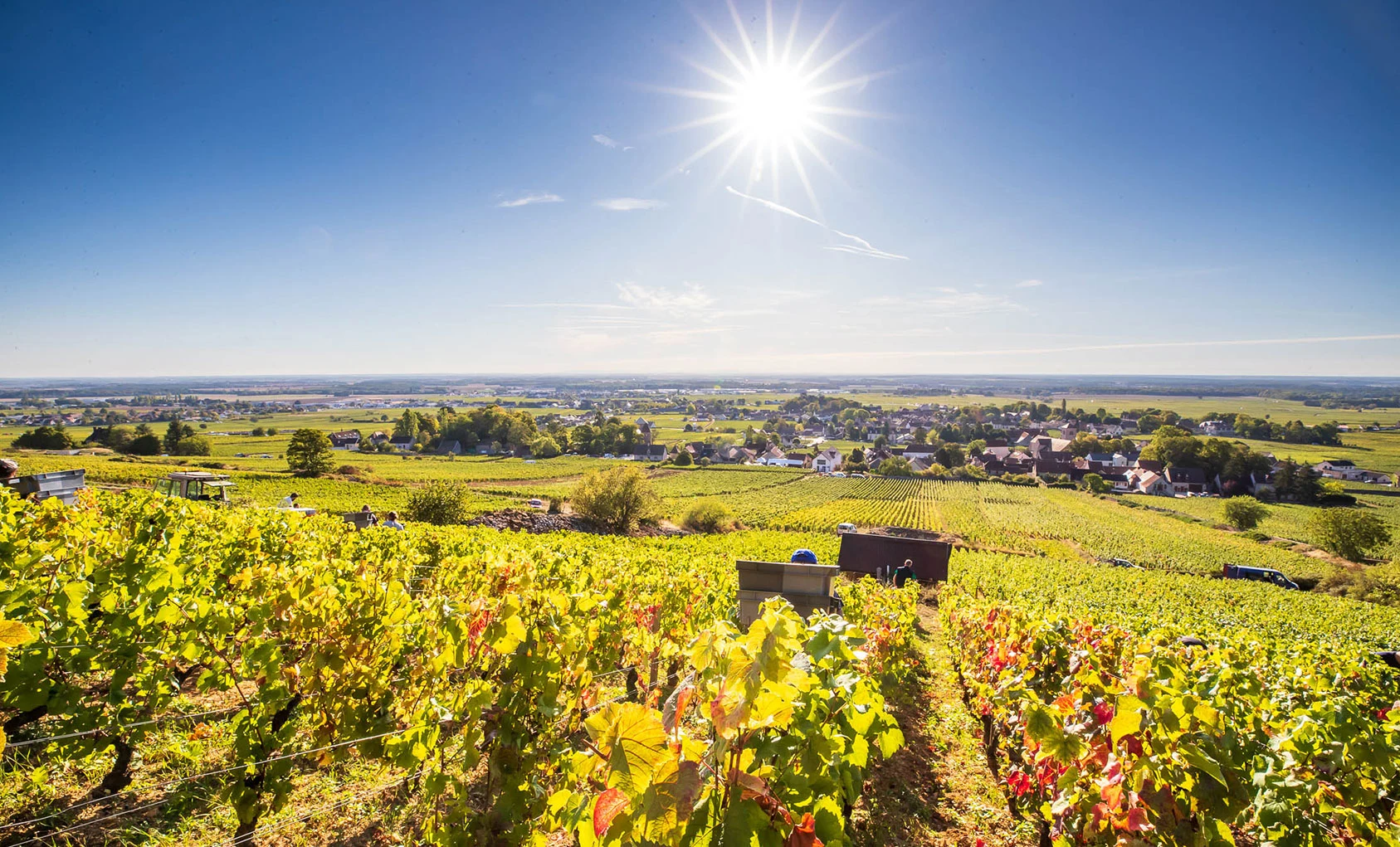
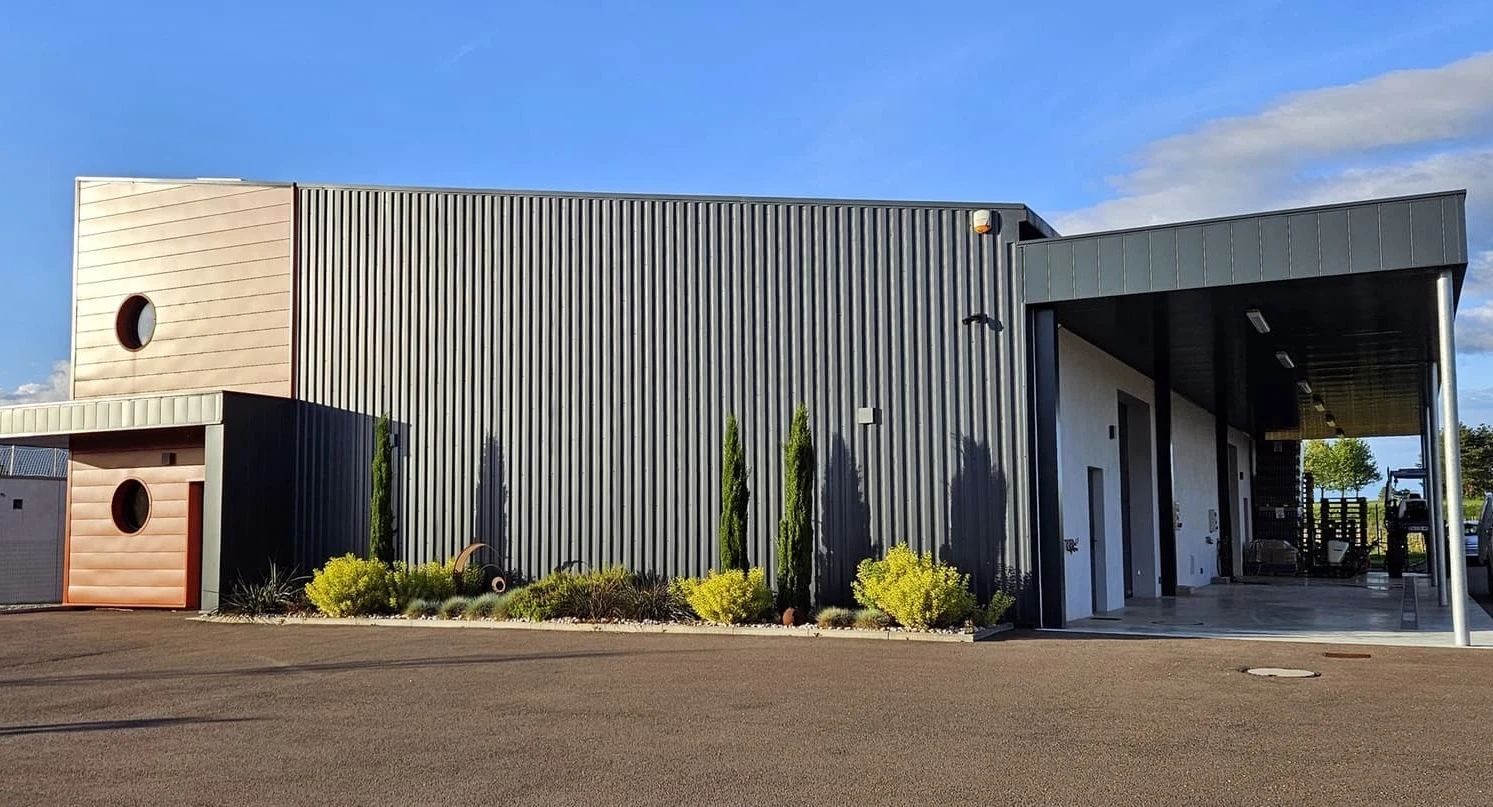
The cellar reads as a grower’s room rather than a staged tasting set. The quiet is practical. Barrels need topping up; tanks need watching; the harvest boxes, sorting table, press, and vat house set the rhythm when fruit comes in from the surrounding vineyards. Marsannay’s particular breadth also lives in the room. The appellation permits red, white, and rosé under the same village name, so the domaine’s work moves between Pinot Noir, Chardonnay, Aligoté, and Marsannay Rosé without leaving its local vocabulary. Old vines give the program some of its pressure: many parcels range from 20 to 70 years old, and some Aligoté vines reach 80 years. Horse-drawn ploughing for old vines, tillage, and green harvesting happen outside the cellar, but their consequence arrives inside it, cluster by cluster.
Fournier’s place in Marsannay is tied less to a single bottle than to continuity: a family presence from the 17th century, an estate founded in 1962, and organic practice certified in 2008. The quiet pointer here is the same one the cellar gives every season, follow the Marsannay wines and the Aligoté as Laurent Fournier keeps working through the 25 cuvées of Domaine Jean Fournier.
Marsannay-la-Cote, Bourgogne-Franche-Comté, Frankreich
Marsannay-la-Côte