- Falstaff Winery - Listed · 2026
Approaching the wine culture of Saint Nazaire De Ladarez means leaving behind the polished château narrative that still dominates parts of French wine travel. Here the visual grammar is rougher and more instructive: shale slopes, mountain foothills, a village scale of production and a cellar culture built around small lots rather than grand reception rooms. Domaine La Lauzeta belongs to that register of Languedoc wine, where the land explains the bottle before any tasting note does.
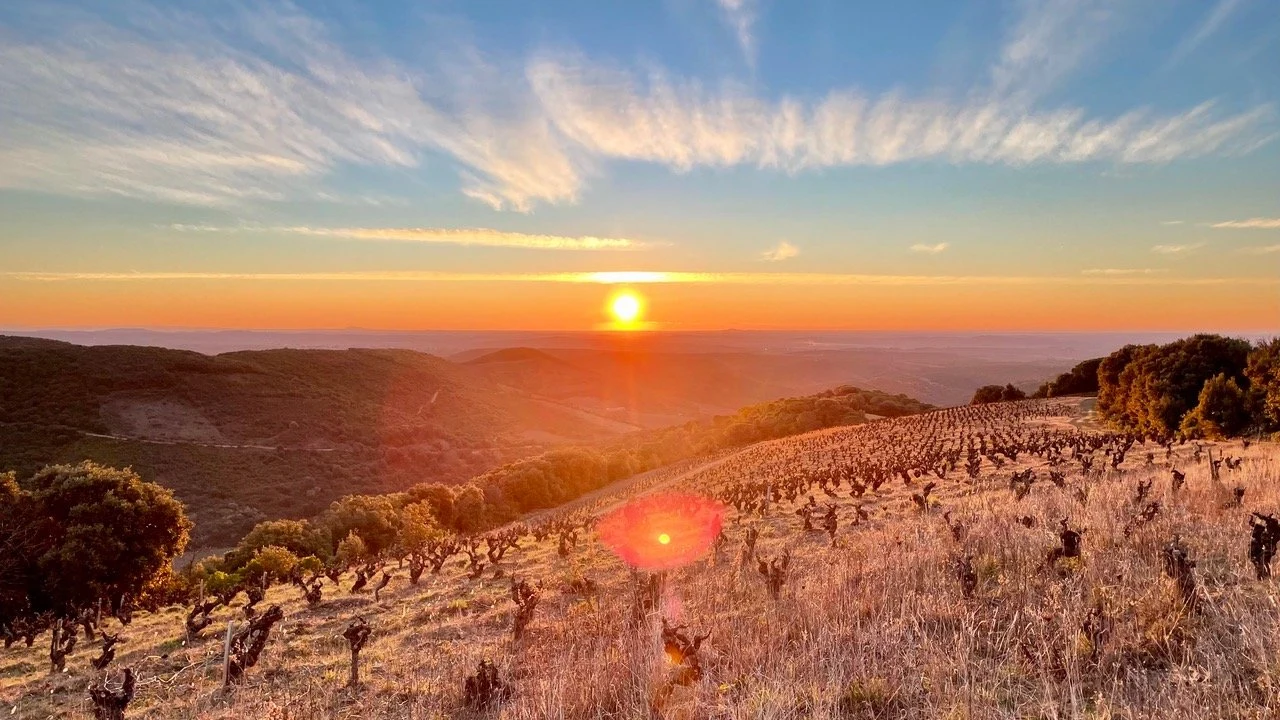
The estate sits within the Saint-Chinian AOP, in the schist foothills of the Espinouse and Caroux mountains. That matters. Saint-Chinian is not a single-texture appellation; its split between limestone and schist zones changes the wines’ architecture. On the schist side, poor soils and heat-retaining rock tend to produce reds with darker structure and rosés with more grip than the pale, coastal shorthand often attached to southern France. Domaine La Lauzeta works inside that more geological reading of the region.
Schist, upland air and the Saint-Chinian argument
Languedoc has spent the past generation moving away from volume as its defining story. The more interesting producers now speak through parcels, organic farming and restrained cellar work, especially in appellations where old vines and marginal soils give small estates a credible point of difference. Domaine La Lauzeta was established in 2015 and converted old vineyards to organic farming from the outset, a decision that places it within the region’s newer, smaller-scale current rather than its cooperative past.
The estate’s production scale is micro-production, and that is not a decorative detail. In this part of southern France, small-batch work allows a producer to separate nuance rather than flatten it into broad regional typicity. The key grapes are familiar to Saint-Chinian, with Syrah and Grenache central to the red and rosé program, while white production draws on regional and adopted varieties including Chardonnay, Chenin Blanc, Picpoul, Muscat and Mauzac. The portfolio is therefore not a single-variety statement; it follows the Languedoc habit of blending for shape, acidity, aroma and texture.
That blending culture is often misunderstood by travelers trained on Burgundy’s village-and-climat model or Bordeaux’s hierarchy of estates. In Saint-Chinian, the more revealing question is not always which grape dominates, but how the vineyard material handles sun, wind and stone. The schist foothills north of the appellation give La Lauzeta its central editorial interest: Mediterranean warmth is moderated by the upland position, allowing ripeness without reducing the wines to weight alone.
Micro-cuvées rather than cellar theatre
The Garagista idea, small, hands-on production from modest facilities, has particular relevance in Languedoc because it pushes against the region’s old reputation for scale. Domaine La Lauzeta’s small winery format and estate tasting setup place the emphasis on the wine rather than hospitality spectacle. This is the opposite of the large destination winery model: the reward is concentration of context, not a full-day amenities circuit.
Winemaker Florian Bruneau is part of that practical frame. His role is significant because a micro-cuvée estate depends on close cellar decisions: fermentation choices, batch separation and the degree to which oak, extraction and élevage are kept in proportion to fruit from dry, low-fertility soils. The broader point is not biography, but control. Estate-based fruit and small lots give a producer fewer places to hide and more chances to preserve site character.
The rosé, white and red categories also show how far Languedoc has moved from easy clichés. Rosé here is not merely a terrace drink; in schist country it can carry texture and food purpose. Whites from this part of the south remain a smaller conversation than the reds, but the presence of Picpoul, Muscat and Mauzac alongside Chardonnay and Chenin Blanc reflects a region still negotiating between local inheritance and wider French cellar language. The reds, built around Syrah and Grenache, sit closer to Saint-Chinian’s established identity: sun, structure and a mineral frame from the rock beneath the vines.
The strongest trust signal is not a trophy cabinet but placement. Wines from the estate have been listed in 17 Michelin-starred restaurants across France, which says something specific about their role at the table. Sommeliers in that environment need bottles that can handle food with precision, not just deliver concentration in a glass. For a micro-production estate founded in 2015, that restaurant presence is a meaningful marker of professional adoption.
How to read the visit in context
A visit to a small village estate in Saint-Chinian should be approached differently from a marquee tasting route in Champagne, Bordeaux or Burgundy. The pleasure is educational: seeing how an organic, small-scale producer interprets a rugged appellation whose reputation is still being sharpened by estates working below industrial scale. The setting is quiet and rural, with mountain and vineyard cues rather than architectural display.
Travelers building a broader local itinerary can use our full Saint Nazaire De Ladarez wineries guide as the natural starting point, then widen the trip through our full Saint Nazaire De Ladarez restaurants guide, our full Saint Nazaire De Ladarez hotels guide, our full Saint Nazaire De Ladarez bars guide and our full Saint Nazaire De Ladarez experiences guide. For wider French and European wine planning, compare the regional spread through Abbaye de Fontfroide in Narbonne, Abbotts & Delaunay in Marseillette, Advini in Saint Felix De Lodez, Alain Brumont in Castelnau Riviere Basse, A. Margaine in Villers-Marmery, Agrapart & Fils in Avize, Alain Gras in Saint-Romain, Albert Boxler in Niedermorschwihr, »der Steiner« Hans Steiner in Podersdorf am See and & Handwein in Mannheim.
The editorial case for Domaine La Lauzeta is precise: it gives Saint-Chinian’s schist zone a small-format, organic expression without dressing it up as luxury theatre. For travelers who care about how soil, scale and farming alter the taste of southern French wine, that is the point.
Questions
Frequently asked
Who works at Domaine La Lauzeta?
Made By profiles Florian Bruneau (Winemaker) at Domaine La Lauzeta.
How expensive is Domaine La Lauzeta?
Domaine La Lauzeta is listed at a price level of $.
The field
How it compares
| Place | Notes | Awards |
|---|---|---|
| Domaine La Lauzeta | Saint-Nazaire-de-Ladarez, $ | · |
| Château Les Carmes Haut-Brion | Bordeaux | · |
| Château Montrose | Saint-Estèphe | · |
| Château Smith Haut Lafitte | Martillac | World's 50 Best |
| Domaine Faiveley | Nuits-Saint-Georges | World's 50 Best |
| Hundred Acre | Napa | · |
| Vega Sicilia | Valbuena de Duero | · |