Chef in Residence
Jean-François Nicq
Winemaker
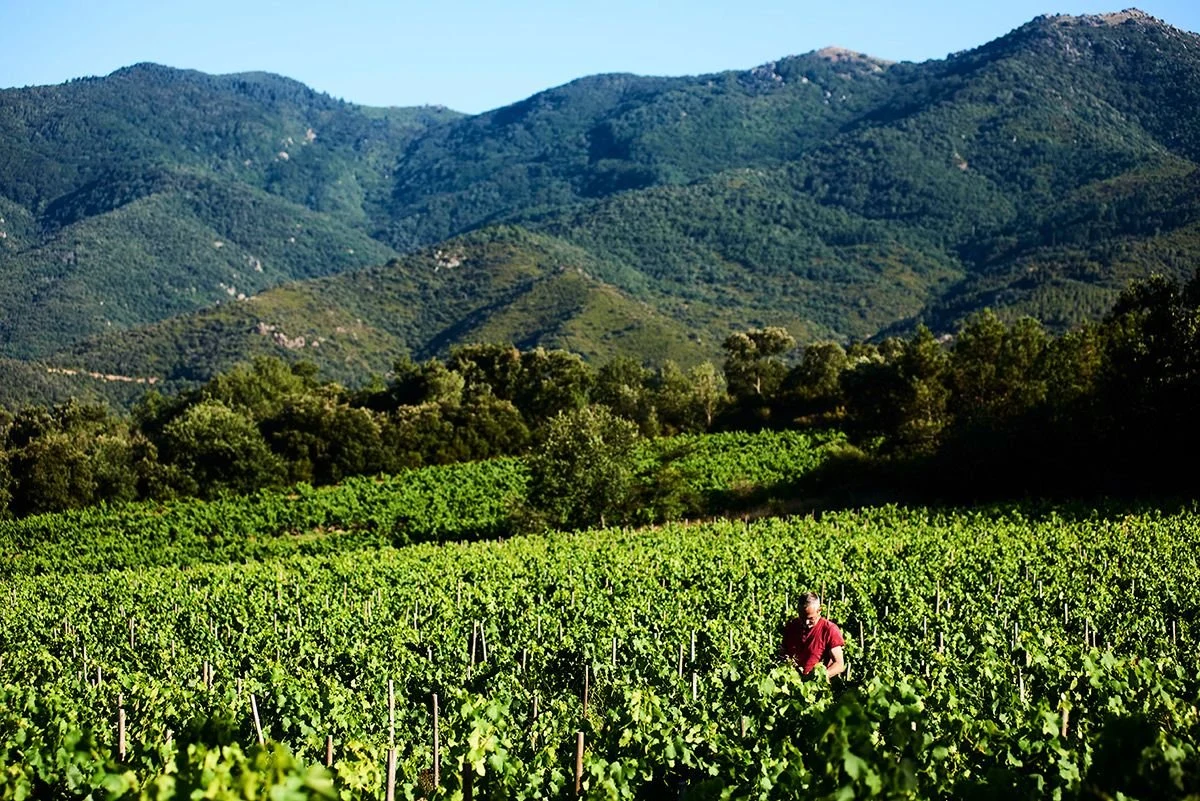
Jean-François Nicq, winemaker at Domaine Les Foulards Rouges in Montesquieu Des Alberes, works there today only without sulfur.
Gravity carries the wine to bottle for Jean-François Nicq, winemaker at Domaine Les Foulards Rouges in Montesquieu Des Alberes. The gesture fits the place: less force, fewer corrections, more trust in the fruit that comes off the eastern flank of the Albera Massif. Nicq trained at Mâcon, in Burgundy, where close observation becomes a working habit before it becomes a position. He then spent 1989–2001 as vigneron at Cave des vignerons d’Estezargues in Gard, Côtes du Rhône, a long cooperative chapter that gave him technical command of both vineyard and cellar. Since 2002 he has worked at his own domaine in Montesquieu-des-Albères, Pyrénées-Orientales, where natural wine is not a mood laid over the label but the structure of the work. The estate sits near the Pyrenees, close to the Mediterranean Sea and the Spanish border, on poor, acidic granite and gneiss soils. Its vineyards are AB-certified organic, and the cellar follows the same line: indigenous yeast, no sulfur, no filtration, no fining, and bottling by gravity.
The method at Les Foulards Rouges keeps returning to subtraction. Nicq works Grenache, Mourvèdre, Syrah, Carignan and Cinsault into red, white and rosé wines under the Côtes du Roussillon frame, with a parcel-minded estate scale of approximately 18–20 hectares. The harvest is entirely by hand, a necessary first sorting before the cellar makes its own demands. For Soif du Mal, Grenache and Syrah undergo whole cluster fermentation for 15 days, with carbonic maceration drawing the fruit forward while leaving the wine supple rather than worked over. Free-run and press juices are blended without the usual cellar corrections. No fining. No filtration. No added SO₂. The house vocabulary follows from those choices: Soif du Mal Blanc, Le Fond de l'Air est Rouge, Glaneuses, Mal de Soif, La Soif du Mal. They read as cuvées built around thirst, freshness and ease, but the ease is earned by discipline. A wine can feel relaxed because the hand behind it has refused the shortcut.
The cellar and vineyard carry the feeling of a rural working domaine rather than a polished visitor room. The ground is poor granitic arène, more sand and stone than comfort, with gneiss in the mix and the Albera Massif shaping the air around the vines. The Mediterranean is near enough to matter; the Spanish border is part of the geographic pressure of the place. In the tasting room, the wines do not ask for ceremony. They move in the register Nicq has pursued here since 2002: direct fruit, a living texture, a line of acidity that keeps the glass awake. The quiet is practical. It leaves room for the fermentations.
What matters here is continuity across scale. At Cave des vignerons d’Estezargues, Nicq worked for more than a decade inside a cooperative system; at Les Foulards Rouges, he brought the lesson down to estate size and kept the risk close to his own hands. The next measure is still in the cellar rather than in a statement of intent: indigenous yeast, gravity, and the next bottling of La Soif du Mal.
Montesquieu des Albères, Occitanie, Frankreich
Montesquieu-des-Albères