Fukutaro (福太郎)
- 01CuisineOsaka Okonomiyaki & Negiyaki
- 02CityOsaka, Japan
From the people index
Recommended by
One trusted voice points here.
- Tabelog 100 #90: 3.7pts · 2025
Sennichimae and the Roots of Osaka's Eating Culture
The stretch of Chuo-ku running south from Dotonbori toward Sennichimae is not the Osaka that ends up in architectural photography. It is older and less curated than that, built on the logic of feeding people efficiently and well. The streets around Sennichimae 2-chome have housed theatres, markets, and kitchens for well over a century, and the neighbourhood still carries that layered, functional character. Fukutaro occupies a building at the address 2-3-17 in this district, placing it within that older commercial fabric a few minutes from Namba.
Osaka's culinary identity is built around a set of principles that pre-date the current era of fine-dining competition. Kuidaore, the idea of eating until you are ruined, is less a joke than an accurate description of how the city has historically allocated its energy. The food culture here is participatory and unapologetic, producing traditions like okonomiyaki, takoyaki, and kushikatsu that reward execution over concept. Sennichimae is where several of those traditions are practised with the least self-consciousness, which is not the same as practising them carelessly.
Okonomiyaki as a Civic Practice
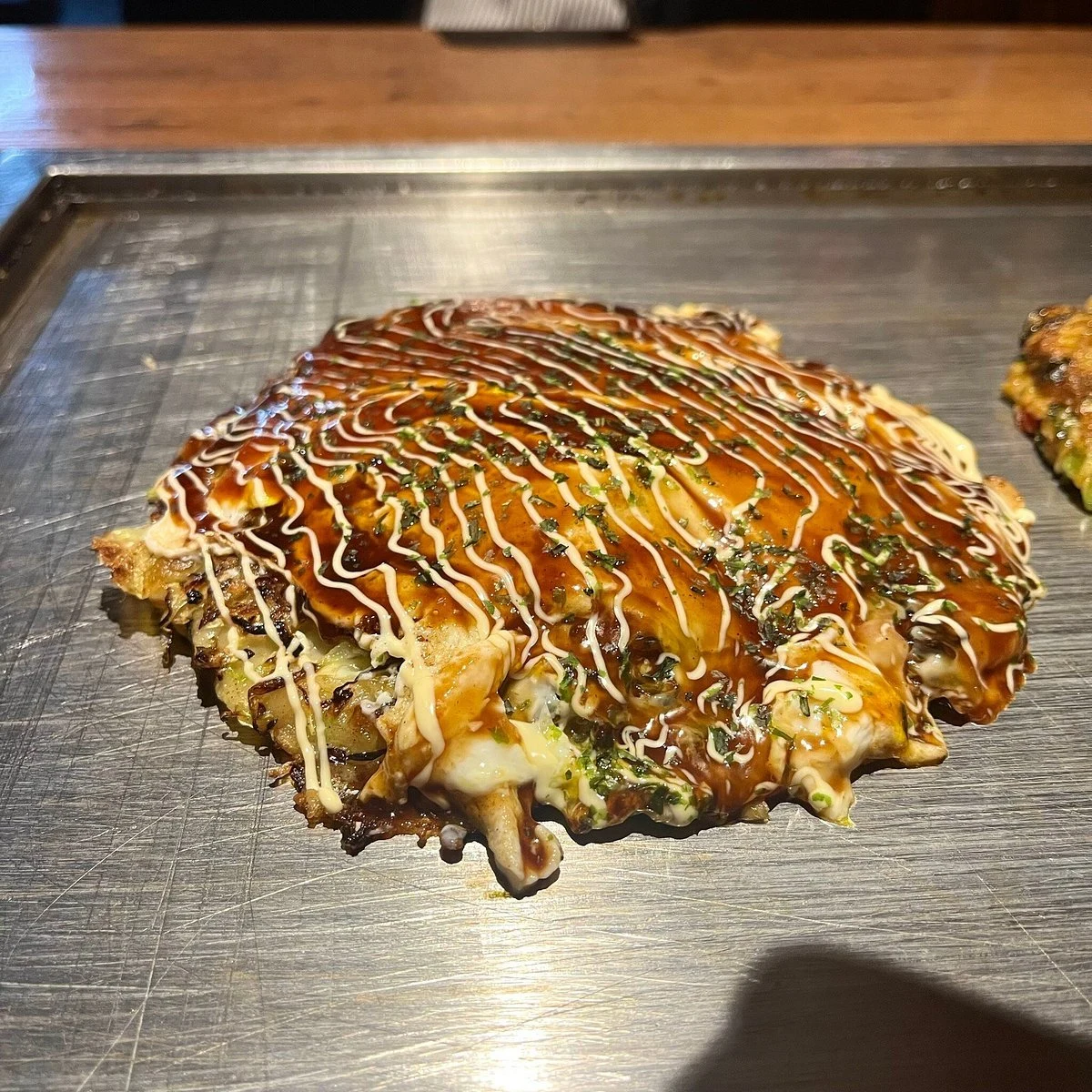
Osaka's claim on okonomiyaki is contested by Hiroshima, whose layered construction differs structurally from the Osaka style of mixing all ingredients into the batter before cooking. The Osaka version, sometimes called Kansai-style, produces a denser, more unified result, where the cabbage, protein, and batter are inseparable from the first pour. This is not a minor technical distinction. The two approaches reflect different philosophies about structure and integration that go well beyond the griddle. Osaka's version is the older form in terms of regional lineage, and it is the one that establishments in this part of Chuo-ku have built their reputations around.
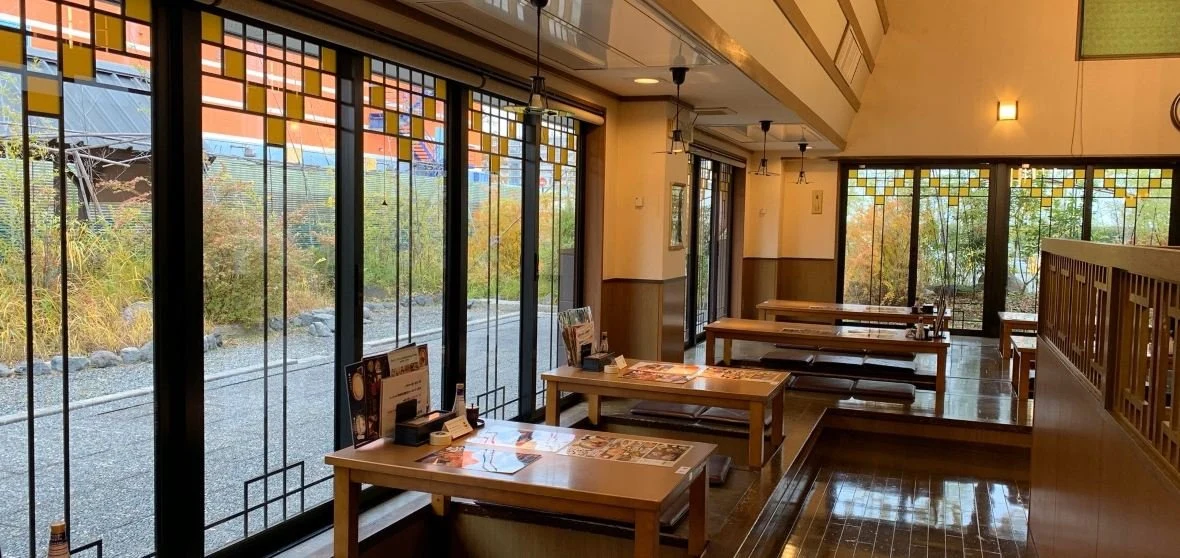
Fukutaro operates in that Kansai-style tradition. For visitors who have eaten okonomiyaki only at tourist-facing counters near Dotonbori, the version served in Sennichimae-area restaurants tends to be calibrated differently, with less accommodation for novelty and more confidence in the base preparation. The batter-to-cabbage ratio, the quality of the dashi used in the mix, and the timing of the flip are all areas where long-standing neighbourhood establishments diverge from high-volume tourist operations. These are the technical details that define the difference between a dish as spectacle and a dish as craft.
Fukutaro operates at a different point in the city's dining structure, one that is less about critical recognition and more about the kind of consistent neighbourhood presence that sustains a food culture over time.
The Neighbourhood at Table
Sennichimae has historically drawn a crowd that is local by default rather than local by design. The area feeds theatregoers from the nearby entertainment district, late-shift workers, and the kind of Osaka residents who are not particularly interested in where they are photographed eating. This produces a dining atmosphere that is calibrated to comfort and repetition rather than occasion. Restaurants here earn their reputation across hundreds of ordinary evenings, not through a single high-profile review cycle.
That dynamic distinguishes places like Fukutaro from the more globally visible end of the Osaka dining scene. Comparable neighbourhood-rooted experiences can be found across Japan in cities with strong regional food identities: Goh in Fukuoka operates within a different culinary tradition but with a similar sense of place-specificity, and Gion Sasaki in Kyoto represents the kaiseki equivalent of deep neighbourhood roots. For contrast across prefectures, akordu in Nara shows how a restaurant can anchor itself to regional character while working in a completely different format. And for those extending a Japan itinerary, Tokyo's tasting-menu tier is mapped well by Harutaka, while regional expressions worth noting include Abon in Ashiya, affetto akita in Akita, Aji Arai in Oita, Ajidocoro in Yubari District, Akakichi in Imabari, and aki nagao in Sapporo. For readers mapping premium casual dining internationally, Le Bernardin in New York City and Lazy Bear in San Francisco represent the Western analogues of restaurants that carry a specific culinary tradition with seriousness at a neighbourhood scale.
Planning a Visit
Fukutaro's address in Chuo-ku places it within easy walking distance of Namba Station, making it accessible without the need for a separate transit leg. The Sennichimae area is most animated in the evening hours, consistent with Osaka's general pattern of late dining, and the surrounding streets are worth exploring before or after eating. Given that specific booking details are not published through central reservation platforms, the standard approach for visitors from outside Japan is to ask hotel concierge staff to call ahead, particularly for weekend evenings when neighbourhood demand in this part of Chuo-ku runs high.
Questions
Frequently asked
How expensive is Fukutaro (福太郎)?
Fukutaro (福太郎) is listed at a price level of $$.
Where is Fukutaro (福太郎) and what does it serve?
Fukutaro (福太郎) is in Chūō, Osaka, serving Osaka Okonomiyaki & Negiyaki.
The field
How it compares
| Place | Cuisine | Notes | Awards |
|---|---|---|---|
| Fukutaro (福太郎) | Osaka Okonomiyaki & Negiyaki | Chūō, $$ | · |
| HAJIME | Avant-Garde Japanese Fine Dining | Osaka | Michelin 3 Stars, World's 50 Best |
| Honkogetsu | Traditional Kaiseki | Osaka | · |
| La Cime | Modern French with Japanese Ingredients | Osaka | Michelin 2 Stars, World's 50 Best |
| Numata | Michelin-Starred Tempura Omakase | Osaka | Michelin 2 Stars |
| Sushi Sanshin | Edomae Omakase Sushi | Osaka | Michelin 1 Star |
| Taian | Traditional Japanese Kaiseki Omakase | Osaka | Michelin 3 Stars |
Similar places
Avant-Garde Japanese Fine Dining
HAJIME
Osaka, Japan
★★★ · 50 Best
Traditional Kaiseki
Honkogetsu
Osaka, Japan
Modern French with Japanese Ingredients
La Cime
Osaka, Japan
★★ · 50 Best
Michelin-Starred Tempura Omakase
Numata
Osaka, Japan
★★
Edomae Omakase Sushi
Sushi Sanshin
Osaka, Japan
★
Traditional Japanese Kaiseki Omakase
Taian
Osaka, Japan
★★★