Lingo
In Residence
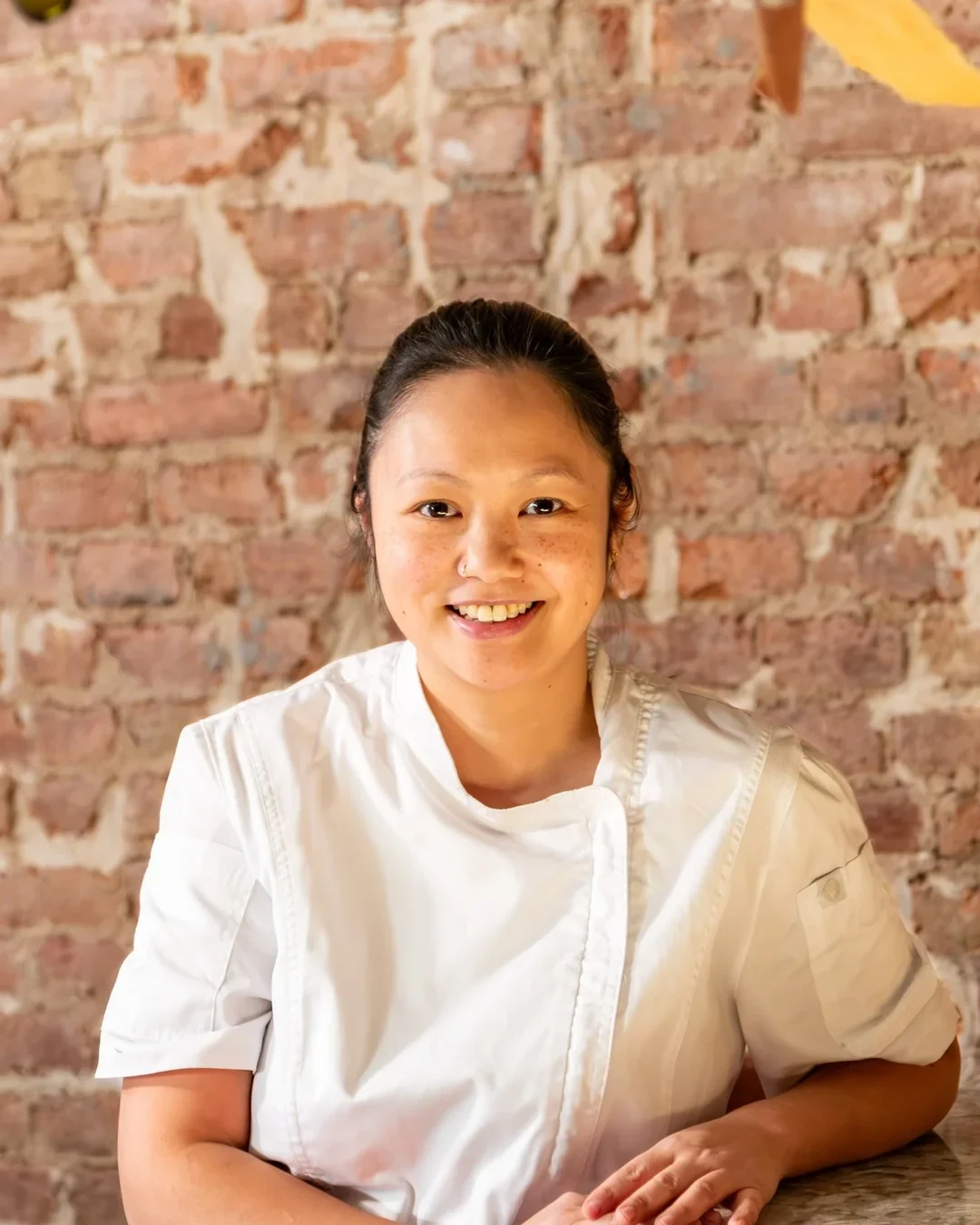
Emily Yuen
Chef
- 01CuisineJapanese-inspired New American
- 02CityNew York City, United States
- 03RecognitionJames Beard Award
- James Beard Winner · James Beard Foundation
- Michelin Plate · 2025
- James Beard Award Semi Finalist · 2025
Where Japanese Technique Meets Western Comfort
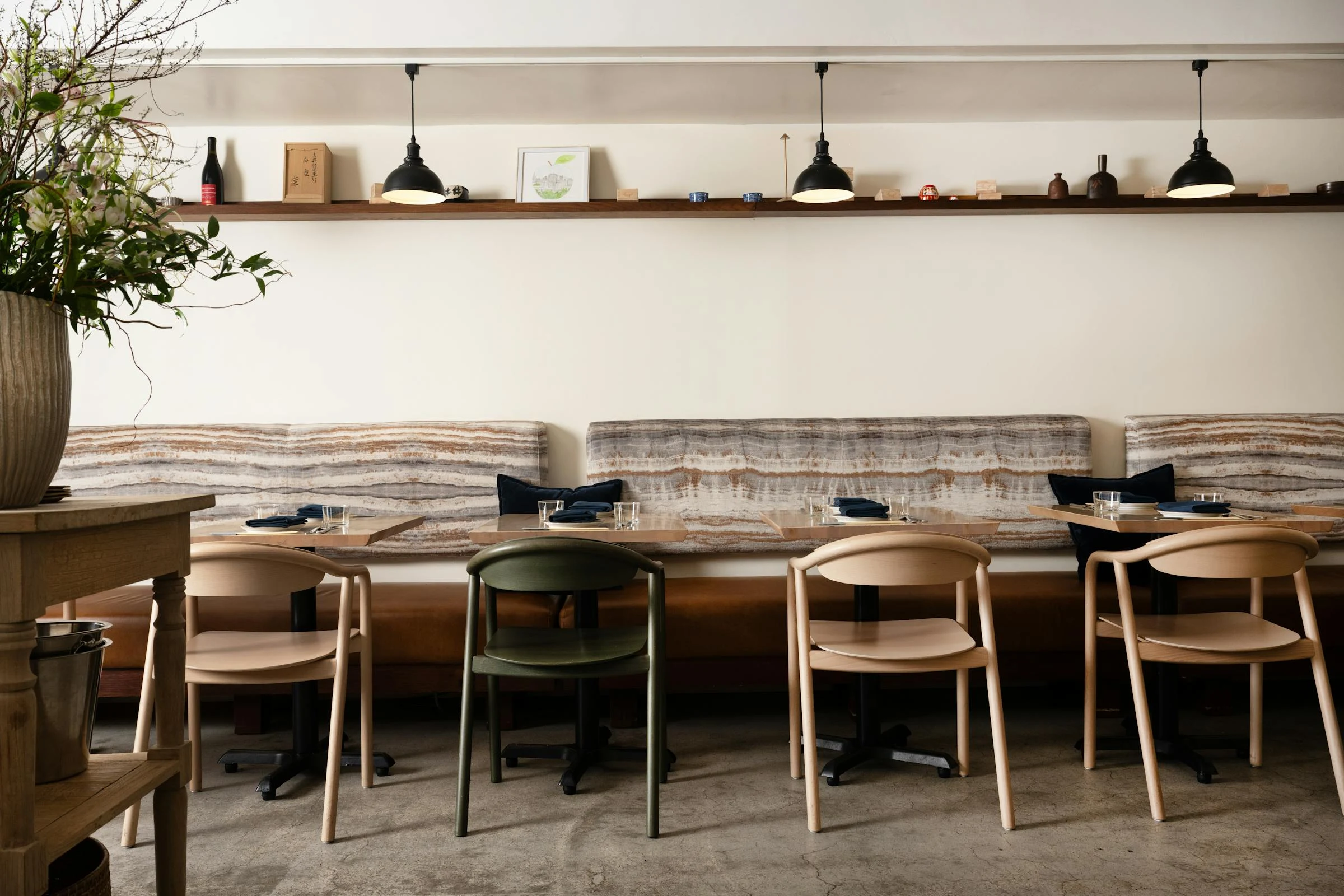
Cross-cultural cooking in New York tends to fall into two camps: the high-wire tasting-menu format, where fusion is a vehicle for chef virtuosity, and the casual neighbourhood register, where it risks becoming a shorthand for anything-goes eclecticism. Lingo, on Greenpoint Avenue in Brooklyn, works a more considered middle ground. The name itself signals the premise: ringo means apple in Japanese, a nod to both the city it occupies and the Western culinary tradition it draws into dialogue with Japanese craft. That positioning, culturally specific but not precious, shapes everything on the plate.
The broader category of Japanese-inflected cooking in New York has deepened considerably over the past decade. At the top of the market, counters like odo and Noda operate within a rigorous omakase framework, where Japanese culinary logic is the dominant grammar and Western ingredients are occasional guests. At the other end, izakaya-adjacent spots such as Blue Ribbon Sushi Izakaya fold Japanese formats into a relaxed, crowd-pleasing structure. Lingo occupies neither of those positions. It is a restaurant where the cultural exchange is the point, not the backdrop, and where the kitchen earns credibility by executing both sides of that exchange with evident care.
The Cultural Logic of the Menu
Japanese cuisine has always been more porous to outside influence than its reputation for rigorous tradition sometimes suggests. Yoshoku, the tradition of Western-inflected Japanese cooking that developed through the Meiji era, gave rise to dishes like hayashi rice, omurice, and the katsu curry that has become a staple across Japan and its diaspora. What Lingo does is essentially invert that direction of travel: instead of Western formats absorbed into Japanese cooking, this is Japanese technique and ingredient logic applied to Western comfort archetypes. The result sits in a lineage that includes restaurants like Tsukimi, where Japanese influence inflects a distinctly American sensibility, though Lingo's execution skews more explicitly toward comfort food as a category.
The chawanmushi at Lingo is a useful illustration. The dish itself is a Japanese steamed egg custard, centuries old in its basic form, defined by a silken, barely-set texture and a restrained dashi-forward flavour. Here it arrives with rock shrimp, scallop tartare, bisque foam, and sea grapes. The additions are unmistakably French-bistro in their reference points: bisque is a European shellfish preparation; foam as a textural element comes from the modernist European kitchen. The sea grapes, a Japanese ingredient with a briny oceanic pop, act as a bridge. The dish works because the underlying Japanese technique remains legible, and the European additions intensify rather than obscure the custard's fundamental character.
Roasted bone marrow steak tartare is a second case study in how this kitchen operates. Bone marrow on toast is a canonical European dish, most associated with British gastropub tradition and old-school French brasserie cooking. Steak tartare is classically French. The black sesame introduction is the Japanese pivot: it adds a creamy, nutty depth that reads as both familiar and disorienting in the leading sense, shifting the flavour register without breaking the dish's structural logic. This is not garnish-level fusion. The sesame changes the experience of the tartare meaningfully, in the way that a good winemaker's intervention changes a wine without announcing itself.
The Beef Pie as Thesis Statement
Among the dishes associated with Lingo, the beef pie most clearly articulates what the kitchen is attempting. Hokkaido-style braised beef curry is the filling: a Japanese preparation with its own layered cultural history, since Japanese curry arrived via the British colonial spice trade, was adapted through the Meiji military, and eventually became one of the country's most-consumed home-cooked dishes. Encasing that filling in a golden pastry crust, the kind of oval hand-raised pie associated with British baking tradition, completes a loop of influence that spans multiple continents and nearly two centuries. Calling it fusion undersells the specificity. This is a dish built from historically entangled cuisines that happen to share a deep comfort-food register, and the construction is coherent on those terms.
That kind of conceptual rigour in a neighbourhood restaurant at the $$ price point is worth pausing on. The restaurants in New York most associated with elaborate cross-cultural cooking, places like Alinea in Chicago by analogy, or the technically intensive American-Japanese work at venues like Single Thread Farm in Healdsburg, operate at price points several tiers above Lingo. The cultural exchange happening at Lingo is not simplified by the format; it is made more accessible without being watered down. That is a harder balance to strike than it sounds.
Greenpoint and Its Dining Moment
Greenpoint's food scene has developed more quietly than those of neighbouring Williamsburg or Bushwick, but the neighbourhood now holds a range of serious kitchens across multiple formats. Its mix of long-established Polish residents, younger creative communities, and proximity to Manhattan via the G train has produced a dining culture that leans toward ingredient-focused, chef-driven cooking rather than the high-volume hospitality model that dominates more tourist-heavy Brooklyn corridors. A restaurant with Lingo's menu logic fits the neighbourhood register: curious, technically grounded, and operating at a price point that treats the immediate community as its primary audience.
For comparison, Chikarashi approaches Japanese-inflected cooking from a Hawaiian poke-rooted tradition, while the kaiseki-adjacent work at odo represents the high end of Japanese-Western dialogue in a formal tasting-menu context. Neither occupies Lingo's specific register: comfort-forward, European-Japanese, accessible but precise. Further afield, the broader American cross-cultural conversation, from Emeril's in New Orleans to Lazy Bear in San Francisco and Providence in Los Angeles - suggests that the most durable fusion cooking is the kind rooted in specific cultural logic rather than novelty alone. Lingo's menu reads as the former.
In Tokyo, the yoshoku tradition that underpins Lingo's conceptual DNA is taken seriously at the upper end of the market; restaurants like Myojaku and Azabu Kadowaki demonstrate how Japanese kitchens engage with outside culinary traditions with formal rigour. Lingo's approach is less formal but no less considered in its references.
Planning Your Visit
Lingo is at 27 Greenpoint Avenue, Brooklyn, NY 11222, placed in the western stretch of Greenpoint close to the waterfront. The restaurant holds a 4.6 Google rating across 304 reviews. The $$ price positioning makes it accessible for a neighbourhood dinner without the advance planning that the upper-tier Japanese restaurants in Manhattan require.
Questions
Frequently asked
What recognition does Lingo hold?
Lingo holds a James Beard award.
Who works at Lingo?
Made By profiles Emily Yuen (Chef) at Lingo.
How expensive is Lingo?
Lingo is listed at a price level of $$$.
Where is Lingo and what does it serve?
Lingo is in Greenpoint, New York City, serving Japanese-inspired New American.
The field
How it compares
| Place | Awards | Cuisine | Notes |
|---|---|---|---|
| Lingo | James Beard | Japanese-inspired New American | Greenpoint, $$$ |
| Atomix | Michelin 2 Stars, World's 50 Best | Modern Korean Tasting Menu | New York City |
| Daniel | Michelin 1 Star, World's 50 Best | Modern French Fine Dining | New York City |
| Eleven Madison Park | Michelin 3 Stars, World's 50 Best | Contemporary Plant-Based Fine Dining | New York City |
| Jungsik New York | Michelin 3 Stars, World's 50 Best | Modern Korean Fine Dining | New York City |
| Kabawa | World's 50 Best | Modern Caribbean Prix Fixe | New York City |
| Le Bernardin | Michelin 3 Stars, World's 50 Best | French Seafood Fine Dining | New York City |
In residence
Similar places
Modern Korean Tasting Menu
Atomix
New York City, United States
★★ · 50 Best
Modern French Fine Dining
Daniel
New York City, United States
★ · 50 Best
Contemporary Plant-Based Fine Dining
Eleven Madison Park
New York City, United States
★★★ · 50 Best
Modern Korean Fine Dining
Jungsik New York
New York City, United States
★★★ · 50 Best
Modern Caribbean Prix Fixe
Kabawa
New York City, United States
50 Best
French Seafood Fine Dining
Le Bernardin
New York City, United States
★★★ · 50 Best