From the people index
Recommended by
One trusted voice points here.
- New York Times Best Restaurants in San Francisco · 2026
- San Francisco Chronicle Top 100 Bay Area Restaurants #35 · 2026
- James Beard Award Semi Finalist · 2025
A Counter at the Edge of the Bay
The Ferry Building has always functioned as a statement about what San Francisco values in food. On any given morning, the marketplace fills with the produce of Northern California's farming belt, stone fruit from the Central Valley, oysters from Tomales Bay, specialty grains from small Sonoma operations. The building's leading tenants don't just sell food; they reflect a specific argument about sourcing, regionalism, and culinary identity. Lunette, a Cambodian restaurant in San Francisco's Ferry Building, makes that argument in a register that few other kitchens in the city have attempted.
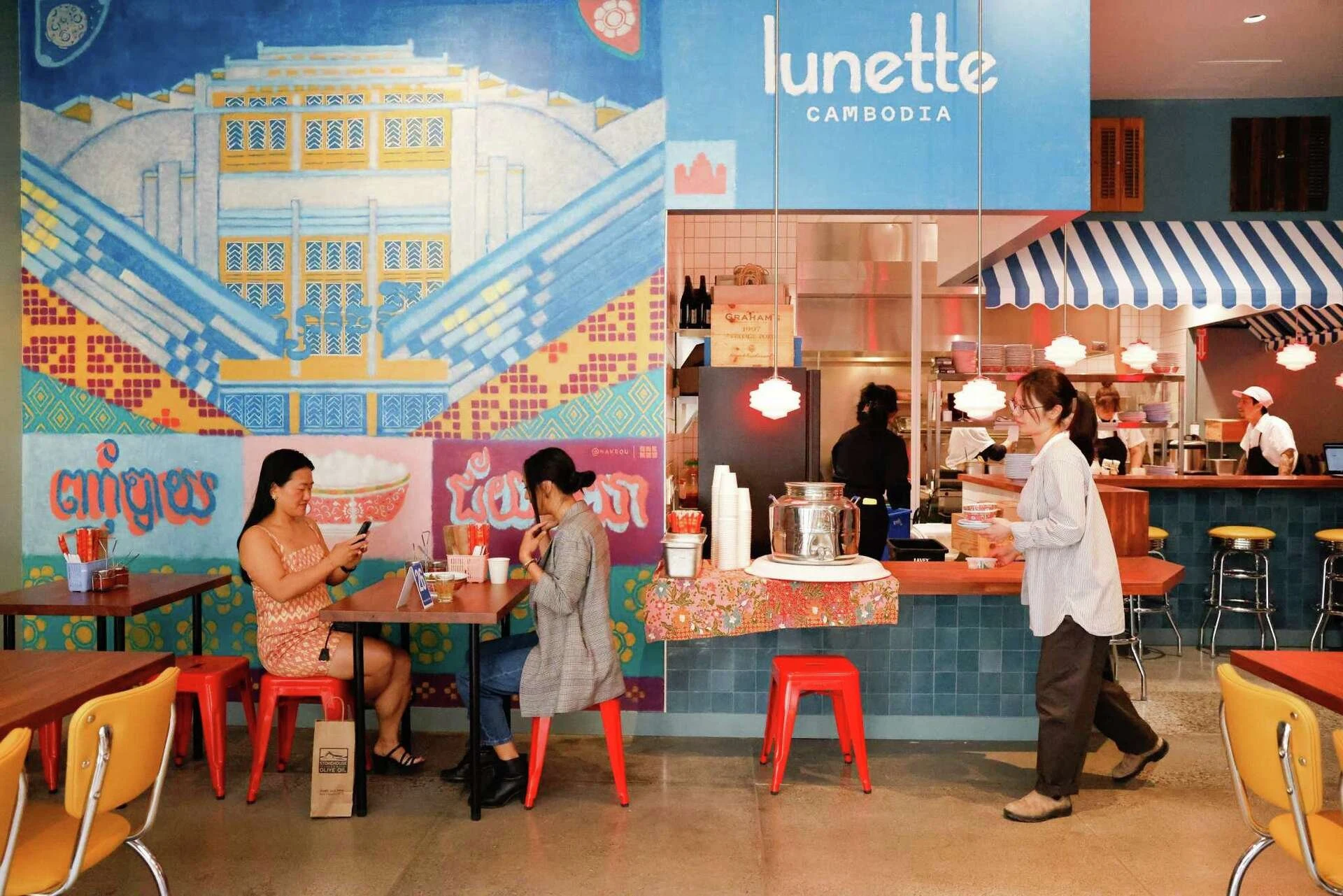
The physical space sets the tone before the food arrives. Artist Nak Bou's mural spans the dining room wall, rendering Phnom Penh's Central Market, the art deco dome, the crowded stalls, the particular quality of Southeast Asian market light, in a way that anchors the cooking geographically and culturally. It is not decorative in the generic sense; it functions as a provenance statement, connecting what arrives on the plate to a specific culinary tradition that predates any contemporary restaurant trend. In a marketplace where visual identity often defaults to reclaimed wood and chalkboard menus, the mural is a more deliberate form of placemaking.
Cambodian Cooking and the Sourcing Question
Southeast Asian cuisines have historically been underrepresented at the level of ingredient-focused fine dining in the United States. The dominant model for serious, produce-driven restaurants in San Francisco, places like Saison, Lazy Bear, or Atelier Crenn, has tended to center European or Japanese frameworks when it comes to treating sourcing as the primary narrative. What Lunette does, positioned inside one of California's most produce-conscious marketplaces, is apply the same seriousness of sourcing to a Cambodian idiom.
Cambodian cooking is built around a set of aromatic foundations, kaffir lime leaf, galangal, lemongrass, fermented fish paste, that reward the same attention to provenance that Bay Area kitchens have long applied to heritage tomatoes or dry-aged beef. The cuisine's reliance on fermentation and slow-developed complexity means that ingredient quality is not incidental; it determines whether the underlying flavor architecture holds. Placing a Cambodian counter inside the Ferry Building, surrounded by the Bay Area's density of specialty producers, creates conditions where that attention to sourcing can actually be realized.
For context, the broader American conversation about ingredient-driven cooking at restaurants like Blue Hill at Stone Barns in Tarrytown, Single Thread Farm in Healdsburg, or The French Laundry in Napa has almost exclusively centered Western culinary traditions. Lunette operates within that same geography of seriousness, the Ferry Building, after all, is not a casual food hall, while drawing on a tradition that has been largely absent from that conversation.
What Nyum Bai Established, and What Lunette Continues
The lineage matters here. Nyum Bai, which operated in Oakland until its closure in 2022, established Nite Yun's Cambodian cooking as a serious force in Bay Area dining, earning recognition that placed it well outside the tier of ethnic-cuisine-as-value-proposition. When a restaurant of that standing closes, the question of what follows is not simply about filling a vacancy; it is about whether the culinary case it made survives. Lunette, operating from the Ferry Building counter format, continues that case in a different register.
The counter-and-small-dining-room format is a meaningful choice in this context. Across American fine dining, from Atomix in New York City to Benu in San Francisco's SoMa neighborhood, the counter format has become associated with a particular kind of precision and intentionality. At Lunette, the format suits a cooking tradition where small plates, shared dishes, and sequential flavors are already native to the cuisine rather than borrowed from a tasting-menu convention.
Placing Lunette in San Francisco's Dining Conversation
San Francisco's most discussed restaurants tend to cluster around a few recognizable formats: the modernist tasting menu (Quince, Atelier Crenn), the fire-and-produce-focused American kitchen (Saison, Lazy Bear), and the Asian-inflected fine dining counter (Benu). These are the formats that have historically drawn the city's critical attention and its highest-spending diners.
Lunette does not sit neatly inside any of those brackets. It is closer in price and ambition to a serious neighborhood restaurant than to the $$$$ tier occupied by the venues above, which puts it in a different competitive conversation, one that includes the Southeast Asian and South Asian restaurants that have quietly built serious followings in the Bay Area without the benefit of Michelin spotlights or major-publication feature coverage. In a city where the dining conversation can narrow quickly around a small set of celebrated formats, that positioning is worth noting: Lunette makes an argument for Cambodian cooking as a primary cuisine, not a supporting act.
For readers building a broader picture of American regional cooking with real sourcing ambitions, the comparison set extends nationally. Providence in Los Angeles and Addison in San Diego represent the Southern California end of produce-driven fine dining; Smyth in Chicago, Frasca Food and Wine in Boulder, Emeril's in New Orleans, and The Inn at Little Washington represent the range across other regions. Le Bernardin in New York City and Atelier Moessmer Norbert Niederkofler in Brunico represent the international axis of ingredient-first cooking. What Lunette contributes to that conversation is a Cambodian culinary tradition applied with the same sourcing seriousness that defines the American end of this list.
Planning a Visit
Lunette is located at Suite 33/47 within the Ferry Building at 1 Ferry Building, San Francisco, the marketplace on the Embarcadero waterfront, accessible by ferry from the East Bay and Marin, by BART to Embarcadero station, and by the F-Market streetcar. The Ferry Building draws heavy foot traffic on Saturday mornings during the farmers' market, when the building operates at its most kinetic; visiting midweek or at a quieter hour allows more considered attention to the food. Given the counter format and limited seating, arriving with a plan rather than on speculation is advisable. Lunette is walk-in friendly.
Questions
Frequently asked
Who works at Lunette?
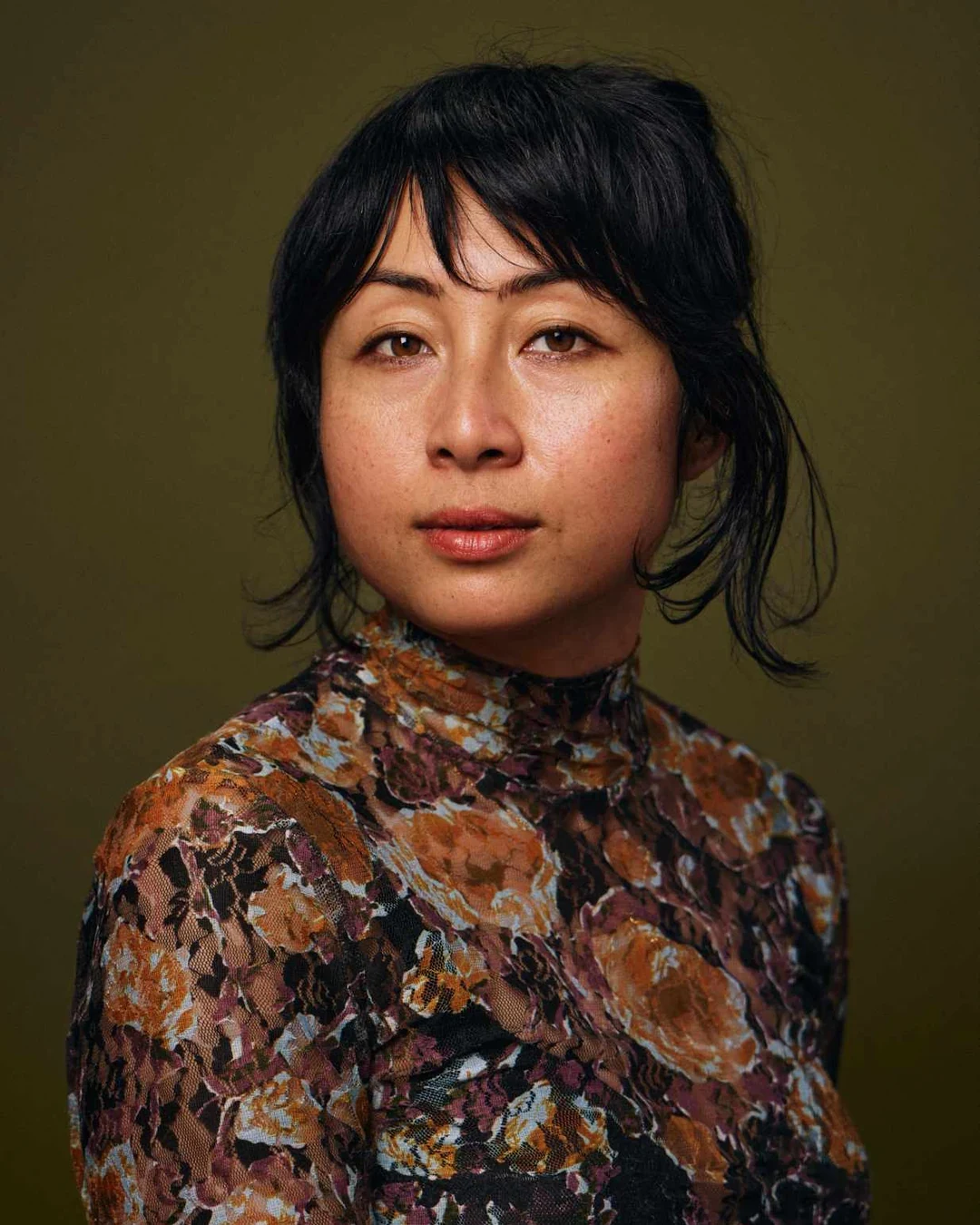
Made By profiles Nite Yun (Chef) at Lunette.
How expensive is Lunette?
Lunette is listed at a price level of $$.
Where is Lunette and what does it serve?
Lunette is in Financial District/South Beach, San Francisco, serving Cambodian Noodles & Rice.
The field
How it compares
| Place | Cuisine | Notes | Awards |
|---|---|---|---|
| Lunette | Cambodian Noodles & Rice | Financial District/South Beach, $$ | · |
| Atelier Crenn | Contemporary French Fine Dining | San Francisco | Michelin 3 Stars, World's 50 Best |
| Benu | Modern Asian Fusion Fine Dining | San Francisco | Michelin 3 Stars, World's 50 Best |
| Lazy Bear | Modern American Tasting Menu | San Francisco | Michelin 2 Stars, World's 50 Best |
| Quince | Modern French Fine Dining | San Francisco | Michelin 3 Stars, World's 50 Best |
| Saison | Modern Fire-Forward Fine Dining | San Francisco | Michelin 2 Stars, World's 50 Best |
| Sons & Daughters | New Nordic Fine Dining | San Francisco | Michelin 2 Stars, World's 50 Best |
In residence
Similar places
Contemporary French Fine Dining
Atelier Crenn
San Francisco, United States
★★★ · 50 Best
Modern Asian Fusion Fine Dining
Benu
San Francisco, United States
★★★ · 50 Best
Modern American Tasting Menu
Lazy Bear
San Francisco, United States
★★ · 50 Best
Modern French Fine Dining
Quince
San Francisco, United States
★★★ · 50 Best
Modern Fire-Forward Fine Dining
Saison
San Francisco, United States
★★ · 50 Best
New Nordic Fine Dining
Sons & Daughters
San Francisco, United States
★★ · 50 Best