- 2 Michelin Keys · Michelin Guide
- Relais Chateaux Award · 2026
- Relais Chateaux Award · 2025
- Michelin 2 Keys · 2025
- Michelin 2 Keys · 2024
Where the Architecture Is the Argument
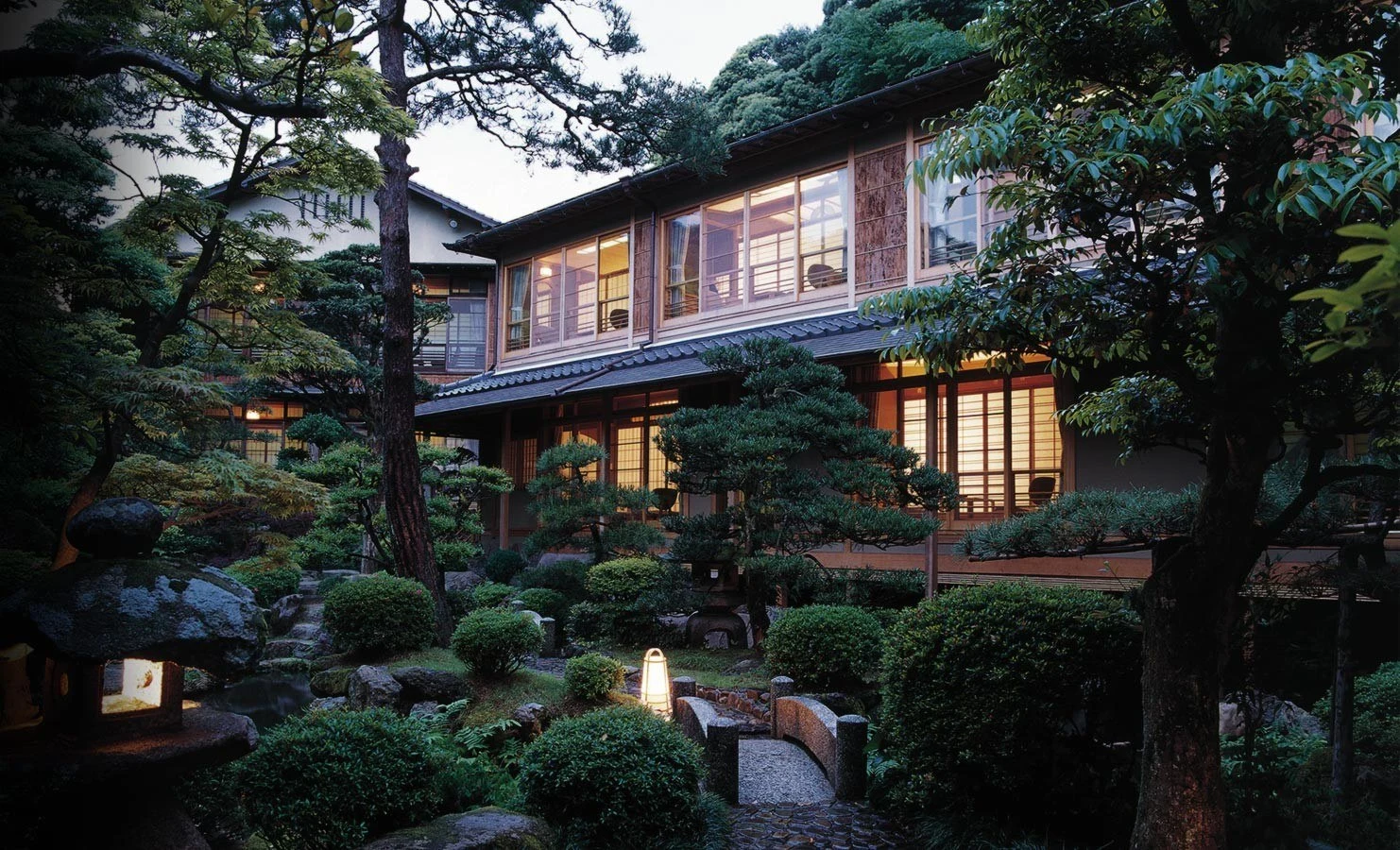
The traditional Japanese ryokan is among the most disciplined built environments in the world. Every spatial decision, the depth of an engawa veranda, the grain direction of tatami mat weave, the ratio of shoji screen to garden view, answers to a centuries-old logic of restorative design. Nishimuraya Honkan, positioned at the upstream end of Kinosaki's central strip near the gate of a local temple, inhabits that logic without apology. There are no Western-style rooms here, no rooms with beds for guests who want the aesthetic without the commitment. All 29 rooms are tatami-only, which means sleeping at floor level on futon laid across woven rush, the ceiling proportioned for a seated human rather than a standing one. That choice is architectural as much as it is cultural: it establishes a consistent spatial register throughout the property that most contemporary ryokan, hedging toward international guests, no longer maintain.
The Physical Language of a Honkan
The term honkan designates the main building of a multi-structure inn, and Nishimuraya uses the word deliberately. The property carries seven generations of family ownership, a lineage that spans well over a century of continuous operation at this address in Kinosaki-cho, Hyogo Prefecture. That kind of tenure produces a particular relationship between a building and its landscape: the gardens have had time to mature, the timber has aged into its patina, and the spatial sequences between room, corridor, garden, and bath have been refined through accumulated observation rather than designed in a single planning cycle.
Structural approach aligns Nishimuraya Honkan with a specific tier of Japanese inn, those where the physical envelope is itself the primary offering, rather than a backdrop for amenities. Comparable properties in this category include Asaba in Izu, Gora Kadan in Hakone, and Araya Totoan in Kaga, properties where the room itself, its proportions and its relationship to the outside, does most of the work that a spa wing or a destination restaurant might do elsewhere. Michelin awarded Nishimuraya Honkan 2 Keys in 2024.
Onsen as Infrastructure
Kinosaki Onsen is among the most coherent hot-spring towns remaining in Japan. Its seven public bathhouses, spaced along a willow-lined canal through the town center, function as shared civic infrastructure: guests from every inn receive a yukata robe and wooden geta sandals at check-in and circulate between baths on foot through the evening, which gives the town a theatrical quality that purpose-built resort onsen towns rarely achieve. Nishimuraya Honkan is located roughly two kilometers from JR Kinosaki Onsen Station, at the quieter northern end of the village near the temple approach, which positions it at a remove from the heaviest foot traffic while remaining within easy walking distance of the public bath circuit.
The property maintains its own internal baths, and a selection of rooms includes private open-air baths, rotenburo, that look out over garden plantings. The layering of private, semi-private, and public bathing options across a single stay is a structural feature of Kinosaki that distinguishes it from onsen destinations where guests remain within a single enclosed resort. Amanemu in Mie and ENOWA Yufu in Yufu both offer immaculate private onsen experiences within contained properties; Kinosaki's model is intentionally outward-facing, and Nishimuraya's location supports that pattern.
In-Room Kaiseki and the Dining Architecture
In the kaiseki ryokan tradition, dinner does not happen in a restaurant. It happens in the room, served across a sequence of courses by a dedicated attendant, the meal timed to the rhythm of the guest's bathing schedule rather than a restaurant's service turns. This is not simply a logistical arrangement; it is a spatial and temporal design decision that integrates eating, bathing, and rest into a single continuous experience rather than separating them into discrete programmed activities.
Kaiseki itself follows a compositional structure, sakizuke, hassun, yakimono, and so on, that mirrors the architectural discipline of the room it is served in. Both are built from restraint, seasonal specificity, and accumulated technique. Hyogo Prefecture's proximity to the Sea of Japan means the ingredient palette at Kinosaki ryokan leans heavily on seafood, with winter months bringing matsuba gani (snow crab) from the San'in coast, a seasonal draw that concentrates high-occupancy demand between November and March.
For guests arriving from the major cities, the access logistics are deliberate: Kinosaki sits approximately two and a half hours from both Kyoto and Osaka by limited express train on the JR Kinosaki line, a journey that frames the arrival as a transition rather than a commute. The distance from urban density is part of the design. Those driving from Osaka or Kobe can reach the town via the Chugoku, Maizuru-Wakasa, and Kitakinki-Toyooka expressways. Kounotori Tajima Airport is 20 kilometers away for domestic connections.
Where Nishimuraya Sits in the Broader Ryokan Field
Japan's premium ryokan market has stratified considerably over the past two decades. At one end are contemporary properties that use traditional vocabulary, low furniture, natural materials, in-room dining, while introducing design-forward aesthetics and international-facing service protocols. Zaborin in Kutchan, Fufu Kawaguchiko, and BYAKU Narai in Narai each occupy variations of that contemporary tier. At the other end are properties whose authority derives from continuity, buildings, families, and practices that have remained in place long enough to constitute a living archive of how the form was meant to work.
Nishimuraya Honkan belongs unambiguously to the second category. Its guest experience is built on execution of a known and ancient template rather than on novelty. The property is not trying to reinterpret the ryokan; it is trying to maintain it at a level of craft that makes the original case for why the form persisted. Rates from US$484 per night place it within Japan's serious ryokan tier, below the ceiling set by properties like Sekitei in Hatsukaichi-shi or Beniya Kofuyuden in Awara, but comfortably within the range where tatami rooms, kaiseki service, and multi-bath access are delivered without compromise.
HOTEL THE MITSUI KYOTO before or after the Kinosaki leg. Urban counterpoints at the luxury end of the Tokyo spectrum, such as Bvlgari Hotel Tokyo, offer a useful measure of how far the two ends of Japanese hospitality have diverged, and why the older model retains its own specific gravity.
Azumi Setoda in Onomichi, Bettei Otozure in Nagato, Benesse House in Naoshima, Atami Izusan Karaku in Atami, Fufu Nikko, Bettei Senjuan in Minakami, Halekulani Okinawa, Jusandi in Ishigaki, and ANA InterContinental Beppu Resort & Spa. For international reference points at the luxury end, Aman New York, Aman Venice, and The Fifth Avenue Hotel in New York City represent how comparable commitments to spatial discipline translate in entirely different cultural contexts.
Planning Notes
The property operates 29 rooms across an all-tatami format. Rates start from US$484 per night. The nearest train access is JR Kinosaki Onsen Station, approximately two kilometers from the property.
Questions
Frequently asked
What recognition does Nishimuraya Honkan hold?
Nishimuraya Honkan holds 2 Michelin keys.
Who works at Nishimuraya Honkan?
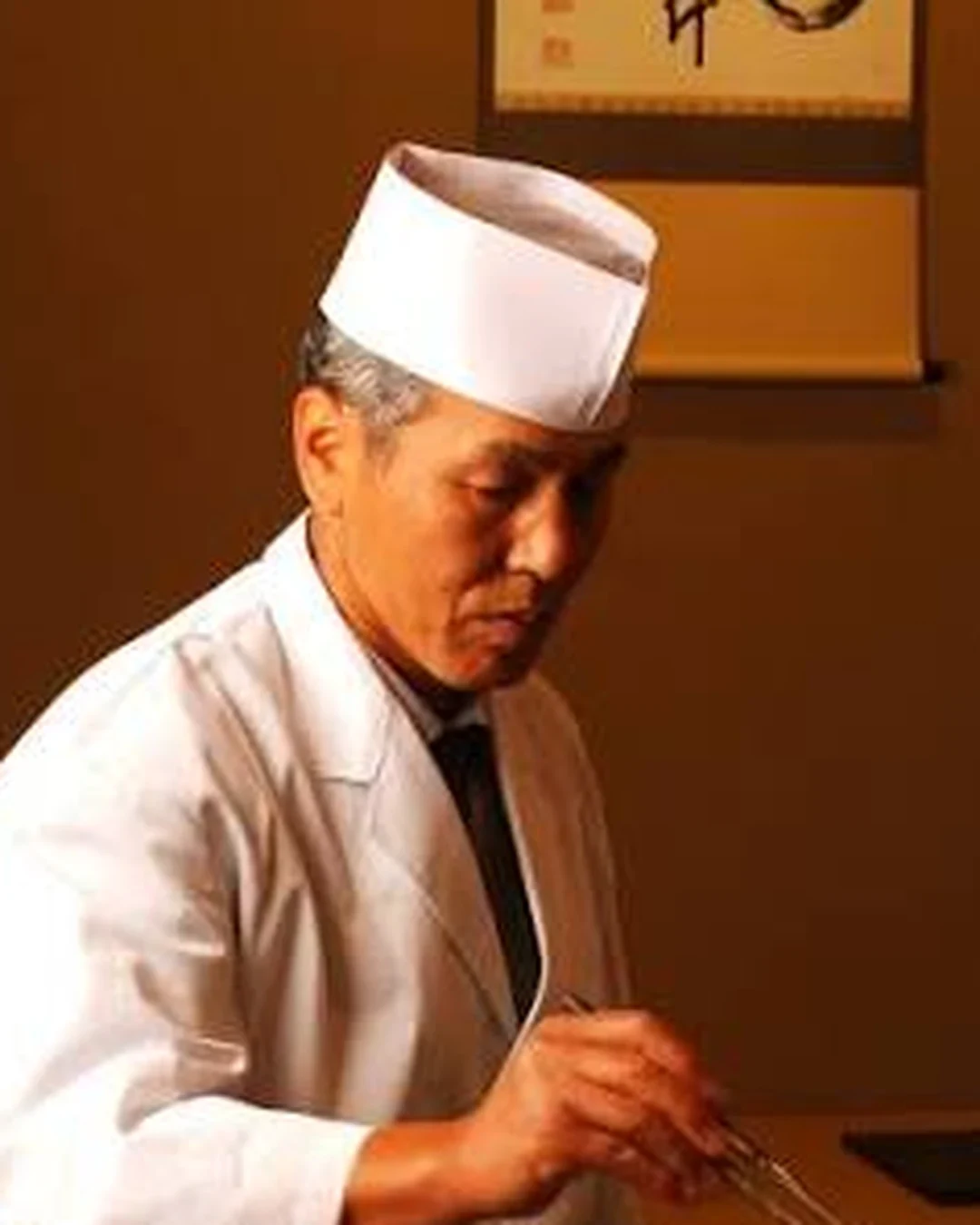
Made By profiles Etsunobu Takahashi (Chef) at Nishimuraya Honkan.
How expensive is Nishimuraya Honkan?
Nishimuraya Honkan is listed at a price level of $$$$.
The field
How it compares
| Place | Awards | Notes |
|---|---|---|
| Nishimuraya Honkan | Michelin 2 Keys | Kinosaki Onsen, $$$$ |
| Aman Tokyo | Michelin 2 Keys, World's 50 Best | Tokyo |
| Cap Rocat | Michelin 2 Keys | Cala Blava |
| Hotel Esencia | Michelin 3 Keys, World's 50 Best | Tulum |
| Il Pellicano | Michelin 1 Key, World's 50 Best | Porto Ercole |
| Mandarin Oriental Bangkok | Michelin 3 Keys, World's 50 Best | Bangkok |
| Ritz Paris | Michelin 3 Keys | Paris |