Ping’s Seafood
In Residence
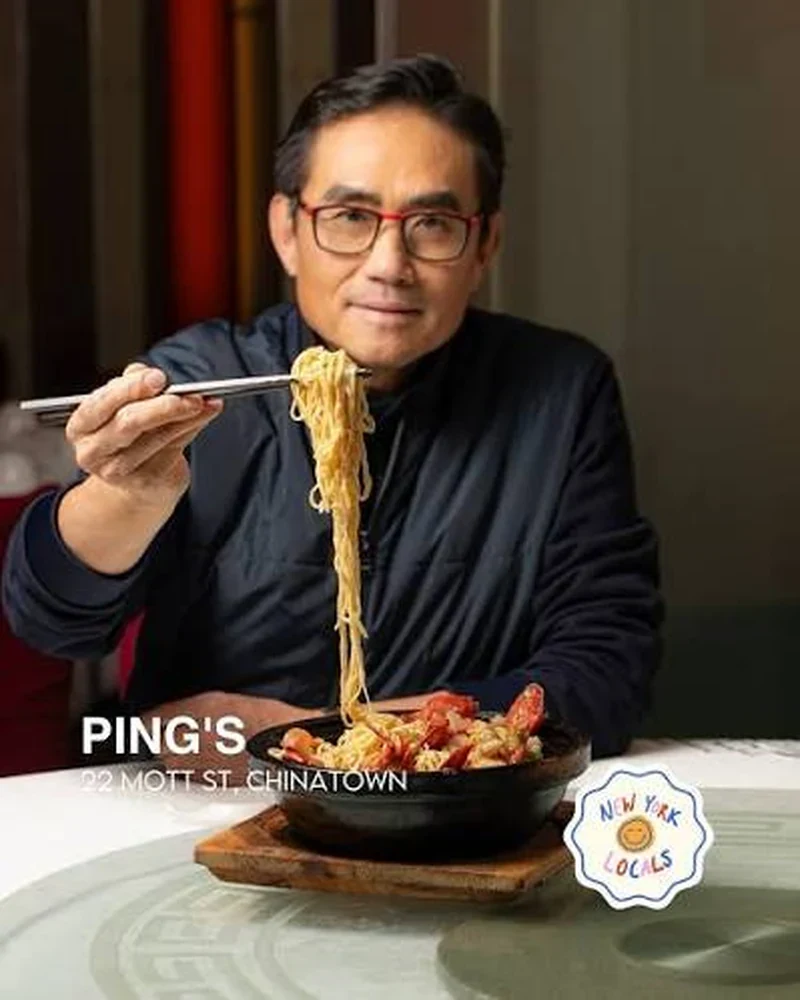
Ping Hui
Chef
- 01CuisineCantonese Dim Sum & Seafood
- 02CityNew York City, United States
From the people index
Recommended by
One trusted voice points here.
- Opinionated About Dining Casual in North America Recommended · 2026
- Opinionated About Dining Casual in North America Ranked #300 · 2024
- Opinionated About Dining Casual in North America Highly Recommended · 2023
Mott Street and the Cantonese Seafood Tradition
Chinatown's seafood houses occupy a specific tier in New York's Chinese dining scene, one that prioritises live-tank sourcing, high-heat wok technique, and communal portions over tasting menus or theatrical presentation. That tradition runs through Mott Street as directly as anywhere in the city, and Ping's Seafood at number 22 has been part of that fabric for long enough to become a reference point for the block. Where many Chinatown operators cycle in and out within a few years, sustained presence on Mott Street signals a kitchen that has held its standard across multiple generations of diners.
Cantonese seafood cooking in this part of Manhattan sits in a different competitive set than the fine-dining seafood houses further uptown. Le Bernardin prices its fish against French technique and white-tablecloth expectations. Here, the benchmark is biological freshness, what came out of the tank that morning, how well the kitchen steamed it, whether the ginger and scallion were cut to order. Those are not lesser criteria; they are different ones, and diners who apply the wrong framework to either venue will misjudge both.
Recognition in Context
Opinionated About Dining is one of the few rating systems that takes the casual end of the spectrum as seriously as the tasting-menu tier. An OAD Casual North America ranking of #300 in 2024, following a Highly Recommended designation in 2023, places Ping's Seafood inside a curated comparable set that the guide's surveyed critics and frequent diners consider worth tracking. That consecutive recognition signals consistency rather than a single strong year, which in Chinatown's competitive environment carries real weight.
A 4.3-star average from 1,729 Google reviews adds a different kind of evidence: volume. It is harder to maintain a stable rating across that many submissions than across a few dozen, and the figure suggests the kitchen's output does not vary dramatically between a slow Tuesday lunch and a packed Saturday dim sum service. For a Cantonese seafood house operating across a seven-day week, that consistency is an operational achievement as much as a culinary one.
Chinatown's best-regarded Chinese tables include Big Wong on Mott and Blue Willow nearby, both of which draw on similar traditions of accessible, technique-led Chinese cooking. Alley 41 and Asian Jewel Seafood Restaurant occupy overlapping territory in the seafood-forward tier, while Chongqing Lao Zao represents a different regional tradition entirely. Ping's sits squarely in the Cantonese live-seafood category within that broader map.
Sourcing, Seafood, and the Sustainability Question
The sustainability credentials of live-tank Cantonese seafood restaurants are more complicated than they first appear, and worth addressing directly. On one hand, the live-tank model is among the most transparent sourcing formats available in a restaurant context: the diner can see the product before it is cooked, and there is no supply-chain obscurity between ocean and table. On the other hand, certain species that have historically appeared on Cantonese seafood menus, particular varieties of grouper, geoduck, and imported shellfish, carry significant traceability concerns.
Chinatown's seafood-focused operators increasingly deal with these pressures from two directions: regulatory scrutiny on imported species and growing diner awareness of overfishing in regional and Pacific fisheries. Kitchens that have been on the same block for years tend to have established supplier relationships that, for better or worse, are harder to shift than those of newer operators. The more productive question for a diner with environmental priorities is not whether a Cantonese seafood house is pursuing formal sustainability certification, most are not, but whether the kitchen is responsive to supply questions and willing to indicate provenance when asked.
This is a category-wide tension in traditional Chinese seafood cooking, visible not just in New York but in comparable Chinatown contexts in San Francisco and Los Angeles. Mister Jiu's in San Francisco has addressed it by building a hybrid identity that incorporates Californian sourcing philosophy into a Chinese-American framework. That approach works at a certain price point and audience profile; it is a different proposition than a Mott Street seafood house operating across a broad community dining base. Neither approach is the default correct one. They solve different problems for different diners.
For diners whose choices are guided by sourcing ethics, the practical steps are consistent regardless of the venue: ask what is in season and locally available, favour shellfish and finfish with shorter supply chains over imported luxury species, and treat the live tank as an opportunity for specificity rather than spectacle. A kitchen that engages those questions seriously is worth returning to. One that cannot answer them at all tells you something different.
What to Expect at the Table
Cantonese seafood cooking at this level is built on a small number of techniques applied with precision: steaming whole fish over aromatics, stir-frying shellfish with fermented black bean or XO sauce, deep-frying soft-shell preparations until the exterior is crisp without overcooking the interior. The format at Ping's reflects the Mott Street tradition, larger dishes designed for sharing, a menu that follows the live-tank inventory rather than a fixed printed card, and pricing that keeps the room accessible.
Chef Ping Hui oversees the kitchen, suggesting the operation has stability in leadership and technique. Within the context of comparable Chinese-American operators, that tenure provides editorial confidence in a way that newer openings cannot match by definition. The weekend hours, Saturday and Sunday opening at 10am, reflect a dim sum or brunch-adjacent service pattern that has been part of Chinatown's weekend rhythm for decades.
Placing Ping's in the Wider Seafood Conversation
New York's premium seafood conversation spans a wide range of approaches. The tasting-menu tier operates on entirely different assumptions about price, format, and occasion. Ping's does not compete in that tier and should not be evaluated against it. The relevant comparable set is the OAD Casual list, the Chinatown seafood block, and the community of diners who treat a well-executed steamed fish as the serious thing it is.
Chinese seafood cooking has found thoughtful interpreters elsewhere, Restaurant Tim Raue in Berlin applies Chinese flavour principles at a fine-dining register, but the Mott Street model serves a different function. It keeps a culinary tradition accessible to the community that built it, at price points that do not require the occasion to be exceptional to justify the visit. That function is not a consolation for the absence of Michelin stars; it is a different kind of value entirely.
The Sunday letter
Get new places like Ping’s Seafood every Sunday.
One email a week with the restaurants, bars and hotels we have just written up, and the people who run them.
One email a week. Unsubscribe from any issue.
Questions
Frequently asked
Who works at Ping’s Seafood?
Made By profiles Ping Hui (Chef) at Ping’s Seafood.
How expensive is Ping’s Seafood?
Ping’s Seafood is listed at a price level of $$$.
Where is Ping’s Seafood and what does it serve?
Ping’s Seafood is in Chinatown-Two Bridges, New York City, serving Cantonese Dim Sum & Seafood.
The field
How it compares
| Place | Cuisine | Notes | Awards |
|---|---|---|---|
| Ping’s Seafood | Cantonese Dim Sum & Seafood | Chinatown-Two Bridges, $$$ | · |
| Atomix | Modern Korean Tasting Menu | New York City | Michelin 2 Stars, World's 50 Best |
| Daniel | Modern French Fine Dining | New York City | Michelin 1 Star, World's 50 Best |
| Eleven Madison Park | Contemporary Plant-Based Fine Dining | New York City | Michelin 3 Stars, World's 50 Best |
| Jungsik New York | Modern Korean Fine Dining | New York City | Michelin 3 Stars, World's 50 Best |
| Kabawa | Modern Caribbean Prix Fixe | New York City | World's 50 Best |
| Le Bernardin | French Seafood Fine Dining | New York City | Michelin 3 Stars, World's 50 Best |
In residence
Similar places
Modern Korean Tasting Menu
Atomix
New York City, United States
★★ · 50 Best
Modern French Fine Dining
Daniel
New York City, United States
★ · 50 Best
Contemporary Plant-Based Fine Dining
Eleven Madison Park
New York City, United States
★★★ · 50 Best
Modern Korean Fine Dining
Jungsik New York
New York City, United States
★★★ · 50 Best
Modern Caribbean Prix Fixe
Kabawa
New York City, United States
50 Best
French Seafood Fine Dining
Le Bernardin
New York City, United States
★★★ · 50 Best
The Sunday letter
Get the next Made By story in your inbox.
We send one email every Sunday morning with the places and people we covered that week.
One email a week. Unsubscribe from any issue.