Realm
- 01CuisineSeychelles-Inspired Fusion Rooftop Lounge
- 02CityWashington DC, United States
Cellar judgment above the pass
A winegrowing brief above Shaw
The kitchen decisions begin with the route the flavours travelled. Chef Keem Hugley, formerly of Bronze, leads the culinary program at Realm in Shaw, Washington DC, a rooftop room built for shareable plates and cocktails. He blends French technique with Indian Ocean flavour, Seychellois Creole cooking in particular, and oversees food and bar together rather than as separate departments. The house opened in late 2025 above the former Cambria Hotel, founded by a team of DC natives led by Evens Charles of Frontier Development & Hospitality Group, and it is that group’s first hotel project in the city.
That matters in a place where the food moves across Seychelles, French, and Indian references rather than a single classical lane. Afrofuturism is the stated frame, and the menu reads it through ocean trading routes rather than through pastiche: music, fragrance, and flavour treated as one inheritance. The rooftop itself was an underused space, a swimming pool and a fitness room, before the conversion. A glass should not flatten the plate. It should give it a frame.
Curry leaf, tamarind, coconut, acid
The menu asks for a beverage program with edge, not weight. Island Oysters arrive with coconut-lime-ginger mignonette; Tamarind-Glazed Lamb Lollipops carry sweetness and acid; Coconut Crab Cakes bring mango-tamarind chutney; Curry Mussels and Ginger-Lemongrass Chicken Skewers pull the table toward spice, steam, and citrus. Those are not neutral flavors. They need lift, texture, and clean finish, especially when plates move across the table instead of in courses.
Realm’s stated wine program is curated, and the bar leans toward cocktails, tropical spirits, fresh spices, and fruit. Natural wine nights give the cellar another register, less formal than a pairing sequence and better suited to the room’s small-plate rhythm. The grammar on that side of the house is the same one the kitchen uses: acidity as structure, fruit as information, spice as judgment. Repetition is not ornament here either. It is how a selection learns to cut.
The room after the pass changes pace
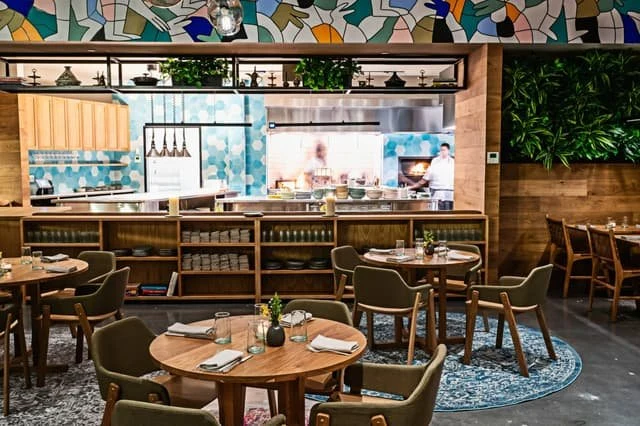
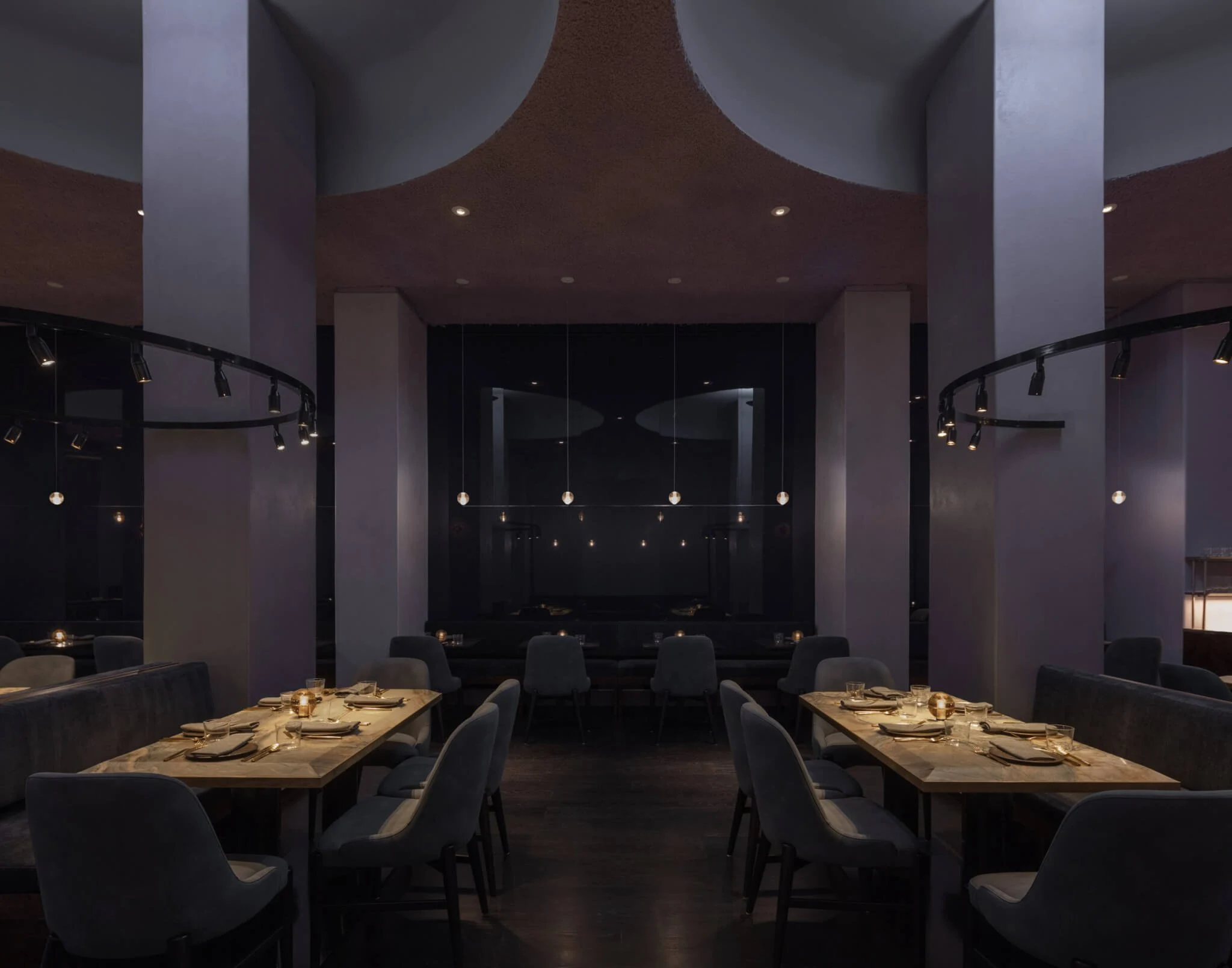
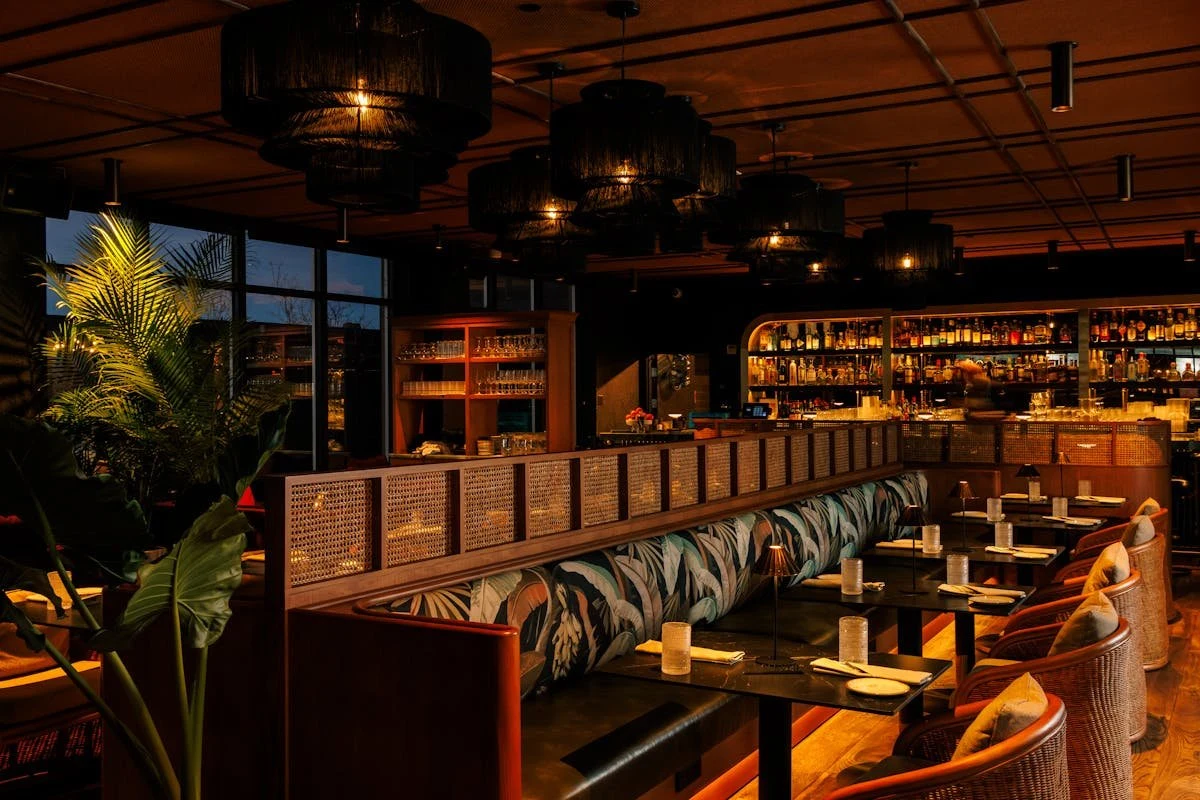
The room sits above Shaw with the city held at a distance, not hidden from it. Indoors, the seating keeps a lounge polish; outside, the patio opens around fire pits and the skyline. The pass sends food meant to be taken by hand, split, returned to, argued over lightly. Oysters, skewers, fries, mussels, lamb. The counterpoint comes from the glass and the bar, where tropical notes have to stay vivid without turning heavy.
As dinner gives way to a louder night, the discipline becomes harder to see and more important. A rooftop can let view do too much of the work. Realm’s better argument is in the sequence between coconut-lime-ginger mignonette, tamarind glaze, curry leaf, and whatever the bar allows into the glass beside them. End the night there, with the fire pits behind a plate of Tamarind-Glazed Lamb Lollipops.
Questions
Frequently asked
Who leads the kitchen at Realm?
Chef Keem Hugley leads the culinary program at Realm in Shaw, Washington, DC. He was formerly of Bronze, and he oversees both the food and bar programs rather than treating them as separate departments.
What kind of place is Realm?
Realm is a rooftop restaurant and lounge in Shaw with a focus on shareable plates and cocktails. The cooking blends French technique with Indian Ocean flavour, especially Seychellois Creole cooking, and the room is framed by Afrofuturism in the menu and drinks.
What does the menu lean toward?
The menu centres on shareable plates built around seafood, chicken, and lamb, with dishes such as Island Oysters, Tamarind-Glazed Lamb Lollipops, Coconut Crab Cakes, Curry Mussels, and Ginger-Lemongrass Chicken Skewers. The bar programme leans toward cocktails, tropical spirits, fresh spices, fruit, and a curated wine list.
What is the setting like?
Realm sits above Shaw in the former Cambria Hotel, with indoor lounge seating and a patio with fire pits and views of the skyline. The rooftop had previously been an underused space with a swimming pool and a fitness room before it was converted.
Do I need a reservation, and is there a dress code?
Reservations are recommended at Realm. The dress code is smart casual.
The field
How it compares
| Place | Cuisine | Notes | Awards |
|---|---|---|---|
| Realm | Seychelles-Inspired Fusion Rooftop Lounge | Shaw, $$$ | · |
| Albi | Modern Levantine Fine Dining | Washington DC | Michelin 1 Star, World's 50 Best |
| Dōgon | Modern Afro-Caribbean | Washington DC | World's 50 Best |
| Jônt | Modern Japanese Fine Dining | Washington DC | Michelin 2 Stars |
| minibar | Avant-Garde Molecular Gastronomy | Washington DC | Michelin 2 Stars |
| Moon Rabbit | Creative Vietnamese-Cajun Fusion | Washington DC | World's 50 Best |
| Oyster Oyster | Modern Vegetable-Focused Tasting Menu | Washington DC | Michelin 1 Star |
Similar places
Modern Levantine Fine Dining
Albi
Washington DC, United States
★ · 50 Best
Modern Afro-Caribbean
Dōgon
Washington DC, United States
50 Best
Modern Japanese Fine Dining
Jônt
Washington DC, United States
★★
Avant-Garde Molecular Gastronomy
minibar
Washington DC, United States
★★
Creative Vietnamese-Cajun Fusion
Moon Rabbit
Washington DC, United States
50 Best
Modern Vegetable-Focused Tasting Menu
Oyster Oyster
Washington DC, United States
★