Sobakiri Karani
- 01CuisineHand-cut Soba Izakaya
- 02CityOsaka, Japan
- Michelin Bib Gourmand · Michelin Guide
- Michelin Bib Gourmand · 2026
- Michelin Bib Gourmand · 2025
- Tabelog 100 #86: 3.6pts · 2025
- Michelin Bib Gourmand · 2024
Soba in Osaka: A Different Set of Rules
Japan's soba conversation defaults quickly to Tokyo. The capital's edo-style thin-cut noodles, served in dashi heavy with katsuobushi, have defined the national reference point for so long that Kansai's quieter buckwheat culture rarely gets equal column space. That asymmetry is worth correcting, because Osaka and its surrounding prefectures approach soba from a distinct set of priorities: lighter, kombu-forward broths, a more relaxed relationship with texture variation, and an appetite for combining noodles with the kind of small, sake-friendly appetisers that would feel out of place in a strict Tokyo soba-ya. Sobakiri Karani, holding a Michelin Bib Gourmand in both 2024 and 2025, operates squarely within that Kansai framework while pushing the format's visual and atmospheric conventions further than most.
What You Walk Into
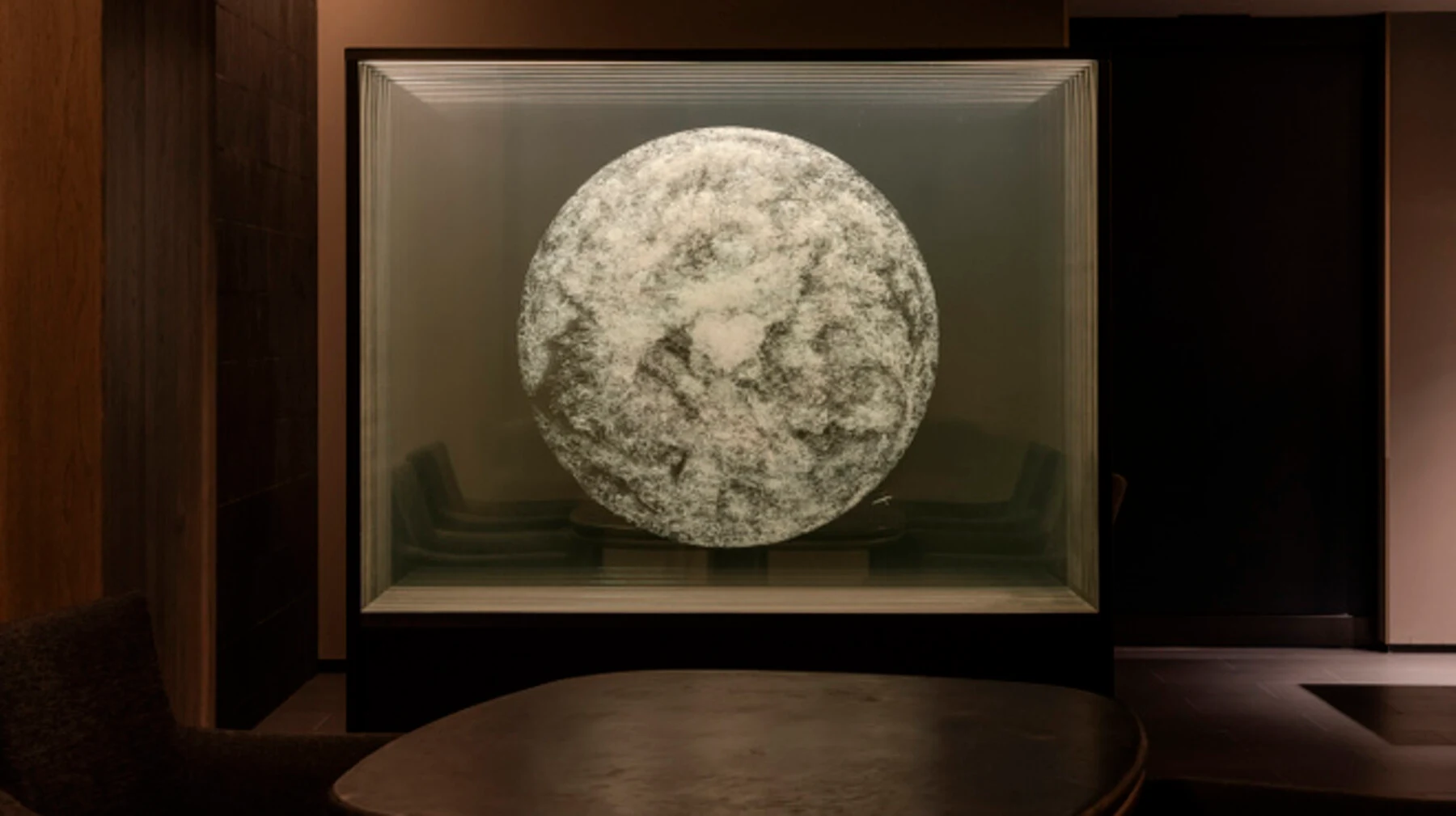
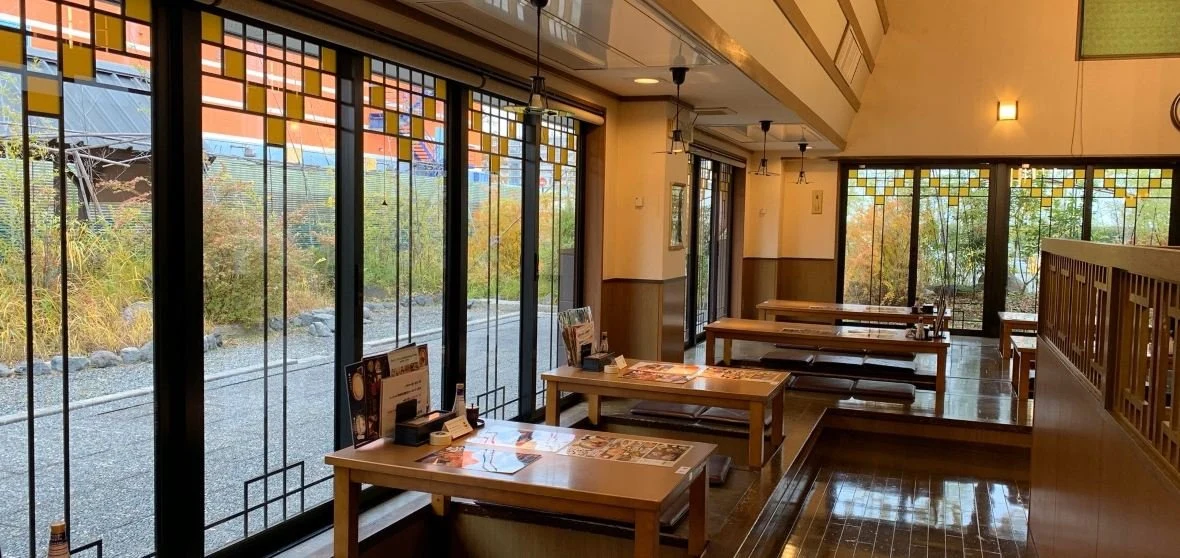
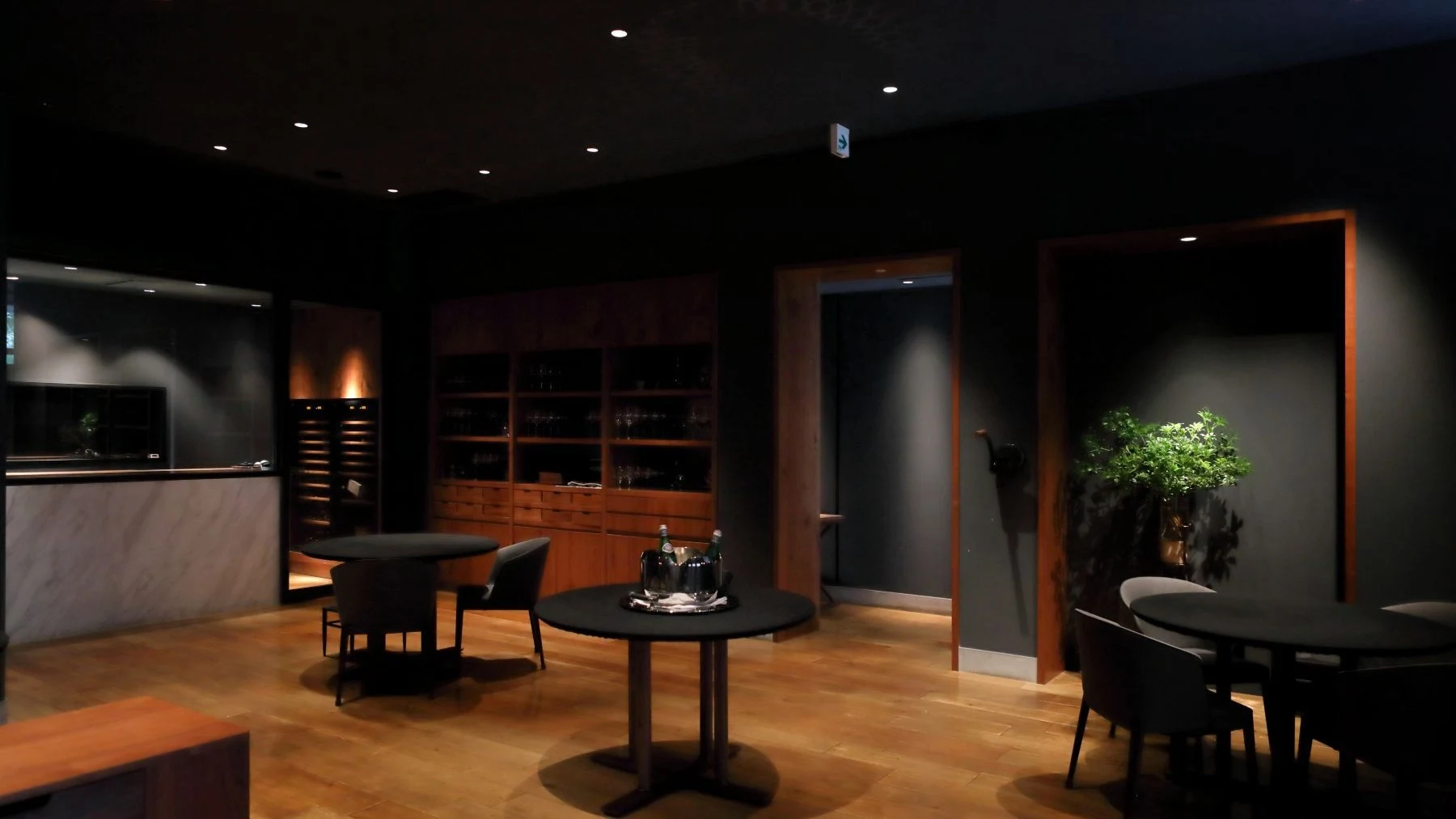
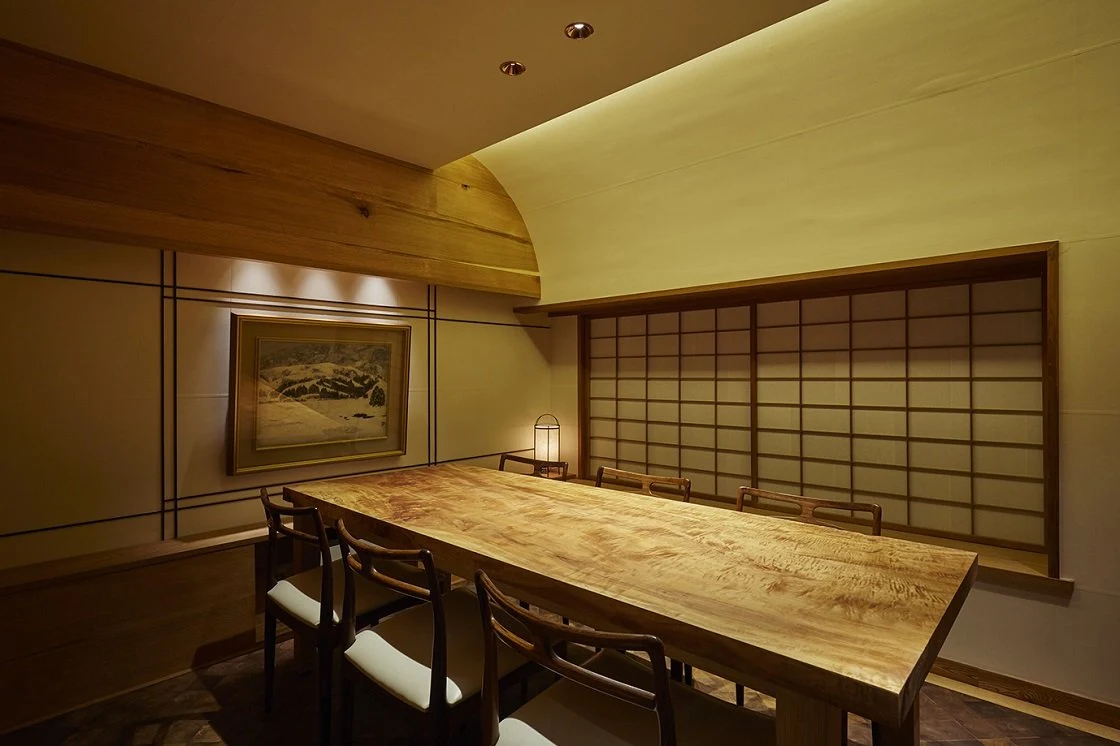
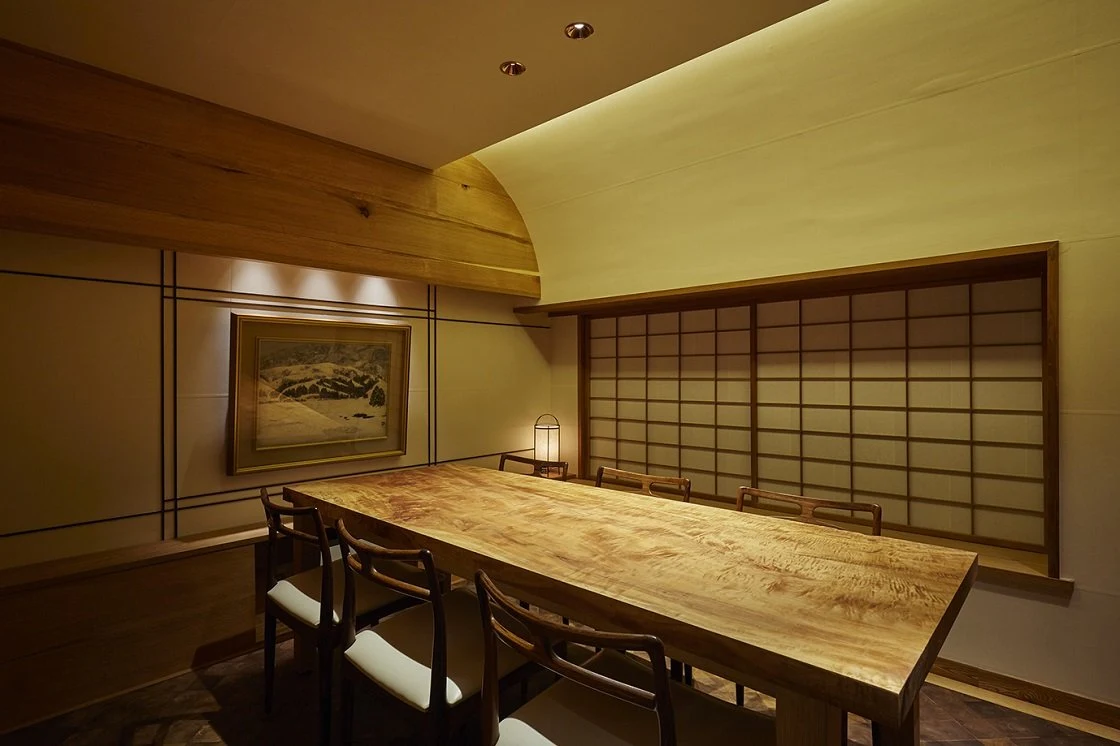
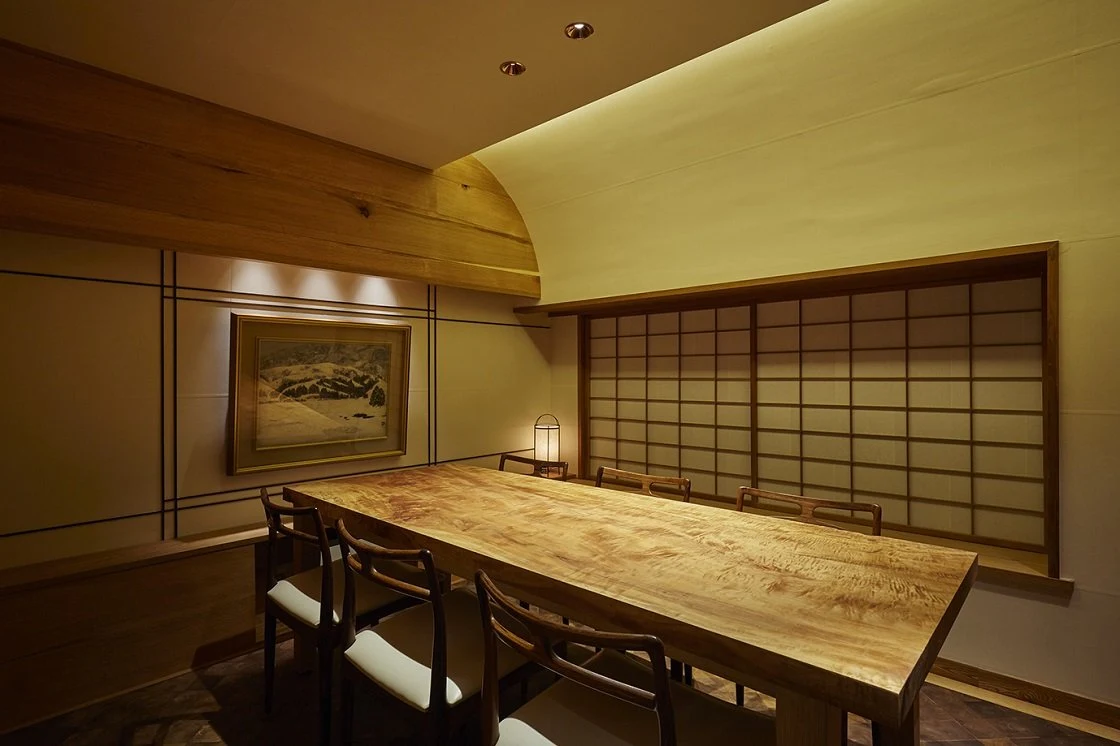
The interior is the first signal that Sobakiri Karani is not working from a standard template. The space was designed in collaboration with a woodworking artist, and the materials are reclaimed timber rather than the smooth, lacquered surfaces that characterize many noodle counters. Large communal tables sit alongside mismatched chairs, and the ceiling carries painted work that reads as deliberately whimsical against the rough-hewn walls. The effect is less the spare, meditative register of a traditional soba-ya and more the convivial atmosphere of a place that expects you to linger, and to order a second round of sake before the noodles arrive.
This matters because atmosphere shapes how a menu is read. In a high-discipline Tokyo soba counter, the noodles are the sole protagonist and everything around them recedes. Here, the room signals that the meal is a longer, more sociable proposition, which prepares the diner correctly for an appetiser list designed with the same care as the buckwheat itself.
The Kansai Approach to Buckwheat
Soba milling and cutting practice varies more than the dish's uniform reputation suggests. Edo-style soba, the dominant Tokyo tradition, favours fine-ground flour and thin, precise cuts, the noodle as a vehicle for clean, immediate flavour. Kansai practice is less codified in the public imagination, which gives kitchens more room to interpret. At Sobakiri Karani, the buckwheat is coarse-ground, and the menu offers both thin and thick cuts. That dual format is an editorial choice as much as a culinary one: it signals that texture and finish are variables worth exploring rather than fixed parameters, and it gives regular visitors a reason to revisit the same dish from a different angle.
Coarse-ground flour produces a noodle with more visible bran, a rougher surface, and a stronger, earthier buckwheat flavour than finely milled versions. The thick cut amplifies that rusticity; the thin cut channels it into something more precise. Neither is wrong, and the coexistence of both on a single menu is less common than the confidence with which Sobakiri Karani presents it.
For context on how Tokyo's soba establishments operate within a tighter stylistic range, Akasaka Sunaba and Azabukawakamian represent the capital's refined, tradition-bound end of the spectrum, useful comparators for understanding what Karani is departing from.
Appetisers as the Opening Argument
The appetiser section at Sobakiri Karani makes the strongest case for the Kansai read of this format. Tofu pickled in unrefined sake (doburoku-style) and a duck-and-onion miso are not incidental additions, they function as an argument that the meal belongs to a sake-drinking tradition as much as a noodle-eating one. This is consistent with how Osaka approaches food more broadly: the city's eating culture prizes conviviality and the steady accumulation of small plates over the austere, single-focus discipline of kaiseki or strict soba protocol.
The unrefined sake pickle is a technique with depth. Doburoku, the cloudy, lightly fermented precursor to refined sake, has a lactic acidity and residual sweetness that penetrates tofu differently than a standard brine would, producing something with more funk and body. The duck-and-onion miso works the same logic in a different direction: fat from the duck, sweetness from the onion, and the fermented depth of miso create a small dish that earns its own attention rather than simply warming the palate for what follows.
Where Karani Sits in Osaka's Dining Map
Fukushima Ward has developed into one of Osaka's more concentrated dining areas over the past decade, with a range of formats from neighbourhood izakaya to small, award-recognised restaurants. Karani's price point, the lowest tier in the city's range, and its Bib Gourmand status place it in a specific position: accessible in cost, recognised for quality, and operating at a scale that keeps the room personal rather than institutional.
Osaka's leading end runs considerably higher. Restaurants like Hajime (French, innovative) and La Cime operate at the ¥¥¥¥ tier with international reputations; kaiseki houses like Naniwa Okina and Ayamedo occupy the ¥¥¥ bracket. Karani's ¥ pricing is not a compromise, the Bib Gourmand recognises exactly this tier, restaurants where value and quality meet without one cancelling the other. Among Osaka's soba options, Soba Takama, Sobadokoro Toki, and Shitennoji Hayauchi offer useful comparisons in style and format.
For those building a broader Kansai itinerary, Gion Sasaki in Kyoto and akordu in Nara represent the region's other reference points across different formats and price tiers. Visitors extending the trip to other cities might cross-reference with Harutaka in Tokyo, Goh in Fukuoka, 1000 in Yokohama, or 6 in Okinawa for a clearer sense of how Japan's regional dining cultures differ at the mid-to-upper price tiers.
Planning Your Visit
Sobakiri Karani is located at 2 Chome-11-26 Sagisu, Fukushima Ward, Osaka. The ¥ price tier makes it one of the more accessible Michelin-recognised addresses in the city. Google reviewers rate it 4.3 across 222 reviews. Hours and booking are straightforward: Mon: 11 AM-2 PM, 5-8:30 PM; Tue: 11 AM-2 PM, 5-8:30 PM; Wed: 11 AM-2 PM; Thu: Closed; Fri: 11 AM-2 PM, 5-8:30 PM; Sat: 11 AM-2 PM, 5-8:30 PM; Sun: 11 AM-2 PM, 5-8:30 PM. Reservations are recommended.
| Venue | Cuisine | Price Tier | Recognition | Ward |
|---|---|---|---|---|
| Sobakiri Karani | Soba | ¥ | Michelin Bib Gourmand 2024, 2025 | Fukushima |
| Soba Takama | Soba | , | , | Osaka |
| Sobadokoro Toki | Soba | , | , | Osaka |
| Shitennoji Hayauchi | Soba | , | , | Tennoji |
Questions
Frequently asked
What recognition does Sobakiri Karani hold?
Sobakiri Karani holds a Michelin Bib Gourmand.
How expensive is Sobakiri Karani?
Sobakiri Karani is listed at a price level of $$.
Where is Sobakiri Karani and what does it serve?
Sobakiri Karani is in Fukushima, Osaka, serving Hand-cut Soba Izakaya.
The field
How it compares
| Place | Cuisine | Notes | Awards |
|---|---|---|---|
| Sobakiri Karani | Hand-cut Soba Izakaya | Fukushima, $$ | · |
| HAJIME | Avant-Garde Japanese Fine Dining | Osaka | Michelin 3 Stars, World's 50 Best |
| Honkogetsu | Traditional Kaiseki | Osaka | · |
| La Cime | Modern French with Japanese Ingredients | Osaka | Michelin 2 Stars, World's 50 Best |
| Numata | Michelin-Starred Tempura Omakase | Osaka | Michelin 2 Stars |
| Sushi Sanshin | Edomae Omakase Sushi | Osaka | Michelin 1 Star |
| Taian | Traditional Japanese Kaiseki Omakase | Osaka | Michelin 3 Stars |
Similar places
Avant-Garde Japanese Fine Dining
HAJIME
Osaka, Japan
★★★ · 50 Best
Traditional Kaiseki
Honkogetsu
Osaka, Japan
Modern French with Japanese Ingredients
La Cime
Osaka, Japan
★★ · 50 Best
Michelin-Starred Tempura Omakase
Numata
Osaka, Japan
★★
Edomae Omakase Sushi
Sushi Sanshin
Osaka, Japan
★
Traditional Japanese Kaiseki Omakase
Taian
Osaka, Japan
★★★