Sushi Taro Omakase Counter
In Residence
Nobu Yamazaki
Chef
- 01CuisineSushi
- 02CityWashington DC, United States
Nobu Yamazaki, chef-owner at Sushi Taro Omakase Counter in Washington DC, works through Traditional Japanese cooking with care.
- Opinionated About Dining Top Restaurants in North America Recommended · 2026
The counter as a station of return
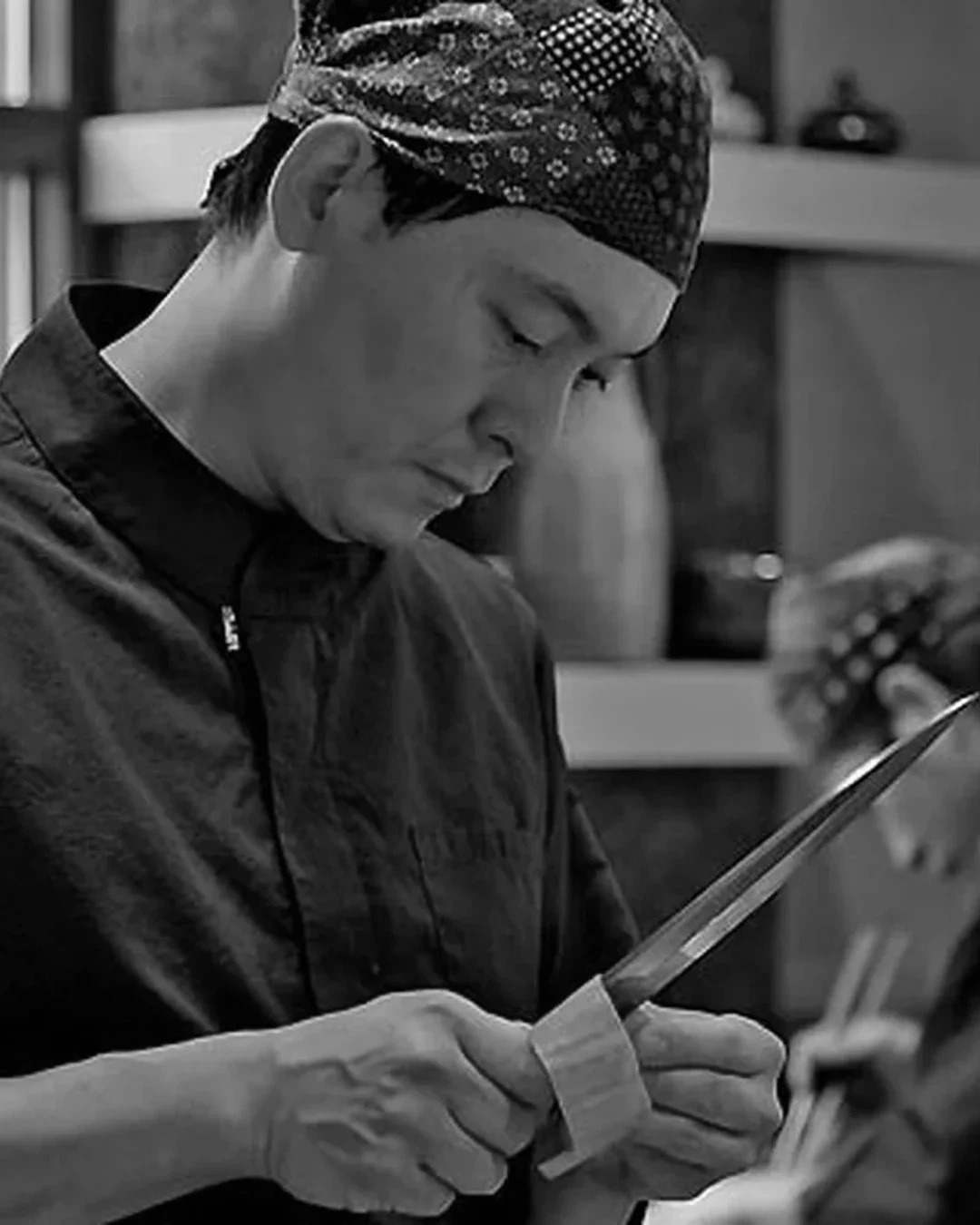
The fish is shown before the choice is made; Nobu Yamazaki, chef-owner at Sushi Taro Omakase Counter in Washington DC, lets the guest see the day’s work before the knife settles into its next sequence. That gesture suits a chef whose account of the craft begins before formal training, in his parents’ restaurant, then moves through art school and into taking over Sushi Taro in 2003. He has described the path simply: “Being in my parents’ restaurant. I started to help my parents, then went to art school.” At the omakase counter, that biography reads less like a résumé than a discipline of looking. Composition matters. So does restraint. The plate arrives as a decision made with the room in mind, not as a flourish from behind a wall.
Yamazaki’s stated turn toward Traditional Japanese cooking gives the counter its center of gravity. “I thought it was about time we focused on more Traditional Japanese cooking.” The line carries no ornament, which is part of its force. It places the work inside continuity: rice, fish, broth, seasonal small dishes, and the order in which a guest is brought through them. His hospitality has the same plainness. “Customers come to certain restaurants with certain expectations. They are trying to have a good time so we are here to help.” At this station, help is not a slogan. It is timing, temperature, pacing, and the confidence to leave space around a piece of nigiri.
Edomae structure, chosen fish
The omakase counter works in a classical register, often described around Edomae sushi and kaiseki-inspired tasting. The meal usually begins with 4 to 6 small dishes before moving into seasonal sashimi and sushi, a progression that gives the kitchen room to set texture before the counter narrows its attention to fish and rice. Goma tofu may sit near chin-mi, the rare delicacies that ask for a guest’s trust: fugu blowfish skin terrine, shirago, Hokkaido Hairy Crab with sticky rice and kani miso. Hadate uni from Hokkaido appears as a named ingredient rather than a decorative luxury, its sweetness depending on handling as much as provenance.
What distinguishes the counter is the moment after the day’s fish is presented. The chefs show the selection, then guests choose what they want to eat. Amaebi, ikura, uni, madai, toro, and unagi belong to that exchange, but the method is not casual. Choice happens inside a strict frame. The counter keeps the bones of a tasting course while allowing appetite to speak back to the bench. For a chef-owner whose cooking has narrowed toward Traditional Japanese technique, that exchange matters: the hand remains in charge, but the room is included in the cut.
Six seats above the street
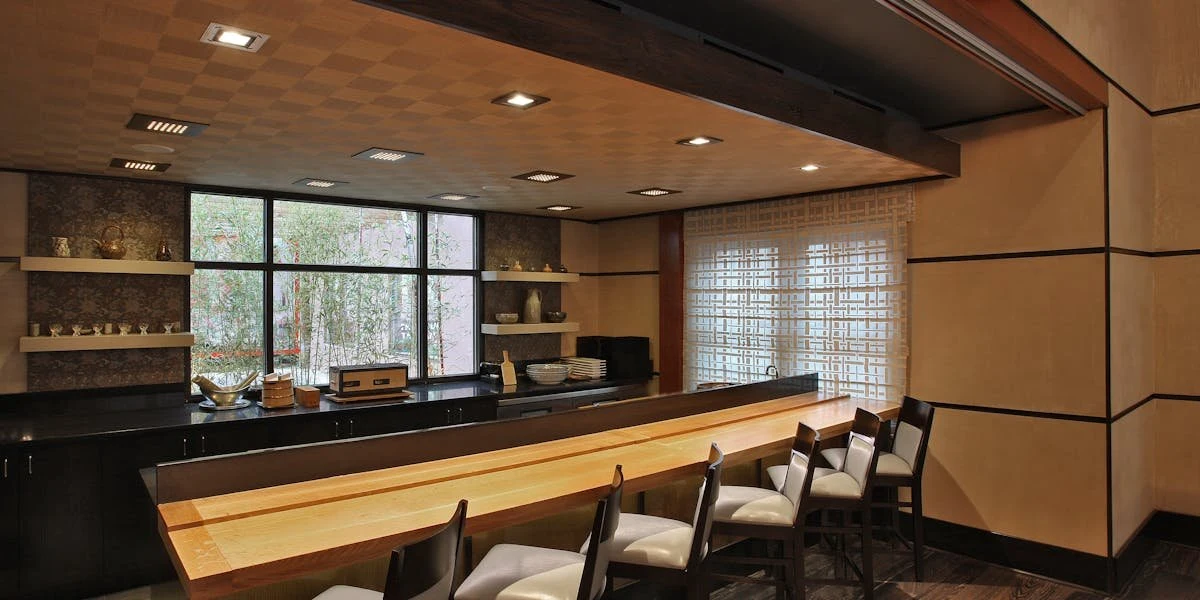
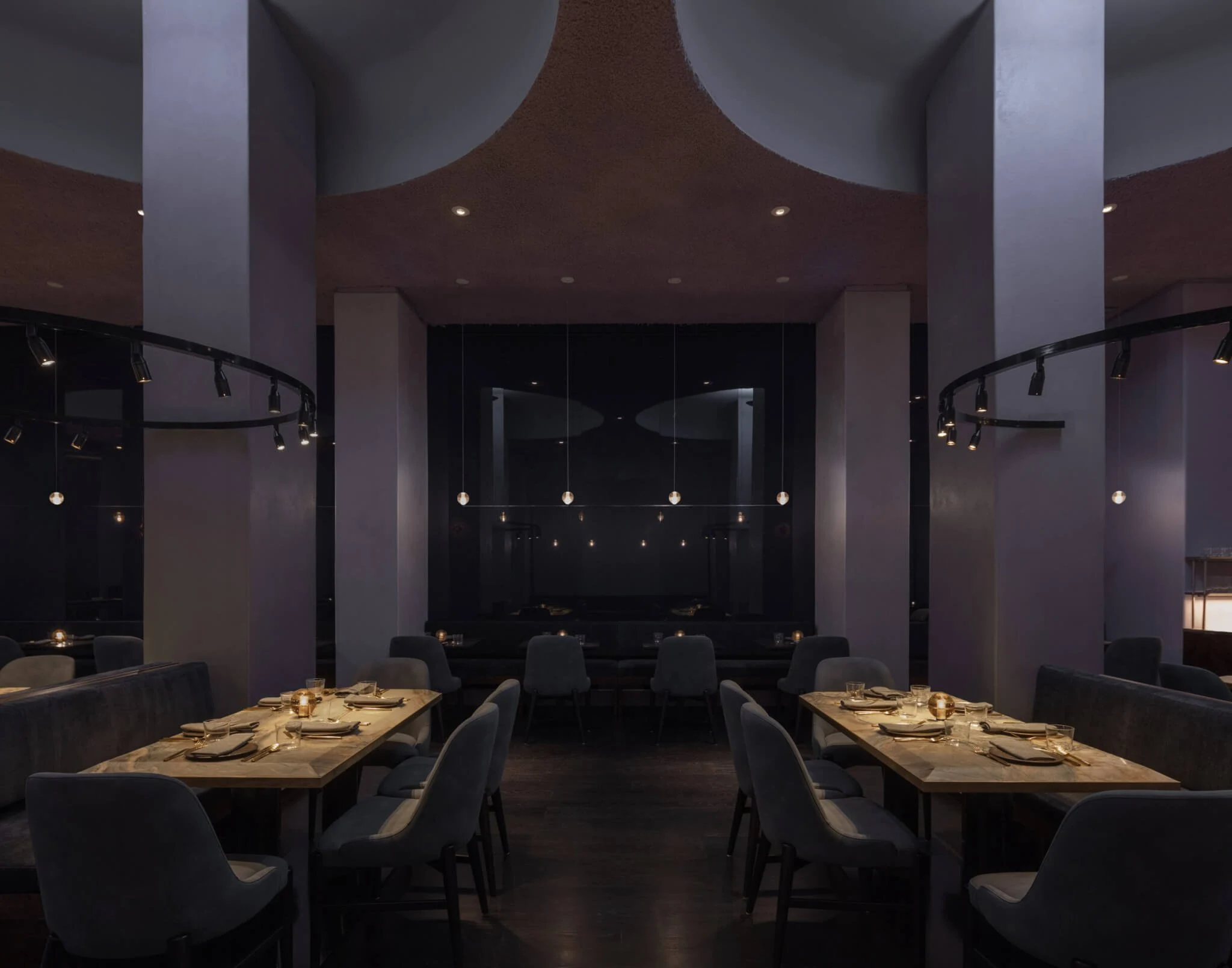
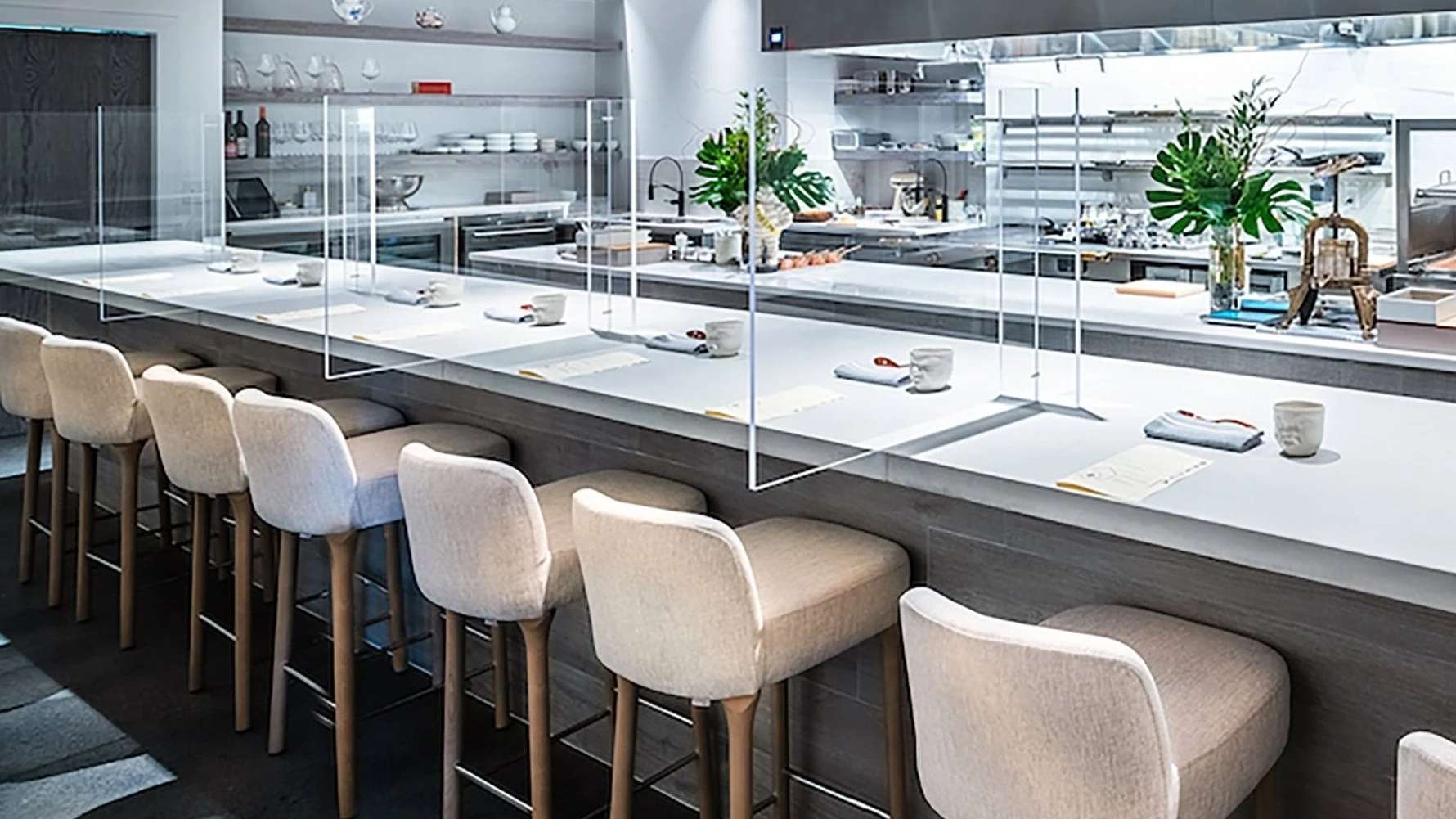
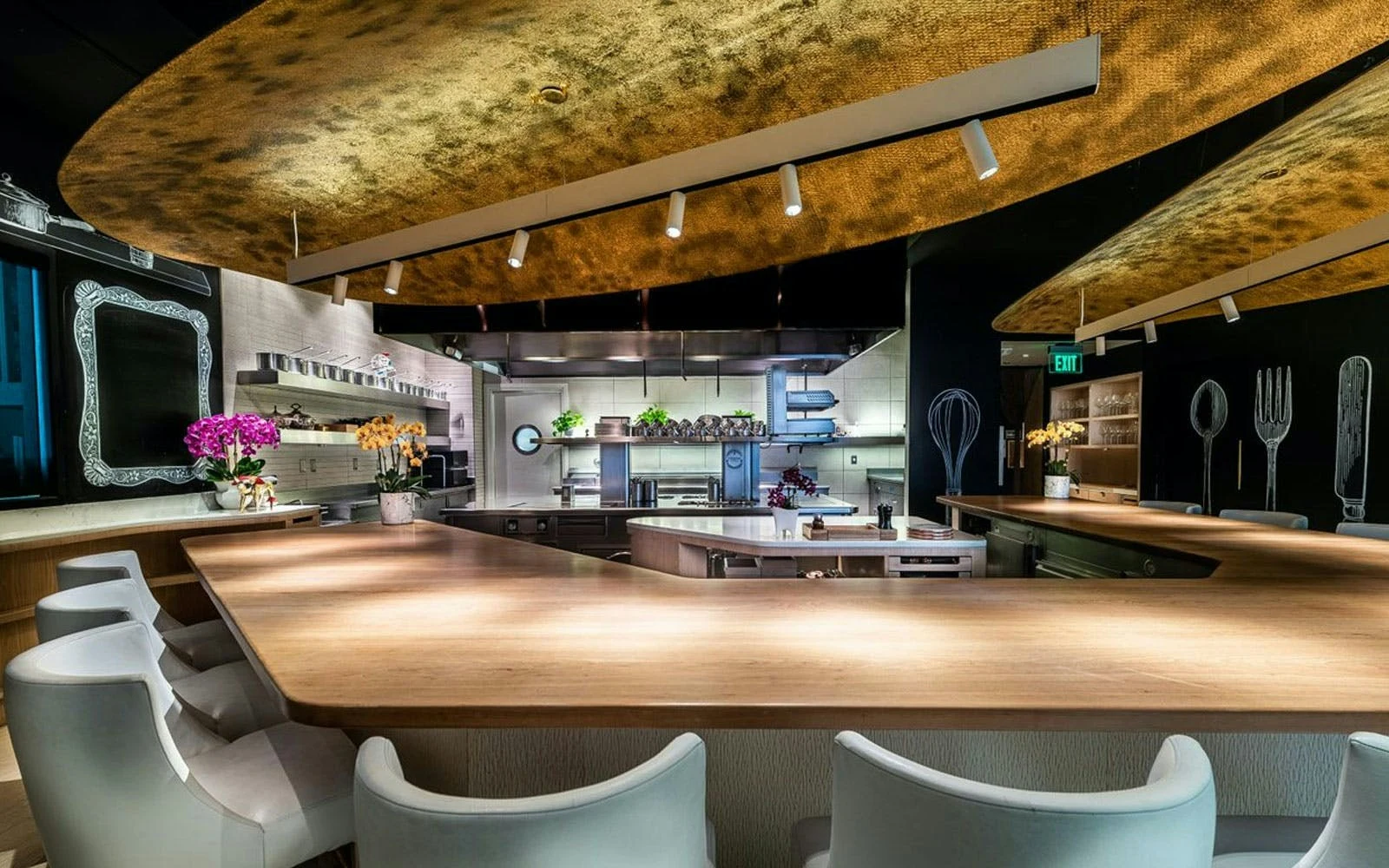
The room is small enough for the pass to become conversational without becoming loose. Six seats set the scale, and the counter turns attention toward the immediate work: the lifted lid, the laid-out fish, the quiet change from small dishes to sashimi, then to nigiri formed and served in sequence. The larger Sushi Taro dining room surrounds it, but the omakase station has its own pace, less a hidden room than a concentrated one. It sits at 1503 17th St NW, above the street life of Dupont Circle, while the work at the counter keeps pulling the eye back down to the board.
Yamazaki’s art-school past is easy to overread, and the setting itself reflects it. The counter asks for proportion: how much explanation before a piece, how much silence after it, how long to let a guest look before eating. The service view he has stated, that the restaurant is there to help guests have a good time, becomes practical here. It is carried by the hands, by the order of the course, and by the fish at Sushi Taro Omakase Counter.
Questions
Frequently asked
Who is behind Sushi Taro Omakase Counter?
Nobu Yamazaki is the chef-owner at Sushi Taro Omakase Counter in Washington DC. He began in his parents' restaurant, later went to art school, and took over Sushi Taro in 2003.
What kind of cooking does the counter focus on?
The counter is centred on Traditional Japanese cooking, with Edomae sushi and kaiseki-inspired tasting elements shaping the meal.
How does the omakase meal usually unfold?
The meal usually begins with 4 to 6 small dishes, then moves into seasonal sashimi and sushi. The chefs show the day's fish before guests choose what they want to eat.
How large is the omakase counter?
The counter has six seats, which gives the room a small and focused scale above Dupont Circle at 1503 17th St NW.
The field
How it compares
| Place | Cuisine | Awards | Notes |
|---|---|---|---|
| Sushi Taro Omakase Counter | Sushi | · | · |
| Albi | Modern Levantine Fine Dining | Michelin 1 Star, World's 50 Best | Washington DC |
| Dōgon | Modern Afro-Caribbean | World's 50 Best | Washington DC |
| Jônt | Modern Japanese Fine Dining | Michelin 2 Stars | Washington DC |
| Moon Rabbit | Creative Vietnamese-Cajun Fusion | World's 50 Best | Washington DC |
| Oyster Oyster | Modern Vegetable-Focused Tasting Menu | Michelin 1 Star | Washington DC |
| Xiquet by Danny Lledo | Modern Spanish Valencian Fine Dining | Michelin 1 Star | Washington DC |
In residence
Similar places
Modern Levantine Fine Dining
Albi
Washington DC, United States
★ · 50 Best
Modern Afro-Caribbean
Dōgon
Washington DC, United States
50 Best
Modern Japanese Fine Dining
Jônt
Washington DC, United States
★★
Creative Vietnamese-Cajun Fusion
Moon Rabbit
Washington DC, United States
50 Best
Modern Vegetable-Focused Tasting Menu
Oyster Oyster
Washington DC, United States
★
Modern Spanish Valencian Fine Dining
Xiquet by Danny Lledo
Washington DC, United States
★