Tempura Matsui
- 01CuisineMichelin-Starred Tempura Omakase
- 02CityNew York City, United States
- 03RecognitionOne Michelin Star
From the people index
Recommended by
One trusted voice points here.

- 1 Michelin Star · Michelin Guide
- Opinionated About Dining Top Restaurants in North America Ranked #77 · 2026
- Michelin 1 Star · 2025
- Opinionated About Dining Top Restaurants in North America Ranked #65 · 2025
- Michelin 1 Star · 2024
- Opinionated About Dining Top Restaurants in North America Ranked #78 · 2024
- Opinionated About Dining Top Restaurants in North America Ranked #79 · 2023
Tempura as a Discipline: Where Matsui Sits in New York's Japanese Counter Scene
When dedicated tempura restaurants began appearing in New York City, most of the dining public still filed the format under "appetizer" rather than "cuisine." Tempura Matsui is a Michelin-starred tempura omakase restaurant in New York City, known for a $295 price per person. Operating out of a discreet address at 222 East 39th Street in Murray Hill, it has spent years making the case that the category deserves the same counter-seat reverence that omakase sushi receives. A Michelin star confirms that the argument has landed with critics who track this tier of Japanese dining in North America.
The broader New York Japanese counter scene is small and competitive. Masa anchors the highest price point in the city for sushi omakase. Secchu Yokota operates in the same disciplined counter register. What separates Tempura Matsui from peers in this cohort is format specificity: the entire meal is organized around a single technique, fried in a combination of sesame and cottonseed oils, with batter applied as sparingly as the kitchen can manage. That restraint is the point. Where sushi counter culture frequently gets the critical attention, tempura at this level of execution remains a smaller, more specialist niche, which is precisely why a 4.8 rating across 363 Google reviews carries some weight here.
The Sunday letter
Find new places through the people who run them.
Our Sunday email brings you the chefs, winemakers and hoteliers behind our newest stories. See a sample before you subscribe.
See a sample of the Sunday emailOne email a week. Unsubscribe from any issue.
The Sustainability Argument Inside the Batter
Tempura's ecological footprint is determined almost entirely by sourcing decisions: what goes into the oil, where the proteins come from, how the kitchen responds to seasonal availability. At Matsui, the seasonal rotation is not incidental, it is the structural logic of the menu. Dishes shift according to what the season offers rather than what a fixed menu requires year-round. Hokkaido scallop appears when the season supports it. Snow crab wrapped in shiso leaf, cauliflower, and squid cycle in and out. This kind of market-responsive cooking reduces the pressure to source out-of-season ingredients through supply chains that carry higher environmental costs.
The oil choice is worth examining in the same frame. Sesame and cottonseed oils have different flavor profiles from the neutral vegetable oils that dominate lower-tier tempura operations, but they also represent a deliberate ingredient decision rather than a default. Sesame oil production has a long history in Asian culinary traditions and carries a relatively compact agricultural footprint compared with some alternatives. The combination of seasonal ingredient rotation and considered oil selection places Matsui inside a quiet but growing movement among Japanese fine dining establishments in North America that treat sourcing discipline as integral to technique, rather than as a marketing position layered on top of it.
This approach connects Matsui to a wider conversation happening across the American fine dining tier. Restaurants like Single Thread Farm in Healdsburg have built their identities around farm-to-table sourcing with environmental accountability built into the format. Providence in Los Angeles has made sustainable seafood sourcing a defining credential in its Michelin-recognized operation. At Matsui, the sustainability argument is embedded in technique and seasonality rather than stated explicitly, which is arguably the more durable version of the commitment.
How the Meal Unfolds
The sequence at Matsui follows a structure that positions tempura as the main event rather than a supporting act. The meal opens with a seasonal soup, the cited version includes seared scallop with wheat cake, before moving into arranged sashimi. This preliminary section is functional: it establishes the kitchen's range and gives the palate a reference point before the fried courses begin.
The tempura sequence itself opens in the traditional way, with crispy shrimp legs. From there, the kitchen moves through whatever the season is offering: squid, Hokkaido scallop, cauliflower, snow crab in shiso leaf have all appeared in the rotation. Each piece is fried to order. The batter is thin and applied with precision. The oils leave a cleaner finish than heavier blends, which is partly technical and partly a product of the disciplined batter-to-ingredient ratio the kitchen maintains.
Meal closes with tencha, a broth-based rice dish with a mellow, deeply flavored quality that functions as a reset rather than a rich final statement. This structure, from delicate soup through sashimi through progressive tempura to a composed closing broth, reflects the kaiseki-influenced sequencing that the leading Japanese counter restaurants in New York deploy regardless of their primary technique.
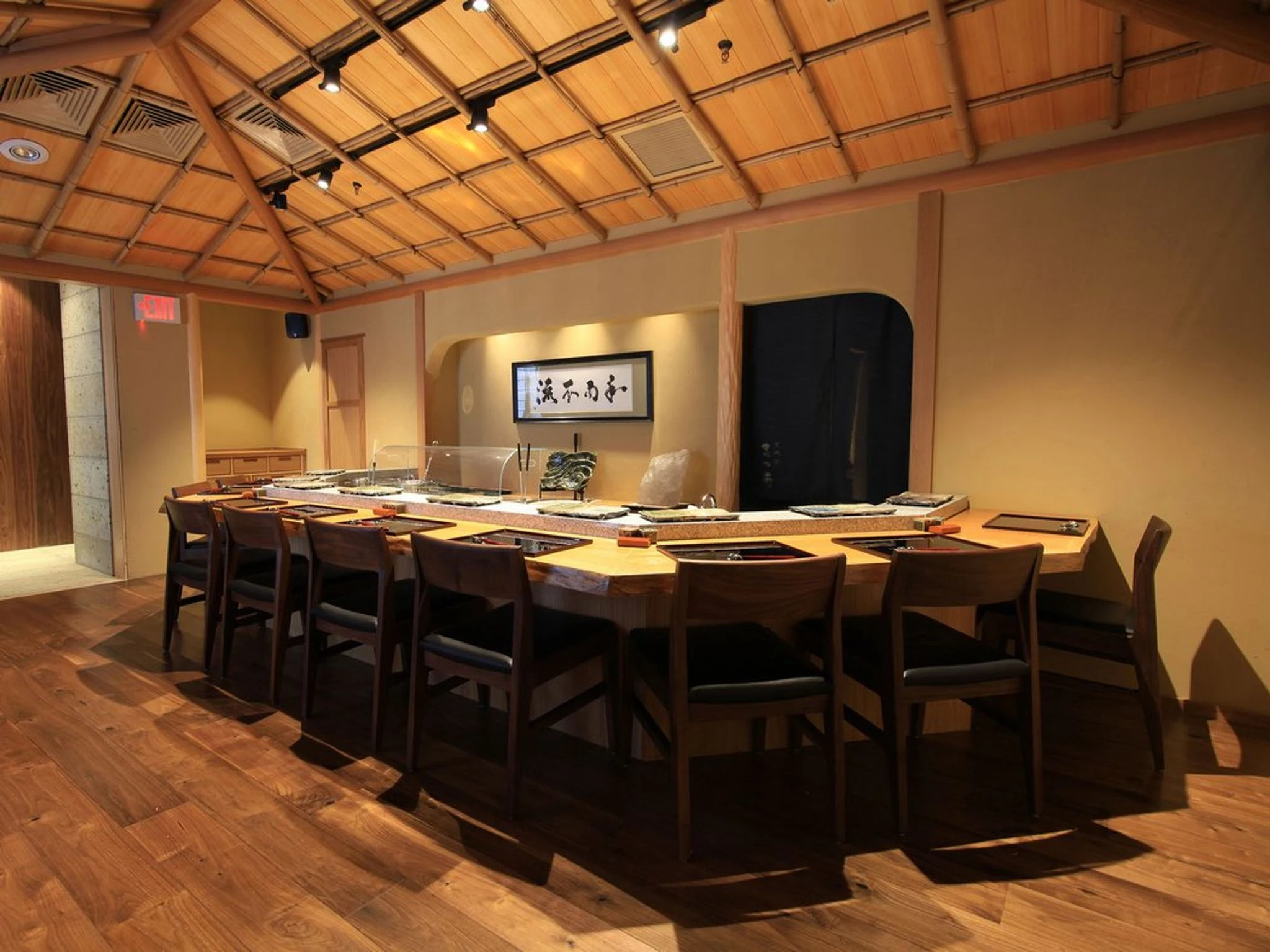
Counter seats are the priority. Watching Chef Kiyoshi Chikano work through the sequence at close range is part of the value proposition in the same way that watching a sushi master work is at a counter like Masa. The chef's lineage and the kitchen's technical approach are credentials that place Matsui in a comparable set that also includes Michelin-recognized operations like Atomix in the Modern Korean register and Le Bernardin in the French seafood tier, all New York restaurants where a single technique or tradition is taken to a level that justifies the $$$$ price point.
Murray Hill as a Setting for This Format
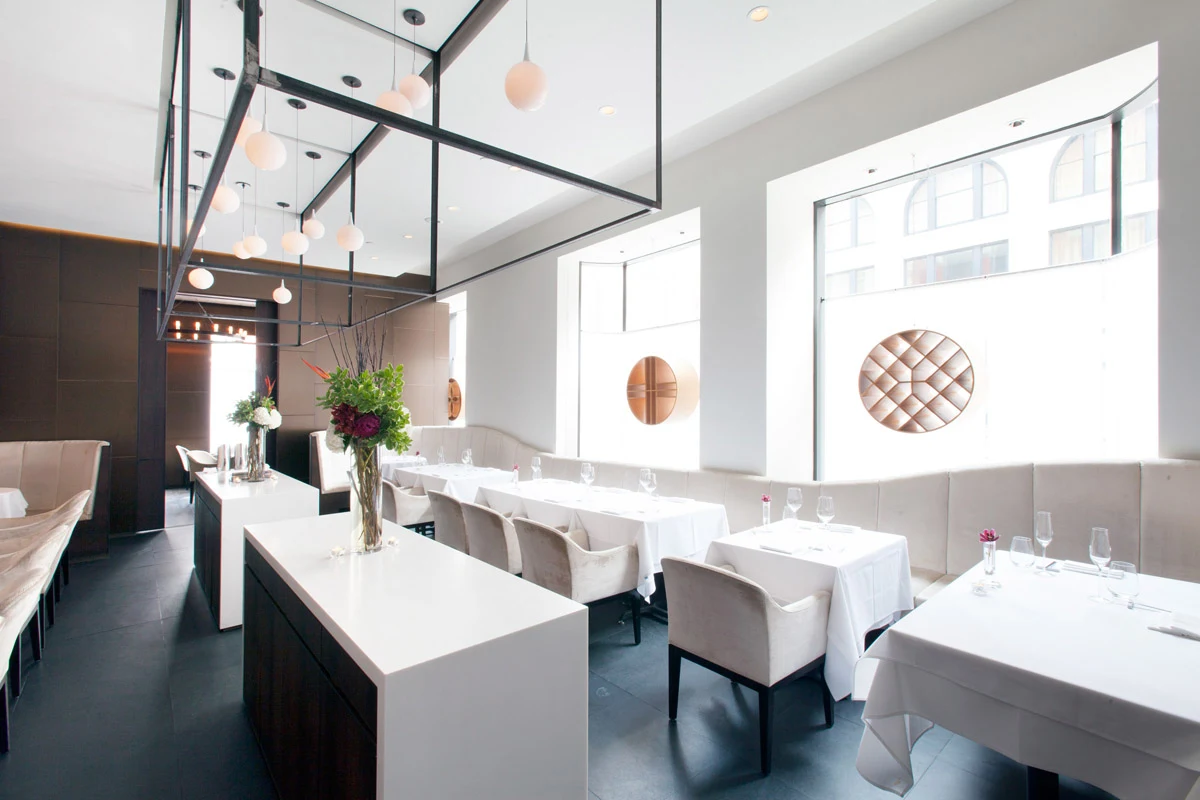
Murray Hill does not carry the same dining cachet as the West Village or Tribeca, but that positioning is partly what makes Matsui's address work. The neighborhood is quieter, more residential in character than Midtown's commercial core, and the restaurant operates in a building rather than a street-level space, adding a low-key quality that matches the counter format. Guests are not walking in off the street. They have reserved in advance, they know what they are coming for, and the room reflects that: controlled, focused, without the ambient noise levels that characterize larger dining rooms.
For visitors exploring New York's Japanese fine dining options across neighborhoods and price tiers, the broader scene.
How Matsui Compares Across the National Tempura Field
Dedicated tempura restaurants at this price and precision level are rare in the United States. Tempura Endo in Los Angeles operates in a comparable register on the West Coast. In the broader range of American fine dining that engages seriously with Japanese technique, Matsui's OAD trajectory, moving from 79th in 2023 to 65th in 2025, suggests a restaurant gaining rather than consolidating ground. Among New York's Michelin-starred Japanese operations, that directional movement is noteworthy.
For context on where Matsui sits relative to the full premium dining tier nationally, restaurants like Alinea in Chicago, Lazy Bear in San Francisco, and The French Laundry in Napa occupy the same conversation about American fine dining's top tier, different formats, different traditions, but the same level of intentionality around technique and sourcing. Emeril's in New Orleans represents a different chapter in that national story. What Matsui shares with these peers is a format where the restaurant's identity is inseparable from a specific technical commitment, executed at counter level, with reservation demand that requires planning ahead. The Eleven Madison Park model of a kitchen organized around a defining philosophical position applies here, even if the expression is entirely different.
If the Asia-Pacific fine dining circuit is on the agenda, 8 1/2 Otto e Mezzo Bombana in Hong Kong operates in a comparable tier of precision and price in that region.
Planning Your Visit
Questions
Frequently asked
What recognition does Tempura Matsui hold?
Tempura Matsui holds 1 Michelin star.
How expensive is Tempura Matsui?
Tempura Matsui is listed at a price level of $$$$.
Where is Tempura Matsui and what does it serve?
Tempura Matsui is in Murray Hill-Kips Bay, New York City, serving Michelin-Starred Tempura Omakase.
The field
How it compares
| Place | Awards | Cuisine | Notes |
|---|---|---|---|
| Tempura Matsui | Michelin 1 Star | Michelin-Starred Tempura Omakase | Murray Hill-Kips Bay, $$$$ |
| Atomix | Michelin 2 Stars, World's 50 Best | Modern Korean Tasting Menu | New York City |
| Daniel | Michelin 1 Star, World's 50 Best | Modern French Fine Dining | New York City |
| Eleven Madison Park | Michelin 3 Stars, World's 50 Best | Contemporary Plant-Based Fine Dining | New York City |
| Jungsik New York | Michelin 3 Stars, World's 50 Best | Modern Korean Fine Dining | New York City |
| Kabawa | World's 50 Best | Modern Caribbean Prix Fixe | New York City |
| Le Bernardin | Michelin 3 Stars, World's 50 Best | French Seafood Fine Dining | New York City |
Similar places
Modern Korean Tasting Menu
Atomix
New York City, United States
★★ · 50 Best
Modern French Fine Dining
Daniel
New York City, United States
★ · 50 Best
Contemporary Plant-Based Fine Dining
Eleven Madison Park
New York City, United States
★★★ · 50 Best
Modern Korean Fine Dining
Jungsik New York
New York City, United States
★★★ · 50 Best
Modern Caribbean Prix Fixe
Kabawa
New York City, United States
50 Best
French Seafood Fine Dining
Le Bernardin
New York City, United States
★★★ · 50 Best
The Sunday letter
Get the next Made By story in your inbox.
We send one email every Sunday morning with the places and people we covered that week.
See a sample of the Sunday emailOne email a week. Unsubscribe from any issue.